Unabomber Ending Explained: How Is Ted Caught and Why Does Joanne Cry?
Netflix’s Unabomber spends most of its running time moving toward two confrontations separated by more than three decades. In 1958, Jacob Tremblay’s young Ted Kaczynski becomes increasingly consumed by Henry Murray’s psychological research at Harvard, while the 1990s storyline follows Shailene Woodley’s Joanne Miller as she becomes convinced that the FBI has been looking for…

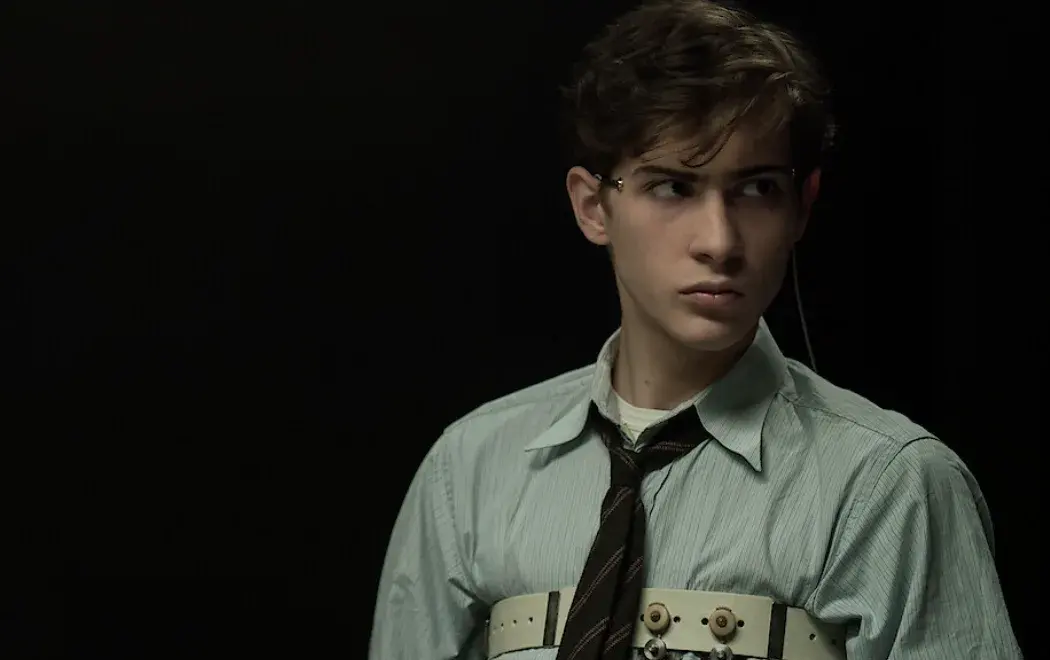
Netflix’s Unabomber spends most of its running time moving toward two confrontations separated by more than three decades. In 1958, Jacob Tremblay’s young Ted Kaczynski becomes increasingly consumed by Henry Murray’s psychological research at Harvard, while the 1990s storyline follows Shailene Woodley’s Joanne Miller as she becomes convinced that the FBI has been looking for the wrong kind of suspect. Director Janus Metz eventually brings those timelines together without pretending they are equally factual. The capture of Kaczynski is rooted in documented history, but the climactic battle between Ted and Murray is heavily dramatized, allowing the film to use Harvard as its explanation for how Ted’s distrust of institutions hardens into something far more destructive. Netflix itself describes the movie as “inspired by true events,” rather than a literal reconstruction.
Related: Unabomber Cast and Character Guide
Why Does Ted Walk Away From Henry Murray?
Ted leaves Murray’s experiment having rejected both the professor and the idea that intellectual debate can give him the validation he has been seeking. The film’s final Harvard confrontation is designed as the culmination of everything Murray has been doing to him, with the professor trying to destabilize Ted by turning his private thoughts, insecurities and recorded conversations back against him. Murray’s claim that Ted has schizophrenia becomes his most aggressive attempt to make the student distrust his own judgment.
That diagnosis is part of the movie’s fictionalized storyline rather than a documented exchange between Murray and Kaczynski. Historically, Kaczynski really did participate in a prolonged Harvard study supervised by Murray from 1959 to 1962, involving confrontational sessions in which students’ beliefs were challenged while their reactions were studied. Harvard reporting confirms the study existed, but the movie considerably expands Murray and Ted’s personal relationship for dramatic purposes.

The movie’s point is not simply that Murray “creates” the Unabomber. Instead, the ending presents the experiment as one experience that reinforces Ted’s existing alienation and growing belief that institutions use knowledge as a means of control. Metz has described the film as showing a young man who becomes increasingly separated from society and eventually embraces destructive means of retaliation, but history does not establish Murray’s study as the single cause of Kaczynski’s later actions.
What Is Inside Ted’s Box for Murray?
The box Ted leaves for Murray contains an annotated copy of Moby-Dick rather than the dangerous package the staging initially encourages the audience to expect. Ted has marked passages that function as pointed comments on Murray, his ambitions and what Ted sees as the professor’s moral compromises. The moment turns the techniques of Murray’s experiment back on him: Ted takes something intellectual and uses it to expose what he believes are another man’s hidden weaknesses.
The reveal works alongside another late twist involving the flattering letters Murray has been receiving. The film reveals that Ted fabricated the praise, recognizing that Murray is not nearly as immune to approval and intellectual status as he presents himself. Your reference material correctly identifies this as a reversal of Murray’s earlier argument that Ted desperately wants recognition from people he considers intellectually important.
Both elements belong primarily to the movie’s constructed Murray-Ted relationship. They should not be read as documented incidents from their real lives. Their purpose is thematic: Ted proves that he has learned Murray’s central lesson about exploiting another person’s emotional vulnerabilities, but he leaves with an even deeper distrust of the system that taught it to him.
How Does Joanne Finally Find Ted Kaczynski?
Joanne’s investigation finally succeeds because Ted’s own writing provides the connection that conventional profiling could not. In the movie, Linda Patrik recognizes similarities between the published manifesto and material associated with Ted, while David Kaczynski initially struggles to believe his brother could be responsible. Joanne continues following the family connection and ultimately obtains the written evidence needed to push the investigation toward Ted’s remote Montana home.

The basic historical breakthrough is accurate, although Joanne herself is fictional. In real life, Linda Patrik encouraged David to consider the similarities between Ted’s writings and Industrial Society and Its Future. David’s representatives eventually provided investigators with letters and an earlier essay, and FBI linguistic analysis found striking similarities between those documents and the manifesto. That evidence, combined with information gathered about Kaczynski’s history, supported the search warrant for his cabin near Lincoln, Montana.
The real operation involved a large multi-agency task force rather than one unusually perceptive agent. Shailene Woodley’s Joanne Miller is a fictional character who condenses parts of that sprawling investigation into a single dramatic perspective. The movie therefore gives her discoveries more individual weight than any one investigator had in reality.
What Do Agents Find at Ted’s Cabin?
The search of Ted’s cabin confirms that investigators have finally identified the person they have been pursuing. The film uses the discovery to close the investigative timeline and provide the answer Joanne has spent the story fighting to prove. Rather than extending into Kaczynski’s trial and imprisonment, Unabomber keeps its focus on the moment when the uncertainty surrounding his identity disappears.
The historical search produced extensive evidence. The FBI says investigators found tens of thousands of handwritten pages, materials connected to the earlier incidents and a completed device that had not yet been sent. Kaczynski was arrested on April 3, 1996, and later pleaded guilty in 1998, receiving a life sentence without parole.
This is where the movie’s two timelines finally intersect conceptually. The young man who believed language and intellectual argument could establish his independence eventually became identifiable because he could not completely separate himself from his own writing. The manifesto gives him the audience he wanted, but it also gives his family and investigators the pattern they need to recognize him.

Why Does Joanne Cry at the End?
Joanne’s tears appear to come from a mixture of relief, exhaustion and frustration rather than simple happiness that the case is over. The movie never reduces the moment to one explicit explanation. She has spent much of the investigation arguing that the established profile is wrong, pursuing connections other agents dismiss and trusting an interpretation of Ted that repeatedly leaves her isolated within her own institution.
That makes her an intentional thematic contrast with Ted. Netflix has highlighted the parallel between the two characters, with Woodley explaining that both possess an unusual willingness to trust their instincts even when people around them disagree. The difference is the direction they take with that frustration. Joanne keeps challenging the institution from inside it, while Ted ultimately rejects society’s structures and chooses a destructive path.
Her tears therefore make the ending less triumphant than a conventional investigative thriller might have been. Finding Ted validates her judgment, but it does not erase the years of institutional failure that came before it or suddenly make her feel completely recognized by the people around her.

Why Does Unabomber End With Ted’s Real Voice?
After the dramatized story concludes, Unabomber makes one final shift by using a genuine recorded interview with Kaczynski. In the recording, he discusses wanting to be represented accurately while reaffirming his opposition to the industrial system. The choice is deliberately uncomfortable because the audience has just watched a fictionalized attempt to explain him, and then the real Kaczynski is briefly allowed to speak for himself.
That final audio also complicates any suggestion that Harvard alone explains what followed. The movie spends considerable time showing Ted being manipulated, humiliated and alienated during Murray’s experiment, but the real recording returns responsibility to the adult Kaczynski and the ideology he continued to defend years later. The Harvard research is part of his history, not an all-purpose explanation for every subsequent decision.
That is ultimately what the ending of Unabomber is trying to hold in tension. Murray’s experiment demonstrates how institutions can misuse authority, while Joanne’s storyline shows that institutions can also contain people willing to challenge bad assumptions from within. Ted experiences the first and rejects the possibility represented by the second. The movie may dramatize the route that gets him there, but its final moments stop short of turning that history into an excuse.