Unabomber Recap: What Happens in the Netflix Movie?
Netflix’s Unabomber tells Ted Kaczynski’s story through two timelines that steadily move toward the same conclusion. In 1958, 16-year-old Ted arrives at Harvard as a gifted mathematics student who is intellectually advanced but socially uncomfortable, while decades later FBI agent Joanne Miller begins questioning the assumptions behind a long-running federal investigation. Director Janus Metz cuts…
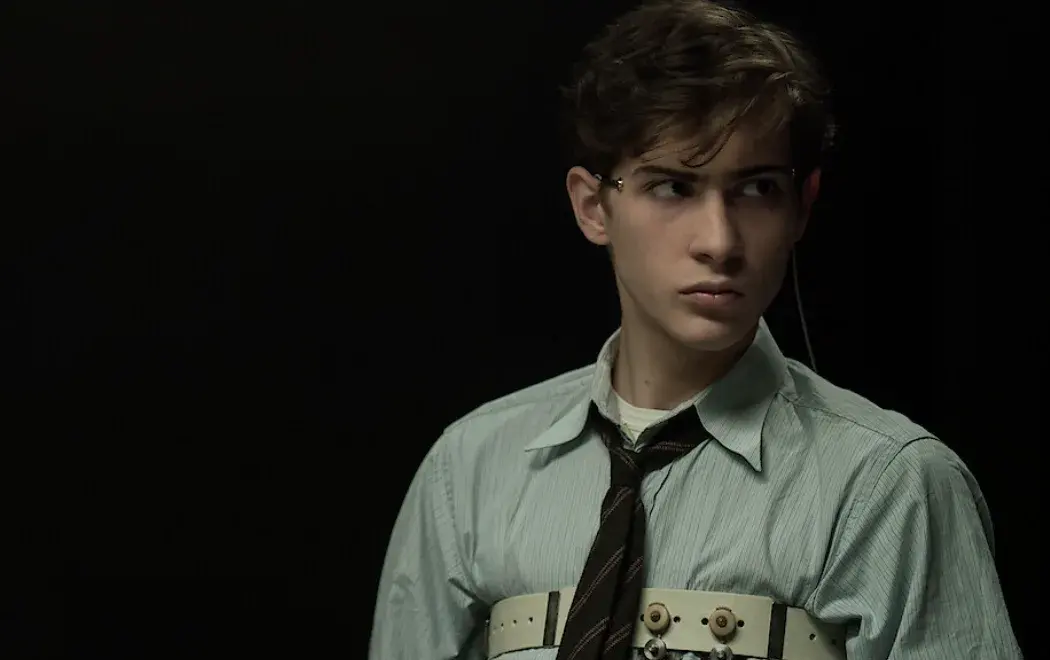
Netflix’s Unabomber tells Ted Kaczynski’s story through two timelines that steadily move toward the same conclusion. In 1958, 16-year-old Ted arrives at Harvard as a gifted mathematics student who is intellectually advanced but socially uncomfortable, while decades later FBI agent Joanne Miller begins questioning the assumptions behind a long-running federal investigation. Director Janus Metz cuts frequently between the young Ted’s involvement with Professor Henry Murray and Joanne’s effort to identify the person behind Industrial Society and Its Future. The movie does not attempt to cover every stage of Kaczynski’s life, instead concentrating on Harvard and the final phase of the investigation.
Related: Where Is David Kaczynski Now? How Ted Kaczynski’s Brother Helped Identify the Unabomber
Ted arrives at Harvard and meets Henry Murray
Ted enters Harvard much younger than most of the students around him. Although his ability with mathematics is obvious, he has difficulty fitting into campus life and becomes increasingly interested in philosophy and questions about individual freedom. His father, Turk, wants him to remain focused on his studies, but Ted becomes fascinated when psychology professor Henry Murray offers what appears to be an opportunity to participate in intellectual debates.
Murray runs the project with Christiana Morgan and presents himself as someone who recognizes Ted’s intelligence. Ted believes he has finally encountered adults willing to take his ideas seriously, but his first session is not what he expects. He is connected to monitoring equipment and placed opposite an aggressive opponent whose purpose is not simply to debate his philosophy, but to pressure him personally while Murray’s team observes his reactions.
Ted initially performs badly, but Murray encourages him to become more forceful. He begins treating the debates almost like competitions that must be won, and his confidence gradually turns into aggression. At the same time, his academic performance starts to suffer as he gives more of his attention to Murray’s project and to his own developing ideas about society.
Joanne believes the FBI is looking for the wrong man
The later timeline begins near the end of the long investigation. A new incident increases pressure on the FBI, while major newspapers publish Industrial Society and Its Future in the hope that someone will recognize the author’s ideas or language. Joanne Miller believes the manifesto reveals that the existing profile is too narrow and argues that investigators should consider a highly educated suspect with a strong intellectual background.
Her superiors are not initially convinced. Joanne and her partner Leo Driver are even assigned to watch newsstands on the theory that the author may appear to purchase copies containing his own manifesto, but the operation produces nothing useful. Joanne remains convinced that the writing itself matters more than the behavioral assumptions that have guided the investigation.
That belief puts her increasingly at odds with her colleagues. The film uses Joanne as the audience’s guide through the 1990s investigation, although she is a fictional composite rather than a direct portrayal of one real FBI agent. Her storyline simplifies the work of a much larger real task force into one character who keeps pushing the linguistic angle.
Ted realizes what Murray’s experiment really involves
Back at Harvard, Ted becomes more comfortable with Murray and begins sharing deeply personal thoughts with him. After an awkward romantic encounter with a young woman, he admits that he feels disconnected from other people and wonders whether something is fundamentally different about him. Murray presents himself as someone Ted can trust, making what Ted later discovers feel like a profound betrayal.
Ted eventually learns that private conversations have been recorded and that information collected from him can be used during the confrontational sessions. He begins to see Murray’s project less as an intellectual exercise and more as an attempt to understand how people can be pressured, destabilized and made to abandon their positions. Whether the real Harvard research should be interpreted in exactly those terms is another question, but that is the dramatic conclusion Ted reaches inside the movie.
His relationship with Murray consequently changes. Ted no longer sees him primarily as a mentor, and the two begin behaving more like intellectual rivals. The movie repeatedly connects what Ted learns in those rooms with his growing distrust of institutions, even though it skips most of the years between Harvard and the later investigation.
David Kaczynski gives Joanne her strongest lead
The breakthrough in Joanne’s investigation arrives through Ted’s younger brother, David Kaczynski. David and his wife Linda Patrik notice that the manifesto contains ideas and expressions that resemble Ted’s writing. A communication from the Chicago FBI office alerts Joanne to the potential connection, and she becomes interested almost immediately.
David is far less certain. Suspecting a stranger is one thing, but considering that his own brother might be the person investigators are looking for is considerably harder. Joanne believes his hesitation is emotional rather than evidence that the lead is weak, and she begins examining Ted’s background more closely.
The linguistic connection grows increasingly difficult to dismiss. Ted has spent years living alone outside Lincoln, Montana, and his personal writings provide additional points of comparison with the manifesto. The movie concentrates those discoveries around Joanne, David and Linda, while the real investigation involved many more agents, analysts and intermediaries.
Ted and Murray have one final confrontation
As Joanne closes in on the older Ted, the Harvard storyline reaches its own breaking point. Murray personally confronts Ted and attempts to undermine his confidence by arguing that Ted’s behavior points to schizophrenia. The accusation is designed to make Ted question whether his ideas represent independent thought or symptoms he cannot recognize in himself.
That specific confrontation is fictional. Kaczynski was evaluated for schizophrenia much later, during the legal proceedings following his arrest, but there is no evidence that Murray diagnosed him at Harvard. The movie relocates that later controversy into its central Ted-Murray relationship because it gives their final encounter greater dramatic weight.
Ted ultimately rejects Murray’s attempt to define him. He also turns Murray’s methods back against the professor by exploiting Murray’s own need for intellectual approval. Before leaving, Ted sends him a package containing an annotated copy of Moby-Dick rather than the dangerous object the scene initially seems to suggest.
The manifesto leads investigators to Montana
Joanne’s case finally reaches Ted’s remote cabin as the two timelines converge. David’s information, the writing comparisons and the growing evidence surrounding Ted give investigators enough reason to focus on him. A federal team moves toward the property while the film simultaneously finishes the Harvard story, linking the teenage Ted who walks away from Murray with the older man now facing the consequences of the life he built afterward.
The search confirms that investigators have finally identified the person they were seeking. Ted is taken into custody, bringing the movie’s investigation to a close without spending much time on the court proceedings that followed. Joanne has been proven right, but rather than celebrating, she returns to her office emotionally exhausted by everything that has happened and by how difficult it was to make the people around her reconsider their assumptions.
Unabomber then leaves the fictionalized investigation behind and ultimately brings the real Kaczynski back into the story through recorded audio. That choice reinforces the divide running through the entire film: Metz is dramatizing a historical life, not claiming that every conversation between Ted, Murray and Joanne happened exactly as shown. The movie reaches a definite conclusion to the manhunt, while leaving the deeper meaning of Ted’s Harvard experience for viewers to interpret.