What Is Get Jiro Based On? Anthony Bourdain’s Comic Explained
The books behind Get Jiro unite Anthony Bourdain and Joel Rose's food satire with a chef's origin story, years before the television adaptation.
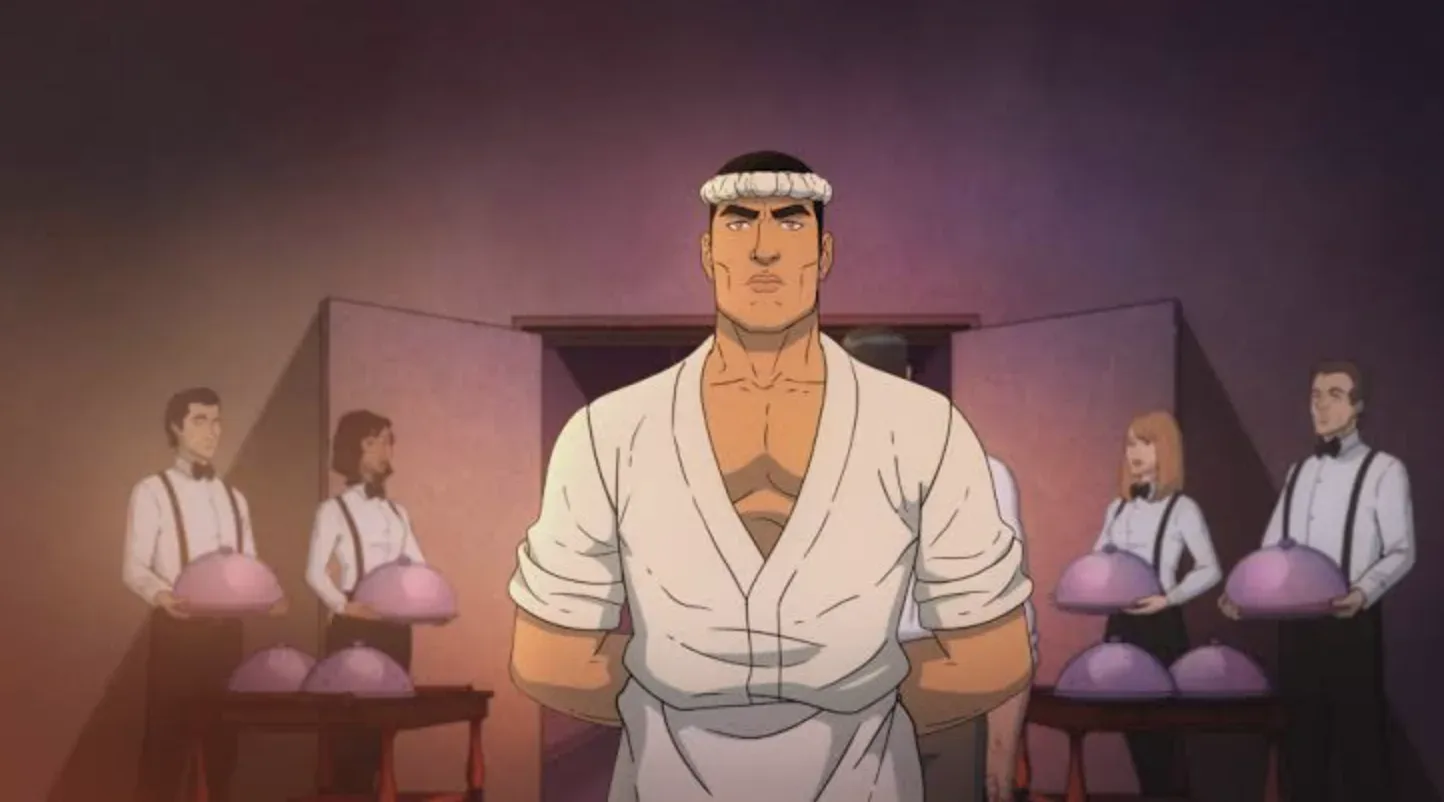
Get Jiro puts a sushi chef in a world where culinary culture has become a form of power. The connection to Anthony Bourdain has prompted viewers to ask what came before the animated series. Its source history brings together food, comics and a writing partnership that can disappear when attention falls on the famous name alone.
The two books behind Get Jiro
The source is Get Jiro!, the 2012 graphic novel written by Anthony Bourdain and Joel Rose for DC’s Vertigo imprint. The pair returned in 2015 with Get Jiro: Blood and Sushi, a prequel exploring the chef’s earlier life in Japan. Langdon Foss illustrated the first book, with Jose Villarrubia providing its colors.
Adult Swim’s August 2026 announcement identifies the graphic novels as the series’ source. It credits Alessandro Tanaka and Brian Gatewood with developing the television adaptation, while Bourdain and Rose remain the books’ co-writers. Those credits describe different jobs: creating the original comics and turning that existing material into a screen production.
Also Read: Who Were the Cops Who Caught El Chapo? The Real Story Behind Facing El Chapo
DC’s Get Jiro! The Complete Collection brings both stories into a single 304-page volume, released on June 30, 2026. The publisher also lists a new cover and previously unseen development art by Foss. That 2026 date belongs to the collected edition: it does not make the original story a newly written comic. For someone finding the character through television, the collection is a route into two existing books.
Why Joel Rose matters to the story
In their November 2015 Fast Company interview, Rose described how discussions became drafts that Bourdain would redirect and expand. Bourdain supplied bursts of ideas, and Rose shaped them into material they could revise together. Rose had also worked in comics as a DC editor, bringing experience with the medium to their shared enthusiasm.
Their 2012 Fast Company interview gives a more practical account. Bourdain sent vivid scenes, Rose organized them into panels, and both edited the work. Foss then asked detailed questions about food, wine and the tools used to prepare fish. Those questions made culinary accuracy part of the artwork, not simply background decoration.
Food becomes a system of power
DC’s official television description places Brian Tee’s Jiro in a near-future Los Angeles where chefs dominate society and food marks class as well as functioning as currency. That premise makes cooking consequential far beyond the kitchen.
Bourdain told Fast Company in 2012 that the satire addressed excesses within a food world from which he also benefited. It included his affections alongside his objections. That gives the comic a more specific target than the idea that caring about dinner is inherently ridiculous. DC describes rival culinary gangs competing for Jiro’s abilities, turning professional status into a contest for control.
Was Jiro inspired by Jiro Ono?
The shared name can suggest a connection to the documentary Jiro Dreams of Sushi, but Bourdain directly rejected Jiro Ono as the character’s basis in a 2015 Daily Dot interview. He instead named sushi chef Naomichi Yasuda as an inspiration, recalling Yasuda’s dedication to his craft and frustration when diners mishandled sushi. The comic exaggerated that frustration into fiction; the distinction does not turn its storyline into an account of Yasuda’s life.
The prequel changes the question
DC’s original 2015 announcement describes Blood and Sushi as a Tokyo-set origin story. Jiro works within his father’s criminal organization while secretly pursuing cooking at night. His culinary ambition therefore conflicts with the role expected of him at home. The prequel asks how he came to value that craft enough to pursue it under such pressures.
Bourdain and Rose told the Daily Dot they wanted a different visual approach for this family story, choosing artist Ale Garza rather than returning to Foss’s elaborate future Los Angeles. In the separate Fast Company conversation, Bourdain identified their shared love of Japanese genre movies as a major influence. The change in setting and artist was part of a shift in the kind of story they wanted to tell.
Fiction written by Bourdain, rather than biography
Readers coming from Tony can find a different kind of Bourdain connection in FilmiFeed’s guide to how Tony reshapes Anthony Bourdain’s real story. That film interprets his life. Get Jiro instead begins with a fictional chef Bourdain helped create. The relevant background is the collaboration and the books’ invented worlds, rather than a search for a one-to-one portrait of their author.