Tony’s Ending Rewrites Anthony Bourdain’s Real Story, But Gets His Biggest Turning Point Right
A24’s Tony ends by giving its 19-year-old Anthony Bourdain (Dominic Sessa) something he has spent most of the summer avoiding: responsibility. After the Flagship is damaged by fire, Tony and Sal organize a beach cookout supposedly to raise money for Chef, although their original plan is to pocket the proceeds themselves. Tony backs out of…
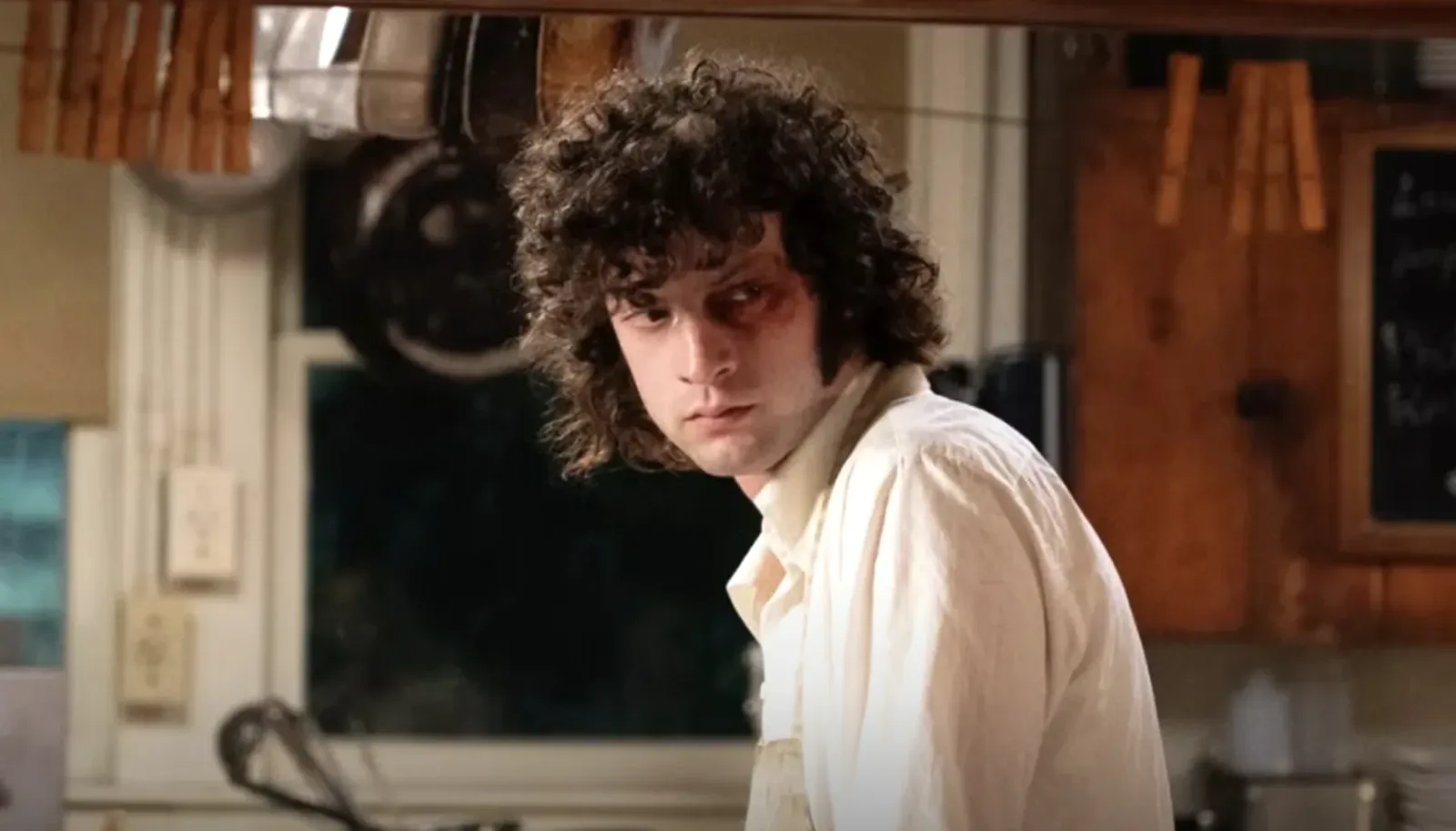
A24’s Tony ends by giving its 19-year-old Anthony Bourdain (Dominic Sessa) something he has spent most of the summer avoiding: responsibility. After the Flagship is damaged by fire, Tony and Sal organize a beach cookout supposedly to raise money for Chef, although their original plan is to pocket the proceeds themselves. Tony backs out of the scam, gives the money to Chef and eventually moves toward culinary school rather than returning to the version of himself who arrived in Provincetown. That emotional progression captures something real about Bourdain, but most of the finale did not happen as shown. The Flagship fire, fraudulent fundraiser and dramatic beach redemption were created for the movie, while Bourdain’s eventual decision to leave Vassar for the Culinary Institute of America is firmly rooted in his actual biography.
Does Tony Keep the Money From the Beach Cookout?
No, Tony ultimately refuses to steal the fundraiser money and gives the proceeds to Chef, making the cookout the clearest proof that he has changed. Until then, Tony has been remarkably good at converting insecurity into arrogance, whether he is lying to Nancy, posturing as a writer or following Sal’s more reckless instincts. The cookout starts as another shortcut, with Tony and Sal exploiting Chef’s misfortune for their own benefit, but seeing people gather around food changes the calculation. Instead of treating everybody around him as material for his own adventure, Tony finally does something that costs him personally and helps somebody else. PEOPLE’s fact check confirms that the film has Tony abandon the plan to steal the proceeds and hand the money to Chef.
Also Read: Where was Tony Filmed?
The scene also gives the film a way to connect young Tony with the Bourdain audiences already know without suddenly transforming him into the polished host of Parts Unknown. Food becomes useful to him because of what happens around it, not simply because he discovers that he likes cooking. Screenwriters Todd Bartels and Lou Howe have said that Bourdain’s ability to connect people through food informed the clambake sequence, which is why the communal meal matters more than the cash itself. That reading is particularly fitting for a movie that has spent two hours showing Tony trying to impress rooms he does not yet know how to belong in.
Did the Flagship Really Burn Down?
No, there is no record that the real Flagship suffered the fire depicted near the end of Tony. The restaurant itself was real, and Bourdain genuinely worked there as a dishwasher during his first Provincetown summer, although he renamed it the “Dreadnaught” when writing about it in Kitchen Confidential. The film turns the restaurant into the physical center of Tony’s education, then damages it so his bad decisions can have an immediate consequence that demands a response. In reality, Bourdain finished that summer, returned to Provincetown again and later worked at other restaurants, including Ciro & Sal’s. The Flagship eventually closed decades later, rather than disappearing because of the crisis portrayed in the movie.
That fictional fire tells us quite a lot about Matt Johnson’s approach to biography. The filmmakers were not trying to reproduce a calendar of everything Bourdain did in 1975, and Bourdain’s estate publicly supported the film on precisely those terms, describing this period as an interpretation of a part of his life that remains incompletely documented. Johnson and the writers took events Bourdain remembered, people he encountered later and ideas associated with his career, then concentrated them into one decisive summer. The fire is therefore invented biography serving character structure rather than an incident viewers should add to the historical record.
Was the Clambake Based on Something Anthony Bourdain Really Experienced?
Yes, although the specific charity scheme is fictional, the communal seafood feast has a genuine connection to the world that influenced Bourdain. Chef Howard Mitcham, author of The Provincetown Seafood Cookbook, held an annual clambake for friends and artists, and Bourdain later wrote admiringly about Mitcham’s attitude toward cooking and eating seafood without pretension. The filmmakers deliberately borrowed from that history when constructing Tony’s beach gathering. TIME notes that Mitcham’s approach helped teach Bourdain that food could be something worth taking seriously rather than merely restaurant labor performed for tourists.
The movie therefore does something more interesting than reproduce a documented fundraiser. It takes a real influence on Bourdain and converts it into a fictional moral test for the younger version of him. The cookout becomes the point where Tony chooses Chef’s version of kitchen life, based on craft, responsibility and feeding people, over Sal’s more intoxicating version built around appetite without restraint. That particular choice belongs to the screenplay, but the two impulses are recognizably assembled from Bourdain’s own writing about the kitchens that fascinated him.
Was Antonio Banderas’ Chef a Real Person?
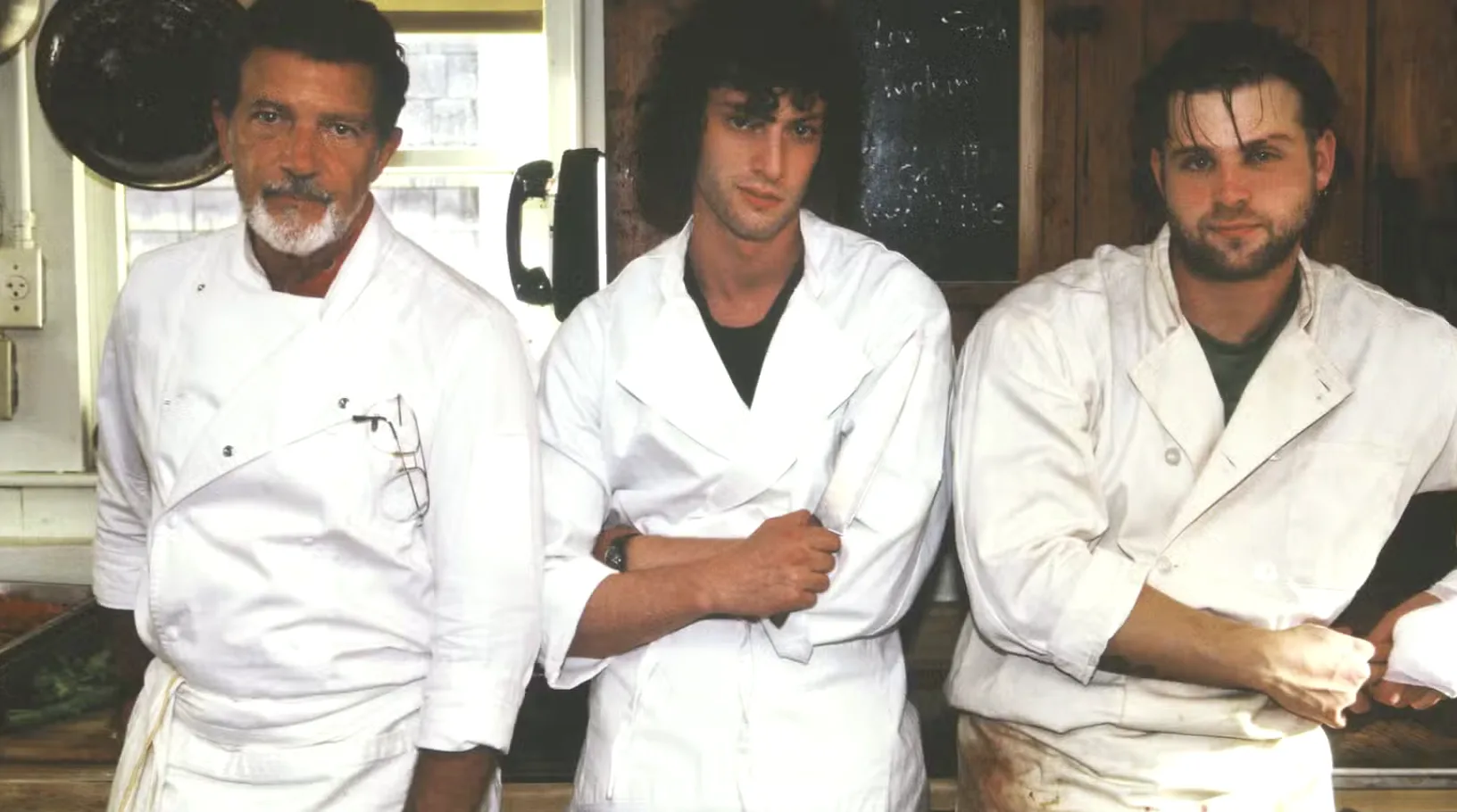
Chef is a composite rather than the literal Provincetown boss who transformed Bourdain’s life in one summer. Antonio Banderas’ character incorporates traits associated with the mentor Bourdain called “Bigfoot” in Kitchen Confidential, but Bigfoot entered Bourdain’s career later in New York, after the Provincetown period. The movie effectively moves that mentor backward in time so Tony’s emerging respect for kitchen discipline has one human face. Vanity Fair reports that the filmmakers intentionally used Bigfoot’s “DNA” for Chef, while also acknowledging that the real man did not personally send Bourdain to culinary school.
Sal works in a similar fashion from the opposite direction. The writers described Chef and Sal as competing influences, one representing discipline and the other the hedonistic appeal that Bourdain also associated with professional kitchens. This means Tony rejecting Sal’s beach scam is not simply a plot resolution between two coworkers. It is the screenplay making him choose what kind of cook, and eventually what kind of adult, he wants to become.

Did Tony and Nancy’s Story Continue After Provincetown?
Yes, and real life makes Nancy far more important than the movie’s summer-romance setup initially suggests. Emilia Jones’ Nancy is based on Nancy Putkoski, but Bourdain did not simply chase an uncertain crush to Provincetown after learning she would be there. They had already been involved since their school years, Bourdain graduated early partly to follow her to Vassar, and the couple planned their Provincetown trip together. They eventually married in 1985 and remained married until 2005.
The film deliberately rearranges those facts because an emotionally unavailable Tony pursuing Nancy gives the summer a cleaner starting point. By the ending, repairing that relationship becomes another sign that he is beginning to see how exhausting his performance of confidence has been for everyone around him. That is movie construction rather than a documented reconstruction of one particular 1975 reconciliation. The real relationship lasted for decades, making Nancy less a temporary catalyst in Bourdain’s story than the film’s compressed timeline can accommodate.
Did Anthony Bourdain Really Leave Vassar for Culinary School?
Yes, and this is where Tony’s heavily fictionalized ending finally lands on solid historical ground. Bourdain did not make the leap after one miraculous summer: he spent three summers working in Provincetown restaurants before leaving Vassar and enrolling at the Culinary Institute of America. He graduated from the CIA in 1978 and went on to build his career in New York kitchens. The movie compresses those years of uncertainty and work into a single season, but the direction of travel is correct.
The final CIA sequence adds one especially affectionate invention. Chef Eric Ripert appears as an admissions officer even though Ripert would only become one of Bourdain’s closest friends much later in life. Johnson has described the cameo as a gesture marking Bourdain’s transition from boyhood toward the professional world that would eventually define him. It is not historical realism, but it suits a movie that repeatedly prefers emotional hindsight to literal chronology.
That is ultimately the fairest way to read Tony’s ending. Anthony Bourdain did not save his Provincetown mentor with the proceeds from a repentant beach fundraiser, nor did a restaurant fire neatly force him to confront every bad quality he carried into the summer. What happened was slower and messier: Provincetown introduced him to restaurant work, he returned for multiple summers, and somewhere during that period cooking stopped being a temporary job and became a possible life. Tony invents the decisive night because movies like decisions that can fit inside a final act. The historical Bourdain needed several summers to reach the same destination.