Why Does Lee Speak With a Pidgin Accent in East of Eden? His Real Voice Explained
Lee initially seems easy to categorize when he enters Netflix’s East of Eden. Working in Adam Trask’s California household, he speaks with a pronounced pidgin accent and presents himself in the manner white Americans of the period expect from a Chinese servant. That impression changes once Lee becomes comfortable around Samuel Hamilton and reveals that…
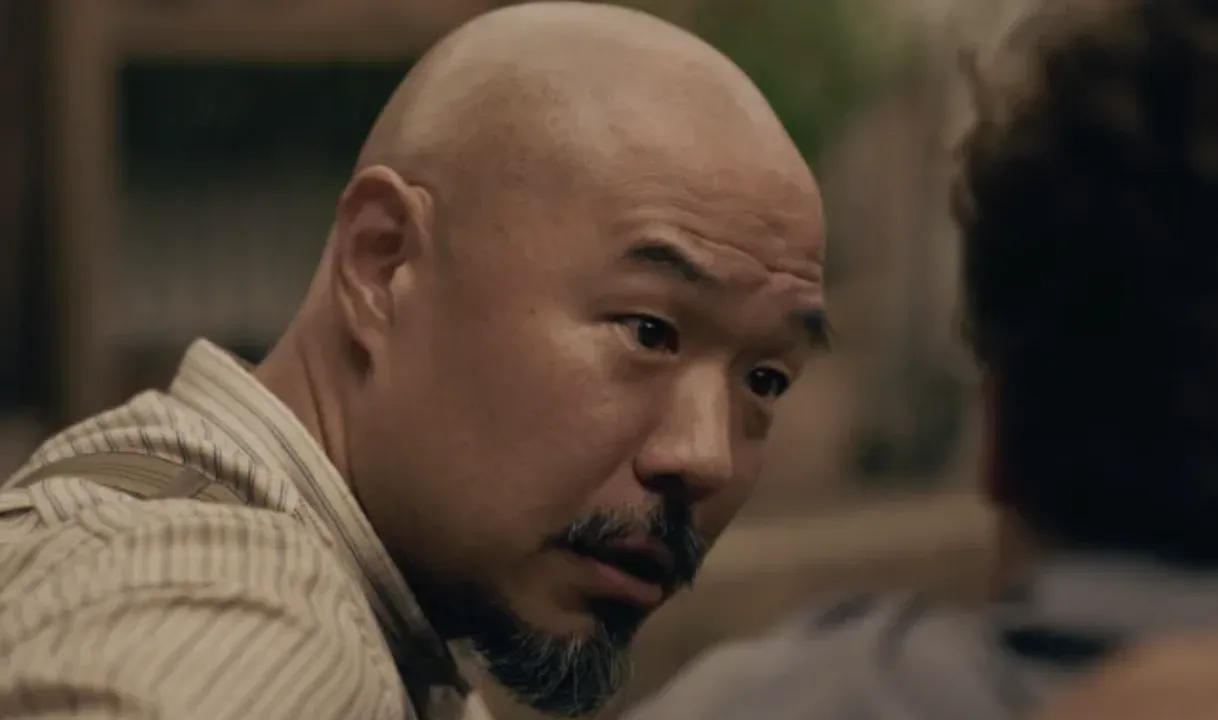
Lee initially seems easy to categorize when he enters Netflix’s East of Eden. Working in Adam Trask’s California household, he speaks with a pronounced pidgin accent and presents himself in the manner white Americans of the period expect from a Chinese servant. That impression changes once Lee becomes comfortable around Samuel Hamilton and reveals that the way he has been speaking is not a reflection of his intelligence or his actual command of English.
The change is intentional rather than a continuity error or an unexplained transformation in Hoon Lee’s performance. Lee has consciously constructed a public version of himself because experience has taught him that many white Americans are more comfortable interacting with a stereotype than with the educated and intellectually independent man he actually is. Netflix retains that central idea from John Steinbeck’s novel while adjusting parts of Lee’s characterization that Zoe Kazan felt carried the racial limitations of the period in which the book was written.
Why Does Lee Use the Pidgin Accent?
Lee uses the accent because it makes him easier for the white people around him to understand within the narrow assumptions they already have about Chinese immigrants.
Hoon Lee described the character as someone who adopts the outward appearance people expect, including traditional clothing and a thick pidgin accent. The important word is “mask.” Lee understands that presenting himself according to a familiar stereotype often creates less resistance than demanding that strangers recognize the more complicated reality of who he is.
That makes the voice a survival strategy as much as a performance. Lee lives in an America where racism shapes how other people interpret him before he has said anything at all. Rather than spending every encounter challenging their assumptions, he sometimes gives them the version of himself they already expect.
The irony is that Lee is often one of the most perceptive people in the entire story. He understands Adam’s weaknesses, sees what Cal is struggling with, forms an intellectual friendship with Samuel, and eventually becomes essential to the story’s understanding of “timshel.” The contrast between how strangers perceive him and who he actually is is therefore deliberate.
Also Read: East of Eden Filming Locations
What Is Lee’s Real Voice?
When Lee stops performing the pidgin persona, he speaks fluent and articulate English. He is not suddenly learning a new way to communicate. He is simply allowing someone to hear the voice he normally keeps hidden.
The distinction matters because describing his earlier voice as simply “fake” misses some of what the story is doing. Lee’s speech is a form of code-switching shaped by prejudice. Both versions belong to the life he has had to construct, but one is designed specifically for people who are more comfortable seeing him as a racial stereotype.
Netflix’s adaptation makes Lee an American-born Chinese man whose intelligence is immediately apparent once the mask drops. The series also reinforces that the assumptions other characters make about him have almost nothing to do with his actual capabilities. Contemporary coverage of the adaptation has similarly highlighted Lee as an educated and philosophical figure who becomes one of the Trask family’s most important influences.
His change in speech therefore tells viewers something about everyone else as well. The question is not why Lee is capable of sounding different. It is why society has convinced him that revealing his actual self is sometimes less useful than performing what people want to see.
Why Does Lee Drop the Accent Around Samuel Hamilton?
Samuel becomes one of the people with whom Lee can stop performing because their relationship is built on curiosity rather than hierarchy.
The two men begin talking seriously about religion, language, human nature, and eventually the biblical story of Cain and Abel. Samuel does not need Lee to remain trapped in the role of an obedient servant for their relationship to make sense, which allows a more intellectually honest friendship to emerge.
Their conversations later lead directly to one of East of Eden’s most important ideas. Lee becomes fascinated with the Hebrew word “timshel” and consults scholars in San Francisco in an effort to understand its meaning. His conclusion that it means “thou mayest” gives the Trask story its philosophy of free choice: people may struggle against the darkness they inherit rather than being permanently defined by it.
That entire intellectual journey depends on viewers understanding that Lee has always contained far more than the role society assigns him. Samuel simply becomes one of the people capable of seeing it.
Why Did Netflix Keep Lee’s Accent Story From the Book?
Lee presents a complicated adaptation problem because Steinbeck gave him extraordinary intellectual importance while also initially writing him through stereotypes that can feel uncomfortable to modern readers.
Zoe Kazan decided that removing Lee entirely would lose too much of the novel. Her grandfather Elia Kazan’s 1955 movie does not include Lee, but Zoe considered him essential to a version attempting to cover the wider scope of Steinbeck’s story.
Kazan told Vanity Fair that she wanted to strip away what she considered “distractingly racist” elements while preserving Steinbeck’s more humane conception of Lee. The result retains the pidgin reveal because the stereotype itself is part of the point, but the adaptation gives Lee substantially more space to exist outside it.
That makes the reveal more than a surprise about the way one character talks. It becomes a commentary on the distance between identity and the roles people are forced to perform.
Lee Becomes the Real Parent of Cal and Aron
Lee’s importance extends far beyond his voice. After Cathy abandons Adam and their newborn sons, Lee becomes the person who performs much of the day-to-day work of raising Cal and Aron.
Zoe Kazan has gone as far as calling Lee the “true parent” of the younger Trask generation. Christopher Abbott similarly described Adam and Lee as functioning almost like an old married couple while raising the twins, even referring to the bond as a kind of platonic romantic relationship. That gives Lee a role no one would predict from his first appearance.
Adam is the twins’ biological father, but he spends long periods emotionally unavailable. Cathy has disappeared. Lee becomes the consistent adult who understands the boys well enough to recognize what each of them needs.
His influence becomes particularly important with Cal. When Cal fears that having Cathy as his mother means he has inherited her darkness, Lee provides the idea that ultimately saves him from accepting that conclusion.
This is why the accent reveal fits so neatly into East of Eden’s broader story. Lee spends years being misjudged because of assumptions connected to his appearance and ancestry, while Cal later risks doing something similar to himself by assuming his parentage determines his character. Lee knows better than almost anyone that identity cannot be reduced to what other people expect you to be.
Why Lee’s Voice Matters to East of Eden
The moment Lee speaks differently asks viewers to reconsider everything they assumed about him when he first entered the story.
That makes him a living example of “timshel” long before the word becomes central to Cal’s ending. Lee refuses to let other people’s prejudices fully define his internal life, even when he strategically performs according to those prejudices in public.
His relationship with Samuel allows him to reveal more of himself, while his relationship with Cal allows him to pass that lesson to the next generation.
In a story filled with people who misunderstand one another, Lee is unusual because he understands exactly how he is being misunderstood and has learned how to navigate it. The accent is not the secret of his character. The real reveal is how much of Lee everyone failed to see while they were listening to it.