What Happened Between Vince Young and Jeff Fisher? Their Titans Feud Explained
Vince Young and Jeff Fisher’s relationship did not collapse because of one argument. The tension began before Young ever played an NFL snap, intensified through disagreements over trust and preparation, and finally became untenable after a November 2010 loss to Washington. Young injured his thumb, threw his shoulder pads and jersey into the stands and…
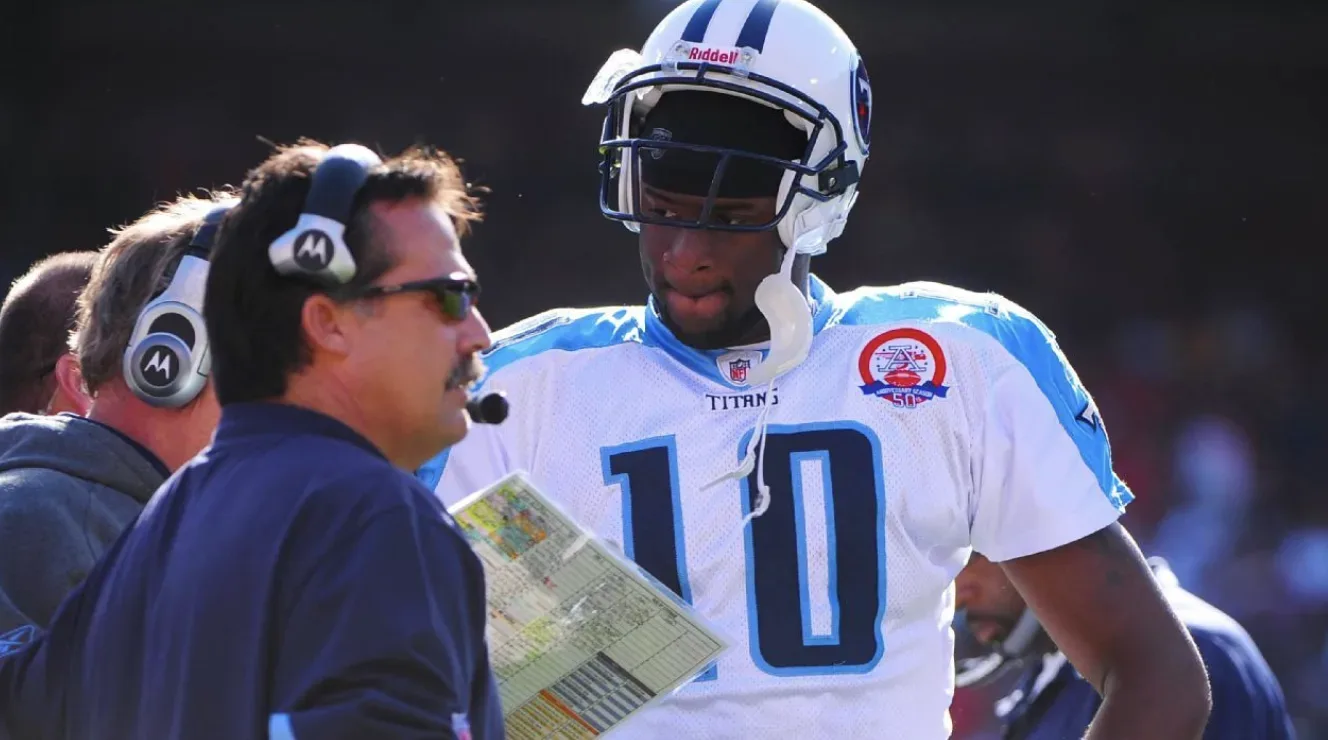
Vince Young and Jeff Fisher’s relationship did not collapse because of one argument. The tension began before Young ever played an NFL snap, intensified through disagreements over trust and preparation, and finally became untenable after a November 2010 loss to Washington. Young injured his thumb, threw his shoulder pads and jersey into the stands and had a heated locker-room exchange with Fisher before leaving the stadium. Tennessee eventually decided Young could no longer remain with the team. Young later acknowledged that he had been immature and apologized to Fisher, while also maintaining that he never felt Fisher completely trusted him. Their feud is therefore less a story of one obvious villain than a quarterback and coach who never developed the relationship either needed.
Jeff Fisher reportedly did not want Tennessee to draft Vince Young
The uneasy relationship appears to have existed from the beginning. Tennessee held the third overall pick in the 2006 NFL Draft after Young’s extraordinary national championship season at Texas. Team owner Bud Adams, a longtime Houston figure, strongly favored Young, while later reporting has consistently described Fisher as preferring another quarterback option. ESPN has reported that Fisher opposed drafting Young, and Sports Illustrated later reconstructed a draft process in which the coaching staff did not view Young as its preferred quarterback.
That background mattered because Young arrived as much more than a normal rookie quarterback. Adams believed deeply in him, Texas fans already regarded him as a legend, and the Titans were effectively handing him the franchise shortly after moving on from Steve McNair. Young nevertheless succeeded immediately enough to complicate any suggestion that he was simply the wrong draft choice. He won the NFL Offensive Rookie of the Year award in 2006 and helped Tennessee reach the playoffs in 2007.
The first major break came during the 2008 season
Young’s third NFL season changed the relationship dramatically. During the 2008 opener against Jacksonville, he struggled, heard boos from the Tennessee crowd and suffered a knee injury. The following day became much more serious when concerns about Young’s emotional state led Fisher and the organization to contact Nashville police. A police report said Fisher had been told by Young’s therapist that the quarterback had mentioned suicide, although both Fisher and Young later said public coverage of the situation exaggerated what occurred.
Veteran Kerry Collins replaced Young and then led Tennessee to a 13-3 record, making it difficult for Fisher to return the starting job immediately even after Young recovered. Young remained the backup entering 2009 and at one point publicly expressed frustration about his position. He later clarified that he wanted to remain with Tennessee, but the episode reinforced the sense that he and Fisher were no longer operating with complete confidence in each other.
Vince Young’s 2009 comeback did not fix the relationship
Young eventually regained the starting job after Tennessee opened the 2009 season poorly. His return was successful. The Titans improved dramatically, Young was named the NFL Comeback Player of the Year and he earned another Pro Bowl selection. The turnaround showed why Adams remained so convinced that Young could still be the franchise quarterback.
Success, however, did not erase the underlying disagreements. Young later described trust as the central problem between himself and Fisher. After Tennessee decided to move on from him, he said he had nothing personally against his former coach but wished Fisher had trusted him more. Fisher’s public comments tended to focus on preparation, professionalism and Young understanding the commitment required of an NFL quarterback.
Those are two different descriptions of essentially the same broken relationship. Young believed the coaching staff never fully embraced him. Fisher believed his quarterback needed to demonstrate the consistency and professionalism required to earn that confidence.
Related: Where Is Vince Young Now? His Life After the NFL
What happened during the 2010 Washington game?
The November 21, 2010 game against Washington turned years of friction into a public rupture. Young suffered a torn flexor tendon in his right thumb during Tennessee’s overtime loss. He tried to return after having the thumb taped, but Fisher kept rookie Rusty Smith in the game. After the loss, Young threw his shoulder pads and jersey into the stands on the way toward the locker room.
Young and Fisher then exchanged heated words in the locker room. Young left the stadium, and Fisher subsequently announced that he would no longer be Tennessee’s starter even apart from the injury. Fisher later had an assistant tell Young not to attend a team meeting, although he clarified that Young had not been banned from the Titans facility. Young sent Fisher an apology by text, which Fisher publicly indicated was less meaningful to him than a face-to-face conversation would have been.
The thumb injury required surgery and ended Young’s season. More importantly, the confrontation effectively ended his Titans career.
Did the Titans choose Fisher over Vince Young?
Initially, yes. Owner Bud Adams wanted the two men to repair their relationship, but by January 2011 the organization concluded that keeping both was no longer realistic. Adams later said Fisher did not want Young playing for him and that the team had reached the point where it had to choose. Tennessee announced that Young would not return for the following season.
The story has an unusual ending because Fisher did not remain either. Only weeks after Tennessee committed to moving forward without Young, the Titans and Fisher also parted ways following additional disagreements about the organization’s direction. ESPN reported that the final separation involved issues beyond Young, including staffing disagreements. Fisher had therefore won the immediate quarterback-coach battle, but the franchise ultimately started over without either man.
Young was formally released in July 2011 and signed with Philadelphia. He never became a permanent NFL starter again.
Who deserves the blame for the Vince Young-Jeff Fisher feud?
The public record does not support reducing the relationship to “Fisher ruined Young” or “Young ruined himself.” Fisher did inherit a quarterback he reportedly had not wanted to draft, and Young had legitimate reasons to wonder whether he would ever fully earn his coach’s confidence. At the same time, Young’s own behavior in 2010 was damaging, and he later admitted as much.
In 2013, Young sent Fisher a letter apologizing for his conduct during their time together. He publicly acknowledged being immature, failing to listen and directing his frustration at other people. That admission does not erase Fisher’s role in a relationship that was strained almost from draft night, but it does make claims that Young accepts no responsibility inaccurate.
Their history is now one of the central subjects surrounding Netflix’s Untold: The Testimony of Vince Young. Advance reporting confirms that both Young and Fisher participated, with director John Henion seeking a more balanced explanation of what happened than the old headlines provided. The documentary releases August 25, so any genuinely new testimony from either man should be added only after viewers can hear it in full.
The clearest conclusion remains that Young and Fisher never developed enough mutual trust to survive the difficult moments. Winning temporarily concealed that problem. The 2010 Washington game finally exposed it in a way the Titans could no longer manage.