Was Ted Kaczynski Really Diagnosed With Schizophrenia? What Unabomber Changed
One of the most unsettling confrontations in Netflix’s Unabomber arrives near the end of Ted Kaczynski’s time in Henry Murray’s Harvard research program. Russell Crowe’s Murray stops treating the young mathematics student as merely another participant and turns the experiment directly against him, using recordings of Ted’s private thoughts before telling him that his behavior…
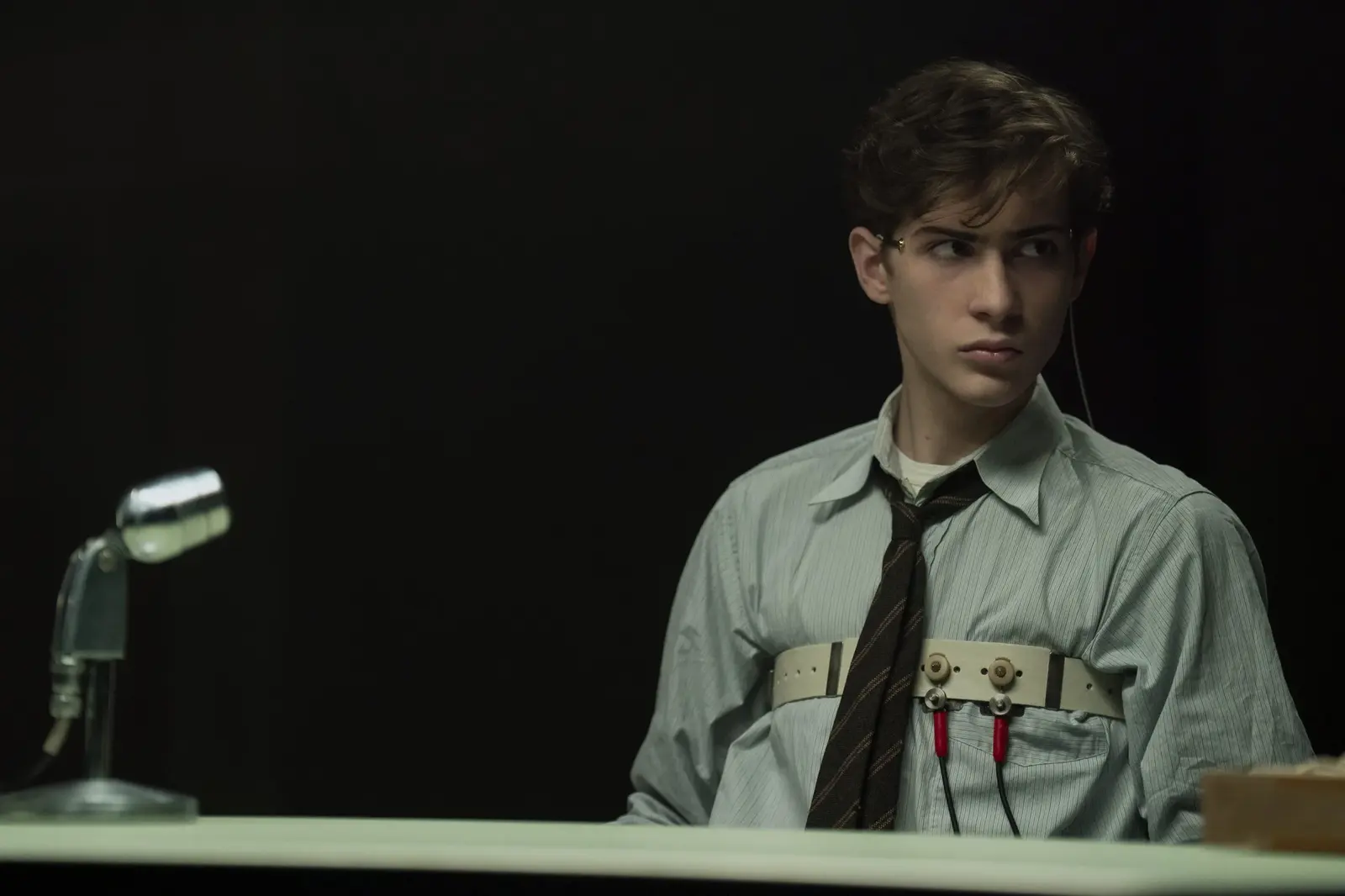
One of the most unsettling confrontations in Netflix’s Unabomber arrives near the end of Ted Kaczynski’s time in Henry Murray’s Harvard research program. Russell Crowe’s Murray stops treating the young mathematics student as merely another participant and turns the experiment directly against him, using recordings of Ted’s private thoughts before telling him that his behavior points to schizophrenia. For Jacob Tremblay’s Ted, the accusation lands as something more threatening than another argumentative tactic because Murray is asking him to distrust his own perception of reality. The scene draws on a genuine controversy surrounding Kaczynski’s mental health, but the movie has deliberately moved that controversy several decades backward.
Related: Unabomber Ending Explained: How Is Ted Caught and Why Does Joanne Cry?
Henry Murray did not diagnose Kaczynski at Harvard
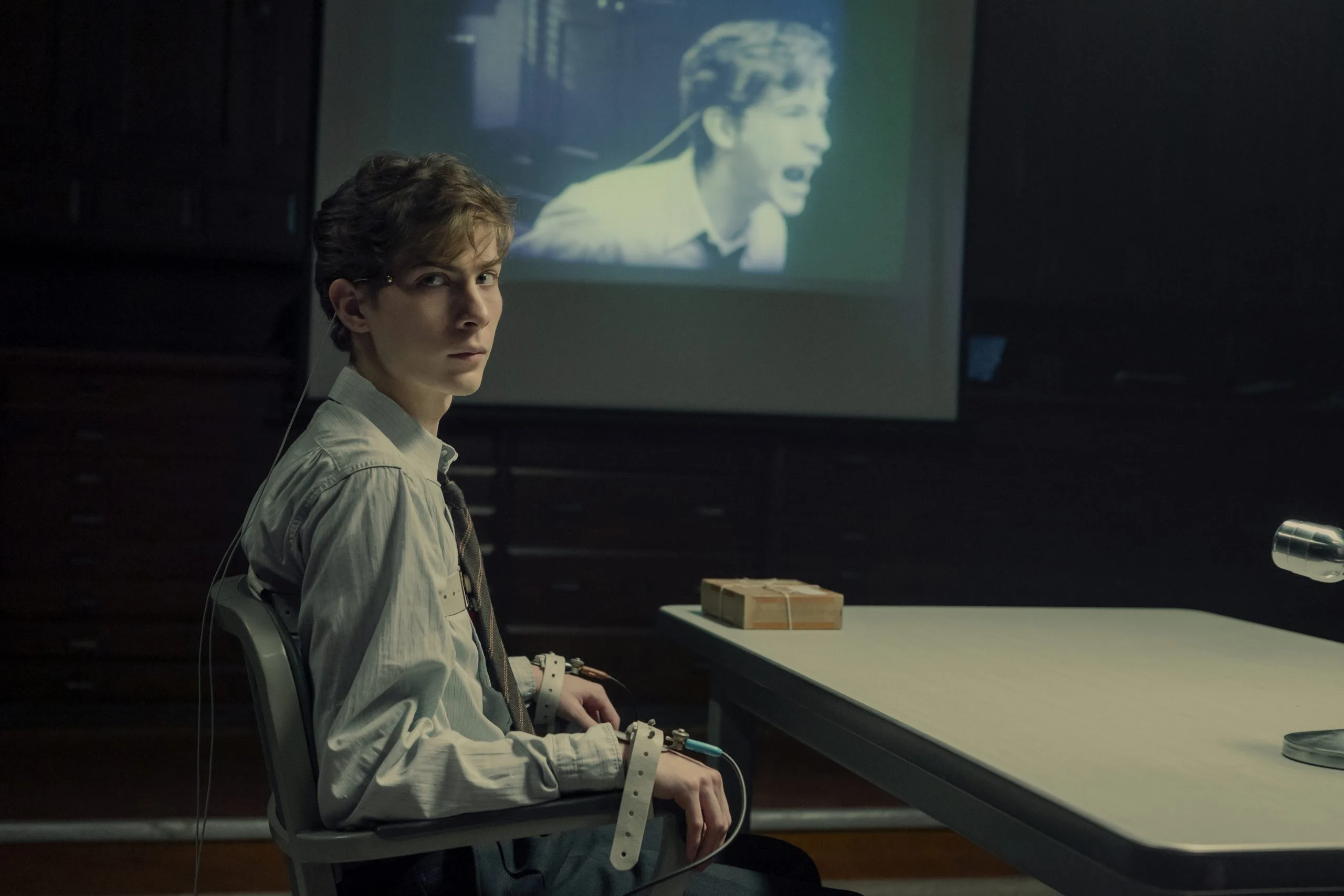
There is no documented evidence that Henry Murray diagnosed Ted Kaczynski with schizophrenia during his Harvard years. Kaczynski really participated in psychological research overseen by Murray between 1959 and 1962, but the surviving descriptions of that program concern personality assessment and responses to stressful interpersonal confrontation. Murray’s own published account describes subjects preparing statements of their personal beliefs and then facing an adversarial critic while researchers measured their reactions.
The climactic sequence in which Crowe’s Murray interprets Ted’s behavior and tells him he has schizophrenia is therefore a dramatic invention. It allows writers Sam Chalsen and Nelson Greaves to bring a later part of Kaczynski’s real history into the Harvard storyline, where the diagnosis can become part of the psychological contest between the two characters. Netflix describes Unabomber as being inspired by true events, and that wording is particularly important when watching the Murray material.

Kaczynski was diagnosed decades later
The schizophrenia diagnosis did enter Kaczynski’s real story after his 1996 arrest. Several mental-health professionals retained during his federal case concluded that he met criteria for paranoid schizophrenia, including psychiatrist Raquel Gur, neuropsychologist Karen Froming and psychiatrist David Foster. Kaczynski reacted strongly against those conclusions and ended further cooperation with some of the clinicians after learning what they believed.
The most important evaluation came from Dr. Sally C. Johnson, a Bureau of Prisons psychiatrist appointed to assess whether Kaczynski was competent to stand trial. Johnson spent approximately 19 hours interviewing him and reviewed extensive personal writings, earlier testing and information from people who knew him. Her 1998 report listed a provisional diagnosis using the terminology of the time: “Schizophrenia, Paranoid Type,” along with a premorbid paranoid personality disorder with other features.
That makes the answer more complicated than simply saying the movie invented the diagnosis. Kaczynski really was diagnosed with paranoid schizophrenia by multiple evaluators, including the court-appointed psychiatrist, but this happened during the legal proceedings in the 1990s, not during Murray’s Harvard study. Unabomber takes a documented later controversy and gives it to Crowe’s character decades earlier.
Sally Johnson still found him competent to stand trial
A psychiatric diagnosis and legal incompetence are not the same thing, and Kaczynski’s case illustrates that distinction clearly. Johnson concluded that despite her provisional diagnosis, he understood the proceedings against him and could assist with his defense. The court subsequently found him competent to stand trial, and both prosecution and defense accepted that finding.
That legal conclusion sometimes creates confusion in summaries of the case. Being competent meant that Kaczynski met the legal standard required to participate meaningfully in his case. It did not mean Johnson had concluded that he had no psychiatric condition, just as her diagnosis did not mean he was legally incapable of understanding his actions or the court proceedings.
Kaczynski ultimately pleaded guilty in January 1998 and received life imprisonment without the possibility of parole. The competency report later became the subject of litigation over whether it should be made public, and a redacted version was eventually unsealed.
Kaczynski strongly rejected the schizophrenia label
Kaczynski himself objected intensely to being portrayed as mentally ill. Court records from his later appeal show that he had written as early as June 1997 that he categorically rejected a mental-status defense. When he learned that defense experts had diagnosed paranoid schizophrenia and that those conclusions had been disclosed, the appellate record says he reacted with “shock and dismay.”
That disagreement eventually became a major conflict between Kaczynski and his defense lawyers. His attorneys believed psychiatric evidence could be important to protecting him from the most severe possible sentence, while Kaczynski believed such a strategy would discredit his ideas by making them appear to be products of illness. His resistance became strong enough that the defense withdrew plans to use a mental-state argument during the main phase of the case.
This history gives the Netflix scene an additional layer, even though Murray never delivered that diagnosis in real life. Tremblay’s Ted reacts to the label as an attempt to strip away the intellectual legitimacy he desperately wants, and the real Kaczynski later expressed a remarkably similar objection when psychiatrists reached their conclusions decades later.
Was the diagnosis universally accepted?
No. The psychiatric interpretation of Kaczynski was disputed even during the legal proceedings. Defense experts supported a schizophrenia diagnosis, and Johnson’s court-ordered evaluation reached a provisional version of the same conclusion, but other experts were less convinced. Forensic psychiatrist Park Dietz, who did not personally examine Kaczynski, reviewed his writings and argued that they did not demonstrate schizophrenia, while other government-side assessments considered schizoid or schizotypal personality characteristics instead.
That disagreement is another reason not to describe the diagnosis as an uncontested final explanation for Kaczynski’s behavior. Johnson herself labeled it provisional, and later psychiatric scholarship has continued to use the case as an example of how questions of diagnosis, insight and competency can become entangled in legal strategy.
Unabomber simplifies that uncertainty by putting the diagnosis directly into Murray’s mouth. As drama, it gives Ted and Henry’s final confrontation a clear psychological weapon. As history, however, the record is more complicated: Murray’s Harvard experiment was real, Kaczynski’s later schizophrenia diagnoses were real, but the movie combines those two separate chapters into a confrontation that did not happen as shown.