The Uprising Filming Locations
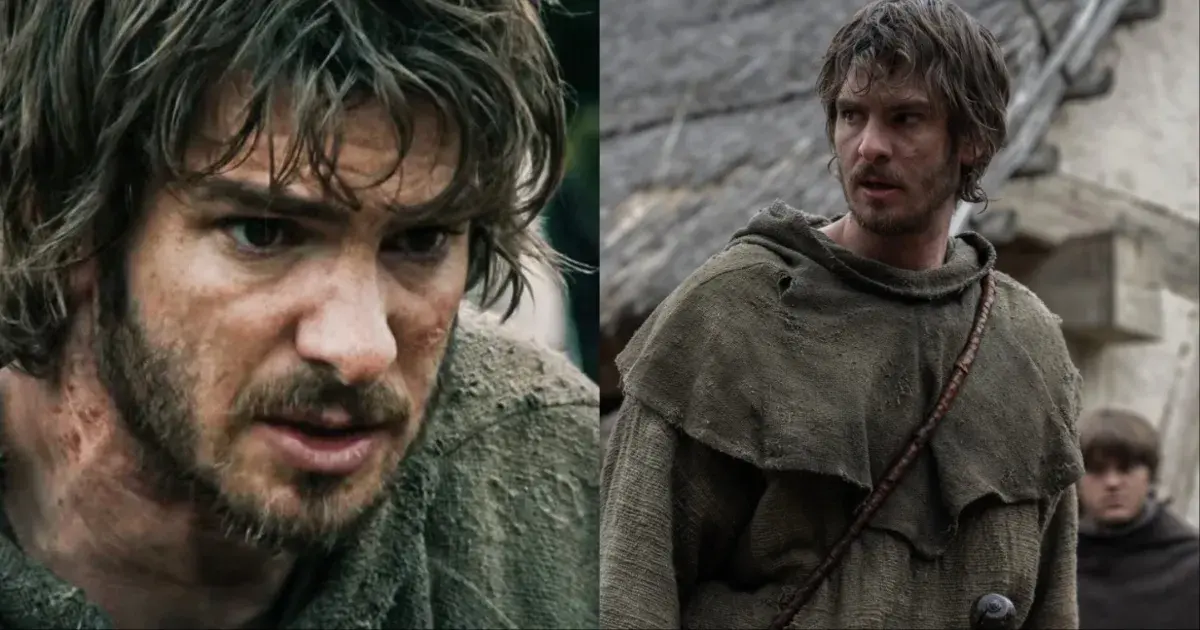
Paul Greengrass’ The Uprising takes viewers deep into 14th-century England, moving from rural settlements to crowded city streets as Andrew Garfield’s Ploughman becomes caught up in the Peasants’ Revolt. Yet much of the medieval England seen on screen was created hundreds of miles away from the places where the real uprising unfolded. The Uprising was…
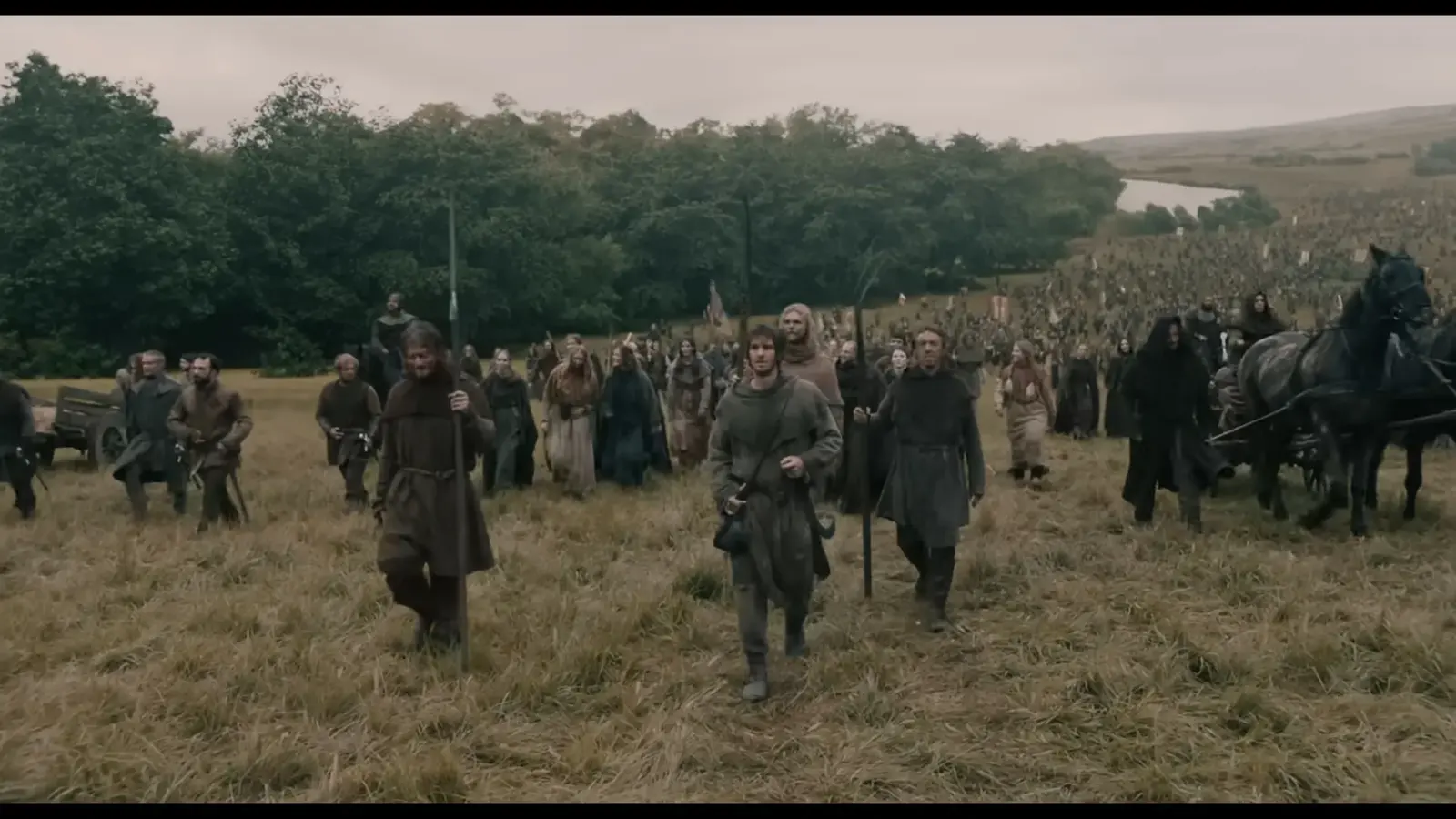
Paul Greengrass’ The Uprising takes viewers deep into 14th-century England, moving from rural settlements to crowded city streets as Andrew Garfield’s Ploughman becomes caught up in the Peasants’ Revolt. Yet much of the medieval England seen on screen was created hundreds of miles away from the places where the real uprising unfolded.
The Uprising was filmed entirely in Bavaria, Germany, where the production combined historic architecture, preserved rural buildings, fortified locations and modern studio facilities. Principal photography took place between September and December 2025, with major filming activity in Nuremberg, Bad Windsheim, Lichtenau, Feucht and Penzing Studios.
The Uprising Was Filmed in Bavaria, Germany
Bavaria gave Greengrass’ production something especially valuable for a large medieval drama: numerous historic environments located within the same German region. Instead of building every village, street and fortress from the ground up, the filmmakers could use existing architecture as the foundation for the film’s version of England.
The production received support from FilmFernsehFonds Bayern, and official German film records identify the project as having been shot entirely within Bavaria. That meant the crew could move between urban architecture, preserved rural settlements, defensive structures and studio facilities while maintaining a consistent production base.
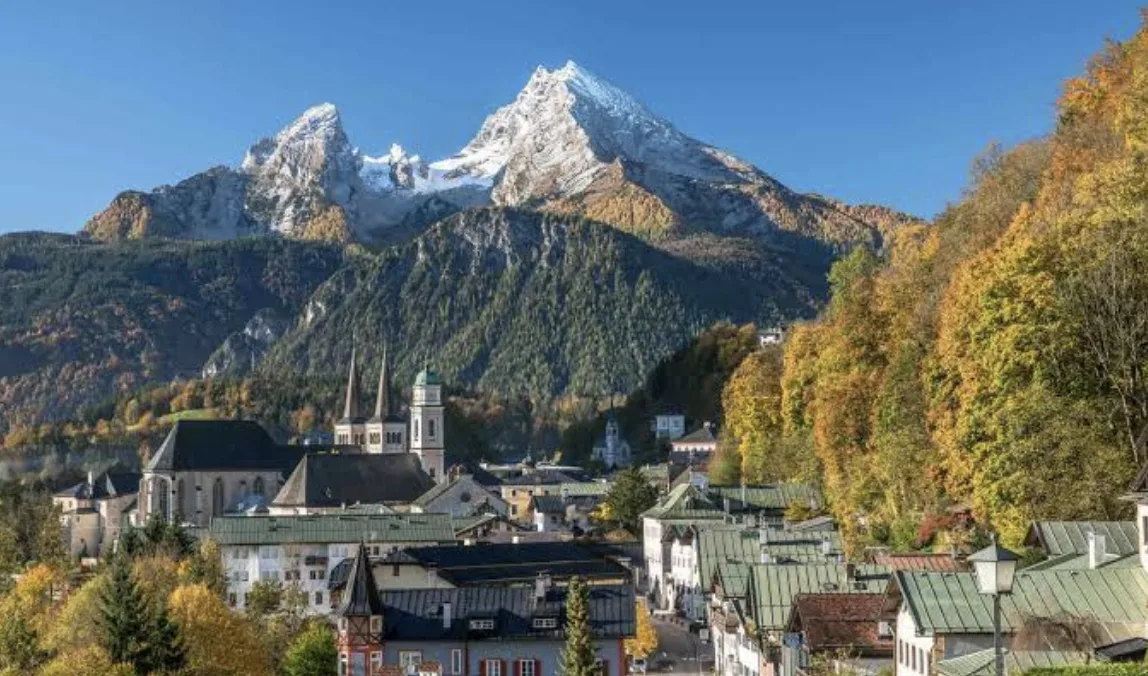
The finished film blends those locations so effectively that viewers are rarely encouraged to notice that they are looking at Germany rather than England. Production design, costumes, extras and visual effects then help connect the individual locations into a single medieval world.
Nuremberg Became Part of Medieval London
Nuremberg was among the most important filming centers for The Uprising. The production spent several days shooting around the city, using historical buildings and public spaces to recreate parts of medieval London.
St. Sebald Church was one of the most prominent locations used during filming. The surrounding Sebalder Platz and nearby areas were transformed with period costumes, horses, props and background performers so that modern Nuremberg could convincingly belong to the world of 1381.
Other filming locations in the city included areas around the Kreuzigungshof, Pellerhaus and Egidienplatz. These spaces provided the production with real stonework, enclosed courtyards and older architectural textures that would have been expensive to reproduce entirely on a soundstage.
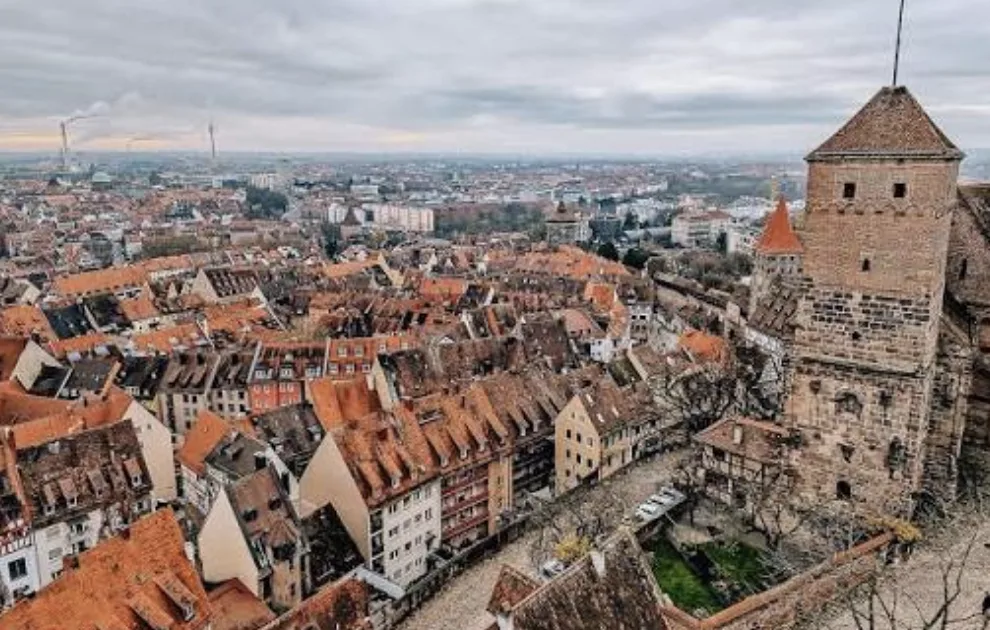
The city also became a base for significant production activity. Hundreds of background performers were used during the Nuremberg filming period, helping Greengrass create the sense that Ploughman’s personal journey has become part of a movement involving thousands of ordinary people.
Also Read: The Uprising Ending Explained: Is Ploughman Really Robin Hood and Why Does He Spare the King?
St. Sebald Church Was One of the Key Locations
St. Sebald is one of Nuremberg’s best known medieval churches, making it particularly useful for a production trying to recreate the visual character of late medieval England. Its Gothic architecture gives scenes an authenticity that cannot easily be reproduced through newly constructed sets alone.
The production transformed the surrounding area rather than simply photographing the church in its present-day condition. Modern elements had to be hidden or removed from the frame, while period dressing helped turn the square into a convincing piece of the film’s historical environment.
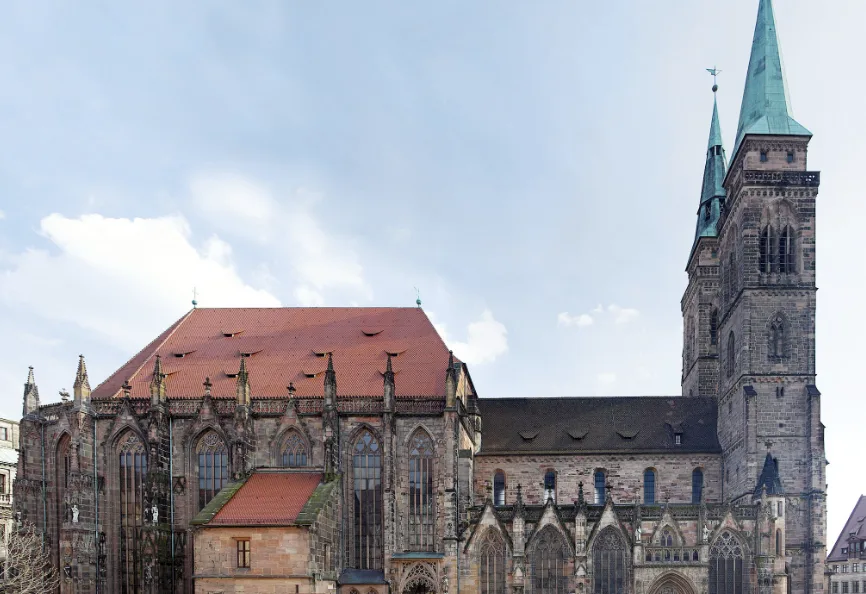
This combination of existing architecture and production design is central to the look of The Uprising. Greengrass could position performers inside spaces that already possessed centuries of visual history, then adapt those environments to fit the specific geography required by the story.
Bad Windsheim Helped Create Ploughman’s Rural World
The Franconian Open Air Museum in Bad Windsheim was another major location. The museum contains preserved and reconstructed historical buildings from the region, making it particularly suitable for scenes involving farms, small communities and rural life.
That setting is especially appropriate for Ploughman because the character begins the movie as a man closely connected to agricultural labor. Before the story grows into a national political crisis, his world is defined by land, work and the local community around him.
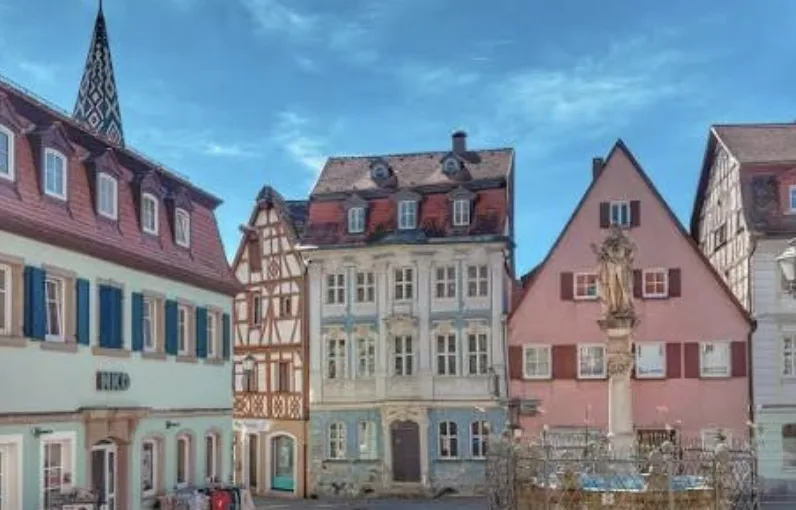
The production reportedly used multiple parts of the museum and surrounding spaces, with additional elements constructed specifically for filming. A town gate was among the structures created for the production, showing how the filmmakers combined existing heritage architecture with newly built additions.
The result gives the early and rural sections of the film a physical texture that would have been difficult to achieve using digital environments alone.
Lichtenau Fortress Was Used for The Uprising
The production also filmed at the fortress in Lichtenau, in Bavaria’s Ansbach district. Its defensive walls, courtyards and stone architecture offered another historically convincing environment that could be adapted for the movie.
A location such as Lichtenau is particularly valuable in a medieval production because the physical scale of real fortifications immediately gives actors and cameras something substantial to work with. Digital effects can then alter or extend the environment without having to create the entire structure from nothing.
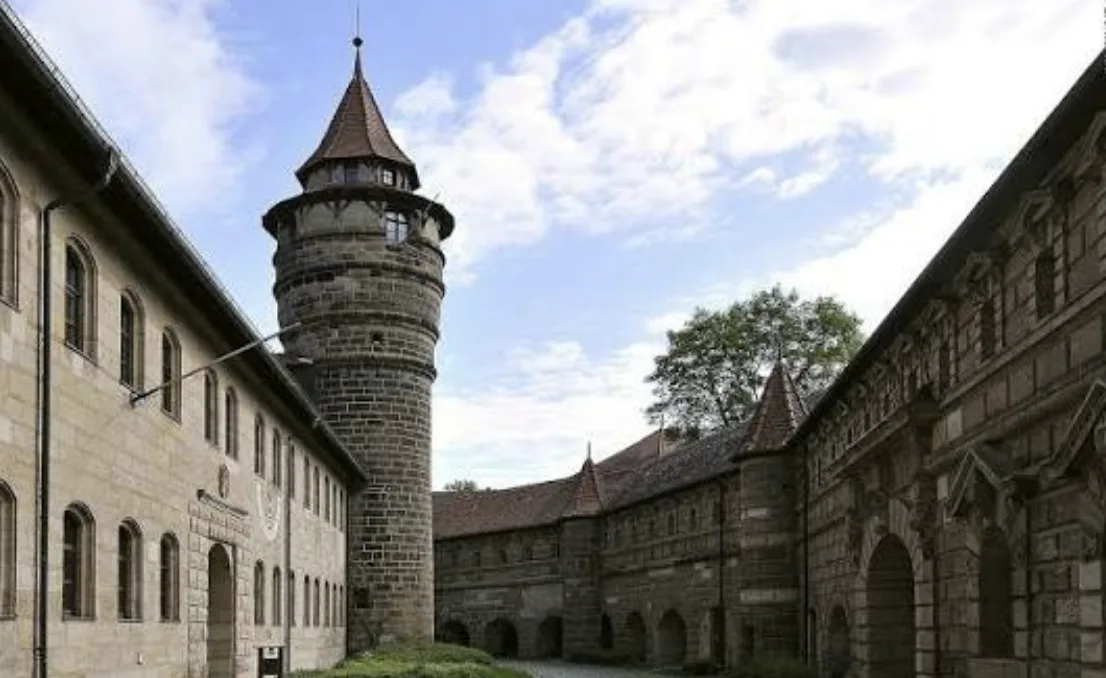
The fortress is one of several examples of how The Uprising builds its England from multiple Bavarian locations rather than depending on one large historical site. A wall seen in one sequence and a church seen in another can belong to the same cinematic city even though the real locations are separated geographically.
The Brückkanal Near Feucht Was Also Used
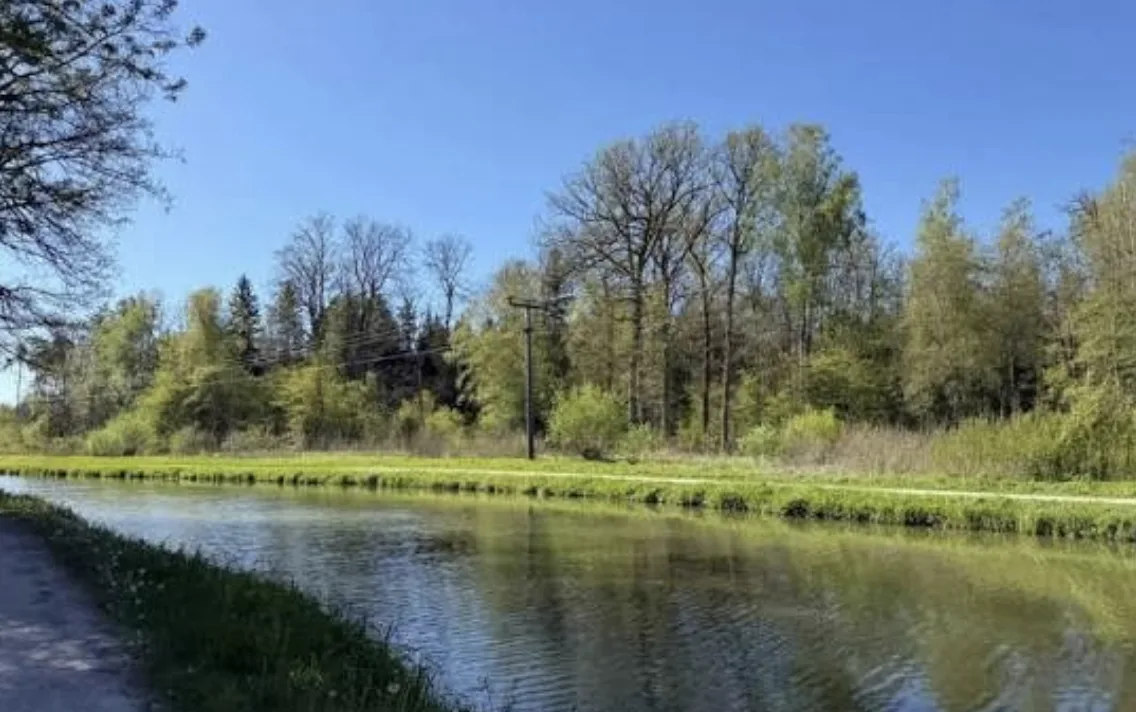
Filming also took place around the Brückkanal near Feucht, another location in the Franconian region. The area provided the production with outdoor scenery away from the more recognizable city and fortress environments.
These rural landscapes are important because The Uprising is not confined to courtrooms, churches or city squares. Ploughman’s journey repeatedly returns to roads, fields, woodland and countryside, particularly as the rebellion spreads beyond the boundaries of individual communities.
Natural locations help preserve that sense of movement. The uprising feels as though it is traveling across a real landscape rather than moving between a handful of disconnected sets.
What Was Filmed at Penzing Studios?
Penzing Studios near Landsberg am Lech served as one of the movie’s central production facilities. While Bavaria’s historical locations gave The Uprising much of its exterior authenticity, studio filming allowed Greengrass and his crew to create environments that required greater control.
Period interiors, constructed sections of streets and sequences involving complicated technical requirements could be handled more efficiently at a studio. Sets could also be combined with digital extensions to create areas of medieval London larger than what could practically be achieved at any single real-world location.
This balance between location and studio work is important to the finished movie. The real architecture prevents the world from feeling entirely artificial, while controlled studio environments give the filmmakers the flexibility required for a large production.
Penzing therefore functions as the other half of the movie’s location strategy. Bavaria provided the historical texture, while the studio allowed the production to expand that texture into a much larger version of medieval England.
Hundreds of Extras Helped Transform the Locations
Buildings alone would not have been enough to sell the scale of the Peasants’ Revolt. The production required large numbers of performers to fill streets, squares and gathering places as the movement around Ploughman expanded.
Nuremberg alone hosted hundreds of background-performer assignments during filming. Costumes, horses, props and large crowds helped turn recognizable German locations into spaces that felt occupied by a medieval population.
That density becomes increasingly important as the story progresses. The movie begins close to Ploughman’s individual experience, but eventually the frame has to communicate that his frustration is shared by thousands of people.
Using real locations filled with actual performers gives those scenes a physical unpredictability that fits Greengrass’ filmmaking style. Rather than making the uprising feel distant and carefully arranged, the environments can appear crowded, unstable and lived in.
Why Bavaria Works as Medieval England
The most effective aspect of The Uprising’s filming strategy is that Bavaria is not represented by one famous landmark pretending to be England. Instead, the filmmakers assemble medieval England from pieces scattered across the region.
Nuremberg supplies the dense urban architecture, Bad Windsheim provides rural buildings and agricultural environments, Lichtenau adds fortifications, Feucht contributes natural landscapes and Penzing Studios allows the production to build whatever cannot be found in an existing location.
Once modern elements are removed and the spaces are filled with period details, those separate places can convincingly exist within the same fictional geography.
That is what makes the filming locations particularly interesting. The England seen in The Uprising has been dramatically reconstructed, but much of the texture surrounding Garfield and the rest of the cast comes from genuine historical places that still exist in Bavaria today.