The Oculus Mirror Has Been Hiding in Mike Flanagan’s Other Movies and Shows
Long before “The Haunting of Hill House,” “Midnight Mass” and “Doctor Sleep” made Mike Flanagan one of the most recognizable names in modern horror, he built an entire movie around an antique mirror. The Lasser Glass is the supernatural centerpiece of 2014’s “Oculus,” but its screen career did not end when Tim Russell was taken…
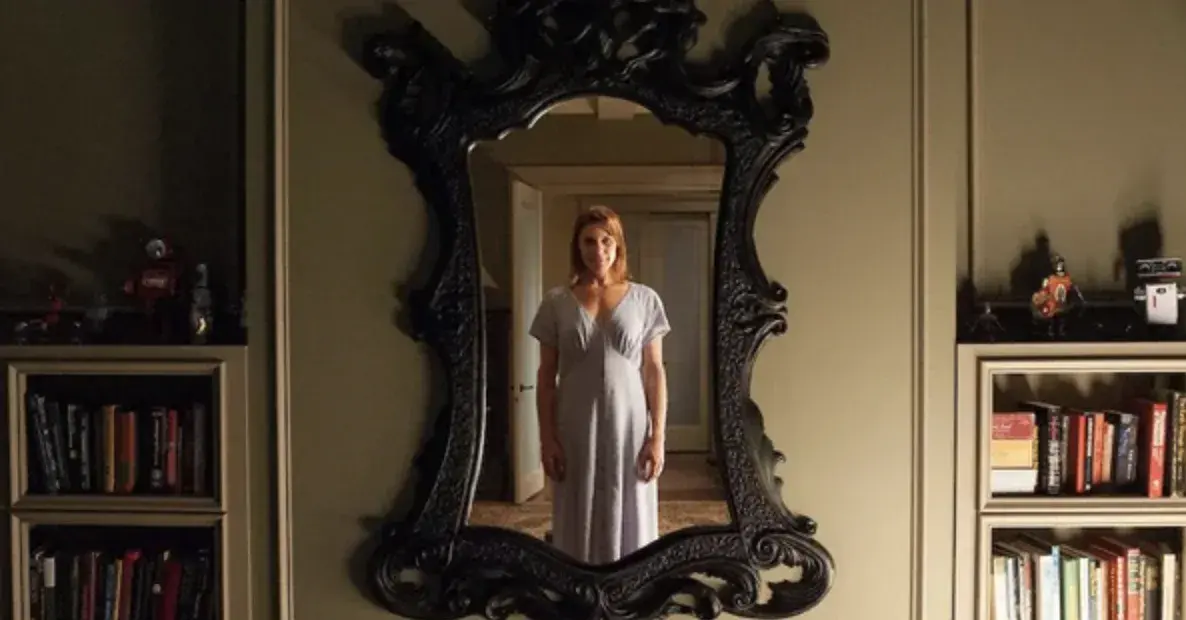
Long before “The Haunting of Hill House,” “Midnight Mass” and “Doctor Sleep” made Mike Flanagan one of the most recognizable names in modern horror, he built an entire movie around an antique mirror. The Lasser Glass is the supernatural centerpiece of 2014’s “Oculus,” but its screen career did not end when Tim Russell was taken away from his childhood home. Flanagan kept the prop. More importantly, he kept finding places to hide it.
The ornate mirror has since appeared, or been visually incorporated, into a remarkable number of Flanagan’s films and television series. It has occupied haunted houses, basements, an attic and even the Overlook Hotel, turning what began as the central threat in one movie into one of the filmmaker’s longest-running Easter eggs. And Flanagan has now explained why.
Why Mike Flanagan Keeps Bringing Back the Oculus Mirror
The recurring Lasser Glass is not merely something fans invented after noticing similar furniture. Flanagan confirmed in a 2024 interview marking the 10th anniversary of “Oculus” that he deliberately continued hiding the mirror in later stories. He said doing so was one way he tried to keep the idea alive after circumstances surrounding the rights made another “Oculus” project difficult to pursue. There is also a wonderfully practical reason the Easter egg can continue.
Three versions of the mirror were originally made for “Oculus.” Flanagan said one subsequently broke, he keeps another at his home, and the remaining prop travels to sets and is hung in later productions. That means fans are not always looking at a digital recreation or a vaguely similar design. In several projects, the actual surviving Lasser Glass has been moved from production to production.
Ouija: Origin of Evil and Gerald’s Game Hide It Differently
One of its first major post-“Oculus” appearances came in Flanagan’s 2016 film “Ouija: Origin of Evil.” The Lasser Glass can be spotted stored in the Zander family’s basement, appearing in the background as Doris moves through the room. It is never acknowledged by the characters and has no role in the plot, making it a pure Easter egg for viewers familiar with Flanagan’s earlier film. “Gerald’s Game” took a more creative approach.
Instead of simply placing the full mirror against a wall, the design of the Lasser Glass was incorporated into the bed where Jessie Burlingame spends much of the movie. The bed’s ornate headboard echoes the distinctive lower section of the mirror’s frame. It is an especially fitting visual joke in a film built around a character who cannot simply walk away from the room she is trapped inside.
The Mirror Is Easy to Miss in The Haunting of Hill House
“The Haunting of Hill House” gave Flanagan perhaps the most natural place imaginable to hide an infamous piece of supernatural furniture. The Lasser Glass can be seen inside Hill House itself.
It appears on the main floor among the mansion’s statues and furnishings, with a clear sighting available in Episode 1 at roughly the 37-minute point. Because the house is already crowded with antiques and background details, the mirror does not immediately call attention to itself.
The appearance is especially fun in retrospect because “Oculus” already contains many of the storytelling ideas Flanagan would later expand in “Hill House.”
Both stories move between childhood and adulthood, both center on siblings carrying radically different understandings of the same traumatic past, and both use a supernatural location or object to undermine the reliability of memory.
Flanagan himself has acknowledged the relationship. Looking back at “Oculus” in 2024, he joked that “Hill House” was essentially the structural idea of “Oculus” expanded across a much larger canvas.
Doctor Sleep Gives the Lasser Glass Its Perfect Hiding Place
Of all the mirror’s cameos, “Doctor Sleep” may be the most meaningful.
Flanagan hid the Lasser Glass inside the Overlook Hotel.
He confirmed the Easter egg himself before the movie’s release, explaining that once the production had rebuilt the Overlook, he could not resist placing the mirror somewhere on its walls.
The choice goes deeper than a fun background reference.
When Flanagan originally pitched the concept of “Oculus,” he described the Lasser Glass as a “portable Overlook hotel.” The idea was that, like Stephen King’s haunted hotel, the mirror did not need to behave like a conventional monster. It could alter the perceptions and decisions of people within its influence.
Years later, Flanagan was able to put his portable Overlook inside the actual Overlook.
In “Doctor Sleep,” viewers can spot the Lasser Glass hanging in a hallway as Dan Torrance moves through the hotel late in the film. It does not mean the mirror is secretly responsible for the Overlook, but as a filmmaker’s signature, the placement could hardly be more appropriate.
Bly Manor, Midnight Mass and The Midnight Club Keep the Game Going
Once Flanagan moved deeper into television, the mirror became increasingly difficult to separate from his visual language.
In “The Haunting of Bly Manor,” the Lasser Glass sits in the attic. It is visible near the beginning of Episode 7, “The Two Faces, Part Two,” during the sequence involving Dani, Peter and the children.
“Midnight Mass” hides it in a location viewers see repeatedly: the recreation center. The mirror sits near the stage and can be spotted during scenes involving Riley and Father Paul, including in Episode 3. Flanagan later discussed its presence there as part of the increasingly interconnected collection of references across his work.
“The Midnight Club” moves the Lasser Glass back underground. It appears among the objects in Brightcliffe’s basement during Episode 6, “Witch,” as the group carries out its ritual.
None of these appearances changes the story around it. That is important. The Lasser Glass is present for fans to find, not as an explanation for what is happening in Crockett Island, Bly Manor or Brightcliffe.
The Fall of the House of Usher Brings the Mirror Into Verna’s World
“The Fall of the House of Usher” gives the Lasser Glass one of its most intriguing placements.
The mirror appears in Episode 1 inside the bar where young Roderick and Madeline Usher encounter Verna. It can be seen in the background at around the 46-minute mark.
Unlike most of the previous locations, Verna’s bar has an intentionally strange relationship with reality and time. That naturally encouraged fans to wonder whether the mirror’s presence meant something more.
The series even contains a second visual reference to the Lasser Glass. In Episode 4, Leo’s chest tattoo uses a shape resembling the mirror’s recognizable frame.
It is a good example of how the Easter egg has evolved. Flanagan no longer necessarily needs to place the mirror prominently in a room. Its silhouette alone is recognizable enough to function as a signature.
Does the Oculus Mirror Connect Mike Flanagan’s Stories?
There is no confirmed canon saying the Lasser Glass makes “Oculus,” “Hill House,” “Midnight Mass,” “Doctor Sleep” and Flanagan’s other stories parts of one literal shared universe. It is safer to understand the appearances as a filmmaker’s recurring signature.
Flanagan’s 2024 explanation supports that reading. He described hiding the mirror as a way to keep the Lasser Glass alive creatively, while also emphasizing that “Oculus” itself could support stories taking place almost anywhere in its history. That distinction actually makes the Easter egg more interesting.
If every appearance were canon, viewers would have to explain why the Lasser Glass quietly passed through half of Flanagan’s fictional worlds without affecting anyone. As a visual calling card, it can instead be whatever the individual viewer wants it to be: a private joke, a connection to Flanagan’s early career or the suggestion that one particularly persistent piece of supernatural furniture keeps finding new homes.
Related: Oculus Ending Explained: What Happens to Kaylie, Tim and the Lasser Glass?
Why the Lasser Glass Matters to Mike Flanagan’s Career
The mirror predates nearly all of the work for which Flanagan later became widely known. “Oculus” itself grew from his earlier short film “Oculus: Chapter 3 – The Man with the Plan,” and the feature already contained several ideas that would become hallmarks of his later storytelling: fractured memory, family trauma, multiple timelines and supernatural forces that exploit deeply personal vulnerabilities. That gives the recurring prop a significance beyond being an Easter egg.
Every time it turns up in another production, the Lasser Glass is also a small reminder of the film that helped establish Flanagan’s approach to horror. For viewers discovering “Oculus” through Netflix now, the most enjoyable twist may therefore come after the movie is over. The mirror Tim and Kaylie could not get rid of has been sitting in Flanagan’s other stories for years. Once you know what its frame looks like, it becomes surprisingly difficult to stop looking for it.