Oculus Ending Explained: What Happens to Kaylie, Tim and the Lasser Glass?
Mike Flanagan’s “Oculus” has found a fresh audience after arriving on Netflix in the US on September 24, 2026, but the movie remains just as effective at confusing viewers more than a decade after its original release. Karen Gillan and Brenton Thwaites play Kaylie and Tim Russell, siblings whose very different memories of a childhood…
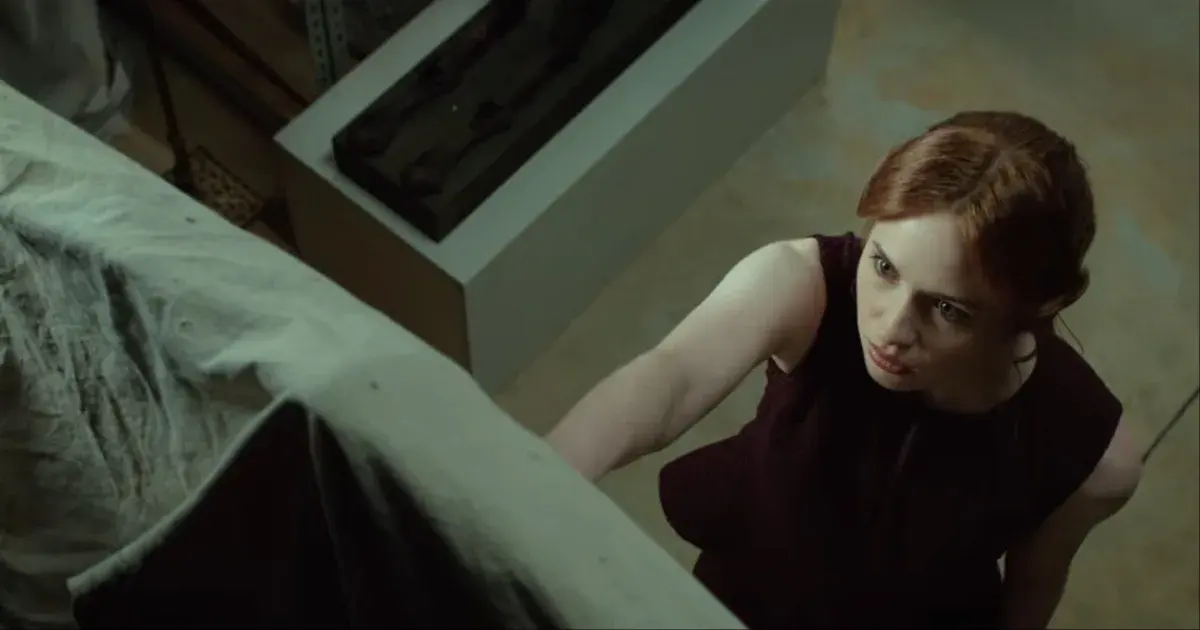
Mike Flanagan’s “Oculus” has found a fresh audience after arriving on Netflix in the US on September 24, 2026, but the movie remains just as effective at confusing viewers more than a decade after its original release. Karen Gillan and Brenton Thwaites play Kaylie and Tim Russell, siblings whose very different memories of a childhood family tragedy lead them back to the antique mirror Kaylie believes was responsible.
Kaylie thinks she has spent years preparing for the confrontation. She has cameras, alarms, outside contacts and a mechanical anchor designed to destroy the Lasser Glass if she and Tim become incapable of doing it themselves. What she cannot account for is the mirror’s ability to change not just what people see, but what they believe they have already seen.
That is why the final minutes become so difficult to separate into reality and illusion. The movie does eventually give us an answer, but it is a cruel one for both siblings.
What Happens at the End of Oculus?
The Lasser Glass defeats Kaylie and Tim by making them experience two different versions of the same room. Kaylie has been pulled deeply into memories of her childhood. In the final sequence, she sees her mother, Marie, restored to the woman Kaylie remembers from before the family’s life unraveled. Marie appears to call her forward, and Kaylie approaches her. The actual situation is very different. Adult Kaylie is standing directly in front of the Lasser Glass.
Tim cannot properly perceive that she is there. Believing he finally has a clear opportunity to destroy the mirror, he activates the anchor mechanism Kaylie installed earlier. The device swings toward the Lasser Glass but strikes Kaylie instead. The screenplay similarly frames the moment through Tim’s expectation that he has finally beaten the mirror before he realizes Kaylie was standing in its path. Kaylie’s elaborate safeguard therefore becomes the final piece the mirror uses against her.

Why Does Kaylie Walk Toward the Mirror?
Kaylie is not simply distracted by a random hallucination. The mirror chooses an image that reaches directly into the unresolved part of her childhood.
Her last years with Marie were defined by fear and confusion, but the film also shows brief moments when her mother appears to recognize her again. Kaylie has spent the rest of her life trying to understand what happened to the family and prove that the people she loved were manipulated by something outside their control.
Seeing Marie restored gives Kaylie something the investigation cannot give her: the possibility of getting her mother back, even for a moment.
That makes the final illusion more effective than another frightening image would have been. The Lasser Glass understands that Kaylie’s determination to destroy it is tied to her inability to let go of her family. It turns that attachment into a weakness.
Why Does Tim Activate the Anchor?
Tim does not knowingly choose to harm Kaylie. By the climax, the mirror has already demonstrated that it can hide people, alter the apparent location of objects and make the siblings experience events that never happened. Tim therefore acts on information that feels completely real to him but is false. From his perspective, the path between the anchor and the Lasser Glass is clear.
That is the weakness in Kaylie’s supposedly objective system. The anchor itself cannot hallucinate, but a human being still decides when to activate it. The mirror does not have to overpower the mechanism. It only has to control Tim’s understanding of the room.
Flanagan has explained that his interest in mirrors comes partly from the gap between reflection and reality. Even an ordinary mirror shows a reversed and subtly altered version of a person, an idea he used as the foundation for a supernatural force that makes its victims distrust perception itself. Kaylie prepares for a haunted object. What she is really confronting is something that can make preparation meaningless.

Was Tim Wrong About the Mirror?
Tim spends the beginning of “Oculus” arguing that there is a rational explanation for what happened to the Russell family. Years of psychiatric treatment have taught him to reinterpret his childhood memories without the supernatural explanation Kaylie still believes.
By the end, however, the movie makes it difficult to sustain the idea that the mirror exists only in the siblings’ minds.
Flanagan’s own official page for the movie explicitly describes the Lasser Glass as a supernatural entity, while contemporary descriptions of the film likewise present the mirror as a force that infects the perception of those around it.
The movie still wants viewers to experience the uncertainty that Tim experiences. We repeatedly see scenes in which there is no dependable way to identify reality until the consequences become visible. But that ambiguity concerns what the characters can trust, rather than whether the Lasser Glass has any power at all.
What Really Happened to Alan and Marie Russell?
The present-day story becomes clearer once it is understood as a repetition of what happened to Tim and Kaylie’s parents.
Alan and Marie gradually begin experiencing different realities after the mirror enters their home. Their relationship deteriorates, their behavior changes and the children eventually realize that neither parent can reliably understand what is happening around them.
Near the end of the childhood timeline, Alan briefly regains enough awareness to understand what the mirror has done to the family. Young Tim is then left at the center of a family tragedy that authorities can explain without ever accepting the supernatural element.
That history is important because adult Tim ends the movie in essentially the same position. He knows what happened, but what the police see tells a completely different story.

Does the Lasser Glass Survive?
Yes. Kaylie’s plan fails to destroy the mirror. The irony is that she understands one important part of its defense correctly. Direct attempts to damage the Lasser Glass are unreliable because a person close enough to strike it can be made to believe they are hitting something else. That is why she creates an automated mechanism in the first place. What she misunderstands is the scale of the mirror’s influence.
Flanagan once described the concept behind the Lasser Glass as a kind of “portable Overlook Hotel,” comparing its effect to the way the Overlook in “The Shining” can reshape the reality of people who enter its orbit.
That comparison helps explain why there is no conventional confrontation at the end of “Oculus.” The mirror does not fight Kaylie and Tim. It changes the conditions under which they make decisions until they defeat themselves.
Who Does Tim See in the Final Scene?
As police take Tim away, the ending deliberately recreates the image associated with his childhood. He looks back toward the house and sees his parents. This time, Kaylie is standing with them.
The movie does not clearly establish whether these figures should be understood as literal spirits trapped by the Lasser Glass or images the mirror creates from the people connected to it. That distinction remains deliberately unresolved. What matters is what the image means to Tim.
As a child, he was removed from the house while trying to explain something nobody else could see. As an adult, he is once again being taken away while insisting that the mirror is responsible, except Kaylie is no longer beside him to support his version of events.
The ending therefore turns Tim’s apparent recovery at the beginning of the movie upside down. He started the story convinced that he had learned to distinguish reality from a traumatic childhood memory. He leaves knowing that Kaylie had been right about the central fact all along.
Also Read: The Breadwinner Ending Explained: What Happens to Nate and Katie?
What Does the Oculus Ending Mean?
“Oculus” does not end because Kaylie’s plan was foolish. It ends because her plan was logical in a situation where logic itself could be manipulated.
She tries to eliminate every weakness that destroyed her family the first time. She records the experiment so memory cannot be disputed. She creates outside safeguards. She designs a machine that can act without being frightened or confused. The Lasser Glass turns each layer of protection into another source of uncertainty.
That is also why Tim surviving is not much of a victory. He becomes the only Russell sibling left who knows the truth, but he has no obvious way to prove it. The authorities arrive after the supernatural manipulation has finished, leaving behind circumstances that make Tim look responsible.
Flanagan has since said that one of the things he loved about “Oculus” was the virtually unlimited number of stories the mirror could support across different periods and different owners. He even continued hiding the physical Lasser Glass prop in later projects as a way of keeping the idea alive.
The movie’s final victory therefore belongs to the mirror. Kaylie is gone, Tim is alone, and the Lasser Glass remains exactly where it has always been most dangerous: waiting for someone else to believe it is only an object.