Is Ploughman a Real Person in The Uprising? Andrew Garfield’s Character Explained
The Uprising surrounds Andrew Garfield’s Ploughman with several people who really belonged to the political upheaval of 1381. Wat Tyler, John Ball and the young King Richard II all come from the historical record, which makes it easy to assume the movie’s central character must also have a direct real-life counterpart. That is not the…

The Uprising surrounds Andrew Garfield’s Ploughman with several people who really belonged to the political upheaval of 1381. Wat Tyler, John Ball and the young King Richard II all come from the historical record, which makes it easy to assume the movie’s central character must also have a direct real-life counterpart.
That is not the case. Ploughman is a fictional character created for Paul Greengrass’ film, but his fictional status is also one of the most important ideas behind the story. Instead of following another famous leader whose name survived in historical accounts, Greengrass uses Ploughman to represent the thousands of ordinary people who participated in the uprising and then largely disappeared from recorded history.
Was Ploughman a Real Person?
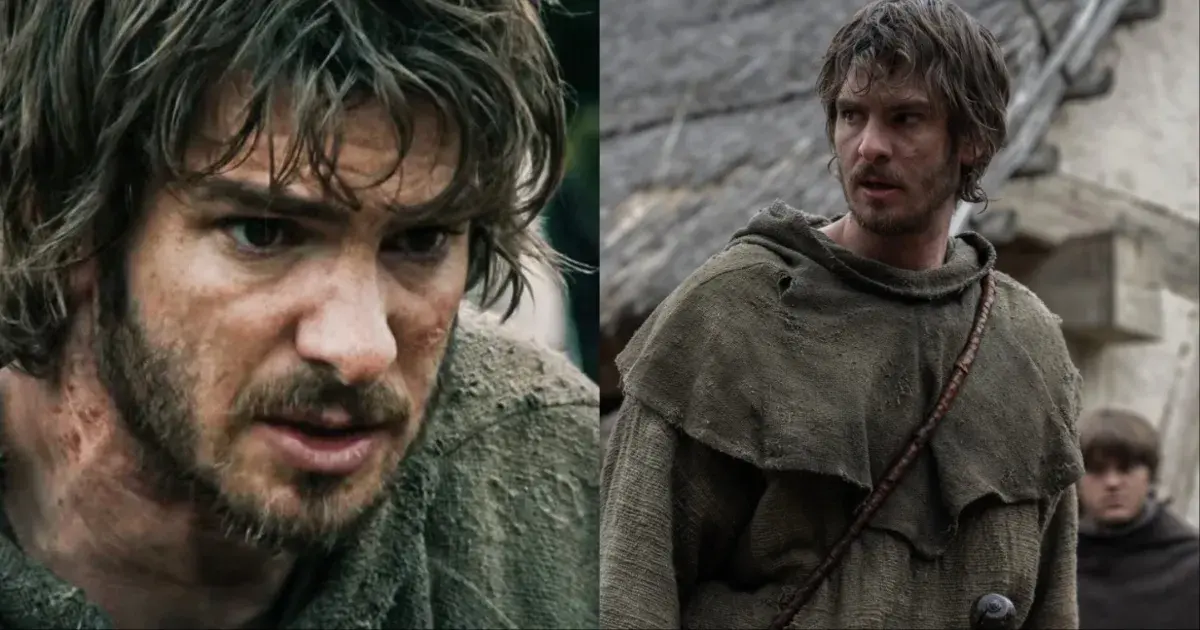
No, Andrew Garfield’s Ploughman was not a documented leader of the Peasants’ Revolt. Greengrass has described him as a fictional hero created specifically for the movie rather than a renamed version of a known historical figure.
That gives The Uprising considerable freedom in the way it tells the story. Ploughman can encounter real people and move through recognizable historical events without the screenplay having to reproduce the documented biography of one specific rebel.
His personal losses, relationships and eventual transformation are therefore part of the film’s fictional narrative. The larger political movement surrounding him, however, is rooted in the very real uprising that spread through England in 1381.
Who Is Ploughman Supposed to Represent?
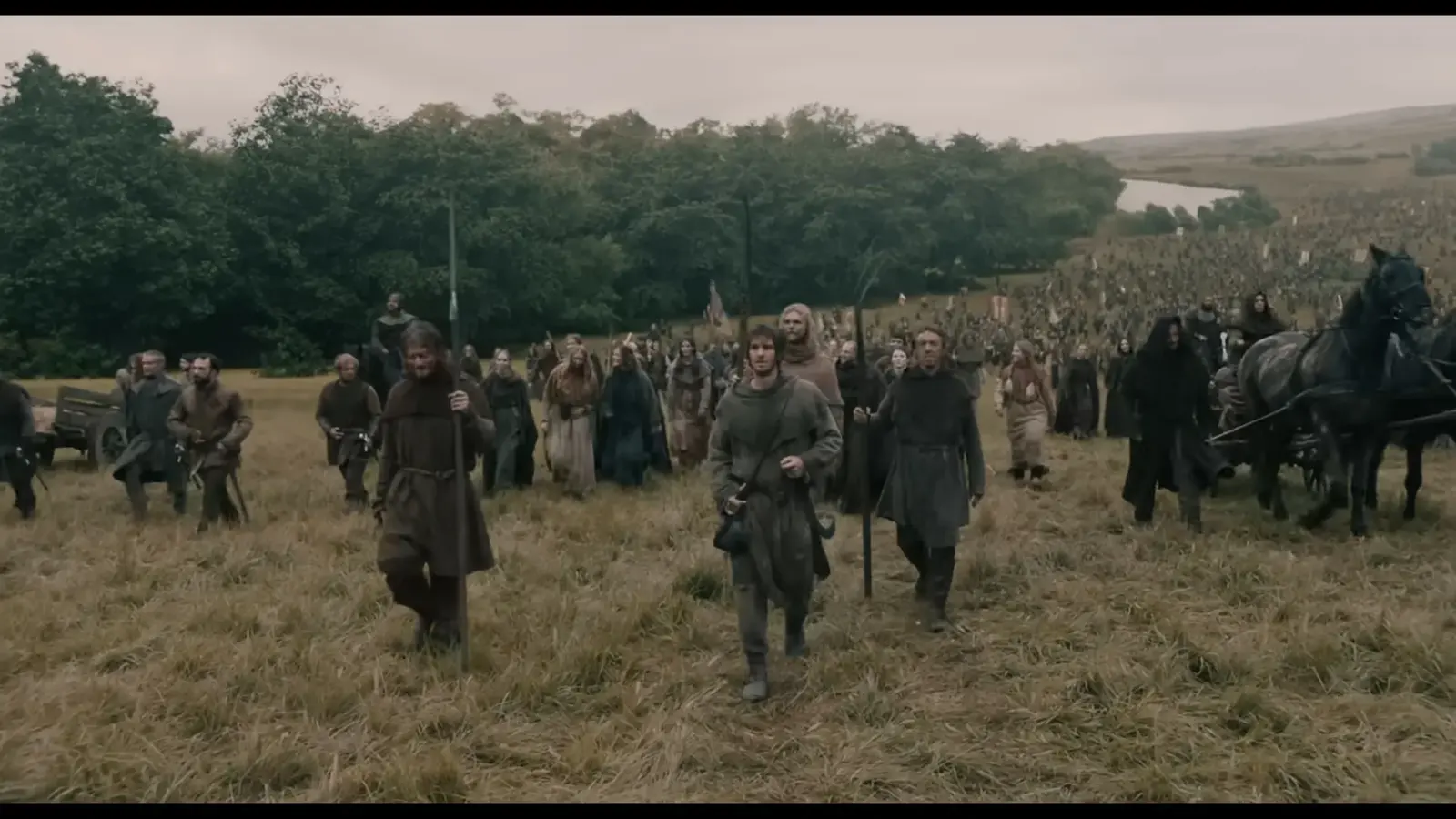
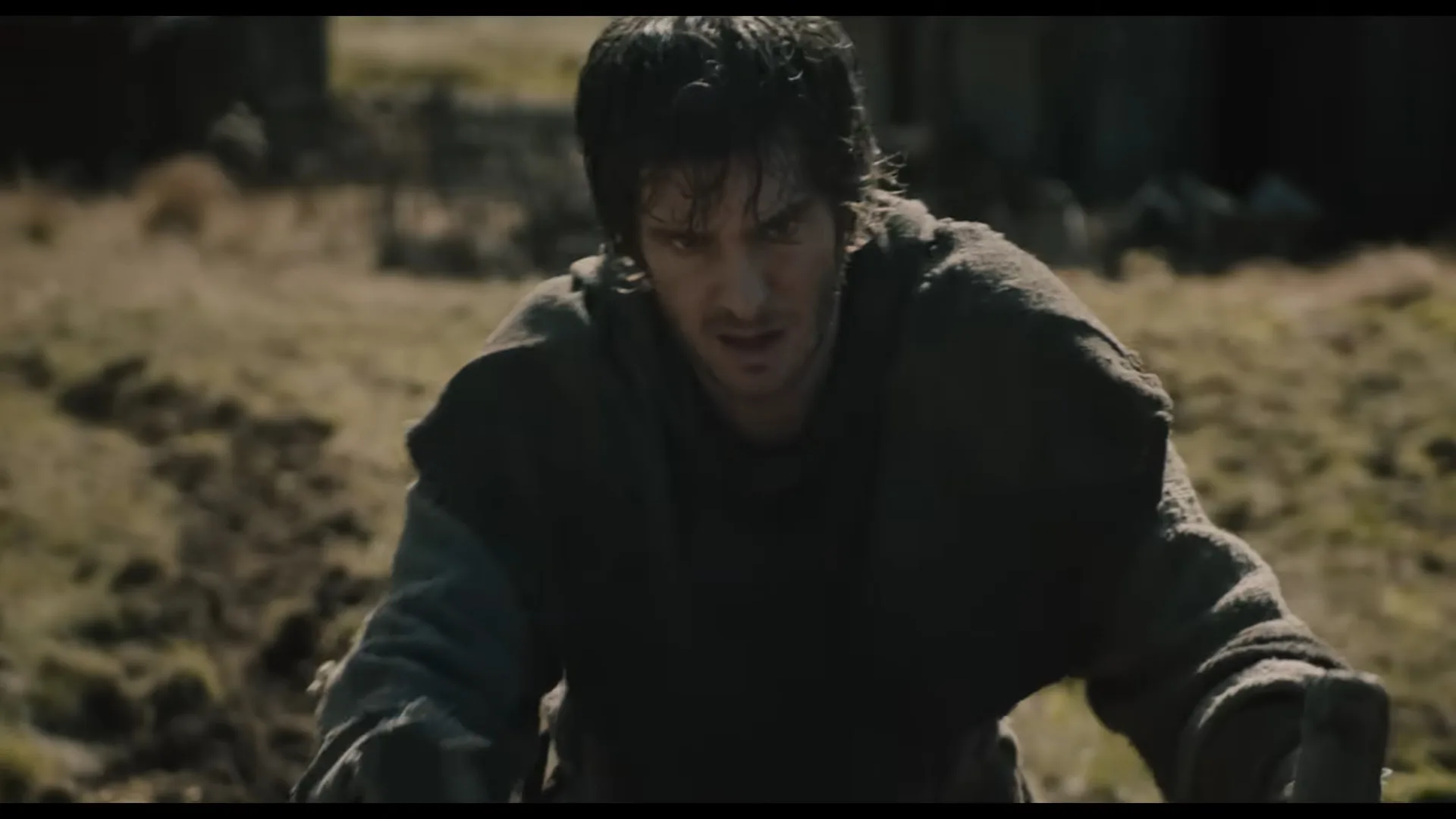
Ploughman represents the ordinary men and women whose experiences were rarely preserved with the same detail as kings, officials or major rebel leaders. Greengrass wanted the uprising to be experienced from below, through someone whose life could easily have disappeared from written history.
That perspective is important because Ploughman does not initially see himself as a revolutionary hero. He is a farmer whose concerns are rooted in his family, land and the increasingly difficult conditions facing people like him.
As events escalate, other people begin to see qualities in him that he does not necessarily recognize in himself. He becomes involved with a movement that gives his private frustration a larger political meaning, but he never entirely loses the sense that he is an ordinary man caught inside extraordinary circumstances.
His lack of a conventional personal name strengthens that idea. “Ploughman” identifies him primarily through his work rather than through family status, title or inherited importance.
Also Read: The Uprising Ending Explained
Why Is Andrew Garfield’s Character Called Ploughman?
On the simplest level, the name describes exactly what he does. He works the land, and his identity at the beginning of the movie is inseparable from agricultural labor.
There is also a deeper literary connection. Greengrass has discussed the name as a nod toward Piers Plowman, William Langland’s medieval poem, which comes from roughly the same cultural world the film is exploring.
That reference becomes particularly interesting because versions of Piers Plowman contain one of the earliest datable literary references to Robin Hood. The connection does not mean Ploughman is secretly a character lifted directly from the poem, but it gives his name another layer once the movie reaches its final act.
What initially sounds like a simple occupational description therefore also quietly points toward the outlaw mythology that becomes important later.
Is Ploughman Based on One Specific Rebel?
The film does not present Ploughman as a straightforward version of one documented participant in the revolt. It is more accurate to see him as a composite dramatic figure whose experiences allow the movie to explore what the rebellion might have looked like to an ordinary participant.
That approach also distinguishes him from Wat Tyler and John Ball. Tyler occupies a recognizable leadership position in the revolt, while Ball provides some of its ideological language. Ploughman begins outside that established leadership and is gradually pulled toward it.
The difference gives the film an accessible point of view. Audiences do not need to begin the movie with a detailed understanding of medieval politics because Ploughman is learning how large the crisis has become at the same time they are.
His story can therefore absorb experiences associated with many ordinary rebels without pretending that historians know the complete life story of one particular farmer who followed exactly the same path.
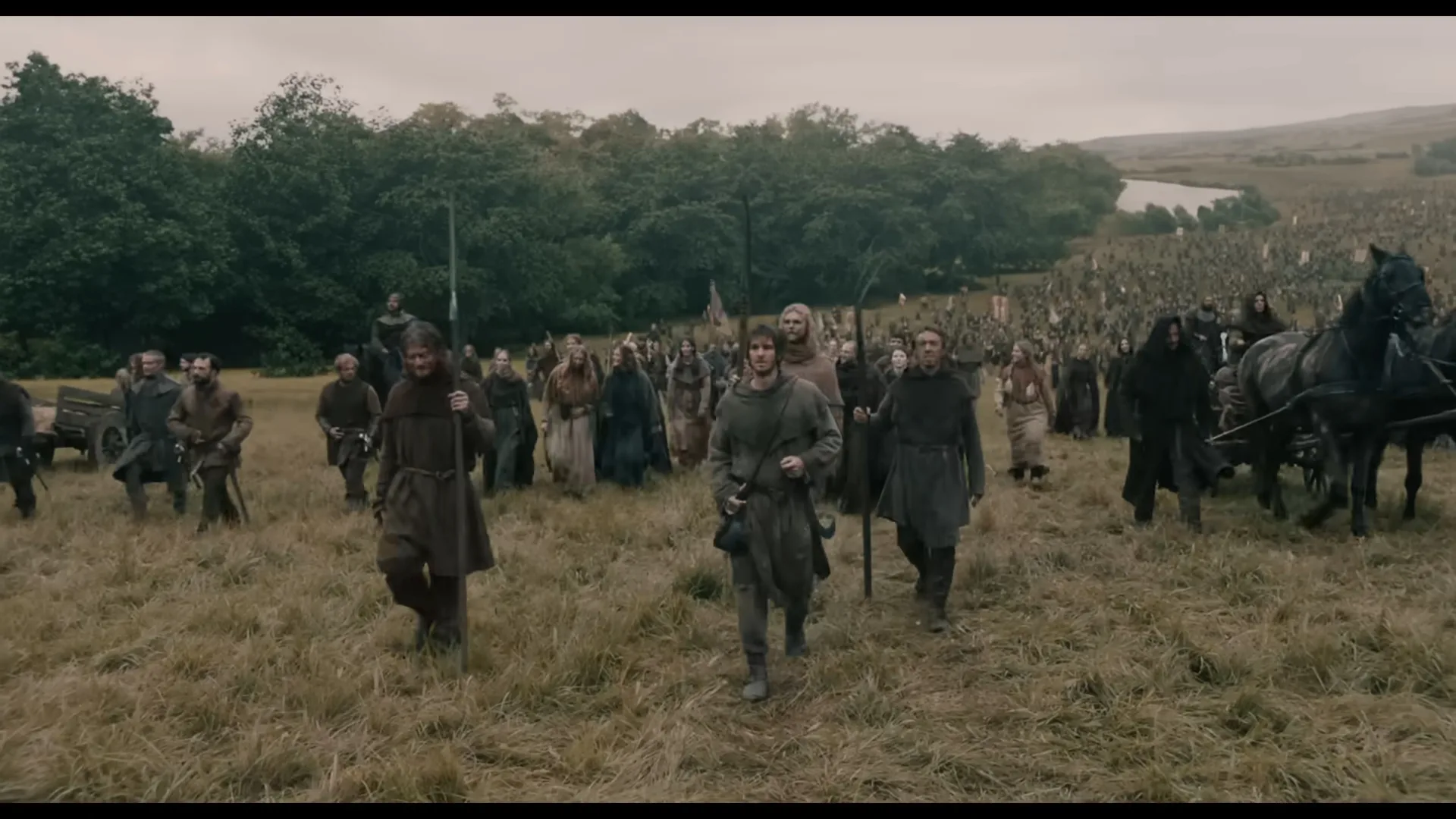
Which Characters in The Uprising Were Real?
Wat Tyler was a real figure associated with the leadership of the Peasants’ Revolt. John Ball was also historical and became well known for religious and political arguments challenging the rigid social hierarchy of medieval England.
Richard II was England’s king during the revolt and was still very young when the crisis reached London. Other figures surrounding the government and city authorities also have historical foundations, even though the movie dramatizes their conversations and actions.
This mixture of real and invented characters is why Ploughman’s fictional status can initially be difficult to recognize. He moves naturally among historical personalities, and the film does not visually separate fictional material from documented history.
Greengrass instead uses Ploughman as the audience’s route into that historical world. The famous names provide the political framework, while the fictional farmer provides the emotional center.
Is Ploughman Really Connected to Robin Hood?
The final stretch makes that connection unmistakable. Ploughman survives the collapse of the rebellion and eventually reappears as a hooded outlaw operating outside the direct control of King Richard.
Greengrass has explained that this evolution was part of the project from an early stage. The film was originally developed under the title The Hood, with Ploughman’s transformation from farmer into outlaw built into the larger conception of the story.
That does not mean the movie is claiming historians have finally discovered Robin Hood’s true identity. Robin Hood is a legendary figure shaped through stories that developed and changed over centuries, and there is no universally accepted historical biography that Ploughman can simply be attached to.
Instead, Greengrass imagines Ploughman becoming the kind of outlaw around whom such a legend might develop. His actions matter, but so does what other people might eventually say about those actions.
Why Ploughman’s Fictional Identity Matters
Making Ploughman fictional allows The Uprising to tell a story about historical invisibility. Kings and major political figures have names that survive for centuries, while thousands of ordinary people can participate in a transformative event without leaving behind comparable records.
Ploughman begins as one of those anonymous people. The irony of the ending is that his anonymity eventually becomes useful because an outlaw does not need a formal identity in the same way a farmer living under royal authority does.
He can disappear into the countryside, become a story told by others and gradually acquire the qualities of a legend. The man who started the film with almost no place in recorded history becomes someone whose actions might survive precisely because people begin turning them into folklore.
That makes Ploughman’s fictional nature essential rather than a historical shortcut. Greengrass is not asking viewers to believe this particular farmer existed exactly as shown. He is using one invented man to represent the countless real people whose individual stories were never preserved.