The Invite (2026) Ends With Joe and Angela Finally in Sync, But Are They Still Married?
Joe and Angela spend most of The Invite behaving like two people who have forgotten why they chose each other. Their dinner with Piña and Hawk strips away the excuses until both admit that staying together for their daughter, Maggie, may no longer be enough. They even seem ready to end the marriage. Then Joe…
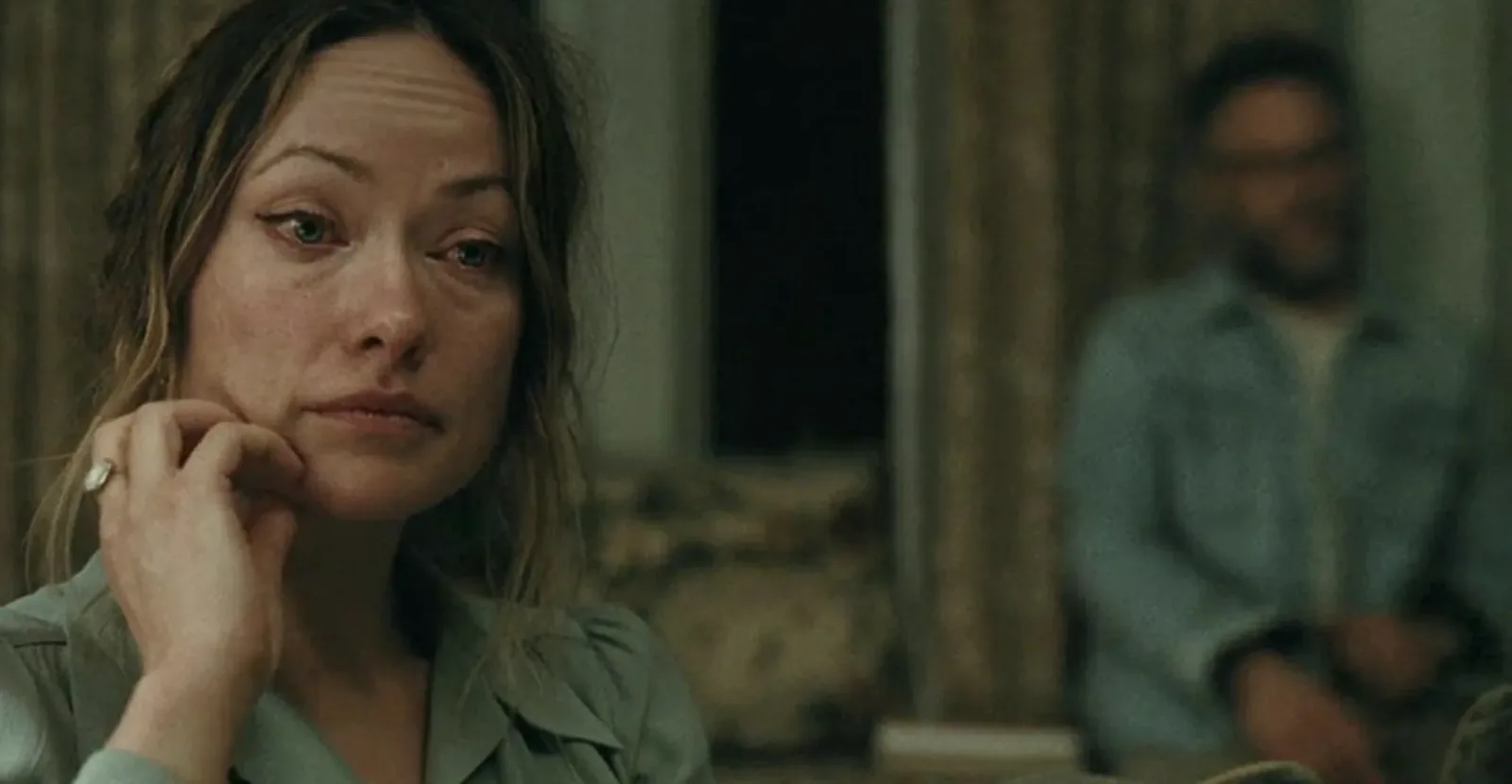
Joe and Angela spend most of The Invite behaving like two people who have forgotten why they chose each other. Their dinner with Piña and Hawk strips away the excuses until both admit that staying together for their daughter, Maggie, may no longer be enough. They even seem ready to end the marriage. Then Joe sits at the piano, Angela joins him, and the film closes on an intimacy that has been missing all night. The ending does not definitively confirm that Joe and Angela stay together, but reconciliation is a very plausible reading. Olivia Wilde intentionally left their future unresolved and has since said that, although she originally imagined they might separate, she now leans toward believing they remain together.
Spoilers ahead for The Invite
Do Joe and Angela Actually Decide to Break Up?
Joe and Angela reach the conclusion that their marriage may be over, but the movie never shows them formally ending it. The dinner becomes an accidental couples-therapy session after Piña points out how viciously they speak to one another. Joe and Angela admit they have not had sex in more than a year, blame each other for their unhappiness and acknowledge that Maggie is one of the main reasons they have remained married. When Piña argues that a child may be better served by two happy separated parents than two miserable married ones, neither Joe nor Angela puts up much resistance.
Once Hawk and Piña leave, the practical conversation already sounds like the beginning of a separation. Joe mentions the lake house Maggie loves and the decisions they will have to make about their shared life. Angela withdraws to another room, while Joe says he will sleep in his office. If The Invite ended there, the answer would be fairly simple: their marriage had run its course. Instead, Wilde gives them one more scene and removes dialogue entirely, forcing the audience to read what happens through their bodies rather than another argument.
Why Does Joe Finally Play the Piano?
Joe returning to the piano signals that he has stopped using his disappointment with himself as a weapon against Angela. He was once a working musician, but by the time of the dinner he teaches at a conservatory and considers his career a failure. The piano sitting unused in his office has consequently become more than furniture. It represents the part of himself he refuses to engage with because doing so would mean confronting the difference between the life he imagined and the one he actually has.
That makes the final performance significant before Angela even enters the room. Joe is not fixing his career or suddenly proving that his younger ambitions were justified. He is simply playing again. The film also begins with the sound of Joe and Angela happily making music together in an earlier period of their relationship, so returning to that activity quietly reconnects the ending with a version of the couple that existed before resentment became their default language. The BFI similarly identifies that opening musical memory as an important piece of the film’s emotional design.
What Does Angela Joining Joe at the Piano Mean?
Angela joining Joe is the strongest evidence for the reconciliation interpretation because, for once, neither partner is trying to correct, impress or defeat the other. Joe begins playing alone, and Angela eventually sits beside him and helps continue the familiar melody. They briefly create something together before Joe carries on, with Angela watching him emotionally and eventually resting against him. He responds by leaning toward her rather than pulling away.
The scene works because almost everything before it has been verbal. Joe and Angela can turn a forgotten bottle of wine, a backache or an awkward remark into ammunition. At the piano there is nothing left to debate. Your supplied notes read the duet as the couple finding a rhythm again after spending the evening painfully out of step, which is a persuasive interpretation even though the movie refuses to label it a reconciliation.
There is, however, another way to read the tenderness. Two people can still love each other while recognizing that their marriage no longer works. The final embrace could be a peaceful goodbye between people who finally understand that ending the relationship does not require erasing everything good that came before it. That possibility is not a loophole invented by viewers. Wilde explicitly intended the scene to support both readings.
Was Piña Telling Them to Divorce?
Piña’s larger point is not simply that Joe and Angela should divorce, but that the relationship they have been living cannot continue unchanged. The dinner exposes how both have made the other person responsible for disappointments that began inside themselves. Joe hates what became of his musical ambitions. Angela resents how completely her own identity has narrowed around domestic life. Neither problem can be solved by having louder sex or copying Hawk and Piña’s unconventional arrangement.
That idea connects closely with one of the relationship concepts Wilde discussed while making the film: long partnerships can contain more than one distinct relationship between the same two people. The Invite therefore allows Joe and Angela’s old marriage to “end” without necessarily requiring Joe and Angela themselves to separate. Their final duet can be read as the first moment of a different version of the relationship, one in which they stop expecting the other person to carry responsibility for all the things they dislike about themselves.
Why Do Piña and Hawk Leave Without Saying Goodbye?
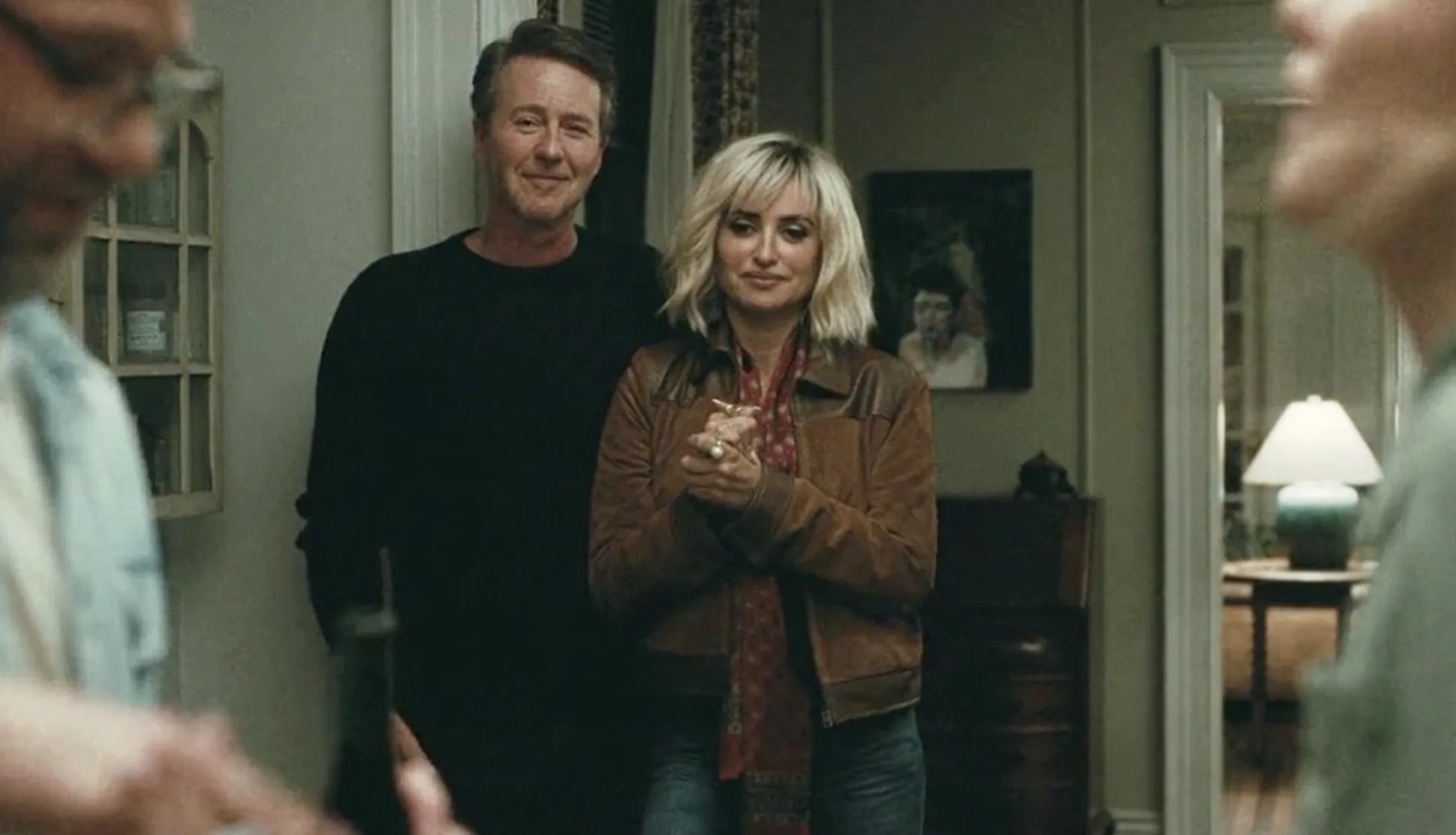
Piña and Hawk quietly leave because their role in Joe and Angela’s confrontation is finished, not because the film confirms they were imaginary. Once the neighboring couple’s own seemingly perfect relationship reveals its imperfections, Joe and Angela can no longer use them as a fantasy against which to measure their marriage. Piña has said what she thinks, the proposed sexual experiment has collapsed, and remaining in the apartment would only give Joe and Angela another distraction from the decision waiting for them. Forbes confirms that the couple simply slips out while their hosts are in another room.
There is a fan interpretation that Hawk and Piña may be imaginary constructs, and your reference material explores that possibility at length. But the film itself does not establish this, and I would not treat it as the intended explanation. Their interactions, the surveillance footage of Joe pounding on their door and the otherwise realistic construction of the dinner all require increasingly elaborate assumptions for the hallucination theory to work. It is more convincing to treat their abrupt exit theatrically: the catalyst leaves, and Joe and Angela are finally forced to face each other without an audience.
Also Read: The Beach House Murders Ending Explained
What Has Olivia Wilde Said About Joe and Angela’s Ending?
Wilde has confirmed that there is intentionally no canonical answer, although she currently leans toward Joe and Angela staying together. She told Entertainment Weekly that she and Seth Rogen actually approached the final scene with different ideas about what would happen next. Rogen believed the marriage would survive, while Wilde initially found the idea of two people separating while still loving one another more convincing.
Her interpretation changed after watching the finished film with audiences. Wilde now says she tends to think Joe and Angela remain together, but she has repeatedly stressed that the viewer is supposed to decide. She has even polled audiences after screenings and reported an almost exact 50-50 division between people who see reconciliation and people who see a loving farewell. That split is not evidence that the ending failed to communicate its answer. It is evidence that the film deliberately declined to provide one.
The most hopeful reading still has a slight edge for me. Joe and Angela spend the night deciding that their old marriage is finished, but the piano scene does not feel like two people emotionally withdrawing from one another. They finally listen, respond and create something together without competition. Whether that lasts another night or another twenty years is unknowable, but the final image suggests they have rediscovered enough affection to consider beginning again. The Invite does not end by assuring us that the marriage survives. It ends by showing, for the first time all evening, why either of them might still want it to.