Is Chef in Tony a Real Person? Antonio Banderas’ Character Explained
Antonio Banderas’ Chef is exactly the kind of person a young Anthony Bourdain seems destined to meet in Tony: demanding, worldly, unimpressed by swagger and serious about the discipline required to survive a professional kitchen. That makes him feel like one of the movie’s most obviously biographical characters. Chef does have a real-life foundation, but…
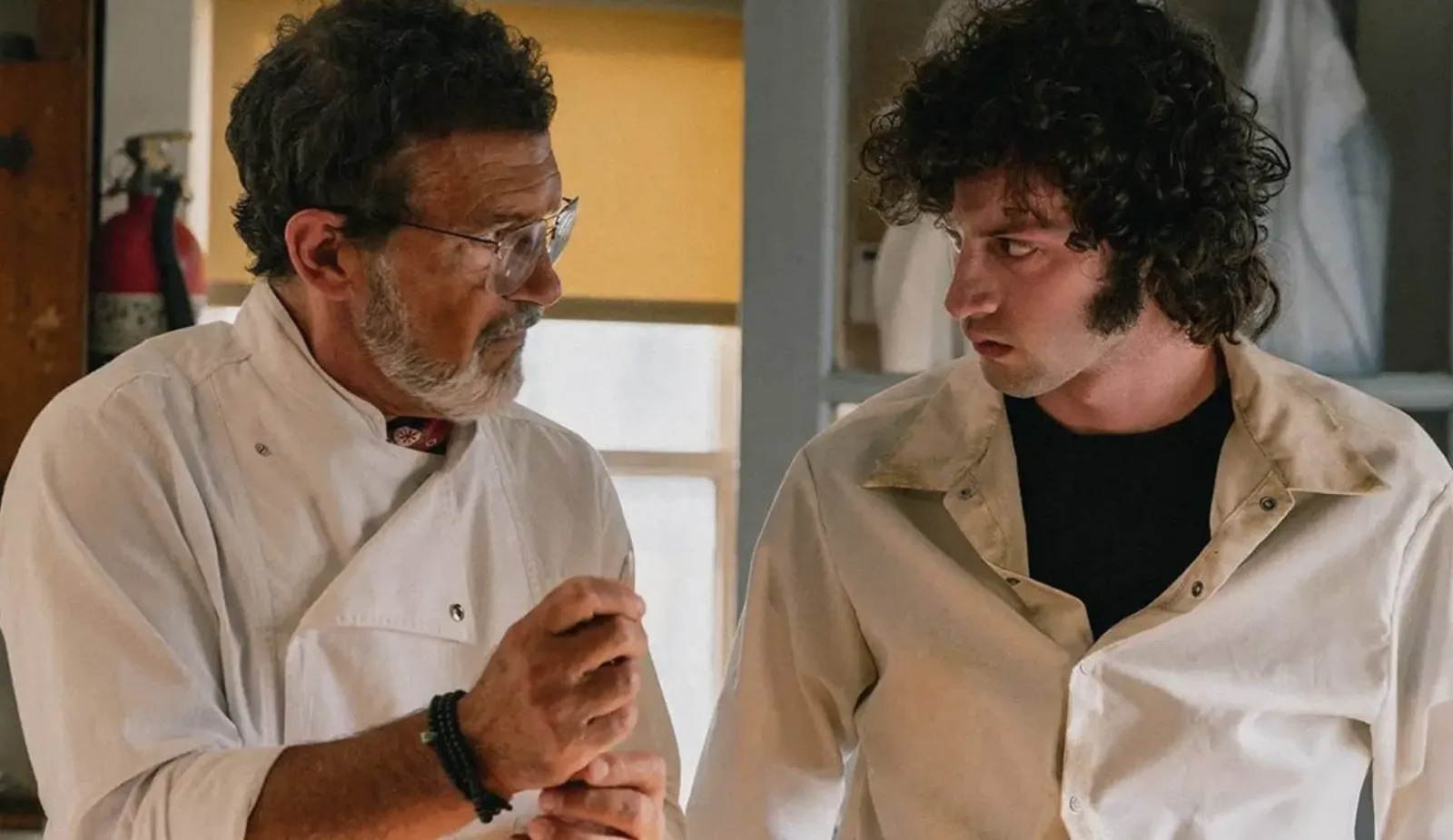
Antonio Banderas’ Chef is exactly the kind of person a young Anthony Bourdain seems destined to meet in Tony: demanding, worldly, unimpressed by swagger and serious about the discipline required to survive a professional kitchen. That makes him feel like one of the movie’s most obviously biographical characters. Chef does have a real-life foundation, but he is not a straightforward recreation of Bourdain’s Provincetown boss. The filmmakers drew heavily from the mentor Bourdain called “Bigfoot” in Kitchen Confidential, then moved elements of that later relationship into the movie’s fictionalized 1975 summer. Director Matt Johnson has also described Chef as a symbolic embodiment of the order and professionalism Bourdain eventually discovered in cooking.
Spoiler Alert
Is Chef Based on a Real Person?
Yes, Chef is partly based on a real mentor, although Tony deliberately reshapes that person to fit its coming-of-age story. Screenwriter Lou Howe told Vanity Fair that “a lot” of the DNA of the man Bourdain called Bigfoot made its way into Banderas’ character. The movie therefore is not inventing the idea that an older restaurant professional helped Bourdain recognize cooking as something worth taking seriously. What it invents is the neatness with which that influence arrives, because the real Bourdain’s culinary education unfolded across different restaurants, different summers and several stages of his early career.
That distinction fits A24’s broader approach to Tony. The studio describes the film simply as the story of a 19-year-old Bourdain stumbling into Provincetown’s restaurant world during a summer that changes his life, while Johnson has said the movie effectively compresses roughly a decade of Bourdain’s development into that single season. Chef is therefore best understood as a fictionalized mentor built from genuine Bourdain history, rather than a biographical portrait with only the name changed.
Related: Is Tony Based on a True Story?
Who Was the “Bigfoot” Anthony Bourdain Wrote About?
Bigfoot was an influential restaurant mentor whom Bourdain discussed in Kitchen Confidential, but Bourdain did not publicly identify him by his real name in the memoir. That is important because various guesses about Bigfoot’s identity circulate among fans, yet the filmmakers themselves have avoided turning those theories into fact. What matters for Tony is the role he played in Bourdain’s development: according to the filmmakers’ research, Bigfoot encouraged Bourdain to pursue cooking professionally and represented a level of restaurant discipline that the younger chef had not previously possessed.
Banderas’ Chef inherits that quality more than a documented biography. He is controlled where Tony is impulsive, experienced where Tony performs experience, and interested in standards rather than the theatrical machismo that initially fascinates Tony about kitchens. Banderas has described his character as a Brazilian-born chef who studied seriously, traveled internationally and nevertheless remained an outsider to elite restaurant culture. Those details define the movie’s Chef, but available reporting does not establish them as literal biographical facts about the unidentified Bigfoot from Bourdain’s memoir.
Did Bigfoot Teach Bourdain During His First Provincetown Summer?
No, and this is one of the movie’s biggest timeline compressions. The real Bourdain did work at the Flagship in Provincetown, beginning as a dishwasher while attending Vassar College, and the Culinary Institute of America says he was eventually moved onto a cooking station. By the end of that early experience, Bourdain had realized that enthusiasm alone was not enough and that he needed professional training if he wanted to keep pace with experienced cooks. He subsequently enrolled at the CIA and graduated in 1978.
The mentor who inspired Banderas’ Chef belongs to a different portion of Bourdain’s developing career. Tony deliberately pulls that influence backward and places it inside the Flagship because the screenplay needs one relationship capable of dramatizing Bourdain’s changing attitude toward work. Vanity Fair notes that Bourdain’s actual second Provincetown summer took him to another restaurant, Ciro & Sal’s, a complication the film simply leaves out. Instead of following every real restaurant and boss, Tony lets Chef stand at the center of a much cleaner fictional apprenticeship.
Related: Tony Ending Explained
Did Chef Really Send Anthony Bourdain to Culinary School?
No. The real mentor behind Chef encouraged Bourdain’s culinary ambitions, but the filmmakers say he did not personally direct Bourdain to the Culinary Institute of America in the way the movie’s storytelling might suggest. This is another case where Tony converts a gradual decision into a relationship-driven turning point. Bigfoot’s encouragement is real enough to justify the emotional idea behind the scene, but the specific path from mentor to CIA belongs to the screenplay.
Bourdain’s own professional history offers a less cinematic explanation. His Provincetown kitchen work exposed how much he still had to learn, and CIA’s biography says that realization led him to seek formal training. The school became the bridge between his chaotic introduction to restaurant life and the decades he later spent working professionally in New York kitchens. Tony gives that decision a mentor because a movie benefits from someone looking Tony in the eye and demanding more from him; real life rarely organizes its turning points that conveniently.
Why Did Tony Need Chef and Sal to Be Opposites?
Chef and Sal were designed as competing versions of the kitchen life Bourdain found irresistible. Howe described them as polar influences, with Chef representing structure and Sal representing the drugs, sex, swagger and appetite associated with the more hedonistic side of restaurant culture. Johnson has similarly said Chef symbolizes the organization of cooking that appealed to Bourdain, while Leo Woodall’s Sal carries qualities inspired by a cook named Dimitri as well as several other kitchen personalities.
That makes Banderas’ character more useful dramatically than a perfectly accurate recreation of any single boss could have been. Tony initially admires cooks because they seem fearless and lawless, but Chef slowly teaches him that the kitchen’s freedom only works because somebody understands timing, craft, repetition and responsibility. The real Bourdain eventually became famous for celebrating both sides of restaurant culture, its pirates and its professionals, often within the same person. Tony separates those impulses into two men so a 19-year-old can literally stand between them and decide which lessons he wants to carry forward.
What Does Chef Get Right About the Real Bourdain?
Chef gets the direction of Bourdain’s transformation right even when the chronology is fictional. Bourdain really did arrive in Provincetown with little professional kitchen experience, begin at the bottom and discover a world that demanded more skill and seriousness than he initially possessed. A24’s own retrospective on his Provincetown years describes those kitchens, cooks and summer communities as foundational to the person he later became.
So there probably was never one Antonio Banderas-like figure standing inside the Flagship and patiently assembling the Anthony Bourdain audiences would eventually know. Tony creates that person because Bourdain’s actual transformation was scattered among restaurants, coworkers, bosses, mistakes and years of work. Chef takes those influences and concentrates them into one memorable relationship. He is fictional in construction, real in inspiration, and perhaps most faithful where biography matters least: he embodies the moment when restaurant work stopped looking like something Bourdain could simply play at and started looking like a profession worth earning.