Is Tony Based on a True Story?
A24’s Tony introduces Anthony Bourdain long before the television shows, bestselling books and globe-spanning food adventures that made him famous. Dominic Sessa plays him at 19, drifting into Provincetown, Massachusetts, and discovering that the restaurant kitchen may suit him better than the literary future he imagines for himself. Yes, Tony is based on a true…
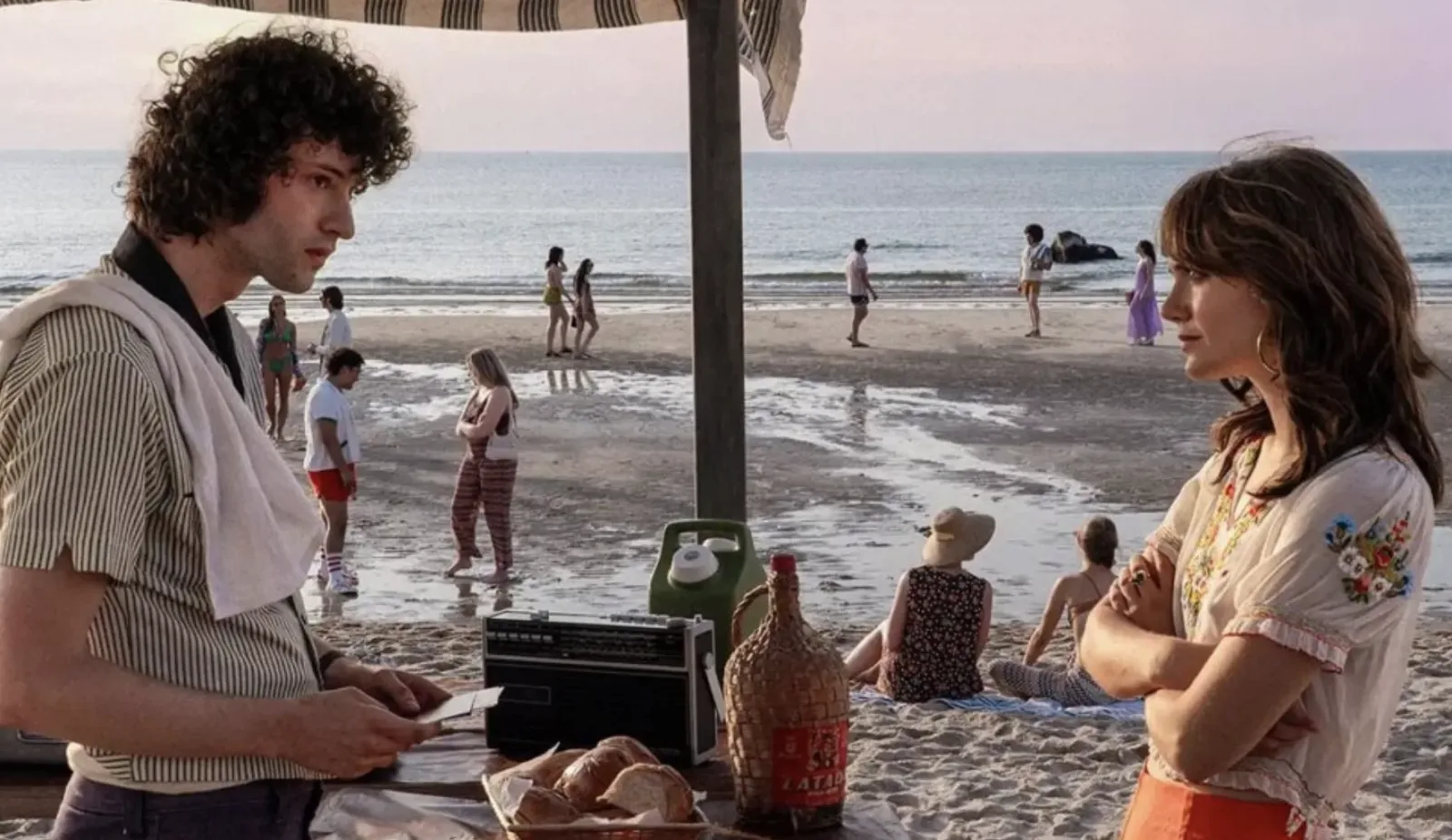
A24’s Tony introduces Anthony Bourdain long before the television shows, bestselling books and globe-spanning food adventures that made him famous. Dominic Sessa plays him at 19, drifting into Provincetown, Massachusetts, and discovering that the restaurant kitchen may suit him better than the literary future he imagines for himself. Yes, Tony is based on a true story, but it is intentionally not a literal reconstruction of one summer in Bourdain’s life. The filmmakers use his own writing, particularly the opening sections of Kitchen Confidential, as their foundation while compressing several formative years into the summer of 1975 and combining real people, memories and invented events into a coming-of-age story. A24 itself has characterized the film as a fictionalized depiction rather than a conventional biopic.
Did Anthony Bourdain Really Work in Provincetown?
Bourdain really did begin his restaurant education in Provincetown, where a summer dishwashing job exposed him to the kitchen culture that would eventually determine his career. The Culinary Institute of America’s official biography says Bourdain was attending Vassar College when he took a summer job washing dishes in Provincetown and was eventually moved onto a cooking station. He later realized that enthusiasm alone was not enough to keep pace with experienced cooks, which helped push him toward professional culinary training. Tony therefore builds itself around a genuine turning point rather than inventing the idea that one Cape Cod summer changed the direction of his life.
The restaurant at the center of that experience was also real. Bourdain worked at the Flagship, although he renamed it the “Dreadnaught” when writing about the place in Kitchen Confidential. During a later Provincetown summer, he moved on to Ciro & Sal’s, another important restaurant in his early development, but Tony folds much of that longer period into its version of the Flagship experience. That compression allows the film to make one restaurant feel like the place where Bourdain encounters nearly every temptation, lesson and personality that will shape him.
Did Tony Really Follow Nancy to Cape Cod?
The romance has a real foundation, but the movie substantially rearranges it. Emilia Jones’ Nancy is based on Nancy Putkoski, Bourdain’s high school girlfriend and eventual first wife, yet Bourdain did not impulsively chase an uncertain crush to Provincetown in the way Sessa’s Tony does. Bourdain and Putkoski had known each other at Dwight-Englewood School in New Jersey, and he graduated early partly so that he could follow her to Vassar. According to research conducted for the film, they planned their Provincetown trip together rather than Tony simply discovering that Nancy would be there and following her.
That is one of the screenplay’s clearest examples of changing chronology to create a cleaner character arc. In Tony, Nancy represents a life Tony thinks he wants before the kitchen starts competing for his attention, giving the movie an immediate romantic reason to bring him to Cape Cod. The real relationship lasted far beyond that summer, with Bourdain and Putkoski marrying in 1985 and divorcing in 2005. The fictionalized courtship therefore understates just how established and significant Nancy already was in Bourdain’s life during this period.
Related: Tony Ending Explained
Related: Tony Filming Locations
Is Antonio Banderas’ Chef a Real Person?
Antonio Banderas’ Chef is not a straightforward portrait of the man who supervised Bourdain at the Flagship. Instead, the character incorporates qualities from a later mentor Bourdain called “Bigfoot” in Kitchen Confidential, along with the filmmakers’ broader idea of the disciplined professional cook Tony needs to encounter. Director Matt Johnson and the writers have described Chef as representing the structured, serious side of restaurant life that eventually attracts Bourdain, even though that particular mentor did not occupy exactly this role during the Provincetown summer.
Leo Woodall’s Sal is similarly assembled rather than copied directly from one biography entry. Johnson has linked Sal to Dimitri, a cook Bourdain admired in his memoir, while Woodall and the filmmakers have described the character as representing several people and the hedonistic kitchen culture that fascinated young Bourdain. That makes Chef and Sal less like two historical portraits than competing versions of what restaurant life could offer Tony. One gives him craft and discipline, while the other embodies the swagger, sex, drugs and recklessness that Bourdain admitted attracted him to professional kitchens in the first place.
Which Parts of Tony Really Happened?
Several smaller moments come directly from Bourdain’s recollections even when the surrounding story is fictionalized. The movie’s painful scene in which Tony burns his hand on hot cookware has a counterpart in Kitchen Confidential, where Bourdain recalled getting burned and sheepishly asking for treatment afterward. The notorious kitchen story involving a cook and a bride also comes from Bourdain’s writing and was one of the experiences he associated with becoming fascinated by the seemingly fearless people working behind restaurant doors. Those details help Tony feel biographical even when the movie has reorganized the people involved and the circumstances around them.
Other major sequences are much freer inventions. The film makes lobster thermidor an important part of Tony’s development despite Bourdain later speaking about the dish without much affection, and the dramatic events surrounding Chef and the Flagship are shaped for the screenplay rather than presented as documented history. Even the movie’s large communal clambake is less a recreation of one recorded incident than a combination of Bourdain’s memories of Cape Cod food culture and the influence of Provincetown chef and author Howard Mitcham, who really did hold annual clambakes. The movie is repeatedly borrowing something true and then building a more convenient dramatic event around it.
Why Does Tony Compress So Much of Bourdain’s Life?
The compression is deliberate because Johnson was interested in showing how Bourdain became someone rather than cataloguing everything he later accomplished. PEOPLE reports that Johnson described the movie as taking roughly a decade of Bourdain’s development, from about age 15 to 25, and “amalgamating” it into the summer of 1975. That explains why influences from later in Bourdain’s career can appear beside experiences drawn from his first restaurant job. The filmmakers had only a relatively small amount of Bourdain’s own writing devoted specifically to this period, so they researched the people and places around him and then constructed a narrative that could stand on its own.
Bourdain’s estate supported that approach while making the same distinction clear. Its statement described Tony as an interpretation of a period in his life that remains partly unknowable rather than an attempt to summarize his biography. That matters because even Kitchen Confidential should not necessarily be treated as a court transcript of Bourdain’s youth. The film’s writers said their research suggested that Bourdain himself heightened and sharpened memories when turning them into stories, something perfectly consistent with the distinctive literary voice that eventually made the memoir famous.
Did Bourdain Really Leave Vassar for Culinary School?
This crucial part of Tony’s transformation is firmly grounded in Bourdain’s real life. After discovering restaurant work in Provincetown, Bourdain eventually left Vassar and attended the Culinary Institute of America, graduating in 1978. He then spent more than two decades working professionally in kitchens, including famous New York establishments such as the Rainbow Room and Les Halles, before writing and television transformed him into a far more public figure.
That is why Tony can fictionalize so much without becoming completely detached from the man whose name it carries. The specific mentor may be composite, Nancy’s role has been rearranged, several summers have become one, and individual incidents are invented or borrowed from other moments in Bourdain’s life. What the film preserves is the larger truth that Provincetown introduced a restless young Bourdain to a world in which he unexpectedly found purpose. The real transformation took longer than one cinematic summer, but the destination was the same: the teenager who arrived without much direction eventually left restaurant work convinced him that cooking might be a life rather than merely another temporary job.