Reacher Season 4 Moved Gone Tomorrow Out of New York, So Why Philadelphia?
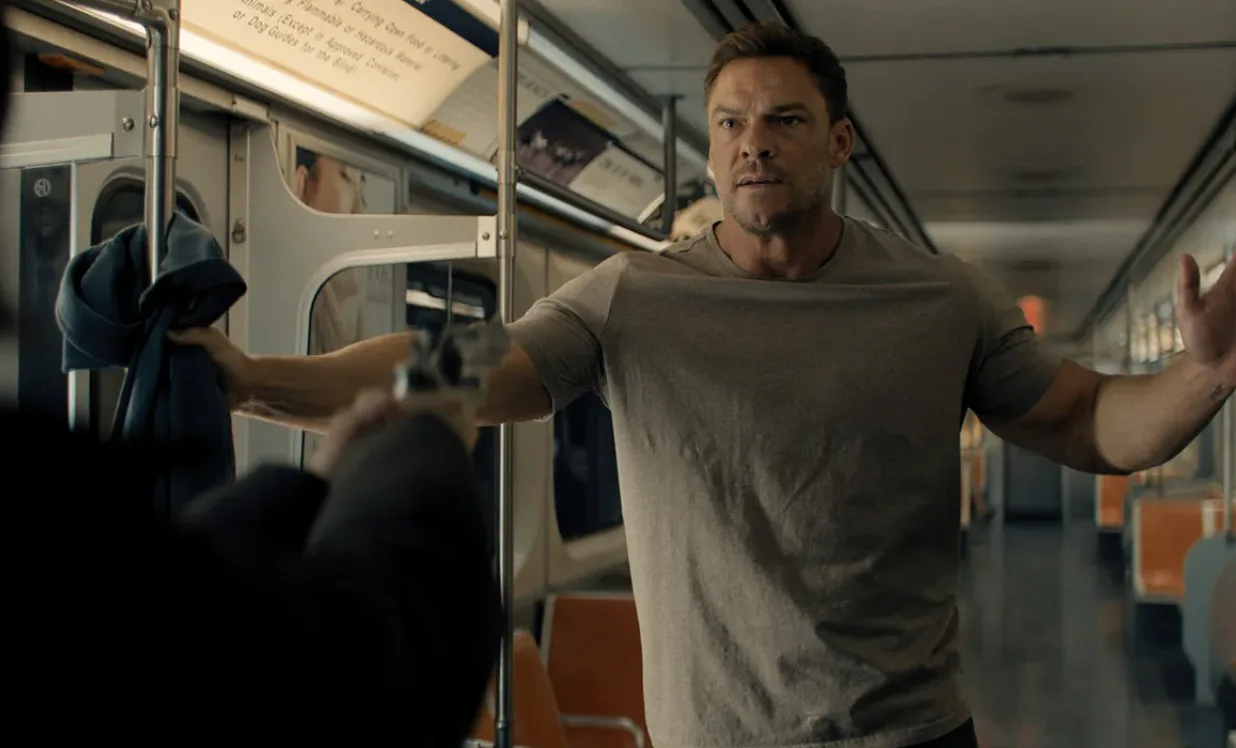
Anyone coming into Reacher Season 4 after reading Gone Tomorrow will notice the change almost immediately. Lee Child opens the novel on the New York City subway. Prime Video puts Alan Ritchson’s Reacher on Philadelphia’s Broad Street Line instead. The switch was deliberate. Showrunner Nick Santora has explained that Philadelphia was chosen partly because the…

Anyone coming into Reacher Season 4 after reading Gone Tomorrow will notice the change almost immediately. Lee Child opens the novel on the New York City subway. Prime Video puts Alan Ritchson’s Reacher on Philadelphia’s Broad Street Line instead.
The switch was deliberate. Showrunner Nick Santora has explained that Philadelphia was chosen partly because the series had already spent significant time in New York during Season 2. Keeping Jack Reacher moving through new places is central to the show’s identity, so returning to New York only two seasons later risked making his latest adventure feel less fresh. Philadelphia allowed Season 4 to preserve the novel’s urban subway thriller while giving Reacher another city to wander into.
That also means the change was not simply Philadelphia pretending to be New York.
Why did Reacher Season 4 change New York to Philadelphia?
Santora addressed exactly that question while discussing the new season.
His explanation was straightforward: the series had already done New York relatively recently. Season 2 brought Reacher and the surviving members of his old investigative unit into a story that used New York heavily, so adapting another New York-based book for Season 4 would have taken the supposedly rootless Reacher back into familiar territory very quickly.
Moving Gone Tomorrow to Philadelphia solves that problem without requiring the writers to discard the premise that made the novel attractive in the first place.
Reacher can still be alone on public transit late at night. He can still notice a distressed passenger. That encounter can still turn into a death that drags him into a conspiracy stretching toward Washington.
The machinery of the story survives. The address changes.
It also fits Reacher as a character. He does not maintain a home, build a conventional life or deliberately return to the same group of people every season. Part of the appeal is that trouble can find him virtually anywhere.
Philadelphia therefore helps reinforce something the television series has increasingly emphasized: every new season should feel as though viewers have caught Reacher during another stop in a much larger life.
How different is Philadelphia from Gone Tomorrow’s New York?
The opening is recognizably Gone Tomorrow, but it is not a scene-for-scene recreation.
In Child’s novel, Reacher is riding the New York subway at roughly 2 a.m. when he begins studying a woman named Susan Mark. Her appearance and behavior remind him of warning signs he learned while serving in the military, and he starts wondering whether she could be a suicide bomber. When Reacher approaches her, Susan unexpectedly shoots herself.
Season 4 transfers that basic incident to Philadelphia and renames the woman Anna Merrick.
Reacher has been drinking in the city before taking the Broad Street Line. He notices Anna in distress, interprets what he sees through the same highly analytical instincts and approaches her. Her death then becomes the doorway into the season’s mystery.
The writers have changed far more than the city. Several character names, relationships and pieces of the political conspiracy have been reworked as well. Yet the unsettling idea underneath the opening remains almost identical: Reacher notices something everyone else misses, acts on it and cannot walk away once the consequences become personal.
That is why the Philadelphia switch does not break Gone Tomorrow. The geography matters, but the story engine matters more.
Related: Reacher Season 4 Gives Jack a Detective He Can Actually Trust: Who Is Tamara Green?
Was Philadelphia chosen just because it was cheaper to film there?
That theory has circulated among viewers, but it is not the explanation Santora has publicly given.
The confirmed creative reason is the desire to avoid returning to New York so soon after using it in an earlier season.
Production considerations may always affect television decisions, but there is no need to invent one here when the showrunner has provided a storytelling reason himself.
There is another clue that Philadelphia was intended to be more than a substitute backdrop: Season 4 repeatedly tells the audience that Reacher really is in Philadelphia.
The premiere gives him a cheesesteak. There are Flyers and Gritty references. Temple University enters the investigation. Philadelphia landmarks and local institutions become part of the texture rather than being carefully hidden.
Production also filmed material in Philadelphia itself, including scenes around Rittenhouse Square. The show could have shot generic urban streets and pretended they were somewhere else. Instead, it leans into the city.
So the simplest answer to the “Was Philly just standing in for NYC?” question is no. Philadelphia is the actual setting of the television adaptation.
Why does the Philadelphia setting work for Reacher?
There is a practical storytelling advantage to the change.
Gone Tomorrow needs a large East Coast city with extensive public transit, dense streets and relatively easy access to Washington, D.C. Philadelphia can provide all of those things without forcing a major reconstruction of the plot.
That becomes evident almost immediately when the investigation expands beyond Anna Merrick.
Reacher moves between Philadelphia and Washington while digging into John Sampson, Lila Hoth, Anna’s government connections and the increasingly suspicious people surrounding the missing flash drive. The broader conspiracy remains tied to national politics, which means Washington still feels naturally connected to the local investigation.
Philadelphia also gives the season a slightly different visual personality. The city can support subway scenes, political intrigue, cramped street encounters and large-scale action while still feeling distinct from the New York material viewers saw earlier in the series.
And because Reacher is a drifter, the series can use that change without needing a complicated in-story explanation. There is no job transfer or relocation to justify. He happened to be in Philadelphia. Then somebody died in front of him.
For Jack Reacher, that is usually enough.
Related: Reacher Season 4’s Missing Ben Merrick Mystery Is Much Worse Than It First Looks
Does changing the city alter the Gone Tomorrow story?
Yes, although Philadelphia itself is only one part of a much larger adaptation overhaul.
Season 4 has already replaced Susan Mark with Anna Merrick, Theresa Lee with Tamara Green, and John Sansom with John Sampson. Lila Hoth and the mystery surrounding her have also been substantially rewritten, including the shift toward Indonesia rather than simply reproducing the novel’s Soviet-Afghan War background.
That is important because it shows the location change is not an isolated act of creative freedom.
Nick Santora and the writers are retaining the architecture of Gone Tomorrow while rebuilding many of its details for television. The subway death, Reacher’s curiosity, the government conspiracy and the dangerous history surrounding a politician remain recognizable. The exact names, geography and historical context do not have to remain untouched.
Philadelphia is perhaps the most visible example because viewers notice it within minutes.
But the reason behind it is actually very Reacher-like: he has already been there, so it is time to keep moving.