Is Blake Leaving Cardiology in Scrubs? Lillian’s Ending Explained
ABC’s ‘Scrubs’ has never been interested in portraying good doctors as people who always have the right answers. Some of the show’s most meaningful stories have come from physicians discovering their limitations and learning that helping someone isn’t always about finding a cure. Season 2 Episode 3, titled “My Ex’s Ex,” revisits that idea through…
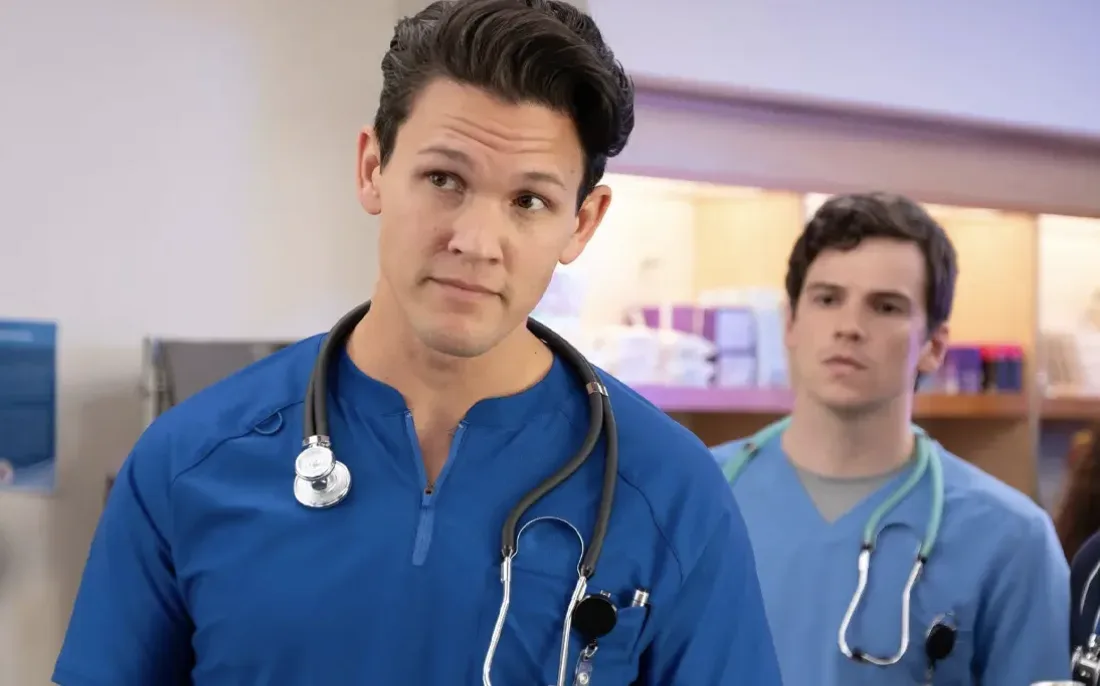
ABC’s ‘Scrubs’ has never been interested in portraying good doctors as people who always have the right answers. Some of the show’s most meaningful stories have come from physicians discovering their limitations and learning that helping someone isn’t always about finding a cure. Season 2 Episode 3, titled “My Ex’s Ex,” revisits that idea through Blake, a young doctor whose ambition to become an interventional cardiologist runs into an unexpected obstacle. What begins as a disagreement between J.D. and Turk over Blake’s medical abilities takes an emotional turn when the reason behind his career choice comes to light. His experience with an elderly patient named Lillian subsequently raises the possibility that his future may lie in a different branch of medicine altogether.
Why Blake Wants to Become a Cardiologist
Blake’s professional ambitions become a point of contention when he approaches J.D. about an accelerated interventional cardiology fellowship. He needs a recommendation letter, and J.D. agrees without hesitation, confident that Blake has the potential to develop into a successful doctor. Grant, however, questions whether that encouragement is entirely justified. He believes cardiology requires a particular set of abilities and worries that J.D. is giving Blake false hope rather than preparing him for the realities of the specialty. J.D. disagrees, maintaining that young doctors deserve opportunities to develop their skills before anyone decides what they can or cannot accomplish.
Determined to prove his point, J.D. asks Turk to take Blake under his wing and help him improve the procedural skills necessary for the fellowship. Unfortunately, Turk quickly notices that the young doctor’s hands-on abilities are nowhere near the level required for such demanding work. Blake remains enthusiastic throughout the training, seemingly unaware that his mentor has serious doubts about his performance. Turk eventually concludes that allowing him to continue pursuing interventional cardiology without an honest assessment would be unfair. The problem is that his attempt at honesty turns out to be considerably more hurtful than he anticipates.
Also Read: Scrubs Season 2 Episode 3 Recap and Ending Explained: Do Elliot and Sean Get Back Together?
Blake’s Promise to His Mother
Turk invites Blake for coffee and tells him that he is not suited for interventional cardiology. He treats the conversation as a practical career discussion, believing that Blake can simply redirect his ambitions toward another specialty. Instead, Blake reveals that his interest in cardiology comes from a deeply personal experience involving his mother. During her illness, a cardiologist provided treatment that allowed Blake to spend five additional years with her, giving their family time they otherwise might not have had. The experience inspired him to enter medicine and eventually led him to promise his mother that he would become a cardiologist in her honor.
For Blake, that promise has become inseparable from his understanding of what it means to be a successful doctor. He isn’t pursuing cardiology simply because it offers professional recognition or an exciting career, but because he wants to provide other families with the same opportunity his own family received. Turk’s assessment therefore feels less like ordinary criticism and more like being told that he cannot fulfill something he promised someone he loved. His disappointment catches Turk off guard, leaving the senior doctor struggling to understand how a seemingly reasonable conversation went so badly. When Turk later admits to J.D. that he has seriously upset Blake, it becomes clear that the younger doctor’s future will require a more thoughtful approach.
The incident also exposes an important difference between J.D. and Turk as mentors. J.D. is reluctant to discourage anyone, even when there are legitimate concerns about their abilities, while Turk believes difficult truths should be delivered without unnecessary hesitation. Neither approach proves particularly helpful to Blake in this situation. J.D.’s optimism doesn’t address the technical challenges he faces, and Turk’s bluntness overlooks the personal meaning of his ambition. The episode gradually suggests that understanding why someone wants a particular career can be just as important as assessing whether they have the necessary skills.
What Happens to Lillian?
Lillian is an elderly patient who has spent enough time at Sacred Heart to become familiar with its medical staff. Early in the episode, she shares a lighthearted conversation with J.D. while he discusses checking her blood cultures to ensure an infection is clearing. She mentions that his eyes remind her of her son Steven, establishing how much her family remains on her mind. Later, Lillian experiences a fall, raising concerns about her health even though she initially appears to be recovering. Her condition eventually deteriorates, bringing Blake into one of the most difficult situations he has faced during his training.
When J.D. learns that Lillian is experiencing serious breathing difficulties, he rushes to her room and discovers that Blake is already at her bedside. Lillian has a do-not-resuscitate order, and her son Steven is away in Europe, leaving the doctors aware that her remaining time may be limited. Blake stays with her as she becomes increasingly weak, offering reassurance while she struggles to understand what is happening. When Lillian calls out for Steven, Blake initially prepares to correct her before changing his mind. He instead reassures her that he is there, allowing her to believe that her son has returned to be with her.
Lillian responds with relief and affection, telling him that she has been waiting and that she loves him. Blake continues comforting her, answering as though he were Steven rather than allowing her final moments to be overshadowed by confusion. The scene is especially affecting because the audience has just learned about his relationship with his own mother. His decision isn’t motivated by medical ambition or a desire to impress his supervisors, but by an understanding of how much it matters to feel accompanied during a frightening experience. Lillian passes away shortly afterward, leaving J.D. and the others to consider what they have witnessed.
Why J.D. Considers Palliative Care for Blake
Lillian’s final moments give the doctors an entirely different perspective on Blake’s abilities. Turk has already established that he struggles with the technical demands of interventional cardiology, but his interaction with Lillian reveals an instinct for compassionate patient care that cannot be measured through procedural performance alone. Rather than becoming overwhelmed by the situation, Blake recognizes what the patient needs emotionally and responds with unusual sensitivity. His ability to remain present and reassuring during an exceptionally difficult moment is precisely what catches the attention of his colleagues. Their subsequent conversation raises the possibility that Blake might be better suited to caring for patients with serious illnesses.
J.D. specifically identifies palliative care as a potential specialty for Blake, recognizing that his strengths extend beyond the conventional expectations associated with his original career choice. Palliative care focuses on improving the quality of life of people experiencing serious illnesses, including managing symptoms, providing emotional support and helping patients and families navigate difficult medical circumstances. Although the episode introduces the specialty through Lillian’s final moments, palliative care is not exclusively concerned with the end of life. It can also be provided alongside treatments intended to improve a patient’s underlying condition. The emphasis on comfort and personal attention nevertheless makes it a particularly meaningful possibility for someone with Blake’s instincts.
There is also a certain irony in how Blake discovers this potential direction. He entered medicine because a cardiologist extended his mother’s life, and he has spent years imagining himself doing something similar for other families. Yet his experience with Lillian demonstrates that medicine can make an extraordinary difference even when additional treatment cannot change a patient’s prognosis. Instead of providing more time, Blake gives Lillian reassurance during the time she has remaining. It is a different expression of the compassion that originally inspired him to become a doctor, but not necessarily a less valuable one.
Is Blake Leaving Cardiology?
Blake has not officially abandoned his cardiology ambitions by the end of Episode 3. The suggestion that he consider palliative care arises during a conversation among the doctors after Lillian’s passing, rather than through a decision Blake makes himself. There is no indication that he has withdrawn his fellowship application, accepted another position or committed to changing his specialty. His experience with Lillian simply introduces an alternative that his mentors had not considered earlier in the episode. Whether he embraces that opportunity or continues pursuing cardiology remains unresolved.
What makes the development interesting is that Blake’s original motivation doesn’t necessarily have to change even if his professional direction does. His promise to his mother was rooted in gratitude for the doctor who helped their family, and his encounter with Lillian reveals another way of offering that same kindness to people who need it. J.D. also has something to learn from the situation, particularly about the difference between encouraging a young physician and understanding where that physician’s abilities might be most valuable. Turk, meanwhile, is reminded that delivering the truth without compassion can undermine the very people a mentor is supposed to support. Both doctors have an opportunity to help Blake approach his future without treating his difficulties as evidence that he has failed.
The episode ultimately leaves Blake at an important crossroads rather than providing an immediate resolution. His cardiology dream still matters, and the emotional attachment behind it makes the possibility of changing specialties particularly difficult. However, Lillian’s final moments have revealed a quality that neither J.D. nor Turk fully appreciated when they were discussing his procedural abilities. The experience may eventually allow Blake to understand that honoring his mother isn’t necessarily about becoming the same kind of doctor who treated her. It may simply be about becoming the kind of doctor who can make a meaningful difference when a patient needs someone most.