Did Lizzie Borden Really Kill Her Father and Stepmother? What the Evidence Says
The rhyme has made Lizzie Borden synonymous with an axe for more than a century, but the legal and historical answer is considerably less certain. Lizzie Borden was accused of murdering her father, Andrew Borden, and stepmother, Abby Borden, but she was found not guilty in 1893. Nobody else was convicted, and the murders remain…
The rhyme has made Lizzie Borden synonymous with an axe for more than a century, but the legal and historical answer is considerably less certain.
Lizzie Borden was accused of murdering her father, Andrew Borden, and stepmother, Abby Borden, but she was found not guilty in 1893. Nobody else was convicted, and the murders remain unsolved. There is substantial circumstantial evidence that has kept suspicion focused on Lizzie, but there is no conclusive piece of physical evidence proving she committed either killing.
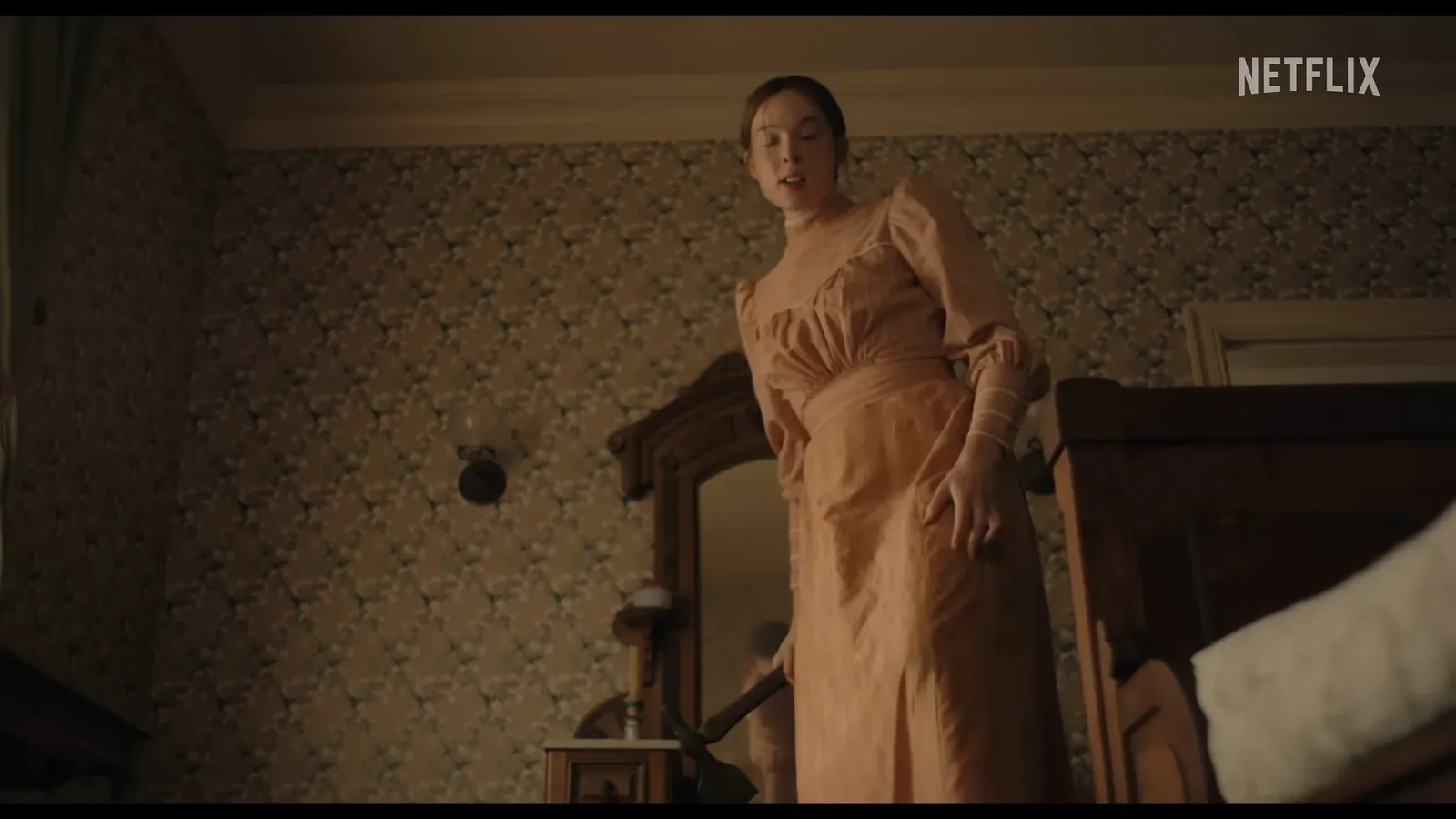
That ambiguity is particularly important ahead of Netflix’s Monster: The Lizzie Borden Story, because the series is offering its own highly dramatized interpretation of a mystery history never definitively solved.
What happened to Andrew and Abby Borden?
On August 4, 1892, Abby Borden was attacked in an upstairs guest bedroom at the family’s home in Fall River, Massachusetts.
Andrew returned home later that morning and was subsequently killed while resting on a sofa downstairs. Investigators concluded that Abby had died before her husband, with at least an hour separating the murders.
That gap became an enduring problem for theories involving an unknown outsider.
Anyone responsible for both murders would seemingly have needed either to remain inside or around the property for an extended period without being detected, or to leave and return.
Lizzie and Bridget Sullivan, the family’s maid, were both at the property during important portions of the morning.
Why did investigators suspect Lizzie?
There was no eyewitness who saw Lizzie attacking either victim, but several circumstances troubled investigators.
She stood to benefit financially from her father’s death. Prosecutors also focused on testimony that Lizzie had allegedly attempted to purchase prussic acid shortly before the murders. Another damaging development came when family friend Alice Russell revealed that she saw Lizzie burning a dress a few days after the killings. Lizzie said the dress had been ruined by paint. Her account of where she had been also attracted attention.
Lizzie said she had gone to the barn before returning and discovering her father’s body. Investigators questioned whether that timeline made sense and whether someone inside the house could really have missed what had happened. There was another oddity surrounding Abby.
Lizzie said her stepmother had received a note asking her to visit a sick friend. No such note was ever produced, and the supposed sender was never identified. Abby’s body was actually upstairs throughout much of the period when Lizzie was discussing her as though she had gone out.
None of those points alone proved murder, but together they gave prosecutors their case.
Related: Monster: The Lizzie Borden Story Filming Locations
The prosecution had a major problem: physical evidence
For such a violent double homicide, the state could not place convincing forensic evidence on Lizzie.
No blood-covered clothing belonging to her was introduced as proof that she had wielded the murder weapon. Police recovered hatchets from the property, but investigators could not definitively establish one as the weapon used to kill both victims.
Fingerprint evidence did not rescue the investigation either. The technique was not yet routinely trusted by American law enforcement, and police did not develop fingerprints from the suspected weapon that could conclusively identify a killer.
The case was therefore built overwhelmingly on circumstances, behavior and motive.
Why was Lizzie Borden found not guilty?
The prosecution lost access to some of its most damaging material.
Judges excluded Lizzie’s inquest testimony, where prosecutors believed inconsistencies in her statements could have hurt her defense. Evidence concerning the attempted purchase of poison was also excluded at trial. Then there was the social reality of 1893.
Lizzie was a white, Protestant, middle-class Sunday school teacher presented before an all-male jury. Contemporary descriptions repeatedly emphasized her respectable appearance and supposedly delicate nature.
Smithsonian historian Joseph Conforti argues that class, gender and nativism all influenced the case. The idea that a woman of Lizzie’s social standing could possess either the physical strength or moral capacity for such brutal killings conflicted with powerful Victorian assumptions about women.
She also had the resources for an exceptional defense team, including former Massachusetts governor George Robinson.
The jury returned a not-guilty verdict after a remarkably brief deliberation.
Does her acquittal prove that Lizzie was innocent?
No. It proves that the prosecution failed to establish her guilt to the jury.
That distinction is why the case remains fascinating.
Alternative suspects and theories have circulated for generations, but none has produced evidence sufficient to identify another killer conclusively. Smithsonian notes that Lizzie was the only person ever charged with the murders.
She lived for another three decades after the trial, moving with her sister Emma into a more fashionable Fall River house called Maplecroft. Despite her acquittal, local suspicion followed her for the rest of her life.
Monster cannot settle a mystery that history did not
Netflix describes Monster: The Lizzie Borden Story as a dramatization about repression, power, revenge and the birth of an infamous cultural figure. Ella Beatty has said the season investigates Lizzie’s psychology and the continuing questions surrounding the crime.
That makes the series an interpretation rather than a verdict.
Unless previously unknown evidence somehow emerges, viewers should be cautious about coming away from Monster believing they have finally learned exactly what happened inside the Borden house.
The most accurate answer remains frustratingly simple: Lizzie Borden may have killed Andrew and Abby Borden, but more than 130 years later, nobody can prove that she did.