Wonka’s The Golden Ticket Filming Locations
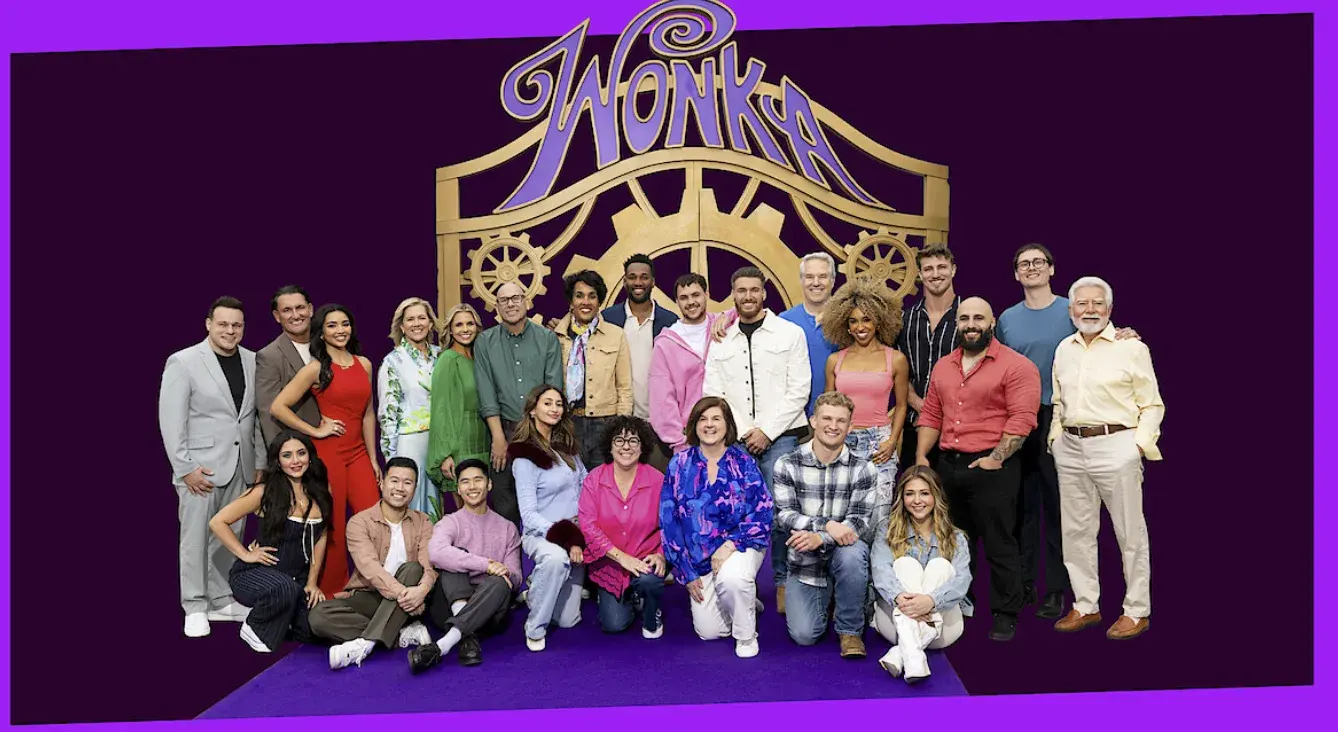
Netflix’s Wonka’s The Golden Ticket does not treat Willy Wonka’s Chocolate Factory like an ordinary game-show set. The nine-episode competition sends 12 Golden Ticket winners and their chosen partners through rooms filled with elaborate games, temptations, Oompa-Loompas and a new version of Wonkavision, all while drawing heavily on the visual personality of Willy Wonka &…
Netflix’s Wonka’s The Golden Ticket does not treat Willy Wonka’s Chocolate Factory like an ordinary game-show set. The nine-episode competition sends 12 Golden Ticket winners and their chosen partners through rooms filled with elaborate games, temptations, Oompa-Loompas and a new version of Wonkavision, all while drawing heavily on the visual personality of Willy Wonka & the Chocolate Factory. The scale makes the factory appear more like a sprawling attraction than a television production. Behind the gates, however, most of that world was created inside one of Australia’s biggest studio complexes, with another striking Sydney landmark helping complete the illusion.
Also Read: Habeas Corpus Filming Locations
Village Roadshow Studios, Gold Coast
The main filming location for Wonka’s The Golden Ticket is Village Roadshow Studios in Oxenford, Queensland, on Australia’s Gold Coast. Screen Queensland officially announced in October 2025 that Eureka Productions had begun shooting the Netflix series there, describing the set as a large “retro-futuristic” Wonka world created by Queensland crews. The production was expected to contribute around $17 million to the state’s economy and support more than 210 employment opportunities.
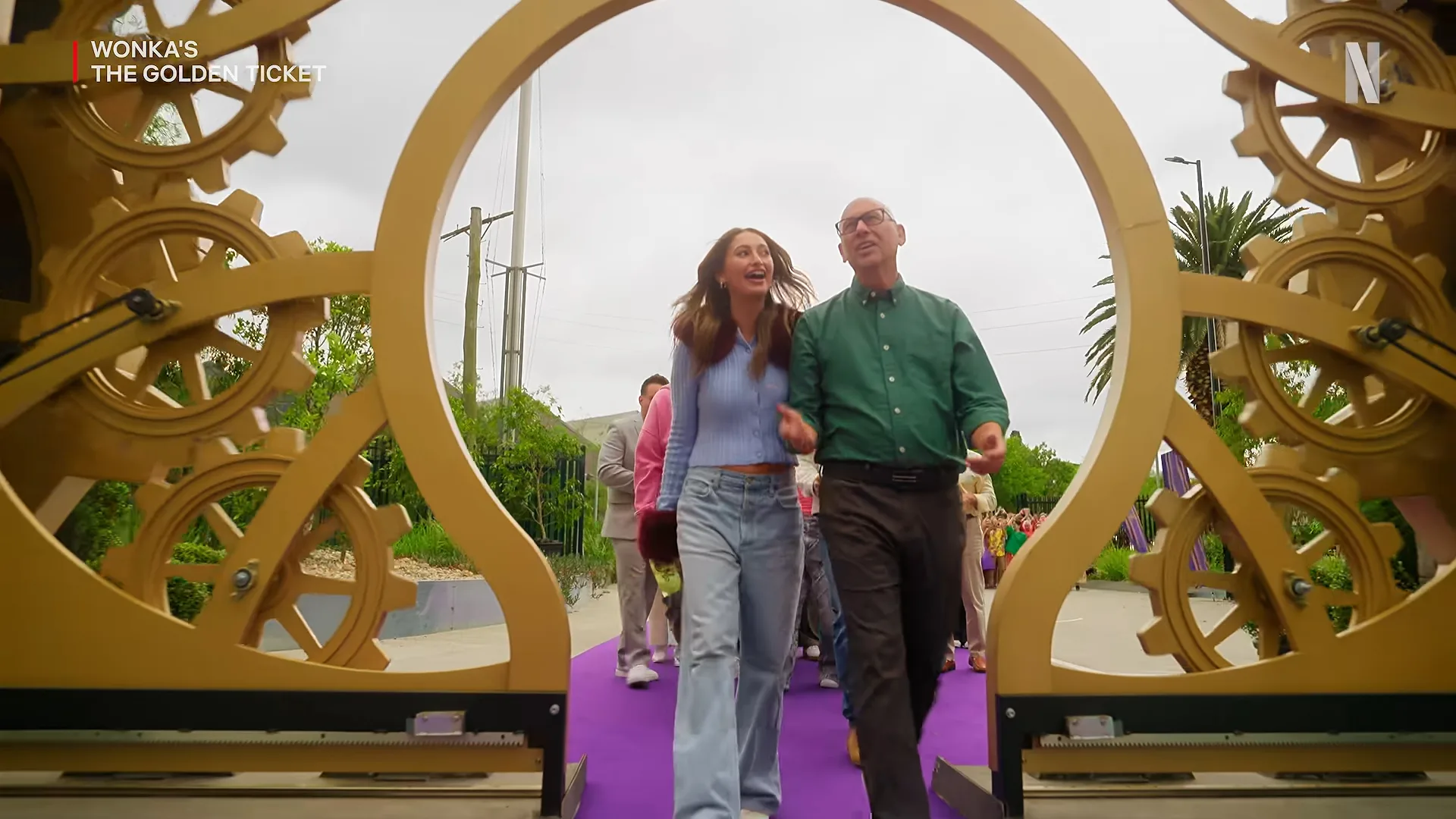
Village Roadshow Studios provided something a conventional location could not easily offer: enough controlled space to build an entire reality competition around the factory. Instead of finding a real confectionery plant and dressing its rooms, the production created purpose-built environments where games, cameras, practical effects and contestant movement could all be coordinated. That is why the factory can change so dramatically from one challenge to another while still feeling like part of the same eccentric world.
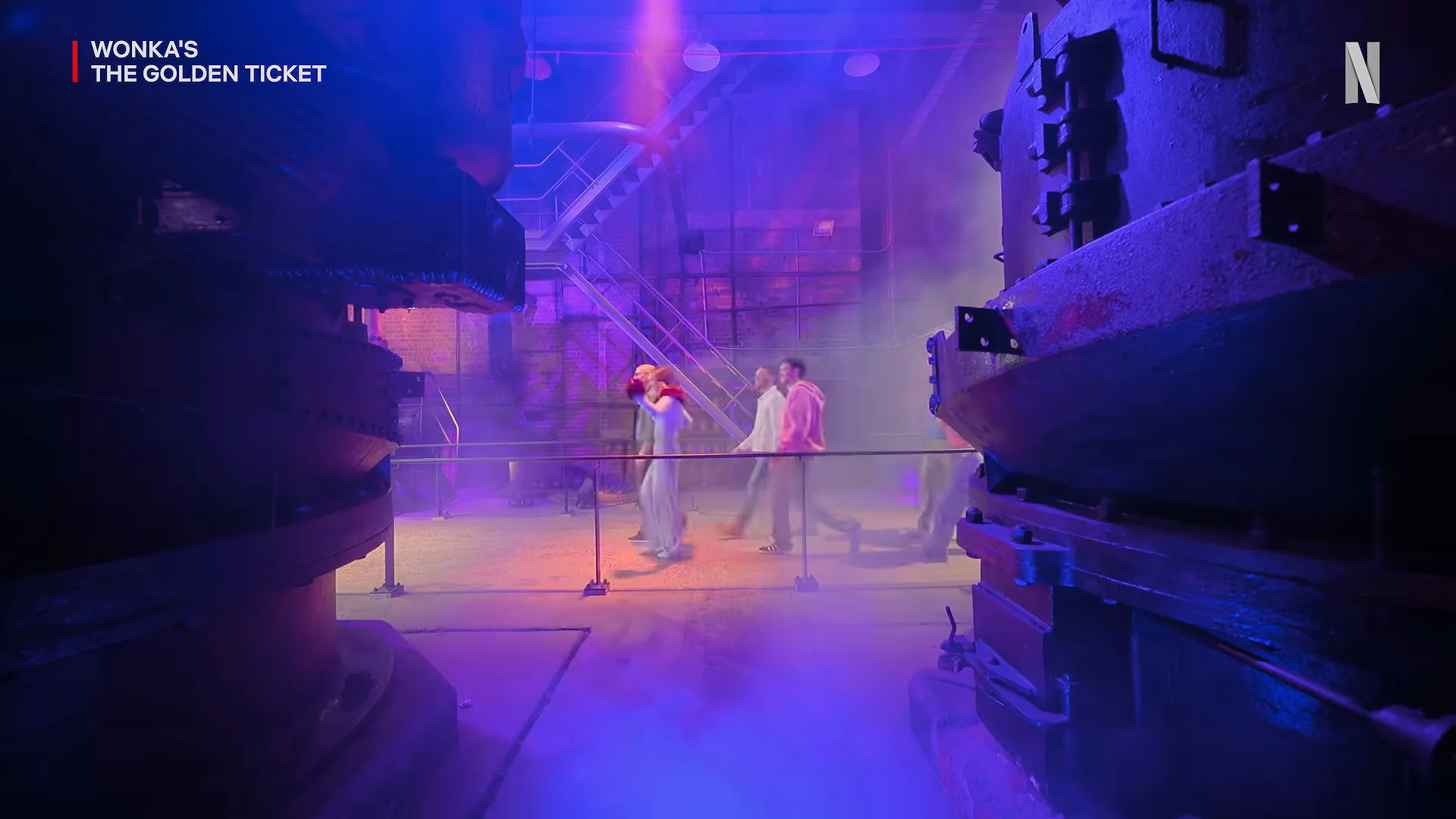
The Chocolate Factory Was Built for the Show
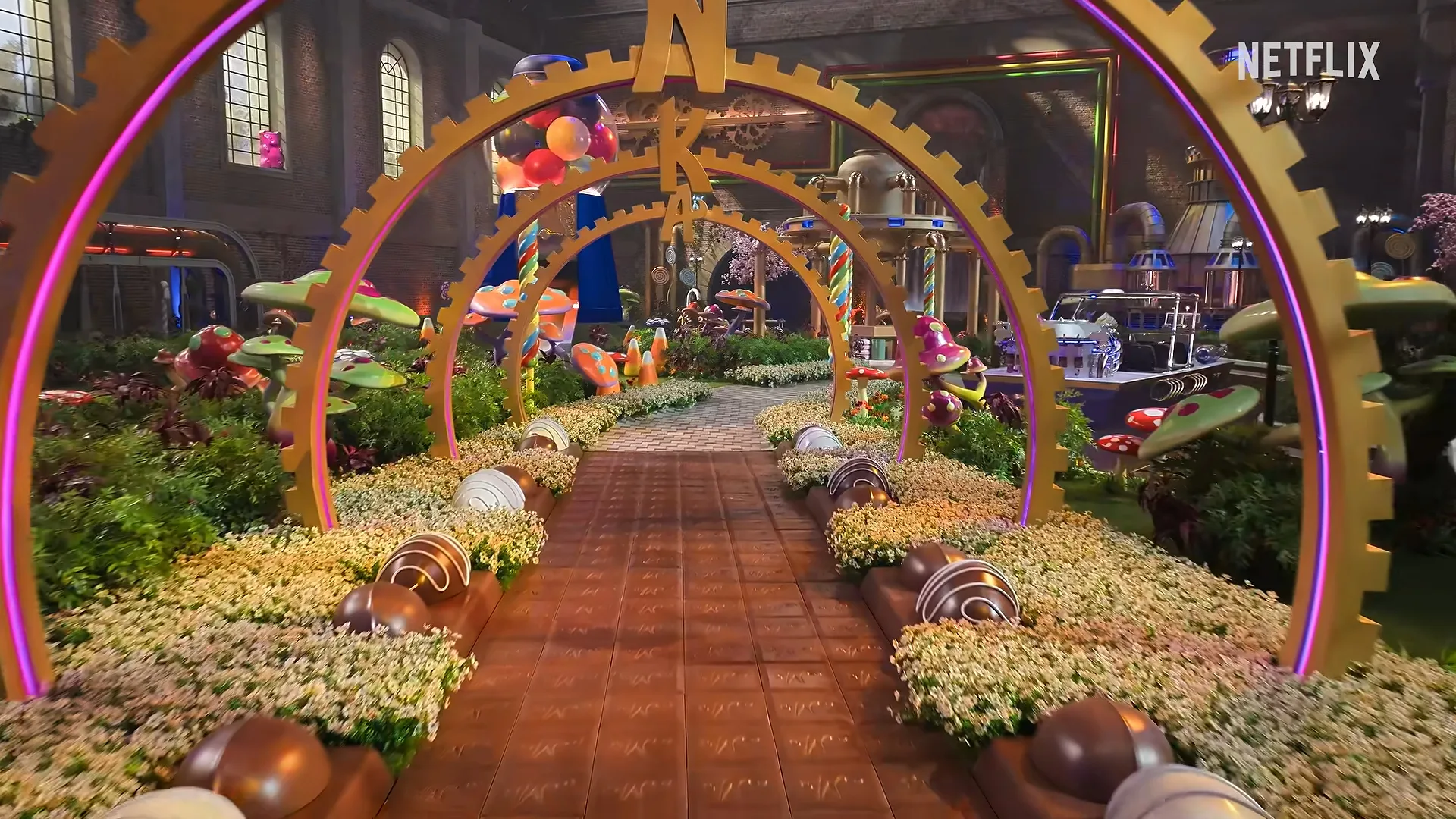
Much of what contestants experience inside Wonka’s factory is a physical set rather than a digital environment added later. Netflix’s own behind-the-scenes material shows the production leaning into elaborate practical spaces, including the candy-filled garden and Wonkavision 2.0, a bright studio where Howie Mandel, Nick Cannon and Wayne Brady appear during different games.
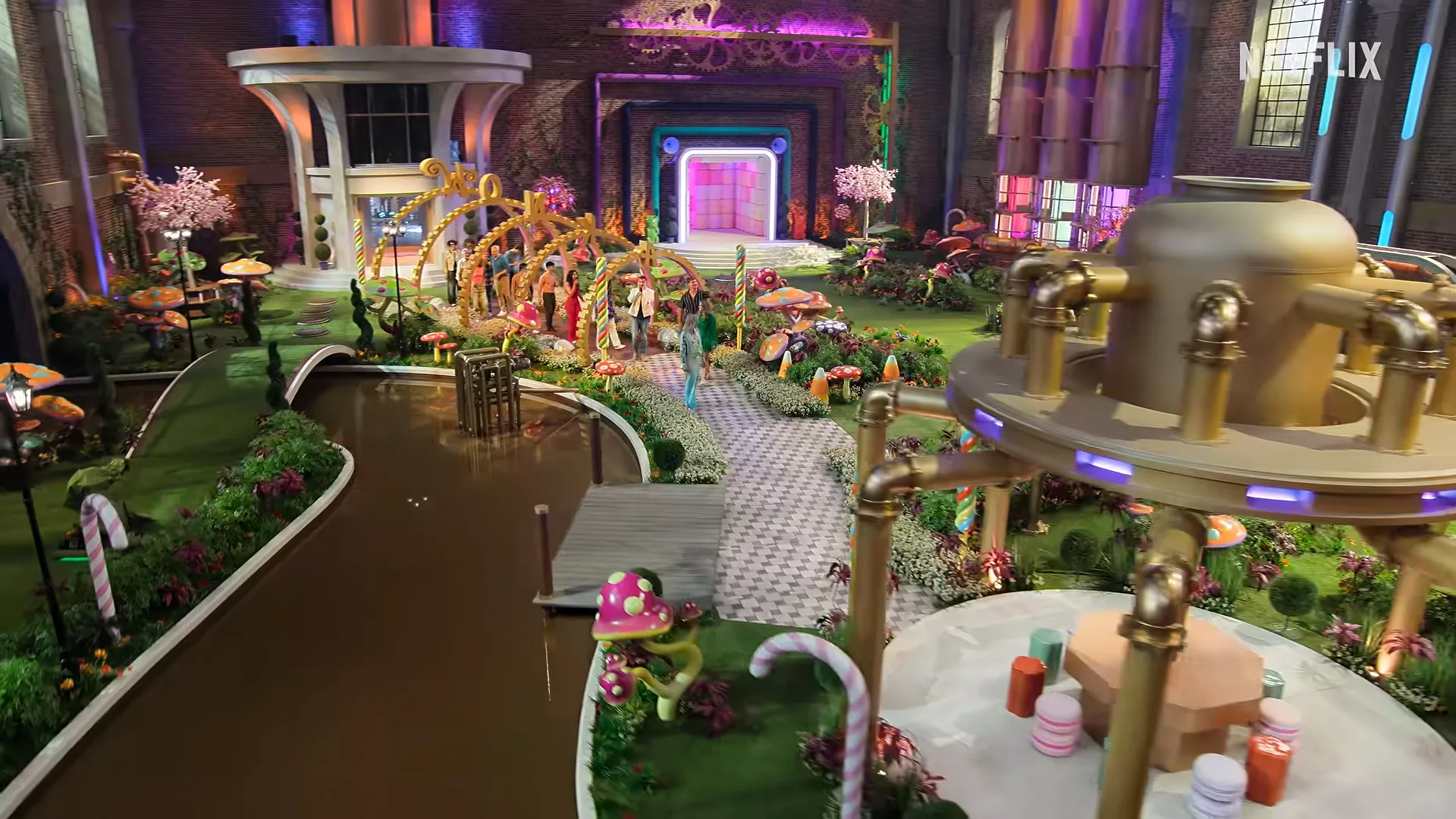
Australian magician and illusion designer Adam Mada was brought in to make some of the factory’s stranger ideas work in front of the contestants rather than relying entirely on editing. He told TheWrap that the production wanted many effects achieved in-camera, including illusions in which players appear to disappear while the people around them watch. Mada and set designer Chris Batson even constructed a replica environment in Sydney while developing and testing some of the illusions before they were used with the real contestants.
That practical approach helps explain why the finished factory feels unusually substantial for a reality competition. Contestants are genuinely walking into rooms designed around the game mechanics, rather than standing on a mostly empty stage surrounded by digital scenery. Oompa-Loompa performer Beccy Benjamin even recalled mistakenly trying a jelly bean on the set because parts of the environment looked convincing enough to eat.
White Bay Power Station, Sydney
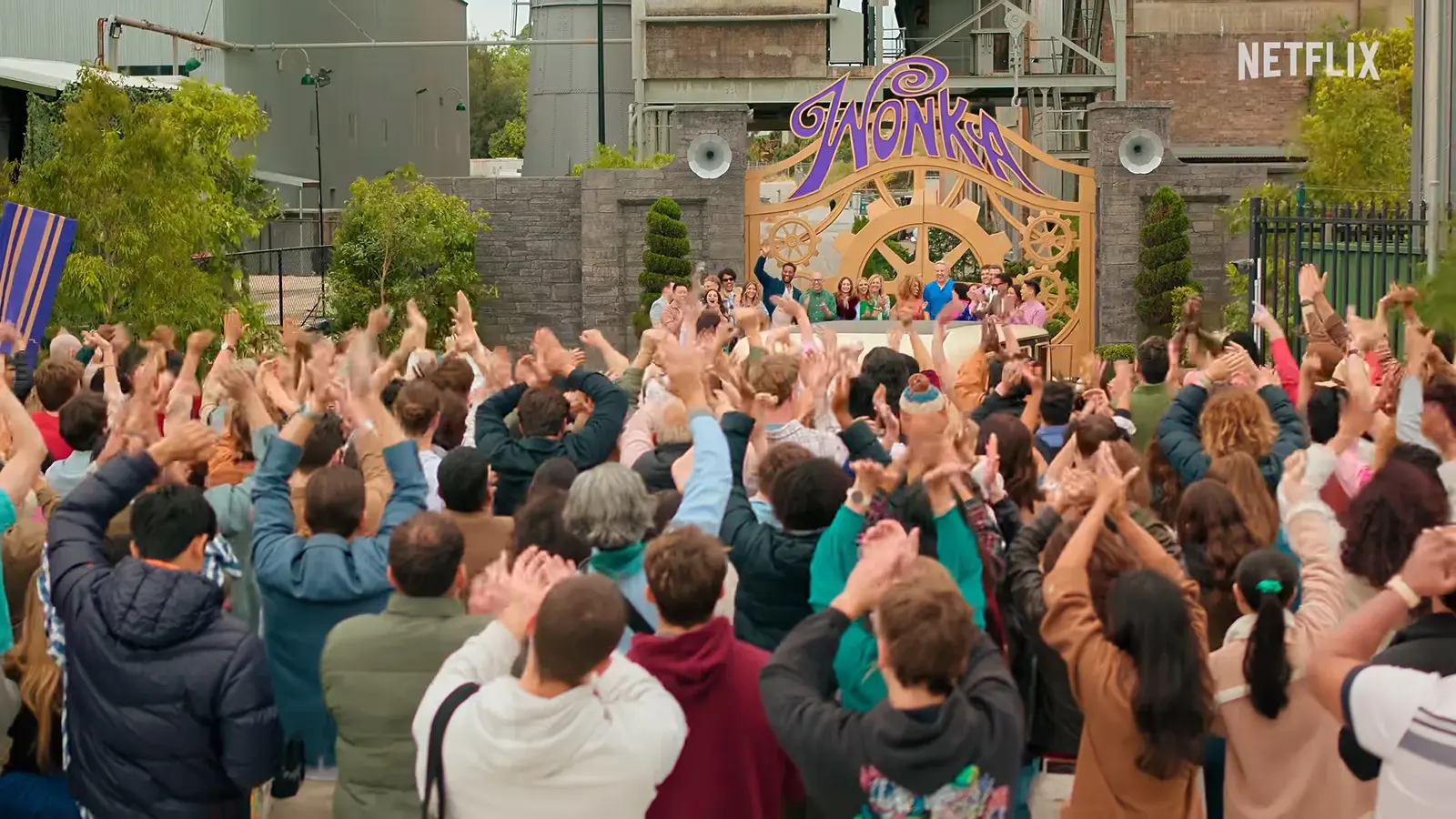
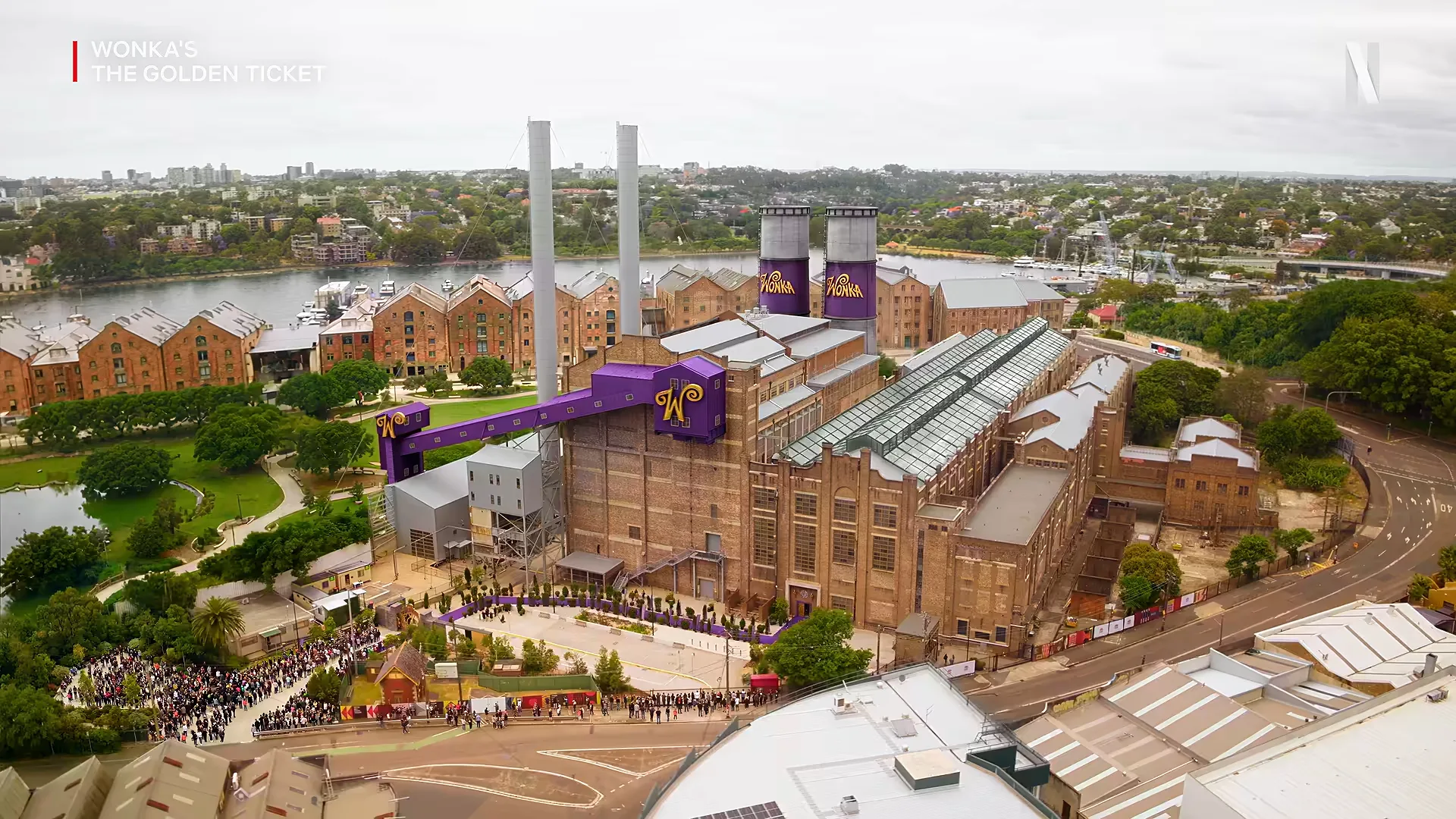
The production also used White Bay Power Station in Rozelle, Sydney, giving Wonka’s The Golden Ticket a second major Australian location. The heritage industrial site itself has confirmed that it served as a backdrop for the Netflix production, alongside other major screen projects filmed at the property.
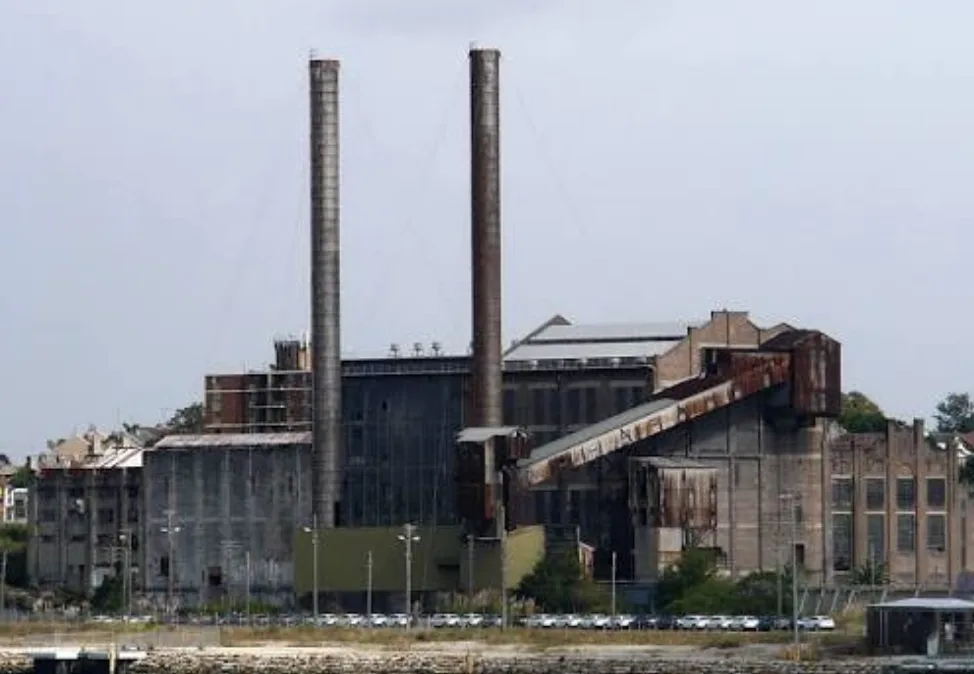
Location reporting identifies White Bay as the setting used for the imposing exterior of Wonka’s factory, with the former power station redressed to fit the fictional chocolate empire. Its enormous brick structure, industrial machinery and towering interior spaces already possess the kind of scale that would be difficult to reproduce simply by building a facade beside a studio. The contrast also works nicely with the Gold Coast interiors. Outside, the factory can appear mysterious and industrial; once contestants enter, the show can reveal the much brighter world constructed at Village Roadshow Studios.
White Bay Power Station has become an increasingly useful production venue since being revived for cultural events. The site’s official filming information highlights its expansive halls, corridors and industrial architecture, all of which make it adaptable for large television and film projects. Wonka’s The Golden Ticket uses precisely that quality, turning a former Sydney power station into part of a fantasy chocolate factory without needing to hide all of its industrial character.
Is Wonka’s Chocolate Factory a Real Place?
The factory seen in Wonka’s The Golden Ticket is not a real operating chocolate factory that visitors can tour. The central interiors were constructed for the competition at Village Roadshow Studios, while White Bay Power Station supplied additional real-world architecture for the production. The magical factory audiences see is therefore a combination of custom-built television sets, practical effects and carefully selected industrial surroundings.
That distinction is important because the series deliberately tries to make the contestants feel as though they have entered an actual Wonka environment. The Oompa-Loompas interact with them inside the spaces, practical illusions happen in real time and the games are integrated into the scenery rather than placed on generic competition stages. The factory is fictional, but a surprisingly large amount of what the contestants encounter physically existed during filming.
Why Australia Worked for Wonka’s The Golden Ticket
Australia gave the production both sides of what it needed. The Gold Coast offered a major studio complex capable of housing the colorful factory interiors, while Sydney provided an enormous industrial landmark that could contribute exterior scale. Keeping the production within Australia also allowed Eureka Productions, which has a Sydney base, to draw heavily on local designers, builders, technicians and performers.
The decision fits the unusual challenge of adapting Wonka into reality television. A normal game show can build one stage and rearrange it between rounds, but Wonka’s The Golden Ticket needs contestants to believe they are moving deeper into a strange factory with its own rules and surprises. Village Roadshow Studios gave the designers room to create that world, while White Bay Power Station supplied a real piece of industrial architecture large enough to make the factory seem as imposing from the outside as it does once the games begin.