Why Is Rebecca Suspicious of Zelda Southport in Ted Lasso Season 4?
Keeley comes away from Zelda Southport’s speech in Ted Lasso Season 4 Episode 4 ready to bring her closer to AFC Richmond almost immediately. Rebecca has the opposite reaction. She recognizes Zelda’s success, her money and her obvious commitment to women’s sport, but she also begins looking into the person behind the public persona before…
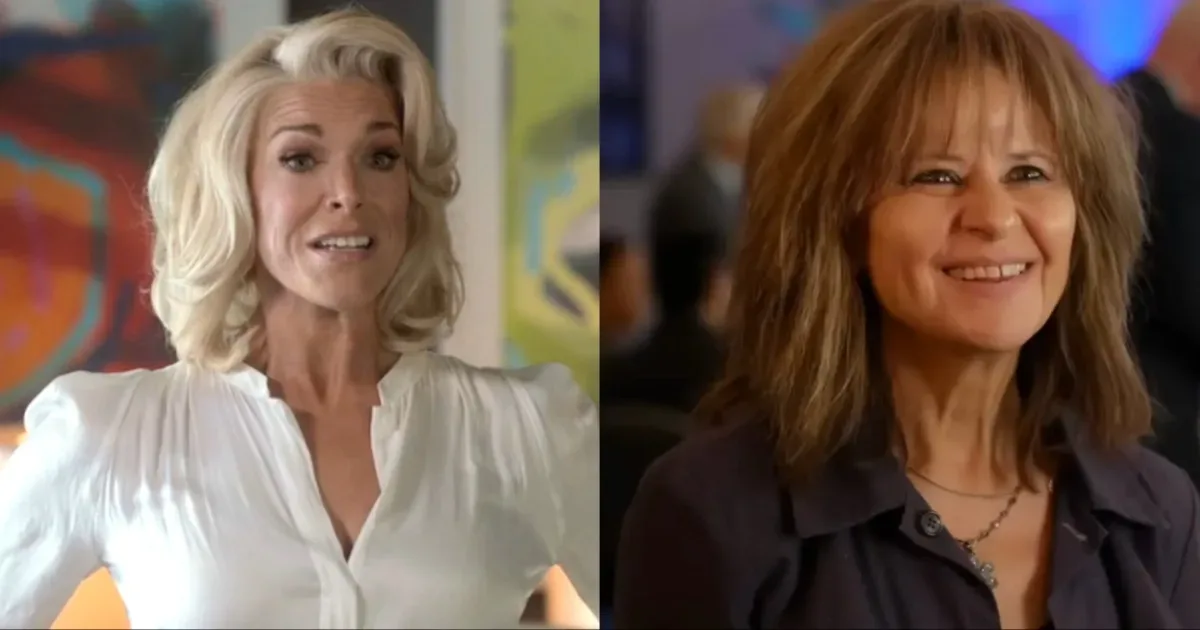
Keeley comes away from Zelda Southport’s speech in Ted Lasso Season 4 Episode 4 ready to bring her closer to AFC Richmond almost immediately. Rebecca has the opposite reaction. She recognizes Zelda’s success, her money and her obvious commitment to women’s sport, but she also begins looking into the person behind the public persona before agreeing to do business with her. That research turns up a different legal name, an old arrest and a personal history colorful enough to make Rebecca uncomfortable with Keeley’s enthusiasm. Rebecca does not believe Zelda is necessarily dangerous or dishonest. Her concern is much simpler: Richmond barely knows her, and Keeley is already treating charisma like trust.
Who Is Zelda Southport in Ted Lasso Season 4?
Zelda Southport is an influential investor in women’s professional sports who enters Ted Lasso Season 4 through the summit attended by Keeley and Rebecca. Played by Tracey Ullman, Zelda is introduced as the managing partner of Scorpio Sports, an investment operation with enormous financial resources and a particular interest in women’s athletics. Keeley is immediately impressed by both her success and her willingness to criticize wealthy organizations that publicly celebrate women’s sports without putting meaningful money behind them. Rebecca is intrigued too, but her instinct is to learn much more about Zelda before allowing her anywhere near Richmond’s business.
“Zelda Southport” also turns out not to be the name she was born with. Rebecca’s research identifies her as Carol Dring and uncovers an old arrest involving an alleged threat against a club owner with butter knives, along with Zelda’s colorful history around the music scene. None of that proves she is dishonest about her current business, but it explains why Rebecca becomes uncomfortable with Keeley’s eagerness to trust her after a single meeting. Zelda’s public persona is polished enough to attract investors and rebellious enough to fascinate Keeley, while Rebecca wants to know how much of that persona is carefully constructed.
Episode 4 then demonstrates why Zelda could be extremely valuable to Richmond. When Ted and the women’s team end up at the police station after the pub fight, Zelda uses an old connection with the Chief Constable to arrange their release and apparently keep the incident from damaging their records. She immediately sees promotional value in the arrest as well, recognizing that the story of Richmond’s women standing together can be turned into publicity rather than embarrassment. That mix of money, influence and unconventional problem-solving is exactly what attracts Keeley and exactly what makes Rebecca cautious.

Zelda makes exactly the impression Keeley wants
Zelda is introduced at the women’s sports summit as the managing partner of Scorpio Sports, a major investment fund focused exclusively on women’s professional athletics. Her keynote speech immediately distinguishes her from the safer corporate voices in the room. Instead of congratulating wealthy attendees for supporting women’s football, she criticizes people who use the sport for publicity and reputation laundering without genuinely caring about it.
Keeley is captivated by the bluntness. Zelda talks the way Keeley often wishes powerful people would talk, and her willingness to mock the room makes her seem less like another investor and more like somebody who understands how women’s sport is routinely undervalued.
The financial appeal is obvious too. Keeley points out that Zelda has access to around a quarter of a billion dollars and sees very little downside in bringing somebody with that influence into Richmond’s orbit.
Rebecca is impressed enough to listen, but not enough to skip the questions that come afterward.
Why does Rebecca investigate Zelda?
Rebecca’s concern starts with Zelda’s identity. She discovers that “Zelda Southport” is not actually her legal name and that she was originally called Carol Dring. Keeley sees the alternate name as harmless, possibly a leftover from Zelda’s punk-rock years, while Rebecca treats it as one more reason to learn who they are dealing with before signing anything.
Rebecca also finds an old arrest involving Zelda allegedly threatening a club owner with a pair of butter knives. The detail is ridiculous enough to sound almost charming within Ted Lasso’s world, and Keeley quickly points out that both she and Rebecca have things in their past that could look terrible without context. Rebecca does not really disagree with that. Her objection is to speed.
She tells Keeley they cannot be naive and jump into business with everyone they meet. That line explains her entire position better than the arrest does.
Rebecca has no moral objection to somebody having an unconventional past. She simply wants Richmond to know the person behind the sales pitch before tying the club to her financially.
Related: Are Trent Crimm and Dr. Sharon Getting Together in Ted Lasso Season 4?
Rebecca has good reasons to be more cautious than Keeley
Season 4 has placed Rebecca in a very different position from Keeley. Keeley can afford to become excited by Zelda’s personality and imagine the marketing, investment and cultural possibilities. Rebecca has to think about what happens if the partnership goes wrong.
The women’s team is still new. Richmond is trying to establish credibility around the project while dealing with shareholders, finances, recruitment and public skepticism. Bringing in a major outside investor could accelerate everything, but it could also change who controls the project and what pressures are placed on the club.
Rebecca has also spent years dealing with powerful people whose charm concealed very different motives. Rupert is the obvious example, but the larger lesson is that confidence and access are not the same thing as trustworthiness.
That history makes Rebecca’s instinct almost automatic now. She can like Zelda and still investigate her.
In fact, that may be one of the clearest signs of how much Rebecca has changed since the earliest seasons. She is no longer making major decisions primarily from anger, fear or the need to prove something. She is acting like an owner responsible for what Richmond becomes next.
Zelda getting the team out of jail proves both Keeley and Rebecca right
The police-station sequence is where Zelda becomes much harder to categorize. Ted and Richmond’s women’s team have been arrested after the quiz-night brawl, but by the time Rebecca and Keeley arrive, the players are already being released. Zelda arranged it.
She explains that the Chief Constable is an old connection from her touring days. According to Zelda, he once bought heroin from her drummer and still has a cocaine connection through him, leaving the senior police figure owing Zelda a favor.
Keeley hears this story and thinks Zelda is a legend. Rebecca’s earlier caution suddenly looks considerably more reasonable.
Yet the result is undeniably useful. Zelda gets the team out without Richmond paying bail and apparently prevents the incident from becoming a formal stain on their records.
The scene therefore refuses to make either Keeley or Rebecca simply wrong. Zelda’s questionable connections are exactly the sort of thing Rebecca was worried about, while those same connections immediately solve a crisis nobody else had managed to solve.
Why does Zelda want publicity from the arrest?
Zelda instantly understands that the night can be converted from scandal into identity. Rather than trying to pretend the arrest never happened, she encourages Keeley to recognize the publicity value in a women’s team getting into a fight after uniting against misogynistic men at the pub.
Keeley understands the opportunity immediately. By the end of the episode, she wants to turn the attention into something bigger than a newspaper feature and starts talking about selling out Nelson Road. This is another reason Zelda appeals to her.
Zelda sees women’s sport as a product that should not apologize for demanding attention. She understands provocation, personality and spectacle, while Richmond has been trying to make its new team feel culturally relevant rather than merely worthy of support. Rebecca sees the same talent. She also sees how quickly Zelda can manipulate an institution, a police connection and a news cycle to produce the result she wants. That combination can be incredibly valuable. It can also become dangerous if Richmond does not know where Zelda’s boundaries are.
Is Zelda supposed to be a villain?
Episode 4 gives no evidence that Zelda is a villain. Her speech about women’s sport is consistent with the values Richmond is trying to build, and everything she does after meeting Keeley ultimately helps the club. The episode instead presents Zelda as unpredictable.
She is wealthy, politically connected, rebellious and apparently completely unembarrassed by the messier parts of her history. She also seems capable of operating in spaces where Rebecca normally expects some degree of institutional restraint. That is why Rebecca’s suspicion should not be confused with hostility.
She does not tell Keeley never to work with Zelda. She says they should not rush into business with somebody they met a few hours earlier. Keeley is attracted to Zelda’s possibility. Rebecca is thinking about Zelda’s consequences. Both instincts will probably matter if Zelda becomes more deeply involved with Richmond.
Why Rebecca’s caution could matter next
Episode 4 ends with Zelda having done almost everything necessary to make herself useful to the women’s team. She inspires Keeley, gets Richmond out of legal trouble and immediately finds a way to turn their arrest into publicity. That makes Rebecca’s hesitation more interesting rather than less relevant.
If Zelda had simply behaved suspiciously, Rebecca’s decision would be easy. Instead, she is dealing with somebody whose unusual methods repeatedly produce results. The real test will be whether those methods continue aligning with Richmond’s values once money, ownership or control becomes part of the relationship.
The next episode’s pressure around the Chelsea match will only make outside support more attractive. Richmond is facing one of the strongest teams it has encountered while still trying to build an audience and establish legitimacy. Zelda looks like someone who could speed that process up dramatically. Rebecca’s question is whether speed is the same thing as progress.
Ted Lasso Episode 4 does not answer that yet, but it makes clear why Rebecca refuses to let Keeley’s excitement answer it for her.