Why Did Tom Betray Olive in The Love Hypothesis?
Tom Benton initially seems like the person capable of opening exactly the professional door Olive Smith has been searching for in Prime Video’s The Love Hypothesis. Olive has spent years developing research that matters deeply to her, and Tom’s position at Harvard makes his interest in that work appear like a major step forward. Because…

Tom Benton initially seems like the person capable of opening exactly the professional door Olive Smith has been searching for in Prime Video’s The Love Hypothesis. Olive has spent years developing research that matters deeply to her, and Tom’s position at Harvard makes his interest in that work appear like a major step forward. Because he is also one of Adam Carlsen’s professional friends, Olive has little reason at first to suspect that the opportunity comes with conditions he has deliberately kept hidden.
Arty Froushan plays Tom opposite Lili Reinhart’s Olive and Tom Bateman’s Adam. His role turns the movie’s final act away from the relatively safe complications of fake dating and toward a more serious question about power inside academia. Tom does not betray Olive because her work suddenly disappoints him. He betrays her because he believes his professional status gives him the ability to demand something from her and punish her if she refuses.
Related: The Love Hypothesis Ending Explained: Do Olive and Adam End Up Together?
Why Does Olive Trust Tom?
Tom presents himself as an established scientist interested in helping a promising younger researcher. Olive needs access to stronger resources if she wants to move her work forward, and the possibility of joining a Harvard lab therefore feels like an opportunity she cannot dismiss. Nothing about that initial arrangement requires Olive to view Tom as anything other than a potential mentor.
Adam’s friendship with Tom also helps create a sense of safety. Olive has learned that Adam’s difficult reputation does not accurately describe the person he is privately, so she has little reason to assume someone within Adam’s trusted professional circle will behave differently. Tom benefits from that assumption without earning it.
This is why his later behavior feels like a betrayal rather than simply the arrival of an obvious antagonist. Tom allows Olive to believe their relationship is based on science and merit until she is professionally invested enough for him to use that investment against her.
Why Does Tom Talk to Adam First?
The movie makes Tom’s manipulation more complicated by having him approach Adam before directly pressuring Olive. After Olive and Adam become intimate at the conference, Tom encourages Adam to think about Olive’s Harvard opportunity and her future. His argument makes Adam worry that a serious relationship with him could influence Olive’s choices or keep her from pursuing what is best for her career.
Adam begins stepping back because he believes he is giving Olive space rather than rejecting her. That misunderstanding gives Tom an advantage because Olive sees Adam becoming distant without knowing that Tom helped create the situation. Tom is therefore manipulating both characters at once, using their concern for each other as a weakness.
It is a cleverer strategy than simply threatening Olive from the beginning. By influencing Adam first, Tom helps isolate her before revealing what he actually wants. Both Olive and Adam are left thinking separation may be the responsible choice when neither understands the full situation.

What Does Tom Want From Olive?
Tom eventually makes his intentions clear when he approaches Olive directly. The Harvard opportunity is no longer presented as something she has earned entirely through her work. Instead, he makes inappropriate personal demands and suggests that refusing him could damage her research future.
He also threatens the work itself. For Olive, this is arguably even more frightening than losing one lab opportunity because her research represents years of effort and a career she has fought to build. Tom knows that attacking the work gives him leverage over someone who would otherwise simply walk away from him.
The movie therefore frames Tom’s behavior as an abuse of professional power. The problem is not merely that Olive rejects an unwanted advance. It is that someone with greater status tries to make her believe the price of saying no could be losing control of her own scientific future.
Why Doesn’t Olive Tell Adam?
Olive’s silence initially comes from loyalty rather than distrust. She knows Adam and Tom are professionally connected and assumes exposing Tom could create serious consequences for Adam as well. Rather than make Adam choose between her and his colleague, Olive tries to remove herself from the equation.
That choice is emotionally consistent with the woman who started fake dating Adam because she wanted Anh to feel free to pursue Jeremy. Olive repeatedly sacrifices her own comfort because she believes doing so will simplify somebody else’s life. The Boston crisis demonstrates how dangerous that instinct becomes when the person benefiting from her silence is someone like Tom.
Olive also does not yet understand how completely Adam’s priorities have changed. She still thinks part of their relationship belongs to the original fake-dating arrangement. Adam’s eventual response shows that Tom’s friendship was never something he would value more highly than knowing what happened to Olive.
Why Does Olive Tell Anh?
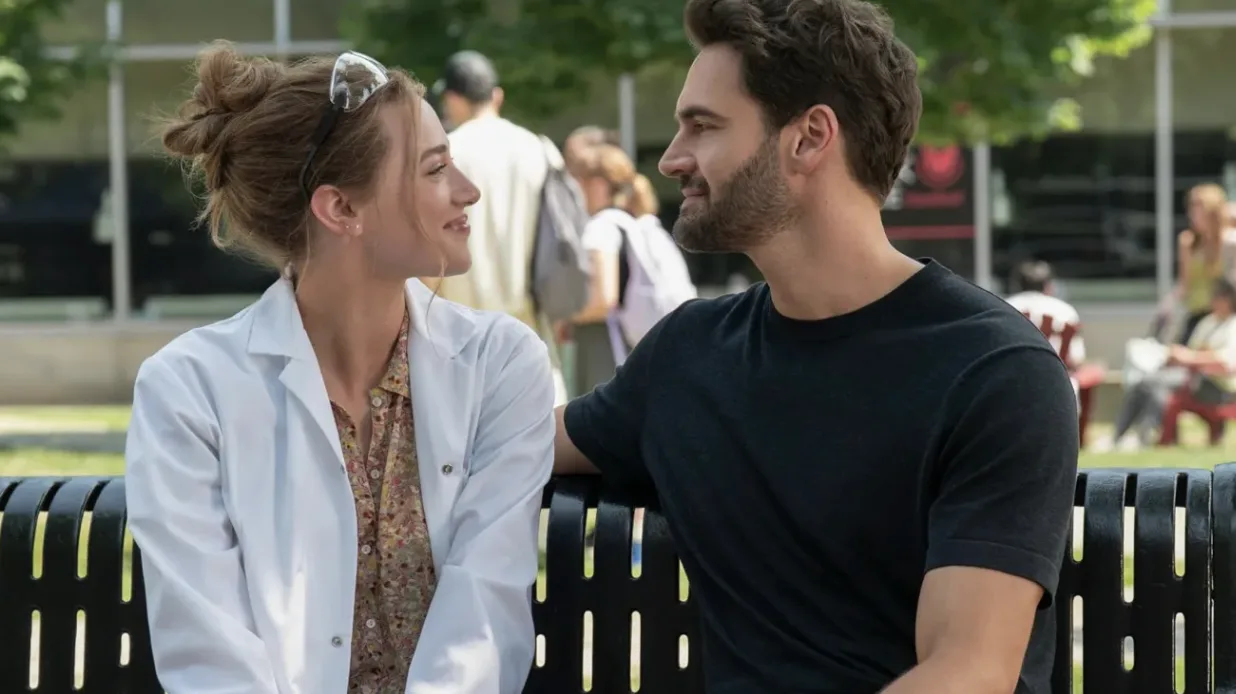
Olive eventually tells Anh the truth, including the fact that her relationship with Adam began as fake dating. She also explains what Tom did at the conference. Confiding in Anh breaks the pattern that has kept Olive isolated since Boston.
Anh immediately understands something Olive has been avoiding: Adam deserves to know. Olive has been trying to protect him by withholding information, but that means Tom’s version of events is still influencing his choices. Anh refuses to let that continue.
The moment also strengthens one of the movie’s most important non-romantic relationships. Lili Reinhart has described Olive and Anh’s friendship as foundational to the story, and the finale proves that friendship works in both directions. Olive created the fake relationship partly for Anh’s happiness, while Anh ultimately becomes the person who helps save Olive’s real relationship.
Does Adam Believe Olive?
Yes. Once Anh tells Adam what happened, his reaction leaves little room for doubt. He does not defend Tom merely because they have history together, nor does he ask Olive to protect Tom’s reputation for the sake of their professional circle.
Adam confronts Tom during a class, and the situation is livestreamed. That matters because Tom relied on privacy, hierarchy and uncertainty when he pressured Olive. Once his behavior is discussed publicly, his ability to control the story begins collapsing.
The confrontation also gives Olive the answer she was afraid to ask for. Adam would rather lose his relationship with Tom than preserve a friendship built around behavior he cannot accept. Olive’s attempt to shield him was therefore based on a choice Adam never would have made.
What Happens to Olive’s Research?
Olive does not surrender the work that brought her to the conference. She turns to Dr. Juliet Aslan, who gives her a professional route forward and helps ensure Tom cannot simply use the Harvard opportunity as a weapon against her. Jeananne Goossen plays Dr. Aslan in the movie.
That resolution is essential because defeating Tom cannot simply mean Olive gets Adam back. If the romance were the only reward, the story would still leave Tom with too much power over the scientific career he tried to control. Protecting Olive’s research establishes that she can survive the professional crisis without abandoning the work itself.
The two-year epilogue confirms how completely that threat fails. Olive becomes a professor at Stanford and develops such a demanding reputation that students refer to her as “Dr. Smite.” Tom tried to convince her that her future depended on people like him, but the ending shows her building authority of her own.
What Happens to Tom?
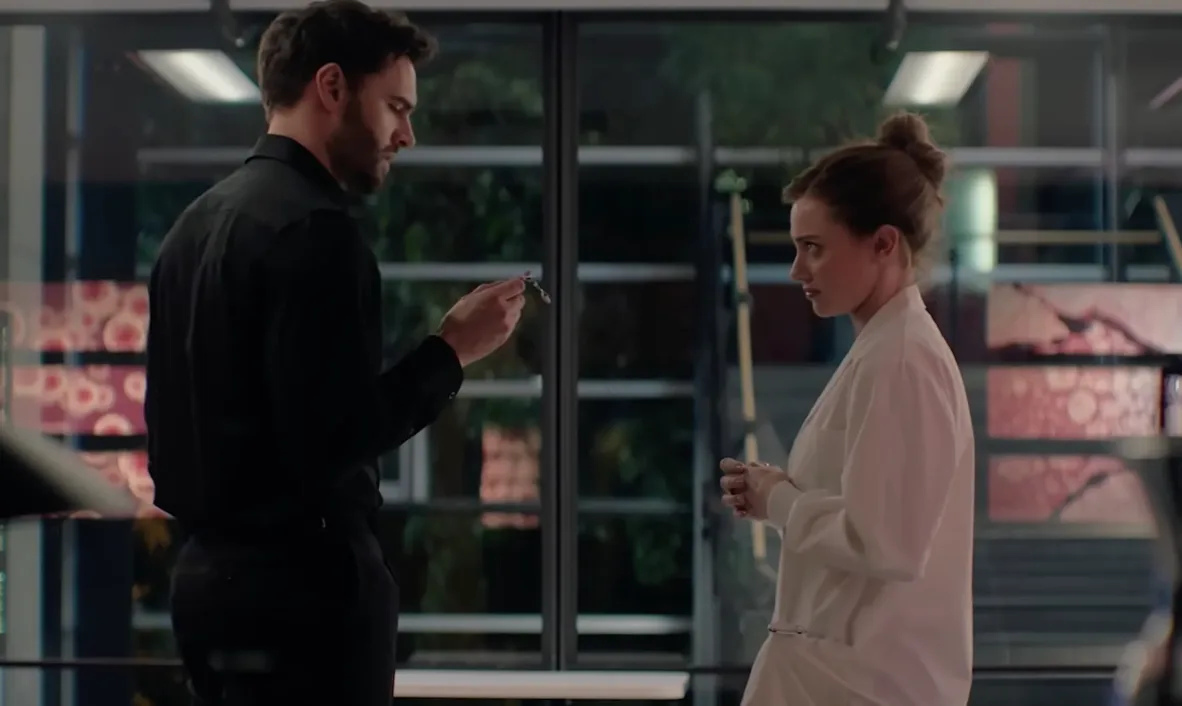
Tom is publicly confronted and professionally exposed, but the movie does not spend its final minutes detailing every disciplinary consequence that follows. Adam’s confrontation makes clear that their friendship is finished, and the livestream ensures the incident is no longer something Tom can contain privately. Serious damage to his academic standing is therefore strongly implied.
It is safer, however, not to state that the movie explicitly shows him being fired or permanently blacklisted. The novel gives Tom a more defined professional downfall, while the film moves quickly toward Olive and Adam’s emotional resolution. The screen version is interested primarily in removing Tom’s control over Olive rather than giving viewers a procedural account of his punishment.
Tom’s real defeat comes from the collapse of the power imbalance he relied upon. Olive protects her research, Adam learns the truth, and the attempt to keep both of them separated fails. The person Tom assumed would remain quiet becomes a Stanford professor two years later, while his own reputation has been publicly compromised.
Why Tom’s Betrayal Matters
Tom is not simply a late villain inserted to delay Olive and Adam’s happy ending. He forces Olive to confront a flaw that has shaped almost every part of the story: her belief that protecting people requires making difficult decisions for them in secret. That instinct works badly in romance and becomes even more dangerous in academia.
His manipulation also demonstrates the difference between Adam’s reputation and Tom’s reality. Adam is feared by students because he is demanding and blunt, but he consistently respects Olive’s work and choices. Tom appears charming and professionally supportive before revealing that he views his status as permission to manipulate someone with less power.
By exposing that contrast, The Love Hypothesis makes Tom’s betrayal central to both Olive’s romantic and professional growth. She does not defeat him by choosing Adam instead of science. She emerges from the crisis with Adam beside her and a scientific future that eventually makes “Dr. Smite” one of Stanford’s intimidating professors in her own right.