The Love Hypothesis Movie vs. Book: What Changed?
Prime Video’s The Love Hypothesis stays recognizably close to Ali Hazelwood’s bestselling 2021 novel, but adapting Olive Smith‘s intensely internal romantic journey into a feature film required more than simply shortening scenes. The book can spend pages inside Olive’s thoughts while she misreads Adam Carlsen’s feelings, worries about her research and invents increasingly complicated reasons…

Prime Video’s The Love Hypothesis stays recognizably close to Ali Hazelwood’s bestselling 2021 novel, but adapting Olive Smith‘s intensely internal romantic journey into a feature film required more than simply shortening scenes. The book can spend pages inside Olive’s thoughts while she misreads Adam Carlsen’s feelings, worries about her research and invents increasingly complicated reasons why their fake relationship cannot possibly be real. Claire Scanlon’s movie has to communicate those same emotions through dialogue, performances and a much faster narrative rhythm.
Lili Reinhart, who stars as Olive and serves as an executive producer, said maintaining the integrity of the characters and doing justice to Hazelwood’s source material was important to the production. That intention is visible in the number of famous book moments preserved on screen, but the released film also removes characters, moves revelations, changes the way the Tom Benton conflict is resolved and replaces the novel’s shorter romantic epilogue with a larger two-year look at Olive’s future.
Related: The Love Hypothesis Ending Explained: Do Olive and Adam End Up Together?
The Fake Dating Story Is Mostly the Same
The movie keeps the premise almost exactly where readers expect it. Olive wants Anh to believe she has moved on from Jeremy, impulsively kisses Adam and then enters a fake relationship with him. Adam agrees because Stanford’s uncertainty about his long-term plans is affecting his research support, giving him a professional reason to appear settled at the university.
That central structure is important because the adaptation never tries to reinvent the novel into a different kind of romance. Olive and Adam still move from reluctant collaborators to people who are clearly attracted to one another long before Olive can admit what is happening. The film simply reaches those emotional milestones more efficiently.
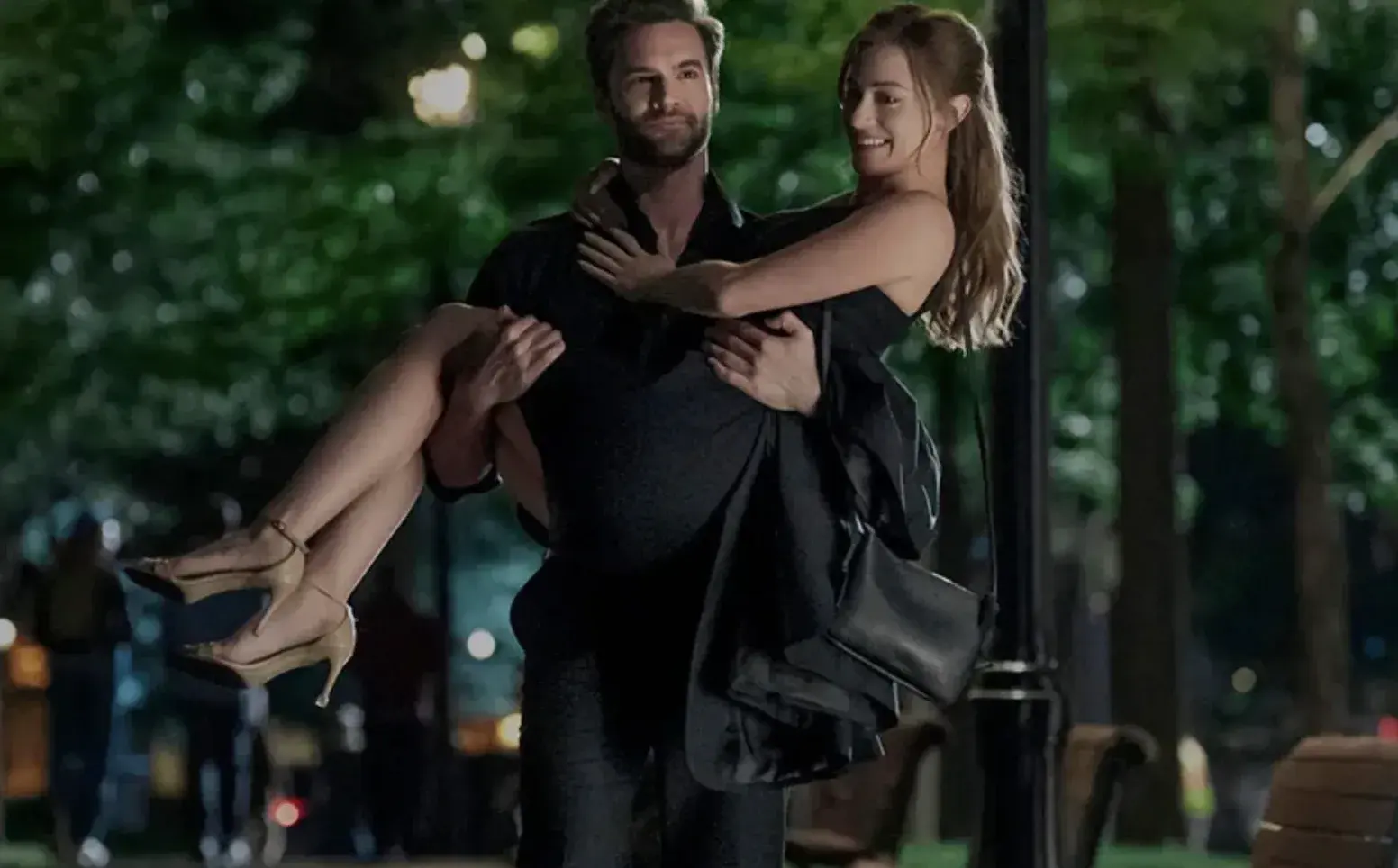
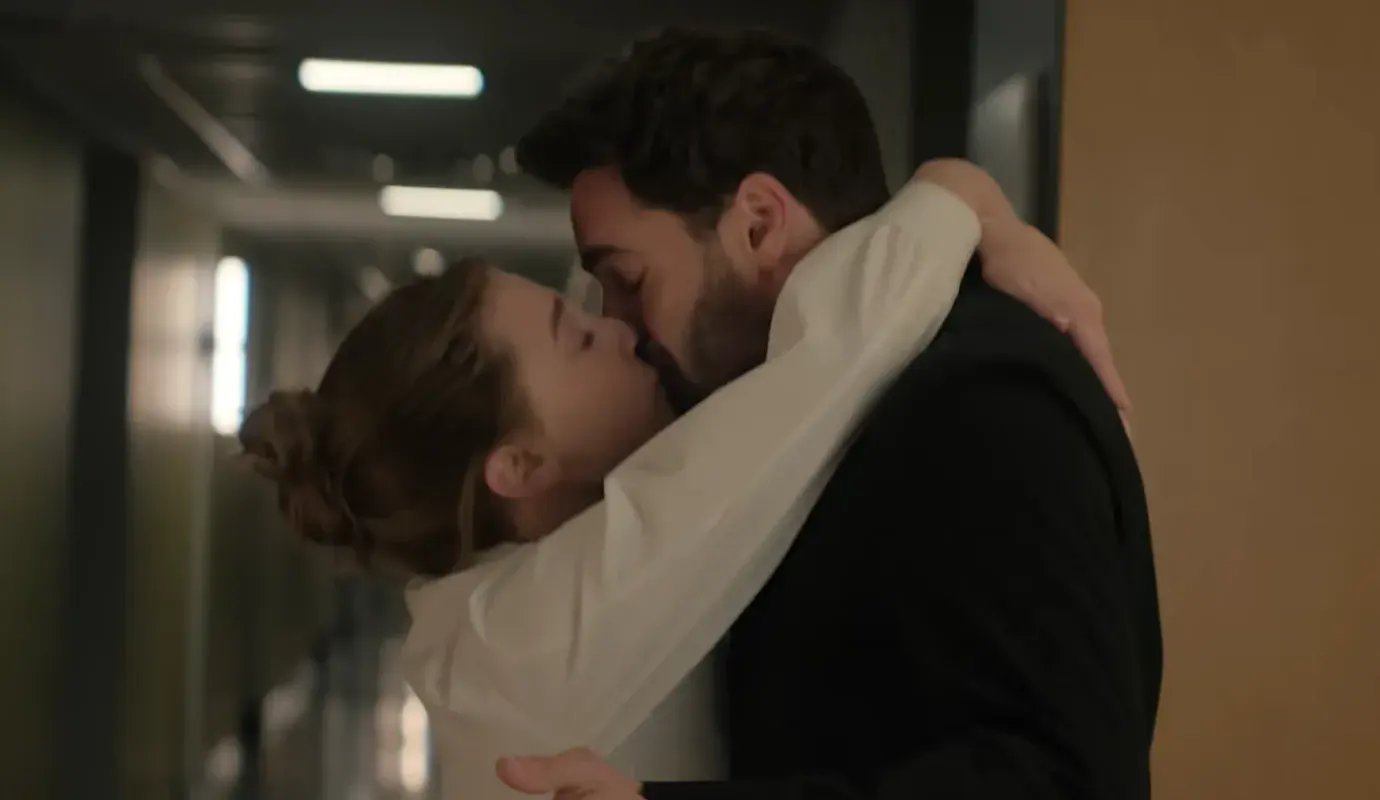
Fan-favorite material also survives. The first kiss, fake dates, sunscreen sequence, physical comedy around Adam’s size and the intimate material readers associate with Chapter 16 all remain part of the screen version. Reinhart and Bateman have discussed filming the intimate sequence with an intimacy coordinator and treating it as an important emotional turning point rather than merely fan service.
Holden Rodriguez Has Been Removed
One of the clearest character cuts is Holden Rodriguez. In the novel, Holden is Adam’s longtime friend and eventually becomes romantically involved with Malcolm. He also plays an important role when Olive needs perspective on Adam’s decisions near the end.
The movie eliminates Holden entirely. India Today’s post-release review specifically identified his absence as one of the adaptation’s more noticeable losses because he adds warmth to Adam’s social world and gives Malcolm a larger personal storyline in the book.
Removing Holden forces other characters to absorb some of his narrative functions. Most significantly, Anh becomes even more important during the final conflict with Tom. Instead of Holden helping Olive understand that Adam deserves all the information before making his own decision, the movie places greater emphasis on Olive’s friendship with Anh.
Adam and Olive’s Earlier Connection Is Revealed Much Earlier
The novel saves an important revelation about Olive and Adam’s past until close to the ending. Olive eventually learns that Adam was the stranger she encountered before her Stanford interview, the person whose unexpected encouragement helped influence her decision to pursue graduate school. That late recognition adds another romantic layer to the idea that Adam had noticed Olive long before their fake relationship began.
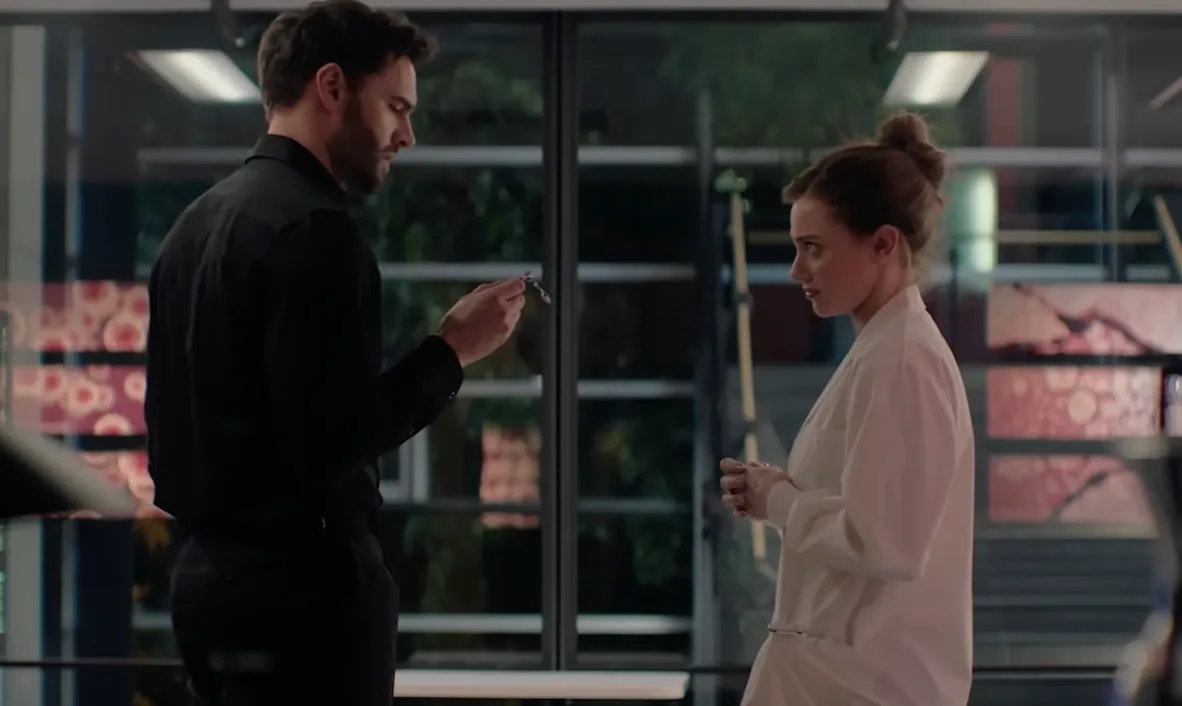
The movie brings that information forward much earlier. A post-release review specifically notes that a revelation treated as climactic near the end of the book becomes a comparatively casual reveal around the transition between the movie’s first and second acts.
The change makes the romance less mysterious but arguably easier to follow in a two-hour film. Viewers understand earlier that Olive and Adam’s connection did not truly begin with the impulsive kiss. What the movie loses is the book’s delayed emotional payoff when Olive finally realizes how far back Adam’s interest goes.
Adam’s Feelings Are More Obvious on Screen
Hazelwood’s novel is closely tied to Olive’s perspective, which means readers experience Adam through her assumptions. Olive believes he is simply honoring their agreement and repeatedly explains away signs that he cares about her. The book can therefore sustain uncertainty much longer.
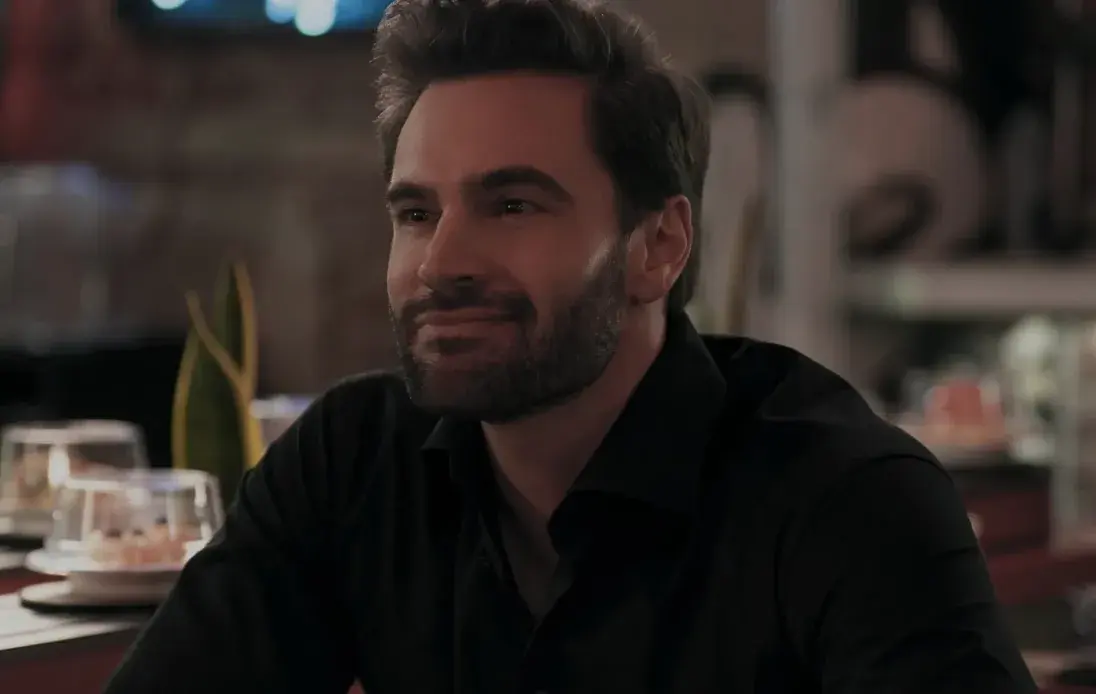
A camera cannot hide Tom Bateman’s reactions in the same way. Viewers see how Adam looks at Olive even when Olive herself remains convinced that nothing real is happening. India Today’s review noted that the screen adaptation moves through the romantic build-up faster and does not produce quite the same slow-burn crescendo as the novel.
That is less a plot change than a storytelling change, but it significantly alters the experience. The movie’s question becomes less about whether Adam is in love and more about how long Olive will take to understand something increasingly obvious to everyone else.
The Tom Benton Story Changes in Important Ways
Tom still becomes the major professional threat to Olive, but the film restructures how the crisis separates her from Adam. After Olive and Adam become intimate at the conference, Tom speaks to Adam first and encourages him to believe that Olive should prioritize her Harvard opportunity. Adam begins pulling back because he thinks he may be standing in the way of her career.
Tom then turns to Olive and reveals the real conditions behind his supposed professional support. He propositions her and threatens her research when she refuses, using his position to make Olive feel that speaking up could cost her the work she has built. Olive responds by trying to protect Adam from the truth, which prolongs the misunderstanding.
The novel handles the evidence and disclosure differently. Olive accidentally records Tom’s behavior, while Anh and Malcolm hear the recording and Holden later helps her recognize that Adam cannot make an informed decision without knowing everything. In the movie, Holden does not exist, and Anh becomes the person who tells Adam after Olive finally confides in her.
Adam’s Confrontation With Tom Is More Public
The movie also gives the Tom storyline a more openly dramatic payoff. Adam confronts Tom during class after learning what happened, and the confrontation is livestreamed. Tom’s behavior therefore becomes impossible to keep within the private professional network he had been using to intimidate Olive.
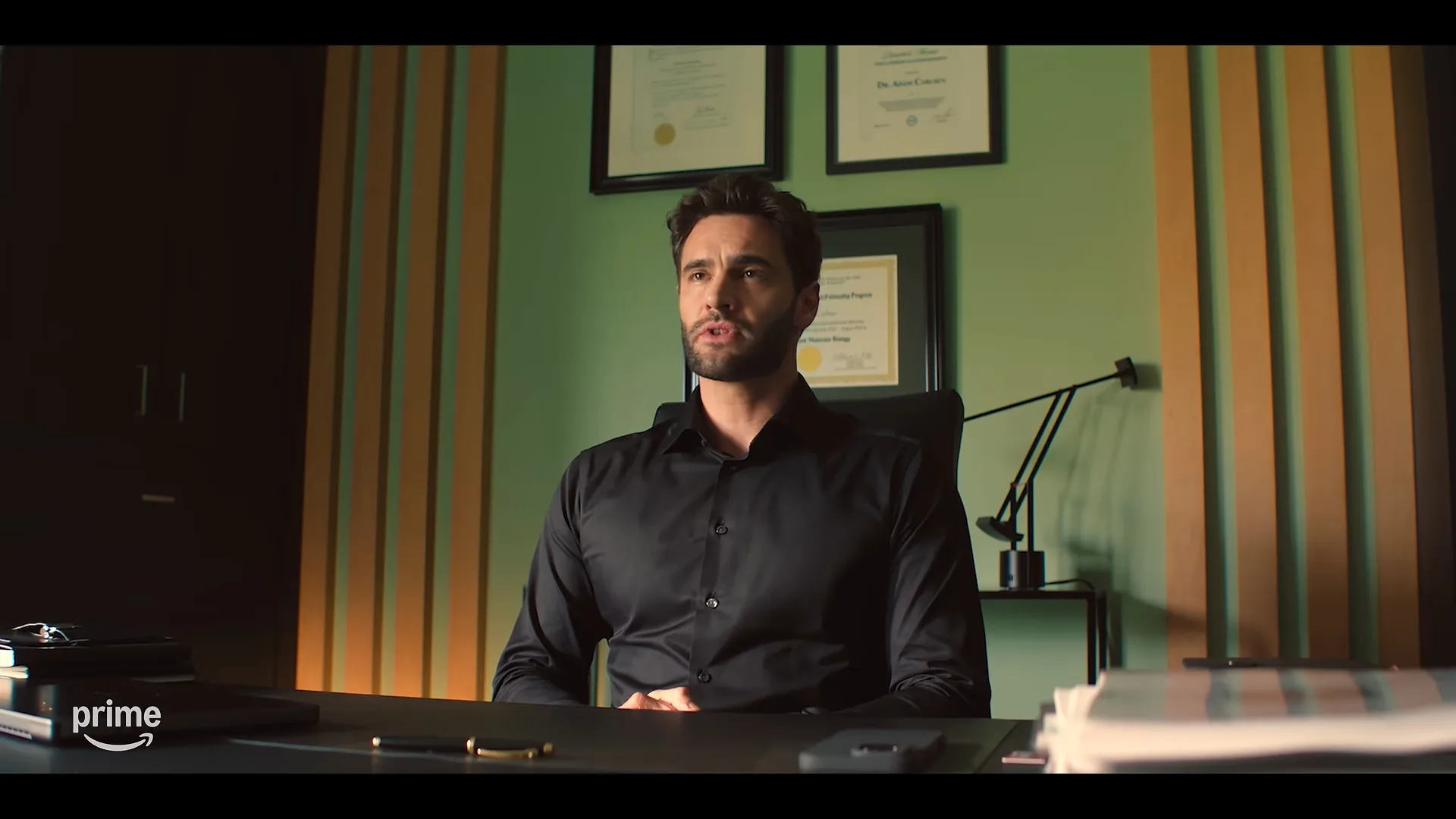
The book’s resolution is more closely connected to Olive’s accidental recording and the formal professional fallout that follows. Tom’s academic consequences are clearer on the page, while the movie focuses more heavily on the public confrontation and Adam’s immediate rejection of him. The film strongly implies major consequences without spending much time showing the institutional process afterward.
That distinction is useful when comparing the endings. In both versions, Tom loses his ability to threaten Olive and Adam supports her without hesitation. The mechanism used to get there is noticeably different.
Dr. Aslan’s Role Is Adjusted
The movie credits Jeananne Goossen as Dr. Juliet Aslan, while the novel’s mentor figure is Dr. Aysegul Aslan. The screen version also gives Dr. Aslan an important place in protecting Olive’s research once Tom’s Harvard opportunity collapses.
This helps the adaptation keep Olive’s scientific future visible during a climax that could otherwise become entirely about romance. Rather than making Adam the solution to both of Olive’s problems, the movie provides a professional route through another female scientist. The choice reinforces the idea that Olive’s career has value independent of the relationship.
The book has more room to explore Olive’s academic network, applications and the responses she eventually receives from other institutions. The movie condenses that broader process into a smaller number of characters and decisions.
The Movie Gives Anh More Importance
Anh is crucial in both versions because Olive’s loyalty to her starts the fake relationship. The movie, however, brings her much more directly into the final romantic resolution. Olive tells her the truth about Adam and Tom, and Anh becomes the person who makes sure Adam learns what happened.
That decision fits Reinhart’s description of Olive and Anh’s friendship as the “engine” of the story. Rather than allowing Anh to disappear once Olive and Adam become the main romantic focus, the movie uses her friendship with Olive to resolve the problem the fake-dating scheme helped create.
It also partially compensates for Holden’s removal. The person who gives Olive the push toward honesty is now the same friend she originally tried to protect with a lie.
The Ending Has a Two-Year Time Jump
The novel’s epilogue takes place about ten months later, on the anniversary of Olive and Adam’s original fake kiss. Olive recreates the moment and asks Adam if she can kiss him again, giving the book a small, intimate callback to where their relationship began.
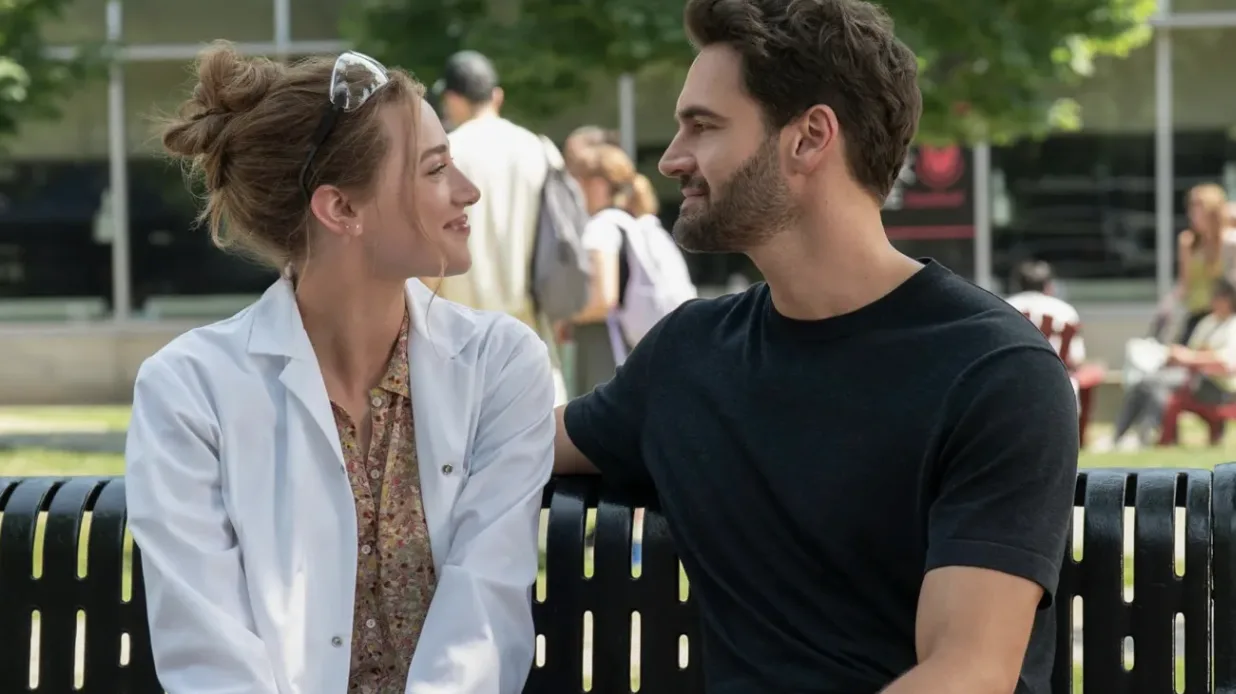
The movie chooses a much larger jump. Two years later, Olive is not simply still dating Adam. She is now a professor at Stanford and has developed such a formidable reputation that students call her “Dr. Smite.”
That is arguably one of the adaptation’s biggest additions because it provides professional closure the book’s romantic epilogue does not emphasize in the same way. Olive does not merely survive Tom’s attempt to control her research. She becomes an established scientist with authority of her own.
Is the Movie Faithful to the Book?
Yes, in the ways that matter most to the central romance. Olive still kisses Adam because of Anh and Jeremy, the fake relationship still becomes real, the conference still exposes Tom as a threat to Olive’s academic future, and Olive and Adam still end the story in love. The movie also preserves many scenes readers considered essential.
The differences are primarily about compression and redistribution. Holden disappears, Anh gains more responsibility, Adam and Olive’s earlier connection is revealed sooner, Tom’s exposure becomes more public and the epilogue moves further into Olive’s professional future. Those changes make the adaptation faster and somewhat less mysterious than Hazelwood’s novel.
Related: Why Did Tom Betray Olive in The Love Hypothesis?
The result is a movie that follows the same hypothesis while changing the method. Readers spend longer trapped inside Olive’s uncertainty, while viewers get a more direct romantic comedy with a stronger visual payoff for her scientific career. By the time students are calling Professor Olive Smith “Dr. Smite,” the adaptation has created its own final joke while still delivering the happy ending the book promised.