Why Did Raygun Score Zero Points at the Olympics? The 54-0 Result Explained
Rachael Raygun Gunn became one of the biggest viral stories of the 2024 Paris Olympics after finishing her breaking campaign with a result widely described as 54-0. Her kangaroo-inspired movements and unconventional routine received enormous attention, but the number itself created another question: how could an Olympic competitor literally score zero? The answer is slightly…
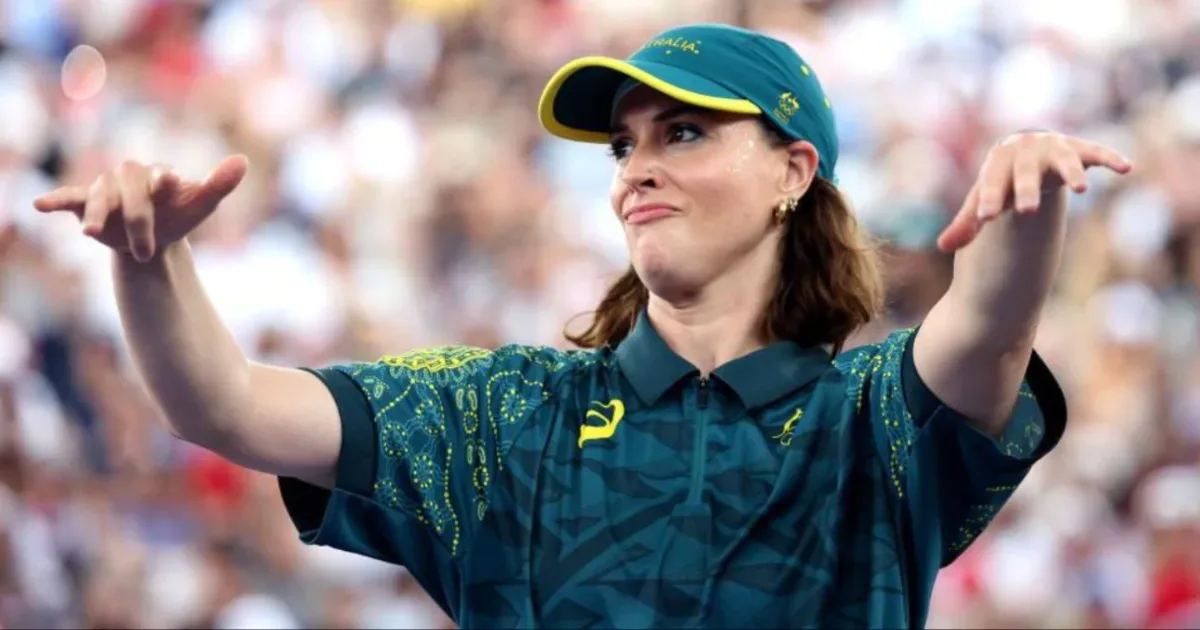
Rachael Raygun Gunn became one of the biggest viral stories of the 2024 Paris Olympics after finishing her breaking campaign with a result widely described as 54-0. Her kangaroo-inspired movements and unconventional routine received enormous attention, but the number itself created another question: how could an Olympic competitor literally score zero?
The answer is slightly more complicated than the headlines suggested. Raygun did not receive 54 possible numerical points and finish with zero in the way an athlete might in gymnastics or diving. The 54-0 figure represented the combined judge votes from her three head-to-head battles. Across six rounds of competition, none of the nine judges voted for Raygun over her opponent.
What Does Raygun’s 54-0 Result Actually Mean?
Raygun competed in Group B against American breaker Logistx, France’s Syssy and Lithuania’s Nicka. Each battle consisted of two rounds, with nine judges comparing the two dancers.
That meant there were 18 judge votes available in each battle. Raygun lost 18-0 against Logistx, 18-0 against Syssy and another 18-0 against Nicka. Adding those three results together produces the famous 54-0 figure.
Related: Did Raygun Rig Her Olympic Qualification? Her Husband and the Petition Explained
She therefore finished the group stage without winning a round and without receiving a single judge vote. The result eliminated her before the knockout portion of the competition.
How Was Olympic Breaking Judged?
Breaking did not use a simple system where judges awarded each competitor a numerical score out of ten. Instead, the judges compared the two breakers competing against each other across several categories.
Those areas included technique, vocabulary, execution, musicality and originality. A breaker could therefore impress through difficult power moves, musical interpretation, creativity, control or a combination of several different qualities.
Raygun’s zero does not mean every movement she performed was literally judged as worthless. It means that when judges compared her entire performance with the breaker standing opposite her, they preferred her opponent in every round.
That distinction is important because the viral 54-0 statistic can make it sound as though Raygun simply failed to earn any performance points. In reality, she lost every comparative judge vote.
Why Did Raygun Perform So Differently From Her Opponents?
Raygun knew she could not necessarily match some of the younger competitors through explosive power moves and extreme athletic difficulty. She was 36 during the Paris Olympics and had entered breaking later in life than many elite competitors.
Instead, she attempted to emphasize originality and character. Her routine included movements inspired by Australian imagery, most famously the kangaroo-style sequence that became one of the most widely shared clips of the Games.
Originality was genuinely one of the judging criteria, so the strategy was not completely irrational. The problem was that creativity alone was not enough to overcome the advantages her opponents had in other areas, including technique, execution and athletic difficulty.
Who Beat Raygun at the Paris Olympics?
Raygun’s opponents were also stronger than some viral discussions suggested. Logan Edra, known as Logistx, was already an accomplished American breaker, while French competitor Syssy progressed into the knockout stage.
Raygun’s third opponent, Dominika Banevic, known as Nicka, eventually reached the Olympic final and won the silver medal. She lost the gold-medal battle to Japan’s Ami Yuasa.
Raygun was therefore not simply losing to random competitors. She was facing athletes operating at a very high international level, including one of the eventual Olympic medalists.
Did Raygun Literally Score Zero Points?
Technically, saying Raygun “scored zero points” simplifies the judging system. The official results show her finishing with zero rounds won and zero judge votes, rather than receiving a traditional numerical performance score of zero.
However, the phrase became shorthand because the end result was still extraordinary. Across three battles and six rounds, all nine judges consistently preferred Raygun’s opponent.
That is why 54-0 became attached to her Olympic story. It was not a traditional 54-point scoreboard, but it accurately reflected the fact that Raygun did not receive a single judge vote during her entire Olympic competition.
Her routine became far more famous than almost any medal-winning performance from breaking’s Olympic debut, but the numbers themselves tell a straightforward story. Raygun tried to distinguish herself through originality, while her opponents were stronger across the judging criteria that ultimately decided the battles.