Why Did Meade and Westfield Kill Oleksandra Balakn in Lioness Season 3 Finale? Her Death Explained
Oleksandra Balakin has spent most of Lioness Season 3 existing in the uncomfortable space between valuable intelligence source and suspected manipulator. She helps lead the CIA to Alexis Yurimov, provides information that exposes foreign networks inside the United States and receives Witness Protection in return, only for Joe’s kidnapping to place every decision she made…
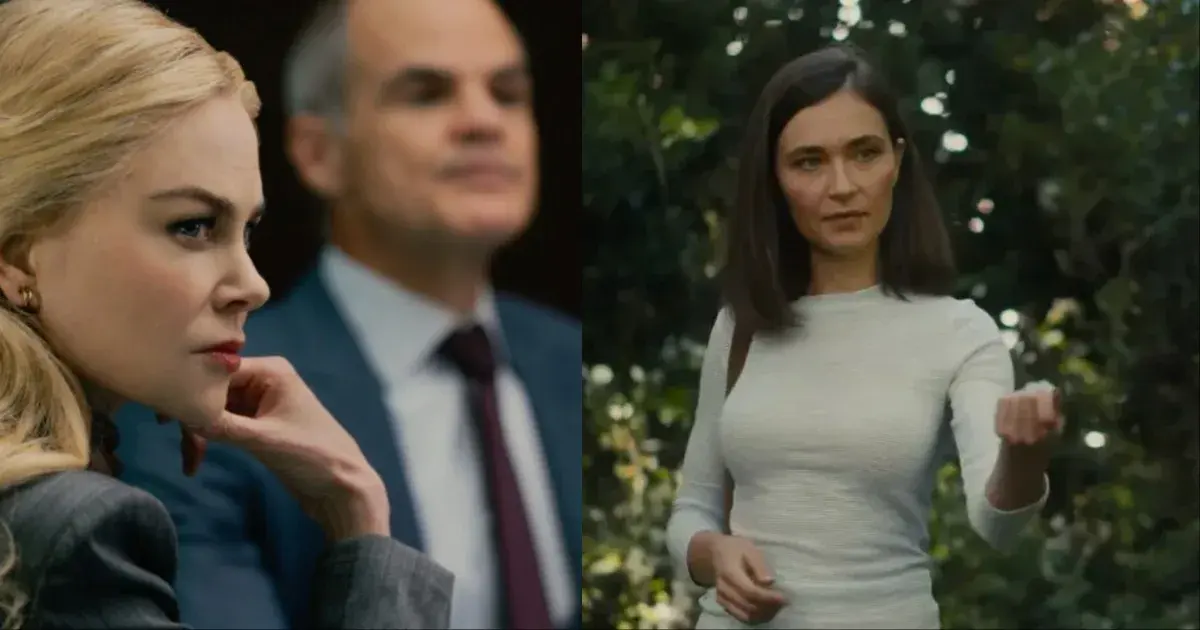
Oleksandra Balakin has spent most of Lioness Season 3 existing in the uncomfortable space between valuable intelligence source and suspected manipulator. She helps lead the CIA to Alexis Yurimov, provides information that exposes foreign networks inside the United States and receives Witness Protection in return, only for Joe’s kidnapping to place every decision she made under renewed scrutiny. By the time The Unraveling reaches Oleksa’s story, Kaitlyn Meade and Byron Westfield are no longer asking whether she has been completely honest with them. They are asking whether leaving her alive could create a political crisis the United States cannot control, and their answer leads to one of the finale’s darkest decisions.
Related: Lioness Season 3 Episode 7 Preview: Will Joe Finally Be Rescued?
Why Do Meade and Westfield Order Oleksa’s Death?
Meade and Westfield push for Oleksa to be killed because they believe she may be connected to a Ukrainian operation designed to manipulate the United States into escalating against Russia. Their theory develops after Russia and Iran stop providing convincing explanations for the unusual structure of Joe’s kidnapping. Meade eventually considers the possibility that Ukraine had the strongest strategic reason to make the abduction look Russian, since an American response against Moscow would strengthen Ukraine’s position in the war. If Oleksa helped engineer that deception, she would represent both an intelligence threat and evidence of an extraordinary manipulation of U.S. foreign policy.

The crucial detail is that they do not possess definitive proof before deciding she has to die. Cinemaholic’s finale account describes their conclusion as a theory serious enough that Meade and Westfield fear what could happen if it spreads through the government or reaches the public. Rather than waiting for the theory to be confirmed or disproved, they recommend eliminating Oleksa before the situation can become politically uncontrollable. That makes her death less like punishment after a proven betrayal and more like a preemptive national-security decision.
Why Would Ukraine Want Joe’s Kidnapping Blamed on Russia?
The suspected motive is to deepen American hostility toward Russia. Russian contractors were involved in Joe’s abduction, and earlier failed attempts also carried obvious Belarusian and Russian fingerprints, making Moscow the natural target of CIA suspicion. If Joe had been successfully transported abroad while Washington remained convinced that Russia ordered the operation, the United States could have responded with greater resources or more aggressive measures against Moscow. Ukraine would benefit strategically from that escalation without needing to openly ask the United States to increase its involvement.
That possibility also explains why the operation appears deliberately layered. Different groups seem to perform different parts of Joe’s kidnapping, repeatedly causing the CIA to shift blame from Russia to Iran and then elsewhere. Meade’s Ukraine theory proposes that this confusion is not accidental but the actual design of the operation, with each layer leading investigators toward the conclusion someone else wants them to reach. Lioness has not publicly confirmed before the finale that Ukraine truly masterminded the plan, which makes the CIA’s response to Oleksa especially unsettling.

Does Secretary Mullins Approve the Execution?
Yes, according to the reported Episode 8 events, Secretary of State Edwin Mullins ultimately approves Meade and Westfield’s recommendation. They present Oleksa as a risk that cannot safely remain inside Witness Protection while the Ukraine theory exists, arguing that waiting for certainty could itself become dangerous. Mullins signs off on the operation, turning what begins as an intelligence hypothesis into a lethal government decision. The scene also keeps responsibility from resting solely on Westfield, because the choice passes through several senior officials rather than being carried out secretly by one rogue character.
That detail matters for the larger themes of Season 3. Joe has repeatedly operated in a world where officials justify extreme measures by arguing that national security cannot wait for ordinary legal processes, and Oleksa ultimately becomes a victim of exactly that logic. The CIA protected her when her information was useful and removes that protection once her continued existence becomes strategically inconvenient. Her fate therefore mirrors the disposable treatment of assets the series has explored since its first season.
How Is Oleksa Killed?
Grady and Goose are sent to locate Oleksa after Kyle’s earlier actions revealed where she was living under Witness Protection. She has been using the identity Paige Weaver in Tulsa, Oklahoma, believing the protection arrangement gives her some distance from the intelligence war she escaped. Cinemaholic reports that Oleksa realizes she is being pursued and attempts to get away, but the operators eventually catch and covertly execute her. Her body is abandoned in an ordinary location rather than treated as the scene of an official government action.
The death itself happens off-screen, which initially preserves a small amount of ambiguity. The finale removes that ambiguity when Oleksa’s remains are later discovered by a runner and his dog, confirming that the execution was carried out. That choice also prevents the sequence from becoming an action spectacle, keeping the emphasis on how casually a former intelligence asset can disappear once senior officials decide she has become dangerous. The woman whose information drove much of Season 3 ends up reduced to a body meant to attract as little attention as possible.

Was Oleksa Actually Guilty?
This is the most troubling part of her ending because the evidence available when the decision is made does not conclusively prove that Oleksa orchestrated Joe’s kidnapping. Meade’s theory explains several strange elements of the season and gives Ukraine a plausible strategic motive, but plausibility is not the same thing as proof. Cinemaholic specifically describes Meade and Westfield as acting before the theory can be properly verified because they fear the consequences of waiting. Oleksa may therefore have been a genuine architect of the plot, an operative who knew only part of it or another person being manipulated by someone still higher in the chain.
That uncertainty may be exactly what The Unraveling wants viewers to carry forward. The official synopsis says Joe discovers a wider plot, implying that the explanation does not necessarily stop with the person currently being blamed. Killing Oleksa removes one possible source of answers just as Joe is attempting to identify everyone involved. If the finale later proves that Meade and Westfield acted on the wrong theory, her death becomes not a successful cleanup but a catastrophic mistake.

Is Oleksa Really Dead?
Yes, the finale reportedly confirms Oleksa’s death rather than leaving her fate open for a later return. Her execution takes place outside the viewer’s direct sight, but the subsequent discovery of her corpse establishes that she did not secretly escape Grady and Goose. There is also no current announcement suggesting Elizaveta Neretin will return in a future season, although Lioness itself has not yet been officially renewed for Season 4. Any future appearance would therefore most plausibly require a flashback or another story set before her death.
Oleksa’s ending is significant because it resolves her personal fate while leaving the larger question around her unresolved. Meade and Westfield believe killing her protects the United States from the consequences of a potentially explosive Ukrainian manipulation, but they act before they know whether their conclusion is actually correct. That makes her death one of the harshest expressions of Lioness’ view of intelligence work: being useful can keep an asset alive, but uncertainty can become enough reason to erase them. Whether Oleksa was truly the architect or merely another piece on the board is exactly the kind of question Joe’s wider discovery in The Unraveling still needs to answer.