The Shards: Is Matt Dead, and Who Knows Bret’s Secret?
The disturbing phone call at the end of The Shards premiere suggested that the Trawler had begun moving closer to Bret’s life. Episode 2, “Don’t You Want Me,” confirms something worse. The killer, or whoever is imitating him, has found the relationship Bret is most desperate to conceal. Matt Kellner disappears after receiving anonymous calls…

The disturbing phone call at the end of The Shards premiere suggested that the Trawler had begun moving closer to Bret’s life. Episode 2, “Don’t You Want Me,” confirms something worse. The killer, or whoever is imitating him, has found the relationship Bret is most desperate to conceal.
Matt Kellner disappears after receiving anonymous calls and discovering a ritualistic symbol inside his home. Robert Mallory continues forcing his way into Bret’s friendships. Terry Schaffer turns a promising career lunch into an exercise in sexual manipulation. By the ending, Matt is shown being tortured by someone who knows that he has been intimate with another boy.
The episode does not prove that Robert is the Trawler, despite Bret’s determination to convict him without the inconvenience of evidence. It does reveal that Matt’s abduction is personal. Whoever took him did not choose a random teenager. The attacker knows his habits, his home and his secret connection to Bret. That changes the mystery completely.
Why Does Susan Keep Defending Robert?
Bret Easton Ellis (Igby Rigney) begins the episode worrying about home invasions, missing pets and the young people disappearing around Los Angeles. Susan Reynolds (Kaia Gerber) would rather discuss the welcome party she plans to host for Robert Mallory (Homer Gere).
Susan claims Principal Croft asked her to organize it because Robert has experienced a difficult period. She then reveals information that should have remained confidential: Robert spent time at a developmental center after struggling with depression and other unspecified problems.
Bret immediately treats the hospitalization as proof that Robert is dangerous. Susan views it as evidence that he needs kindness. Neither response is especially fair. Susan exposes Robert’s private medical history to defend him, while Bret converts that history into another exhibit in a murder case he has already decided to prosecute.
What Susan does not initially emphasize is that she has been speaking to Robert privately.
She knows Robert’s version of the strange drive to the mall. According to him, Bret was the one doing the following. Susan has therefore listened to both men and chosen not to dismiss Robert simply because Bret tells her to.
Bret experiences that as betrayal because Susan has always occupied a protected place in his life. He expects her to trust his instincts, even when those instincts are tangled with jealousy, attraction and fear. Robert’s arrival disrupts that arrangement. Susan is interested in the newcomer, and Bret can sense it before she openly admits anything.
The episode’s use of “Don’t You Want Me” during the hot-tub scene is not subtle, but it is smart. Everyone in the room wants somebody whose attention is divided. Debbie wants Bret. Bret wants Matt and, in a different way, Susan. Thom assumes Susan still wants him. Susan is becoming curious about Robert.
It is a love polygon built almost entirely from people pretending they are satisfied.

Who Is Calling Matt and Entering His House?
The anonymous phone calls from Episode 1 were not limited to Bret.
Debbie Schaffer (Hayes Warner) tells Bret that Matt called during the night and demanded that he stop contacting him. When Bret later confronts Matt, the misunderstanding becomes clearer. Matt has been receiving repeated calls from someone who remains silent and breathes into the telephone.
Matt believes Bret is responsible. Bret could not have made at least one of the calls because he was with Debbie when Matt phoned to complain. The harassment has also moved beyond the telephone.
Someone entered Matt’s pool house, drained his aquarium and painted a pentagram across his Foreigner poster. His cat has already disappeared. Those details closely resemble the pattern associated with the Trawler and the Riders of the Afterlife, the violent cult terrorizing Los Angeles through break-ins, animal theft and ritualistic displays.
The long explanation of the cult initially feels like the series pausing the story for a particularly lurid history lesson. It becomes more useful once Matt’s home is violated. The episode is warning viewers that Robert may not be the only explanation for what is happening.
Police suspect that several people could be involved in the ritualistic crimes. The Trawler might be one killer. The murders could be connected to the cult. Someone may also be borrowing the imagery of both to conceal a more personal motive. Bret, naturally, is interested only in Robert.
Robert recently approached Matt in the school parking lot and somehow learned that Bret and Matt had experienced a “falling out.” Matt claims he did not reveal anything important, but Bret does not believe him. Robert already knows enough to make pointed comments about their friendship.
That does not prove Robert entered Matt’s house. It proves he has been asking questions in exactly the place where Bret is most vulnerable.
Why Does Matt Reject Bret?
Bret arrives at Matt’s home frightened, suspicious and emotionally exposed. Instead of comforting him, Matt tells him to stop coming over.
The scene hurts because both boys are speaking around the relationship rather than honestly about it. Bret asks what Robert wanted to know. Matt wants Bret to understand that the anonymous calls and break-in are real. Neither trusts the other enough to address the actual fear between them.
When Bret attempts to kiss him, Matt pulls away.
Matt insists that their relationship was never serious and mocks the idea that they might become boyfriends. Bret leaves in tears, believing he cared more deeply about Matt than Matt ever cared about him. That may be true. It may not be the whole truth.

Matt is already being watched and harassed by someone who appears to know where he lives. Robert has approached him. His animals are gone. His home has been entered. Under those circumstances, distancing himself from Bret could be an attempt to protect them both, even if Matt expresses it with unnecessary cruelty.
The episode does not confirm that interpretation, so Matt’s rejection cannot simply be rewritten as a noble sacrifice. He may genuinely want to end the relationship. He may also be terrified by how exposed it has become.
Either way, Bret responds by centering his own heartbreak.
His older narration describes Matt’s rejection as part of a lifelong pattern in which other men fail to return his feelings. It is a revealing observation, but also a self-involved one. Matt has just reported stalking, threatening calls and a home invasion. Bret leaves thinking primarily about being unwanted. That failure becomes much uglier after Matt disappears.
Is Terry Grooming Bret?
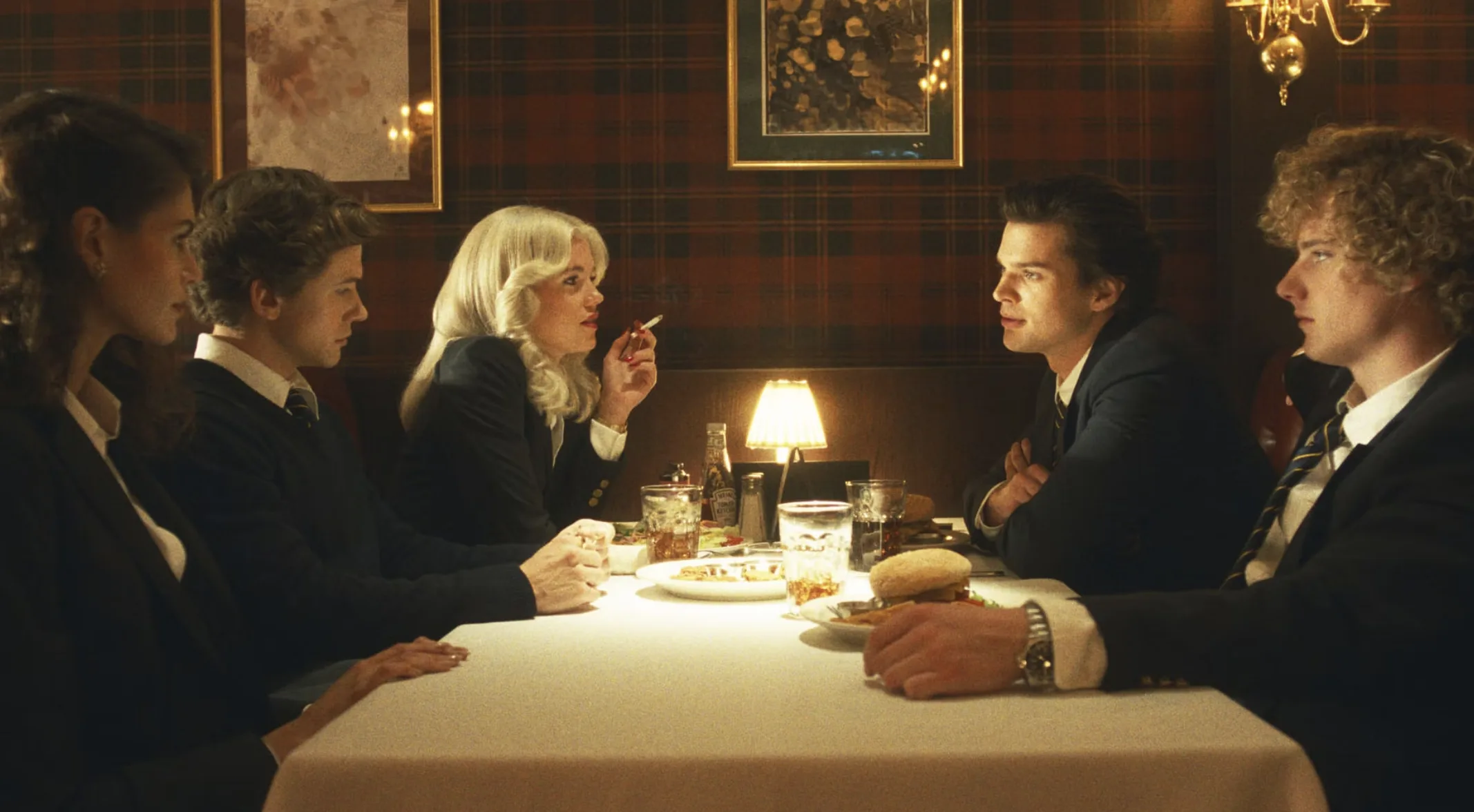
While Matt’s danger escalates, Bret attends lunch with Terry Schaffer (Wes Bentley), Debbie’s father and a powerful Hollywood producer.
Steven Reinhardt (Jordan Roth), Terry’s assistant, makes the imbalance clear before Terry even arrives. Steven compliments Bret’s school uniform, tells him Terry will appreciate it and warns that everyone has an agenda.
Then Terry begins following one.
He flatters Bret’s writing, offers to option his unfinished novel and proposes that they collaborate on a screenplay. For an 18-year-old who wants to become a novelist and filmmaker, the opportunity is almost impossible to resist.
Only after establishing himself as Bret’s possible gateway into Hollywood does Terry turn the conversation toward sex.
He asks whether Bret is attracted to men, whether he has fooled around with Thom Wright (Graham Campbell), and whether anything has happened with the other boys in their group. When Bret questions what Liz and Debbie know, Terry asks him to keep the lunch private. This is grooming disguised as mentorship.
Terry does not make a direct physical move during the meal. He does something more calculated. He creates professional dependency, tests Bret’s boundaries and frames secrecy as part of an adult understanding between them.
His warning about producer Allan Carr is especially revealing. Terry tells Bret to avoid Carr because Carr might exploit him, apparently unable or unwilling to recognize that he is performing a cleaner version of the same behavior.
Bret understands enough to challenge him. He still accepts the promise of a screenplay meeting.
That does not make Bret equally responsible. Terry is the adult with money, influence and access to the career Bret wants. But Bret’s willingness to remain close to him becomes another betrayal of Debbie, who believes her father is merely helping her talented boyfriend.
The preceding argument between Debbie and her mother, Liz Schaffer (Evan Rachel Wood), gives the situation additional weight. Liz warns her daughter that Bret is aloof and more interested in his work than in their relationship. Debbie responds by defending the romance and attacking her mother’s failed marriage.
Liz tells her to look in the mirror because Debbie is becoming her.
It sounds cruel. It also looks increasingly accurate.
Why Does Bret Pretend He Barely Knows Matt?
Robert confronts Bret at school and makes his intentions unusually plain. If Bret is helping organize the welcome party, Robert says, he should make an effort to become his friend. Otherwise, they will have a long and unpleasant senior year.
That is a threat dressed as social advice.
Before Bret can respond, Susan announces that Matt is missing. His parents have not seen him for days, although their neglect means they did not notice immediately. Matt lived separately in the pool house, followed his own routine and could disappear from school without anyone checking on him. Susan asks Bret whether they were friends. Bret says no.
He reduces Matt to someone who sold him marijuana a few times. It is the episode’s most painful betrayal because Bret does not hesitate. Protecting his public identity matters more, in that moment, than acknowledging the missing person with whom he shared an intimate relationship.
The lie is understandable within the homophobia and social pressures of 1981. It is still a lie.
Bret has spent two episodes insisting that nobody else recognizes the danger around Robert. When someone he privately cares about vanishes, Bret helps erase the most important connection investigators might have examined.
That connection could matter. Matt’s attacker later demonstrates knowledge of his sexual history. Bret may possess information that could explain why Matt was targeted, but revealing it would expose him too.
The episode also plants another possible suspect during Susan’s conversation with Ryan Vaughn (Daniel Dale). Ryan suggests that the Trawler may have taken Matt and describes the possibility of him being tortured before anyone has found a body.
Susan immediately questions how he knows that.
Ryan explains that he was referring to the Trawler’s female victims. That is plausible. The series nevertheless lingers on the exchange for a reason. Bret is so consumed by Robert that he may be ignoring suspicious behavior from people already inside the group.
Then Matt’s blood-covered backpack is discovered at Crystal Cove State Park.
The disappearance has become a likely abduction, and Bret’s private guilt is no longer something he can keep safely separated from the murders.
Is Matt Dead, and Who Is Torturing Him?
Episode 2 does not confirm that Matt is dead.
The ending reveals Matt alive during a torture session, although it does not establish whether the scene is happening in the present or whether Bret is hearing a recording made earlier. Matt is forced to eat living fish, almost certainly connecting the torture to the aquarium that was drained inside his pool house.
His attacker then orders him to sing and asks a sexually explicit question about his experience with another boy.
That is the episode’s most important clue.
Whoever abducted Matt knows about his sexuality or has discovered his relationship with Bret. The harassment was therefore not random. Matt’s home, animals and private life were studied before he disappeared.
Robert remains the obvious suspect. He spoke to Matt shortly before the abduction, knew about the falling out with Bret and has repeatedly demonstrated that he understands more about Bret’s desires than Bret wants him to know. He also threatens Bret and expresses a deliberately graphic interest in Susan, as if testing how strongly Bret will react.
But the episode works hard to prevent Robert from becoming the only answer.
The Riders of the Afterlife use animal rituals and home invasions. Ryan speaks about Matt’s torture before any body is found. The attacker could be connected to someone Matt trusted, someone who had access to his home or someone who had been watching Bret’s secret visits.
There is also the possibility that more than one person is involved. The episode’s cult history explicitly introduces that theory before Matt vanishes.
The blood on the backpack suggests severe injury, but the torture sequence proves only that Matt was alive when it occurred. It does not confirm that he survives afterward.
More importantly, the attacker now possesses information that can destroy Bret socially even if Matt is rescued. Bret’s fear is no longer limited to being exposed as bisexual. His secrecy may have helped create the conditions in which Matt could disappear without anyone understanding their connection.
The title “Don’t You Want Me” lands differently by the end. Bret wanted Matt privately but denied him publicly. Matt wanted some form of acknowledgment that Bret could not offer. Debbie wants affection from a boyfriend who is using their relationship as camouflage. Terry wants access to Bret under the cover of professional opportunity. Robert wants Bret to keep watching him.
Every desire in the episode comes with control attached.
Matt’s abductor represents the most violent version of that idea. He does not merely want Matt’s attention. He forces him to perform, consume and confess.
The question going into Episode 3 is therefore larger than whether Robert is the Trawler. It is whether Bret can investigate Matt’s disappearance without admitting why Matt mattered to him.
So far, he has chosen the secret. Matt may pay for it.