The End of Oak Street’s Happy Ending Is Much Stranger Than It Looks
The End of Oak Street appears to give the Platt family an almost impossibly happy ending. Denise, Audrey, Brian and Jeannette escape the prehistoric world through a wormhole and land back in 1982 shortly before Oak Street originally disappears. Denise then uses that small window to save Greg and several neighbors, while Jeannette rushes back…

The End of Oak Street appears to give the Platt family an almost impossibly happy ending. Denise, Audrey, Brian and Jeannette escape the prehistoric world through a wormhole and land back in 1982 shortly before Oak Street originally disappears. Denise then uses that small window to save Greg and several neighbors, while Jeannette rushes back to rescue her own family. Two years later, the Platts are together again. The catch is that the final barbecue reveals two Jeannettes, strongly indicating the heroes have not simply rewritten everything that happened. They have created, or entered, a timeline where different versions of the same people can coexist.
That little detail makes the finale much darker than its celebratory tone suggests. Greg is alive again, but the Greg who fought alongside Denise and died protecting her has not literally been resurrected. Even more troubling, another Denise, Audrey and Brian may still have been transported into the dinosaur-filled past after the returning family changed events around them.
What Actually Happened to Oak Street?
Oak Street is pulled millions of years into Earth’s past by the same unexplained space-time disturbance that produces the movie’s smaller portals. Early clues include a radio report about mysterious cosmic ripples, bursts of light and prehistoric material appearing where it should not exist. Audrey eventually theorizes that wormholes are responsible, with the earlier incidents functioning like smaller disturbances before the entire neighborhood is displaced.
The film deliberately stops short of identifying who or what caused the phenomenon. David Robert Mitchell’s production notes even indicate that dinosaurs from different periods were included to reinforce the idea that the disturbance is pulling material from multiple points across Earth’s history. The neighborhood is therefore not simply transported to one perfectly defined prehistoric year. The wormholes are disrupting time more broadly.
That distinction becomes important during the climax. Small portals continue appearing around Oak Street, and the surviving Platts eventually realize one might take them back to their own time. Their problem is reaching one before it disappears again.
How Do Denise and the Kids Return to 1982?
Denise, Audrey, Brian, Jeannette and Starbuck eventually escape through a portal after Greg has already been killed by a dinosaur. The wormhole does not send them back to the exact moment they left. Instead, they emerge outside Oak Street less than an hour before the neighborhood is due to be swallowed by the larger disturbance.
That creates the opportunity the ending needs. Denise already knows who will die, where Greg will be and approximately when Oak Street is going to vanish. She does not have enough time to evacuate the entire neighborhood, nor does she believe she can safely march her children back into the danger zone and convince everyone that dinosaurs are waiting on the other side of a cosmic event.
Jeannette makes a different choice. Because her parents died after being transported, she runs back toward Oak Street in an attempt to save them before the event happens again. Denise stays with Audrey and Brian and turns an ordinary payphone into her way of manipulating history.
How Does Denise Save Greg?
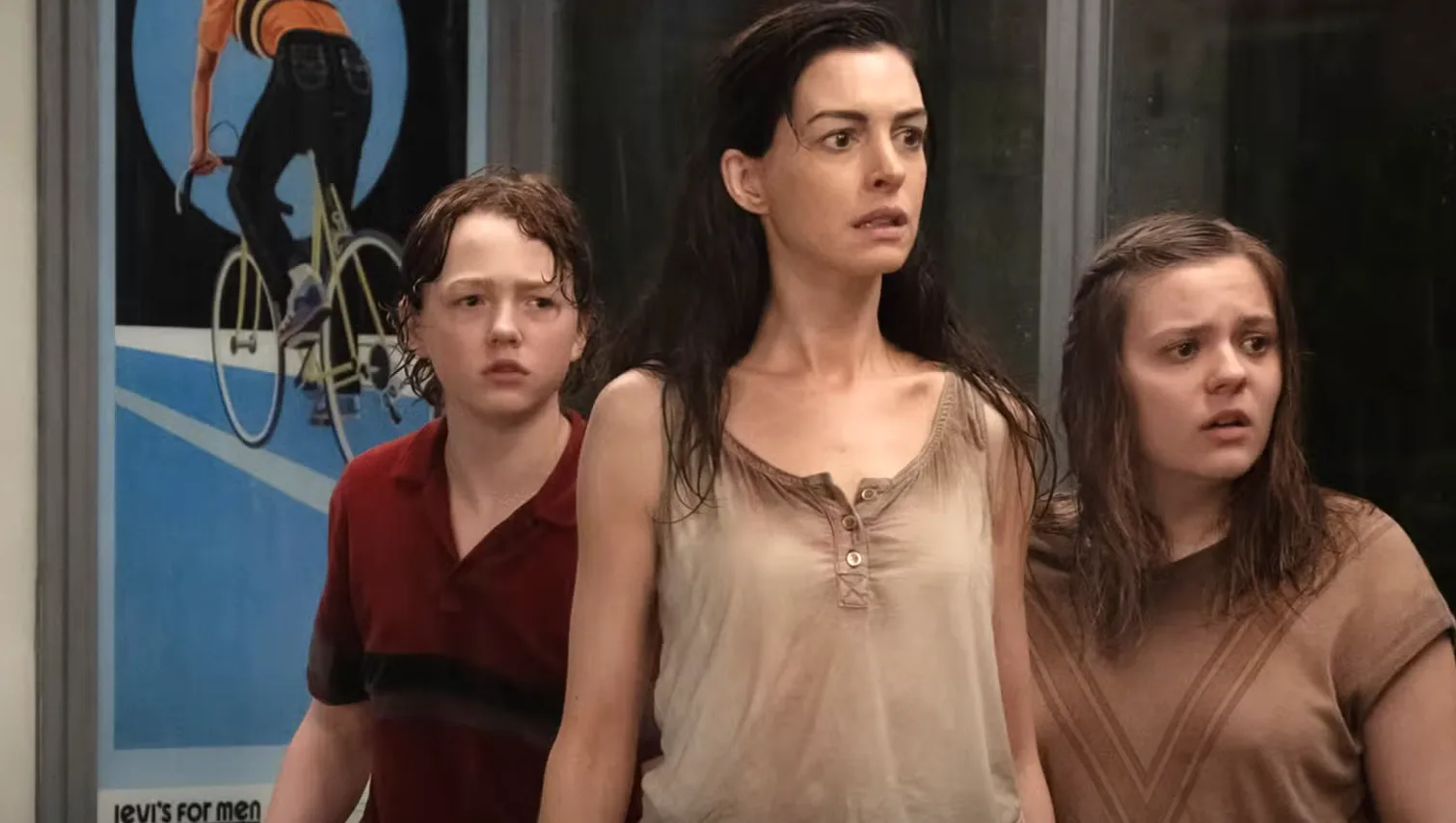
Denise saves Greg by exploiting the secret pizza-delivery job he has been hiding from his family. She places an order that sends him away from Oak Street before the wormhole takes the neighborhood. Greg arrives with the pizza without understanding why his wife and children are already waiting outside the affected area.
It is a clever payoff to something that had earlier represented the problems in their marriage. Greg’s delivery work was humiliating to him because he had lost his regular job and concealed the truth from Denise. That same secret job becomes exactly what allows Denise to get him out of danger without wasting precious minutes explaining time travel to him.
Denise also warns selected neighbors by phone. When Oak Street disappears again, Greg and his family watch from a safe distance as a prehistoric piece of landscape replaces it. The movie later reveals that several people who died during the original ordeal survived this time because Denise knew whom to contact.
Did Denise Erase the Original Dinosaur Timeline?
The movie never confirms that Denise erased the original timeline, and the final scene actually provides evidence against a simple “rewrite the past and everything disappears” explanation. The strongest clue is Jeannette. The Jeannette who survives the dinosaur ordeal remains present two years later even though the younger Jeannette from 1982 was also rescued.
If altering history automatically replaced the original sequence of events, the returning Jeannette should logically vanish or merge with her earlier self. She does neither. Both versions are visible at the barbecue.
The safest conclusion is therefore that The End of Oak Street allows altered versions of events and duplicate people to coexist in some form. Whether that means a branching universe, overlapping timelines or another kind of wormhole effect is unknown. Mitchell never supplies enough information to select one of those models as canonical. SYFY’s breakdown likewise notes that the origin of the wormholes is never revealed.
Related: The End of Oak Street Filming Locations: Where the Dinosaur Thriller Was Shot
Why Are There Two Jeannettes?
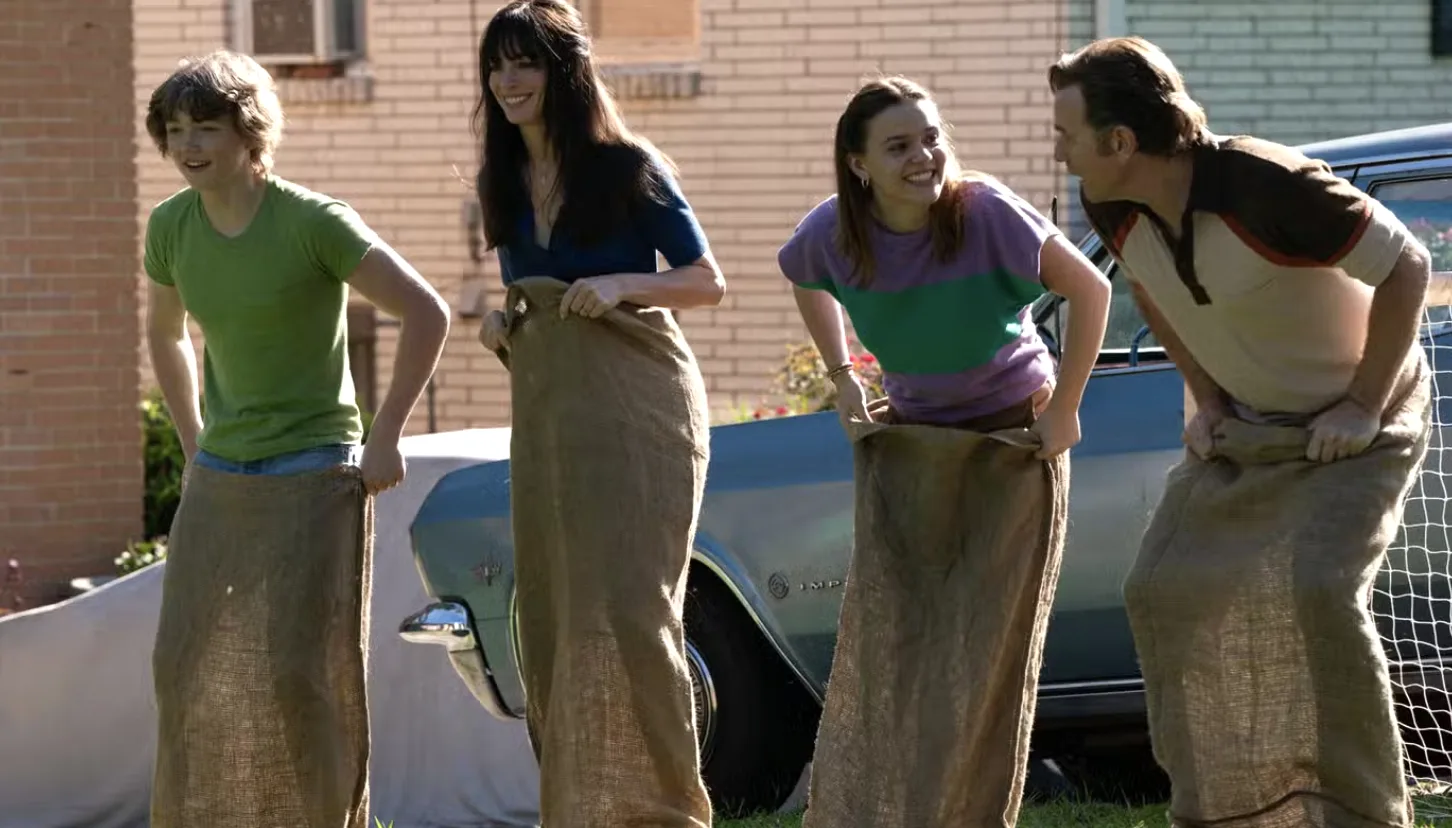
There are two Jeannettes because the version who survives prehistoric Oak Street returns to a point when her younger self is still alive. Survivor Jeannette then goes back toward the neighborhood and successfully prevents her parents and her original 1982 counterpart from suffering the same fate. At the barbecue two years later, both Jeannettes are present with their parents.
The moment initially plays like a final absurd joke, but it establishes the movie’s most important time-travel rule. A traveler does not cease to exist simply because she changes what happens to her earlier self.
That creates an uncomfortable question for the Platts. Denise saves the Greg who has not yet traveled into the past, but she does not remove the earlier versions of herself, Audrey and Brian from Oak Street. When the neighborhood disappears again, those versions should still be inside it.
The Happy Ending May Have Created Another Tragedy
If the two-Jeannette rule applies consistently, another Denise, Audrey and Brian are likely transported into prehistory without Greg. That is not explicitly shown, so it should be treated as an implication rather than confirmed off-screen canon. Yet the movie gives viewers a strong reason to consider it.
Greg was essential to the original family’s survival and ultimately died protecting Denise. In the altered version of events, he is safely outside Oak Street when it disappears. Some neighbors who helped the family also escape because Denise warned them. The versions of Denise and the children who remain behind could therefore face an even worse sequence of events than the one we watched.
Two years later, none of that is visible on the surface. Denise has turned the experience into a successful book titled The End of Oak Street, Audrey has pursued her academic ambitions, Jeannette’s parents are alive and Greg is back with his family.
That is why the ending works better as an uneasy victory than a straightforward reset. The Platts get another chance because Denise learns how to exploit the wormhole, but the movie never says the suffering required to reach that moment has been erased. The second Jeannette quietly proves the opposite. Their happy ending is real, but somewhere in the logic of The End of Oak Street, the terrible version of their story may be real too.