The Electric State: Did Michelle truly have no choice but to kill Christopher, or was there another way to save him?
Christopher asked Michelle to pull the plug in The Electric State, but the Cosmo revival raises the question of whether he was right about his options.
Spoilers below for The Electric State (2025).
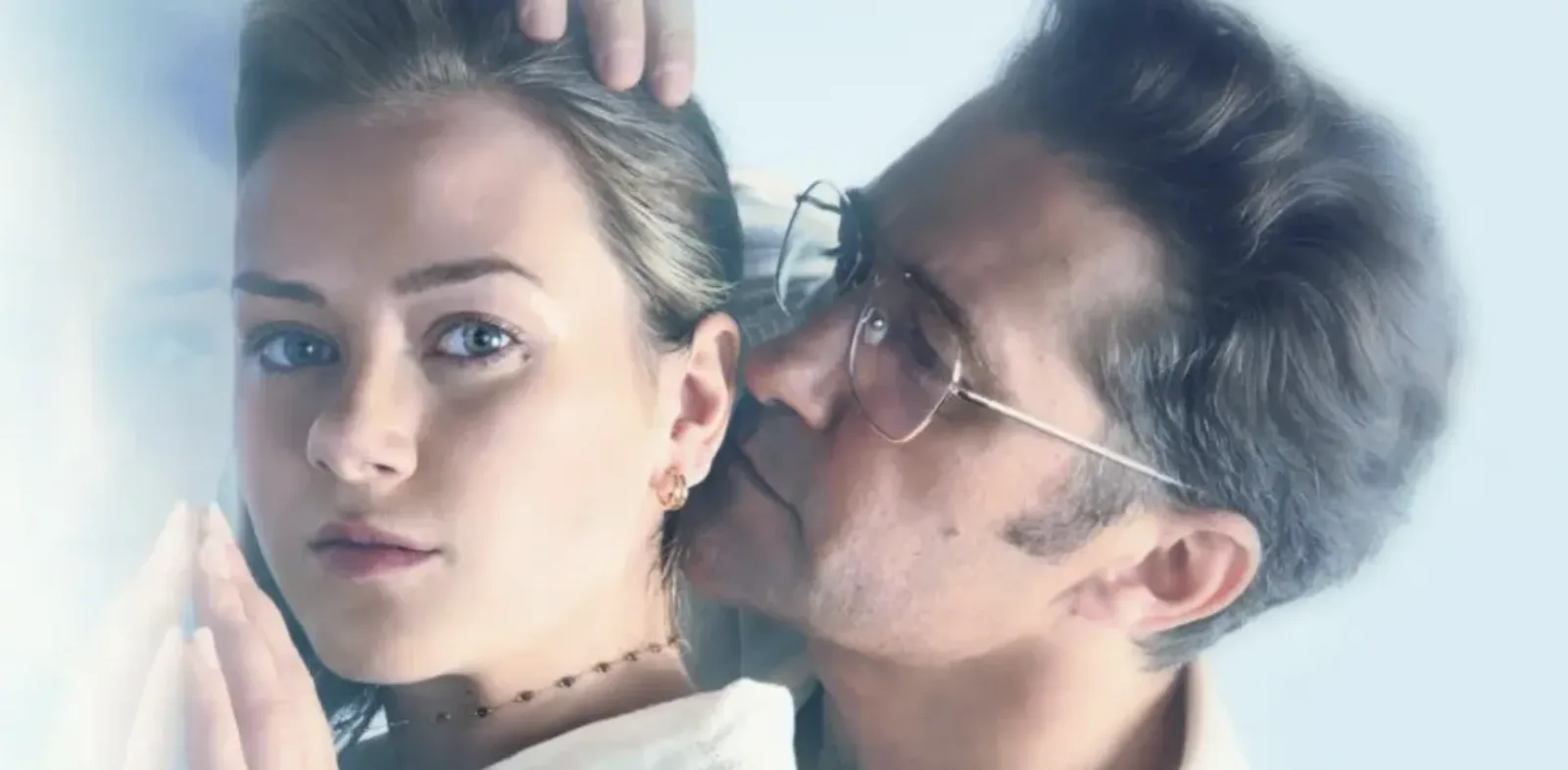
Christopher (Woody Norman) did not simply submit to Michelle’s decision. He asked for it. The central dramatic question about whether Michelle (Millie Bobby Brown) had a choice in The Electric State turns first on that fact: Christopher explicitly tells his sister to unplug him from Sentre’s life-support system, framing his death as his own wish and, in his framing, the only act that can free both him and the millions of people trapped in the Neurocaster network. Whether another path genuinely existed is a harder question, and the film’s own final scene muddies it.
What happens when Michelle reaches Christopher
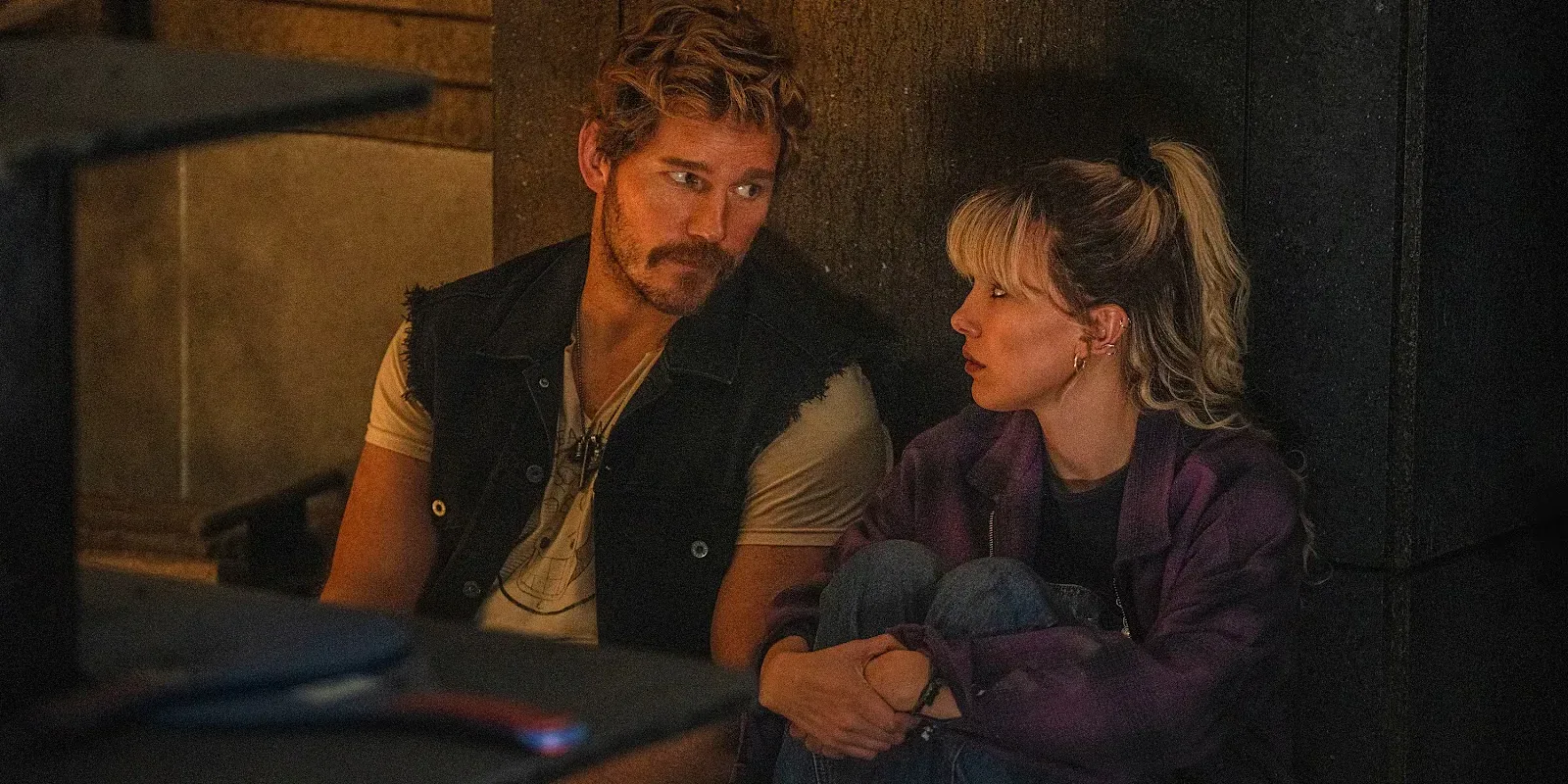
Michelle enters Sentre’s Seattle headquarters alongside PC (voiced by Ke Huy Quan), the robot built by Dr. Clark Amherst (also played by Ke Huy Quan) before Ethan Skate (Stanley Tucci) killed him. She finds Christopher’s body on life support, his brain wired into the infrastructure powering Sentre’s drone network. For the first time in the film, she puts on a Neurocaster headset to speak with him directly.
Christopher knows what Michelle came to do, and he inverts the dynamic. Rather than waiting for her to propose a rescue plan, he asks her to end his life. He has been fully conscious inside Sentre’s system, aware of how the technology has destabilized human society, and he no longer wants his mind used to sustain it. Pulling the plug will simultaneously sever his life support and collapse the entire Neurocaster network, disabling Skate’s drone police force and releasing the users trapped in their headsets.
Why Christopher said a second transfer was impossible
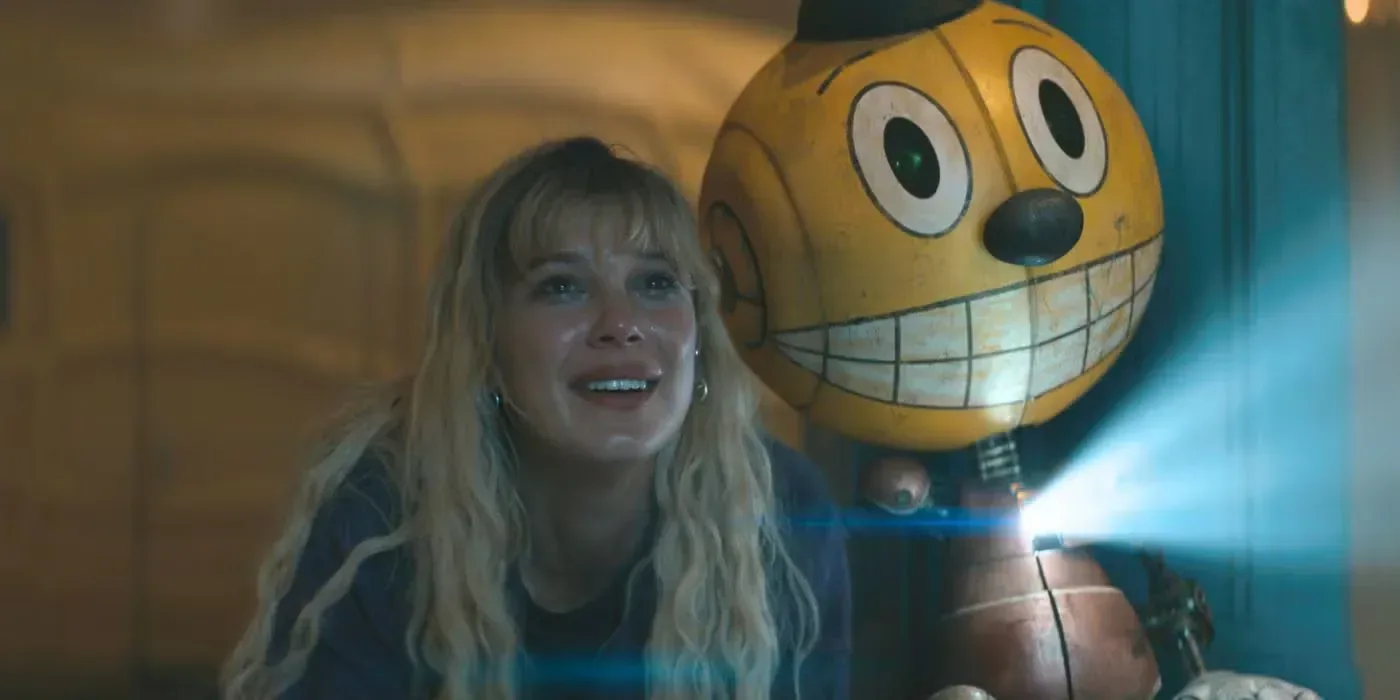
The Sentre safeguards Christopher describes are the reason he gives for why escape has no alternative. Earlier in the film, audiences learn that Christopher managed to project part of his consciousness into Cosmo (voiced by Alan Tudyk), the robot companion that guided Michelle across the American West. That transfer was possible because Dr. Amherst set up an external connection allowing Christopher to reach outside Sentre’s controlled environment.
When Michelle asks whether he can simply do that again, moving his mind into another robot while his body stays on life support, Christopher tells her Sentre placed safeguards to close that route after the first transfer. The loophole Amherst found no longer exists. The film presents his claim as the final word: PC does not contradict it, no character proposes an alternative, and the battle outside, where Keats (Chris Pratt), Herman (voiced by Anthony Mackie), and Mr. Peanut (voiced by Woody Harrelson) are fighting Sentre’s forces, forecloses any extended deliberation. Michelle hugs her brother and unplugs him.
What the Cosmo scene says about those options
The film’s final sequence, set to “Yoshimi Battles the Pink Robots, Pt. 1” by The Flaming Lips, shows Cosmo’s body being deposited in a junkyard with the Seattle battle debris, then standing up and walking away. The implication is that Christopher transferred some part of his consciousness into Cosmo before or during the network’s collapse. It directly echoes an earlier line in the film.
If that reading holds, it does not straightforwardly mean Michelle had an alternative she failed to take. The conditions that apparently allowed the transfer, a massive, unplanned energy event during the system’s collapse, were not something anyone could have engineered in advance. What it does raise is the possibility that Christopher’s own certainty about his situation was incomplete, whether from resignation, exhaustion, or a genuine belief that whatever might survive in Cosmo was too fragmentary to constitute rescue.
The film declines to settle the question. A prequel mobile game, “The Electric State: Kid Cosmo,” was released on iOS and Android in March 2025..
How the graphic novel handled the same moment
In Simon Stalenhag’s 2018 graphic novel, which the Russo brothers’ film adapts, the comparable scene does not resolve Christopher’s fate at all. Michelle finds her brother wearing a Neurocaster. She understands removing it would likely kill him, mirroring her foster mother’s death. The final image in the book shows a robot and a Neurocaster lying on wet sand.
The Cosmo consciousness transfer is a film-specific addition by screenwriters Christopher Markus and Stephen McFeely. In the book, Christopher’s nature is also completely different: he is not a data-transfer processor for Sentre’s network. Major film elements, including the Keats character, the Robot Equality Coalition, and the robot uprising framing, have no equivalent in the source material. The film’s ending closes on something approaching hope. The book does not.
According to Joe Russo (Screen Rant), Stalenhag created the graphic novel as a personal expression of his concerns about technology and did not intend it to be the only version of the story, and he supported the adaptation reaching a wider audience.
What the directors said about the choice
Anthony Russo has framed the ending in terms of balancing honesty with optimism. “If you’re going to tell a big, epic story about a society that’s falling apart and children who were victimized in this sort of catastrophe, how do you emerge from that in a way that is both on one side hopeful, but also sort of honest to the cost of that journey?” he said. “That’s just kind of how it all ended up balancing out for us in the story.”
Joe Russo connected the moment to the film’s broader argument about technology: “Technology has incredible positives and can have an incredible impact on society, but it has tremendous negatives, and those negatives include being addicted to it or using it to disconnect from others around you.”
What the film establishes is not that Michelle acted without thought. It is that she acted on what Christopher told her was true. The Cosmo revival raises the possibility that he was wrong about at least part of that, which does not change what she was asked to do but does change what the moment means for a viewer who watches the final scene.