The Condor Daughter Cast Guide: Who Plays Clara and Ana?
The Condor Daughter does not rely on familiar screen stars to sell its story. Director Alvaro Olmos Torrico wanted performers who understood the Quechua culture, music and rural life his characters came from, and that decision led him largely outside Bolivia’s conventional acting world. The result is an ensemble whose own experiences often sit unusually…
The Condor Daughter does not rely on familiar screen stars to sell its story. Director Alvaro Olmos Torrico wanted performers who understood the Quechua culture, music and rural life his characters came from, and that decision led him largely outside Bolivia’s conventional acting world. The result is an ensemble whose own experiences often sit unusually close to those of the people they play.
Marisol Vallejos Montano leads the movie as Clara, with Maria Magdalena Sanizo as her adoptive mother Ana. Nely Huayta plays Beatriz, Alisson Jimenez appears as Flora, and Gregoria Maldonado plays Dionisia. The film is performed primarily in Quechua, with Spanish becoming more prominent as Clara enters the city.
Also Read: Falling Into Place Cast Guide
Marisol Vallejos Montano as Clara
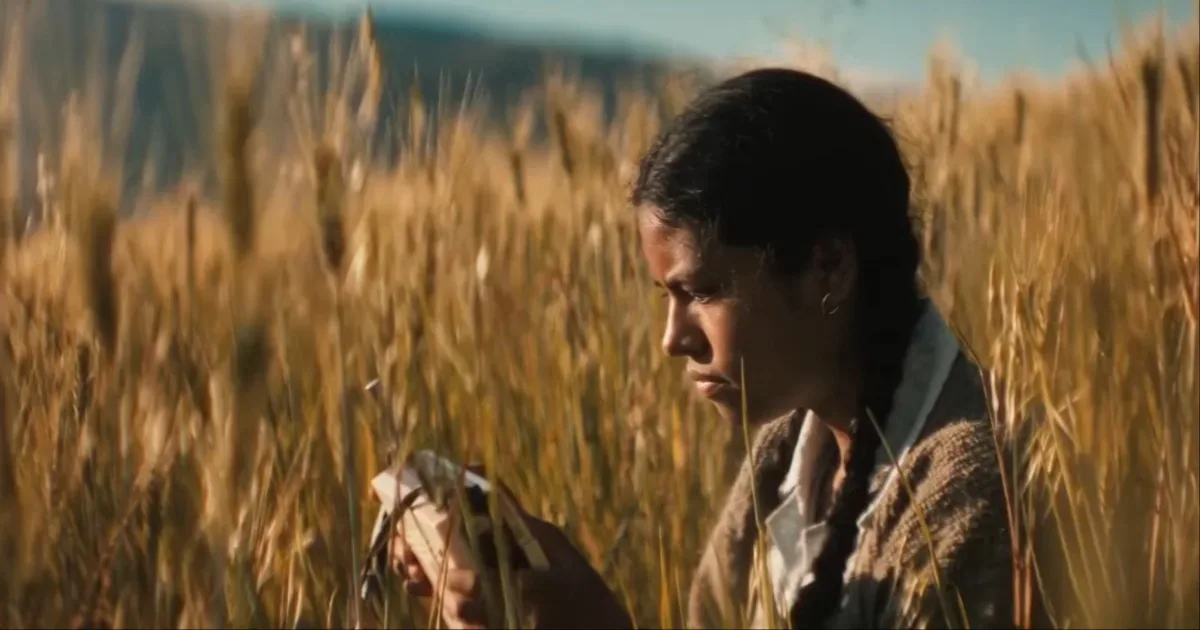
Marisol Vallejos Montano plays Clara, a young woman raised in the highland village of Totorani. Ana has trained her in traditional midwifery and taught her the Quechua songs used to comfort women during childbirth. Clara possesses a remarkable voice, but instead of spending her life continuing Ana’s work, she becomes increasingly fascinated by the music she hears from the city.
For Vallejos, Clara was her first major film role. She has said that she was not pursuing acting when the production found her. Olmos and producer Iris Ocampo discovered her while searching for their lead, with Olmos later revealing that he first came across Vallejos through TikTok.
The casting worked because Vallejos already had the musical ability Clara required. She is a musician and accordion player in real life, making the scenes in which Clara begins performing far more natural than they might have been with an actor pretending to play. Vallejos has also spoken about identifying with Clara’s movement between countryside and city because her own family comes from Pocona in Bolivia’s Valle Alto region.
That connection gives Clara’s conflict more nuance. She is not rejecting her Quechua identity simply because she wants another life. She wants to discover whether the voice she inherited from her community can become something that belongs to her as well.
Maria Magdalena Sanizo as Ana
Maria Magdalena Sanizo plays Ana Lindaura, Clara’s adoptive mother and the traditional midwife of Totorani. Ana took Clara in as a baby and has spent years preparing her to continue a practice that is becoming increasingly vulnerable as younger people leave rural communities.
Sanizo was also not an established film actress. Before the movie, she had worked as a Quechua-language radio presenter, and Olmos selected her partly because finding a professional performer with the language and lived background required for Ana proved difficult.
Her connection to midwifery is particularly significant. Sanizo has recalled accompanying her own grandmother, who was a traditional midwife, during visits to pregnant women. Those memories gave her a personal reference point for Ana’s knowledge and responsibilities.
Ana was also informed by research into real Andean midwives. Olmos traveled through Bolivia interviewing women who practiced traditional childbirth care, and reporting about the film has connected the character in particular with the late midwife Vicenta Dominguez. The role is therefore fictional, but it reflects practices and experiences gathered from real women.
Sanizo’s performance went on to receive major recognition, including Best Performance at the 2026 Guadalajara International Film Festival. The film also won supporting-actress and music honors during its international festival run.
Nely Huayta as Beatriz
Nely Huayta plays Beatriz, one of the important women in the world surrounding Clara and Ana. Official international distribution credits identify Huayta as part of the film’s five-character principal ensemble.
Compared with Clara and Ana, relatively little biographical information about Huayta has been released internationally. That is partly a reflection of the way The Condor Daughter was cast. Olmos favored performers and community participants capable of inhabiting the cultural environment authentically rather than assembling a cast around established celebrity profiles.
Beatriz helps broaden the film beyond a simple two-person conflict between mother and daughter. Clara’s decision to leave affects a community with its own relationships and expectations, and characters such as Beatriz allow the film to show how those choices are understood by the people remaining behind.
Alisson Jimenez as Flora
Alisson Jimenez appears as Flora. She is part of the younger circle around Clara and belongs to the side of the story increasingly connected with life beyond the isolated mountain community. Official credits from the film’s distributor confirm Jimenez in the role.
Clara’s interest in leaving does not develop in a vacuum. She is exposed to ideas, music and possibilities that make the city increasingly difficult to ignore. Flora contributes to that widening world and to the tension between the expectations placed on Clara and what Clara begins imagining for herself.
Jimenez is part of a cast that largely avoids polished movie-star performances. That restraint suits a film in which everyday gestures, family conversations and community customs carry as much dramatic weight as the larger turning points.
Gregoria Maldonado as Dionisia
Gregoria Maldonado plays Dionisia, another member of the rural community. Distributor credits and international festival records list Maldonado alongside Vallejos, Sanizo, Huayta and Jimenez in the ensemble.
Dionisia belongs to the network of women through which the film explores childbirth, family and communal responsibility. These supporting roles matter because Ana’s work as a midwife only has meaning within a community that depends on her knowledge.
The Condor Daughter is interested in what happens when that knowledge no longer has an obvious successor. Clara’s personal choice therefore affects women whose lives may never resemble hers but who depend on traditions passed between generations.
The Cast Was Chosen for Authenticity, Not Familiarity
Olmos has explained that he doubted conventional professional casting would give him the specific performances he needed for Clara and Ana. Their experiences are rooted too deeply in language, regional identity and forms of knowledge that cannot easily be learned for a few scenes. He therefore searched for women who already carried some of that background with them.
That decision is one of the reasons The Condor Daughter feels so closely connected to its setting. Vallejos understands the movement between rural and urban Bolivia and can actually perform Clara’s music. Sanizo speaks Quechua and grew up around traditional midwifery through her grandmother.
The story asks whether an inherited tradition can survive when the person expected to continue it wants a different future. Casting women whose own lives contain echoes of that tension gives the question much more weight. The Condor Daughter may introduce many international viewers to Marisol Vallejos Montano and Maria Magdalena Sanizo for the first time, but their lack of conventional movie-star familiarity is precisely what allows Clara and Ana to feel like people who truly belong to the world on screen.