The Brink of War’s Reagan-Gorbachev Story Really Happened, but the Film Adds Fiction Around It
The Brink of War turns one of the Cold War’s most extraordinary diplomatic encounters into a tense political drama built largely around two men talking in an Icelandic house. Jeff Daniels plays U.S. President Ronald Reagan opposite Jared Harris as Soviet leader Mikhail Gorbachev, with J.K. Simmons as Secretary of State George Shultz. Yes, the…
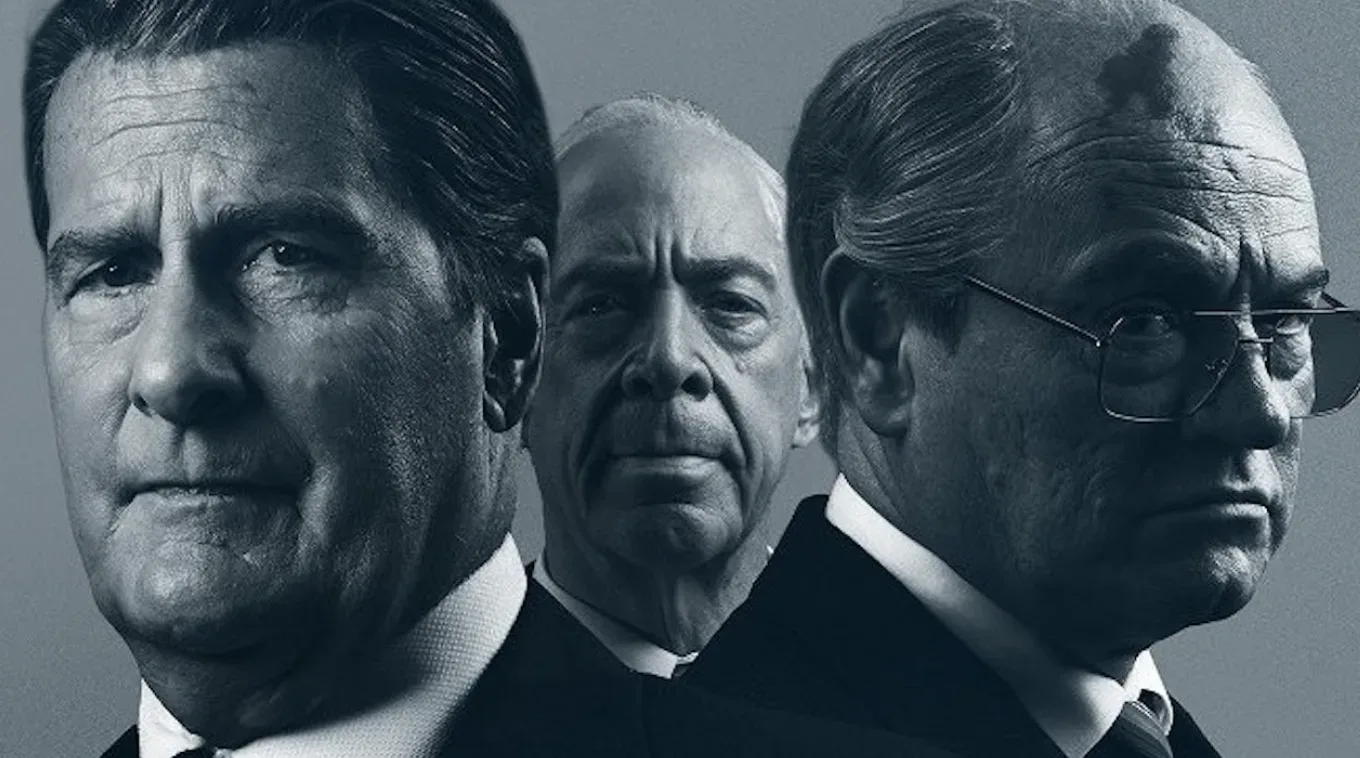
The Brink of War turns one of the Cold War’s most extraordinary diplomatic encounters into a tense political drama built largely around two men talking in an Icelandic house. Jeff Daniels plays U.S. President Ronald Reagan opposite Jared Harris as Soviet leader Mikhail Gorbachev, with J.K. Simmons as Secretary of State George Shultz. Yes, the film is based on a true story. Reagan and Gorbachev really met in Reykjavik on October 11 and 12, 1986, and came remarkably close to agreements that could have dramatically reduced their nuclear arsenals. The talks really did collapse over Reagan’s Strategic Defense Initiative, although the apparent failure later helped shape major arms-control progress.
What makes the film unusually grounded for a historical drama is the material available to writer-director Michael Russell Gunn. He researched the summit for years, spoke with the real George Shultz before Shultz’s death in 2021, and worked from declassified records of Reagan and Gorbachev’s negotiations. The central political confrontation is therefore rooted closely in documented history, even though several supporting scenes and characters were created or expanded for dramatic purposes.
Spoiler Alert
Did Ronald Reagan and Mikhail Gorbachev Really Meet in Reykjavik?
Yes. The central meeting depicted in The Brink of War took place at Hofdi House in Reykjavik, Iceland, over two days in October 1986. Reagan and Gorbachev had previously met in Geneva in 1985, but Reykjavik was initially conceived as a less formal meeting intended to prepare the ground for another summit. Instead, the discussion unexpectedly developed into one of the most ambitious nuclear-arms negotiations of the Cold War.
The stakes shown in the film were real. Both countries possessed enormous nuclear arsenals, and the United States and Soviet Union had spent decades structuring their security around the threat of mutual destruction. At Reykjavik, however, the conversation moved far beyond modest arms limitations. Reagan and Gorbachev discussed deep reductions in strategic weapons, intermediate-range missiles and eventually the possibility of eliminating entire categories of nuclear weapons.
Declassified American records confirm just how far the negotiations went. One proposal called for a 50 percent reduction in strategic offensive arsenals over five years, followed by the goal of eliminating remaining offensive ballistic missiles during the following five years. The summit therefore was not simply a symbolic photo opportunity between two rival leaders. For several hours, they were discussing changes to the nuclear balance that would previously have seemed almost impossible.
How Accurate Are Reagan and Gorbachev’s Conversations in the Film?
Many of the central exchanges are based closely on actual summit transcripts. Gunn has explained that Shultz helped lead him toward the story and provided access to declassified records that allowed the filmmaker to reconstruct what happened inside the negotiating room. According to Gunn, a number of the conversations in the finished movie remain close to the historical wording, although he adjusted some moments to make them work dramatically on screen.
That gives the Reagan-Gorbachev scenes a stronger factual foundation than the private conversations in many historical films. The surviving memorandum from October 12 lists Reagan, Gorbachev, Shultz, Soviet Foreign Minister Eduard Shevardnadze, interpreters and note-takers, and records the leaders arguing through the details of nuclear reductions and missile defense.
The film is still a dramatization rather than a transcript being performed word for word. Gunn did not have comparable records for every conversation involving aides or the two first ladies, so those sections required more reconstruction from biographies and historical research. He has specifically acknowledged filling those gaps using secondary historical sources while trying to remain consistent with the personalities involved.
Related: The Brink of War’s Reagan-Gorbachev Summit Almost Changed History. So Why Did It Fail?
Related: The Brink of War Filming Locations
Why Did the Real Reykjavik Summit Fail?
The talks ultimately broke down over the Strategic Defense Initiative, or SDI, Reagan’s proposed missile-defense program commonly nicknamed “Star Wars.” Gorbachev was prepared to make enormous reductions in offensive nuclear weapons, but he wanted tighter restrictions on American SDI research. Reagan refused to accept restrictions he believed would effectively cripple the program.
This disagreement is the historical engine of The Brink of War. Reagan viewed SDI as a potential defense against ballistic missiles and argued that abandoning it would remove an important safeguard if future arms agreements failed. Gorbachev, meanwhile, believed unrestricted American development of missile defenses could undermine the strategic balance and potentially give the United States a major advantage.
The final exchange was bitter. State Department historical records quote Reagan’s diary describing his refusal to “give away” SDI even though it meant losing the arms-reduction package. Gorbachev similarly maintained that offensive reductions could not be separated from restrictions on defensive systems. Both men left Hofdi House disappointed, and no treaty was signed that weekend.
Which Characters in The Brink of War Were Real People?
Most of the major political figures are based on real people. Reagan, Gorbachev and George Shultz were central participants in the actual events. Hope Davis’ Nancy Reagan and Branka Katic’s Raisa Gorbacheva are also historical figures, and Raisa did accompany her husband to Iceland.
The supporting diplomatic cast likewise includes real officials involved in American and Soviet arms-control policy. The movie features figures such as Kenneth Adelman, Max Kampelman, Richard Perle, Sergey Akhromeyev and Paul Nitze, all of whom belonged to the political and strategic world surrounding the negotiations.
There are, however, deliberate fictional additions. Aya Cash and Guy Burnet play fictional journalists, created to provide an outside perspective on the summit and on the two political couples. They should not be mistaken for unidentified real reporters whose names were simply changed. People confirms that those journalist characters were invented for the film.
Their presence is a useful example of how The Brink of War mixes documented history with conventional screenwriting. The summit itself, its principal participants and its central dispute are real, while the film adds characters and private interactions that help explain the event to an audience that may have little prior knowledge of Cold War diplomacy.
Was Reykjavik Really a Failure?
In the immediate sense, yes, but historically it became much harder to describe Reykjavik as a failure. Reagan and Gorbachev left Iceland without signing the sweeping agreement they had discussed, and both men were visibly disappointed. Yet the negotiations established areas of agreement that did not disappear simply because the final package collapsed.
Just over a year later, Reagan and Gorbachev signed the Intermediate-Range Nuclear Forces Treaty in Washington on December 8, 1987. The treaty eliminated an entire class of American and Soviet ground-launched intermediate-range missiles and introduced extensive verification measures. Reagan administration records explicitly connected the later INF negotiations to principles the two leaders had agreed upon at Reykjavik.
Work toward strategic arms reductions also continued. State Department records from the later Reagan-Gorbachev summit referred back to the 50 percent reduction framework developed at Reykjavik as negotiations moved toward what eventually became the START process.
That is why The Brink of War can truthfully frame an unsuccessful summit as something historically consequential. The men walked away without the enormous nuclear deal they had briefly imagined, but they also discovered how much common ground existed once both sides were willing to test the limits of negotiation.
So yes, The Brink of War is firmly based on a true story, and unusually detailed historical records support much of its central drama. The film compresses events, reconstructs conversations outside the documented negotiating sessions and introduces fictional journalists, but the extraordinary part is not invented: Reagan and Gorbachev really did sit together in Reykjavik and seriously discuss dismantling huge portions of the nuclear arsenals that had defined the Cold War.