Scrubs Season 2 Episode 2 Recap and Ending Explained: Why Does J.D. Admit Dr. Cox?
After the uncertainty surrounding Dr. Cox’s condition in the Season 2 premiere, ‘Scrubs‘ Episode 2 begins with some genuinely encouraging news. J.D.’s revised approach is working, Cox is feeling more like himself, and his illness is described as being in remission. Unfortunately, getting better introduces an entirely different problem when the cost of continuing his…

After the uncertainty surrounding Dr. Cox’s condition in the Season 2 premiere, ‘Scrubs‘ Episode 2 begins with some genuinely encouraging news. J.D.’s revised approach is working, Cox is feeling more like himself, and his illness is described as being in remission. Unfortunately, getting better introduces an entirely different problem when the cost of continuing his treatment becomes impossible to ignore.
“My Mentee” uses Cox’s insurance problem as the foundation for a broader episode about mentorship. J.D. decides he should finally become someone’s Dr. Cox, Elliot becomes overly invested in shaping Tosh’s career, and Turk discovers that being a mentor also means accepting that the younger doctor beside you may eventually become better than you.
Dr. Cox Is Better, But His Treatment Creates a New Problem
The episode quickly confirms that J.D.’s decision at the end of Episode 1 was correct. Dr. Cox’s treatment is working, and Cox has enough of his old energy back to insult J.D. with considerably more enthusiasm.
The medical uncertainty, however, is replaced by financial uncertainty. Cox reveals that each infusion costs $35,000, and he still requires 12 more treatments. His insurance will not cover them under the current circumstances, leaving J.D. determined to find another solution.
J.D. initially tries the proper route. He asks for an expedited appeal of the insurance denial, hoping that someone in the hospital administration can get the decision reversed. The appeal is still denied, forcing J.D. to start thinking about the kind of unconventional workaround that Cox once would have found for one of his own patients.
The answer is technically simple. Cox’s treatment is not covered as an outpatient, but if Cox is admitted to the hospital, insurance would have to cover the necessary care. There is one major obstacle: Cox has no legitimate medical reason to be admitted.
Also Read: Scrubs Season 2 Episode 1 Recap and Ending Explained: Is Dr. Cox’s Treatment Failing?
J.D. Chooses Grant as His New Mentee
Before the insurance problem escalates, Cox points out another gap in J.D.’s new life as chief of medicine. J.D. has become the doctor he is largely because Cox spent years challenging him, but J.D. has not yet found a younger doctor to mentor in the same way.
That sends J.D. searching for his own protege. He settles on Grant Summers, Sacred Heart’s new chief resident, largely because Grant initially appears enthusiastic, likable and uncertain enough that J.D. thinks he can help shape him.
The problem is that J.D. approaches mentorship by trying to reproduce his relationship with Cox instead of actually figuring out what Grant needs. He forces nicknames, becomes overly familiar and imagines every interaction as the beginning of a lifelong mentor-student bond.
His biggest mistake comes when the insurance appeal fails. J.D. asks Grant, in his capacity as chief resident, to admit Cox even though Cox does not meet the requirements for hospitalization. Grant immediately refuses.
J.D. tries to turn the conversation into a lesson about medicine’s imperfect system. He explains that doctors sometimes have to put themselves on the line when the rules prevent a patient from receiving necessary care. To J.D., this is exactly the sort of morally complicated lesson Cox once taught him. Grant sees the situation very differently.
Why Does Grant Report J.D.?
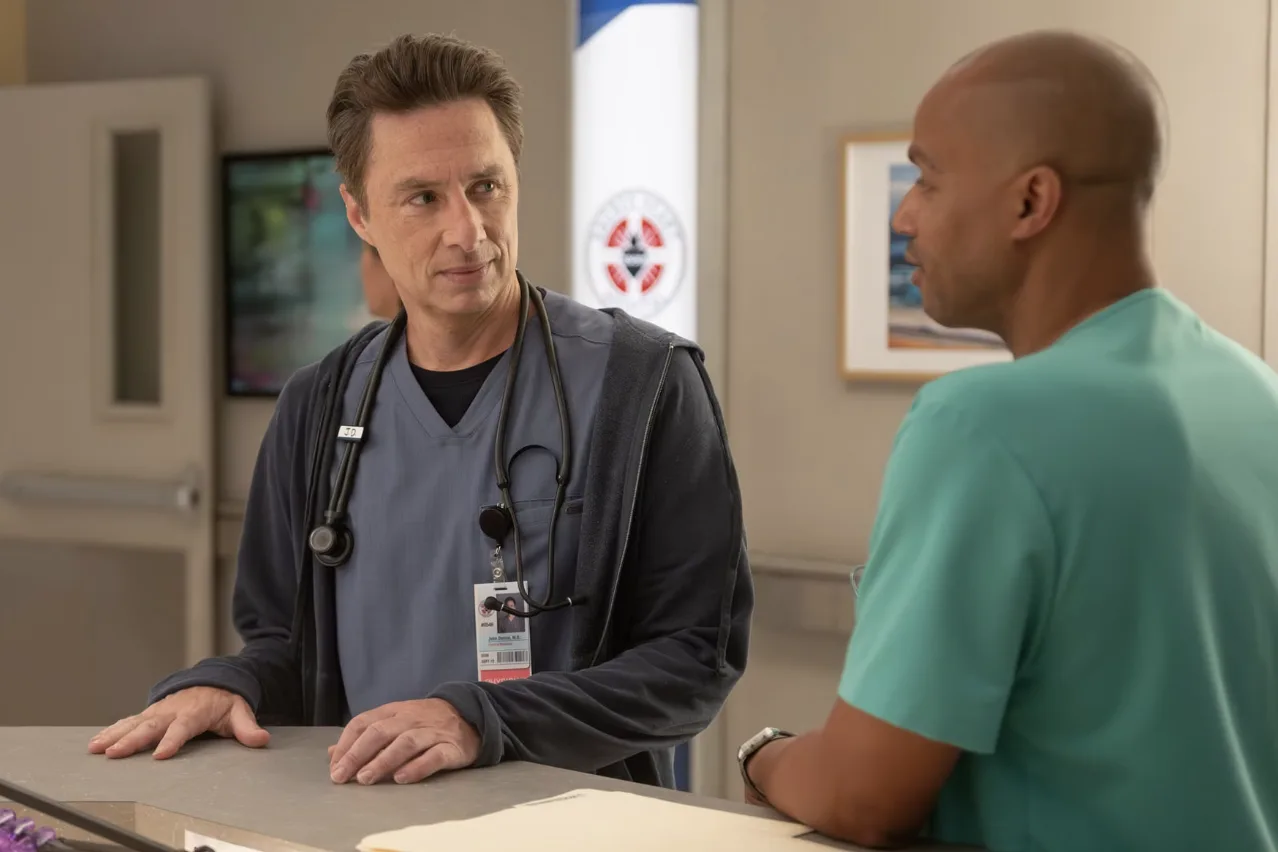
Grant reports J.D. because he believes J.D. has asked him to jeopardize his career by participating in insurance fraud. The decision deeply offends J.D., who expected Grant to understand that helping Cox matters more than rigidly following hospital procedure.
Grant’s position, however, is not unreasonable. He barely knows Cox, has only recently arrived at Sacred Heart, and is being asked by the chief of medicine to create an admission without a legitimate medical basis. What J.D. considers an act of loyalty looks to Grant like a senior doctor pressuring a younger colleague into taking a professional risk.
The confrontation reveals why J.D.’s attempt at mentorship has failed. J.D. thinks that because Cox regularly pushed him into uncomfortable situations, he should do the same with Grant. He overlooks all the years of trust, conflict and affection that made his own relationship with Cox unique.
After Grant reports him, J.D. reacts badly and briefly tries to find somebody else to mentor. Eventually, he realizes that Cox did not stop teaching him simply because J.D. annoyed him. In fact, annoying Cox was practically the foundation of their relationship.
J.D. therefore returns to Grant and asks him to continue rounding with him. He cannot force Grant to become a younger version of himself, but he can still teach him.
Elliot Pushes Tosh Toward Endocrinology
Elliot is dealing with the opposite mentoring problem. Instead of struggling to connect with Tosh, she becomes too invested in controlling the direction of Tosh’s career.
Tosh is halfway through her intern year and knows she needs to start considering a specialty. After mentioning that she enjoyed an endocrinology case, Elliot enthusiastically encourages her toward endocrinology and even offers to connect her with the department.
Things become complicated when a pediatric doctor also takes an interest in Tosh and suggests she has the bedside manner to work well with younger patients. Elliot responds as though somebody is trying to steal her protege. She insists Tosh has bigger plans and eventually describes her as someone who can easily be influenced by whoever gives her attention.
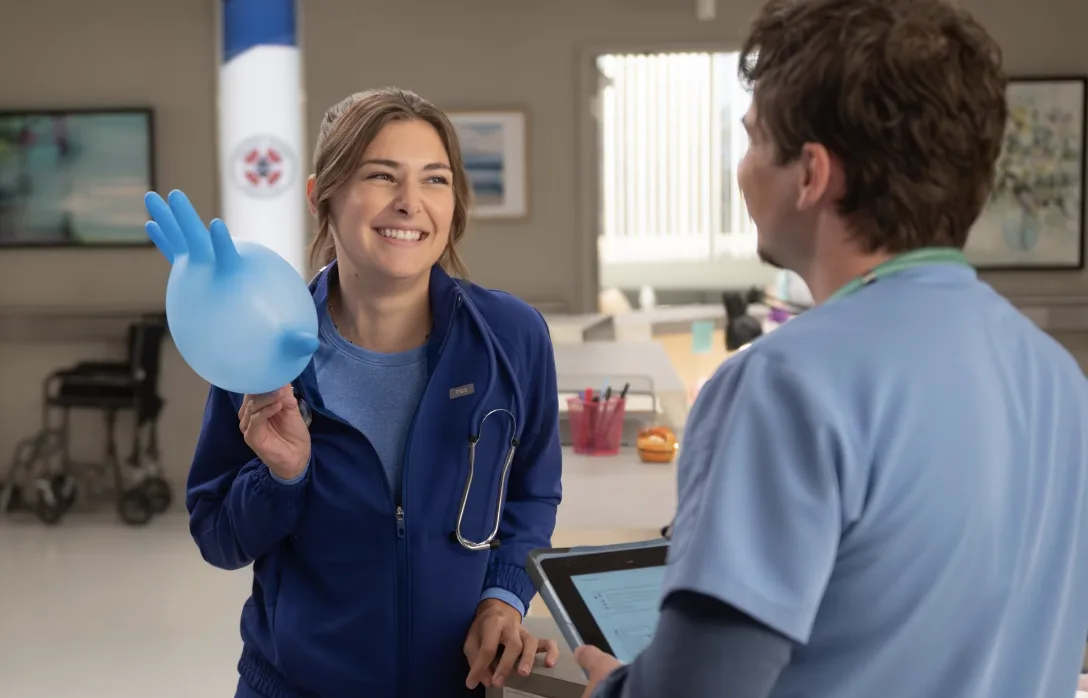
Tosh overhears enough to understand how Elliot actually sees her and pushes back. She is not rejecting Elliot’s guidance, but she wants the freedom to explore different specialties rather than living out Elliot’s preferred version of her future.
Cox once again provides the insight Elliot needs. He recognizes that Elliot is not really worried about Tosh wasting her career. Elliot is looking back at her own life and wondering what she might have accomplished if relationships and other choices had not redirected some of her ambition.
That realization allows Elliot to loosen her grip. Tosh then reminds her that it is not too late for Elliot to pursue something new either, even suggesting that she could write or start a medical podcast. For once, mentoring becomes a two-way exchange.
Turk Realizes Why Mentorship Matters
Turk’s storyline begins as a comedy about aging. A younger surgeon, Deshana, challenges him in the operating room, while Turk refuses to accept that he increasingly needs his reading glasses. Their rivalry eventually leads to a banana-suturing competition, and Deshana beats him.
Turk initially responds by criticizing her for celebrating too much. She quickly points out his hypocrisy, considering how often Turk boasts about his own accomplishments. What is really bothering him is not Deshana’s attitude. It is the possibility that someone younger may be catching up with him.
Cox sees through him immediately. Turk has spent most of his adult life defining himself through surgery, and reaching the peak of his skills also forces him to consider what happens after that peak. His children will eventually grow up, his career will eventually end, and he does not know what part of himself will remain when he is no longer Dr. Turk in the operating room.
Cox tells him that the cases themselves will eventually blur together. What will remain is the memory of helping younger doctors become capable physicians. Turk therefore begins viewing Deshana’s talent differently. Her success does not diminish him. Helping her become better is part of what will give his own career lasting meaning.
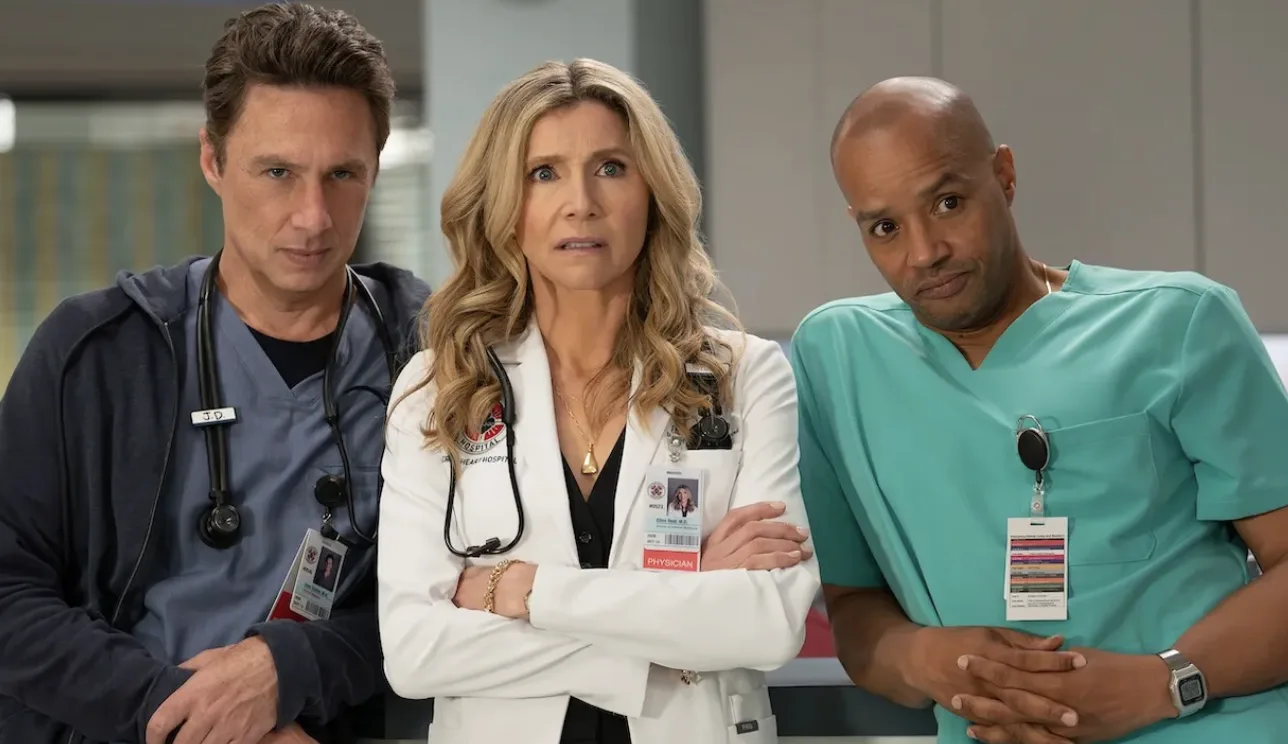
Scrubs Season 2 Episode 2 Ending: Why Does J.D. Admit Dr. Cox?
J.D. decides to admit Dr. Cox because it is the only remaining way he can find to get Cox’s continuing infusions covered by insurance. Cox is healthy enough that there is no legitimate reason for hospitalization, but his insurer has denied outpatient coverage despite the treatment working.
That is why Grant refuses to create the admission. Doing so could expose him professionally, and he is unwilling to risk his career for a workaround involving a man he barely knows. J.D. eventually realizes that he should not be asking Grant to take that risk in the first place. Instead, J.D. decides to do it himself.
Cox immediately objects. He knows the hospital board could punish J.D., and he makes it clear that he did not help J.D. become chief of medicine so that J.D. could throw away the position protecting him. J.D.’s response explains why he is willing to do it anyway.
For years, Cox protected J.D. while teaching him what kind of doctor to become. Now J.D. believes the relationship has reached the point where those roles can reverse. Cox has “passed the baton,” and J.D. sees protecting his mentor as part of accepting what Cox gave him.
The moment also completes the episode’s mentorship theme. J.D. begins the story desperate to recreate his bond with Cox by finding a younger version of himself. He ends it realizing that mentorship is not about copying an old relationship. It is about passing along what that relationship gave you.
Grant may never be exactly what J.D. was to Cox. Tosh may choose a specialty Elliot never expected. Deshana may one day surpass Turk. None of that means their mentors have failed. In the episode’s view, that is the point of mentoring someone in the first place.