Monster: The Lizzie Borden Story Ending Explained: What Happens to Lizzie and Maggie?
The murder trial may decide Lizzie Borden’s legal fate, but Monster: The Lizzie Borden Story does not treat her acquittal as the end of her story. The eighth and final episode, “Carnival,” moves beyond the courtroom to explore what freedom actually looks like for a woman who has escaped conviction but cannot escape the legend…

The murder trial may decide Lizzie Borden’s legal fate, but Monster: The Lizzie Borden Story does not treat her acquittal as the end of her story. The eighth and final episode, “Carnival,” moves beyond the courtroom to explore what freedom actually looks like for a woman who has escaped conviction but cannot escape the legend forming around her name.
Years pass, Lizzie builds the luxurious life she once imagined, and the world around her changes. Yet the murders of Andrew and Abby Borden remain at the center of nearly every relationship she has. Emma cannot forget them, Maggie cannot completely leave them behind, and Lizzie eventually discovers that being declared innocent is very different from believing herself innocent. The finale then extends that idea almost a century forward by returning to Aileen Wuornos, turning Lizzie’s story into something larger than the Borden murders themselves.
Related: Who Is Ella Beatty? Meet the Actress Playing Lizzie Borden in Monster
What Happens to Lizzie After She Is Acquitted?
By the time the finale returns to Lizzie in 1908, she has transformed her life with the inheritance left behind after her parents’ deaths. She lives at Maplecroft, surrounded by animals, modern comforts and the kind of wealth and independence she could never enjoy under Andrew’s control.
She has even recreated parts of the world she lost, including the cherry trees associated with her earlier life. Yet Maplecroft is hardly the peaceful sanctuary Lizzie imagined. The notoriety surrounding the Borden name has followed both sisters into adulthood, and Emma has become increasingly miserable while continuing to live with Lizzie.
Nance O’Neil also remains close to Lizzie in the show’s version of events. Nance needs financial help as she considers moving into motion pictures, and Lizzie is willing to support her. During a dinner with their wealthy circle, however, Emma finally erupts and exposes just how differently the sisters have experienced the years since the trial.

Why Does Emma Leave Lizzie?
Emma has spent years protecting Lizzie because of the promise she made to their mother, but that loyalty has effectively destroyed her own life.
The Borden name follows Emma everywhere. She tells the group that she tried to establish a life away from her sister, only to discover that their family’s reputation made normal relationships almost impossible. She eventually turns to alcohol and drugs for escape while continuing to remain beside Lizzie.
By 1911, Emma can no longer accept that arrangement. Lizzie has become a figure of American folklore, with children dressing as her on Halloween, books openly calling her a murderer and the infamous rhyme spreading her story to another generation. Emma describes their home not as a sanctuary but as something closer to a tomb.
Before leaving, she makes her feelings about the murders unmistakable. Emma hopes that Lizzie will eventually admit what she did, even if that confession only comes on her deathbed. The scene makes clear that Emma’s support during the trial did not mean she believed Lizzie was innocent.
Does Maggie Come Back to Lizzie?
Yes. Maggie repeatedly returns to Lizzie even after trying to create another life for herself. When someone secretly enters Maplecroft’s basement, Lizzie initially prepares for an intruder. The visitor turns out to be Maggie, and the two immediately reunite romantically. Maggie explains that she attempted to start over, eventually settling into a marriage, but the life she built never gave her what she wanted.

At first, Maggie still only allows herself brief visits with Lizzie. Their relationship remains hidden, just as it had been when they were younger. That changes after Maggie returns to her husband and realizes that she is again living according to somebody else’s expectations.
She briefly approaches him with an axe, creating an obvious parallel with the Borden murders, but this time Maggie stops herself. Rather than kill another person to escape an unhappy life, she walks away from the marriage.
When Maggie returns to Maplecroft again, she makes a different entrance. She no longer sneaks into the basement. She enters openly through the front door and tells Lizzie that she intends to stay. Within Monster’s fictional version of their relationship, this becomes the happy ending neither woman believed was possible earlier in the season.
Does Lizzie Finally Admit She Killed Her Parents?
The finale comes as close to a confession as Monster needs to. The series itself has never maintained ambiguity about its version of the murders. Earlier episodes explicitly show Lizzie and Maggie killing Abby and Andrew together. The question in the finale is therefore not whether Lizzie did it, but whether she can finally stop lying to herself about what happened.
Even years later, Lizzie continues entertaining alternative explanations when people ask who killed her parents. She mentions John Morse, a mysterious illegitimate son and other theories before suggesting that perhaps a stranger simply entered the house and committed a random act of violence. Her private conversations with Maggie tell a completely different story.
Once the two women are finally together, Lizzie admits that she still carries the actions of her younger self with her. She cannot undo what happened, but she wants to find some form of peace. Maggie tells her that she will have to make peace with it if she ever wants to move forward.
Lizzie then goes into the woods and prays. She acknowledges committing a terrible act, expresses regret and asks God, Andrew and Abby for forgiveness. She senses the hands of her father and stepmother resting on her shoulders, which she interprets as the sign of grace she had requested.
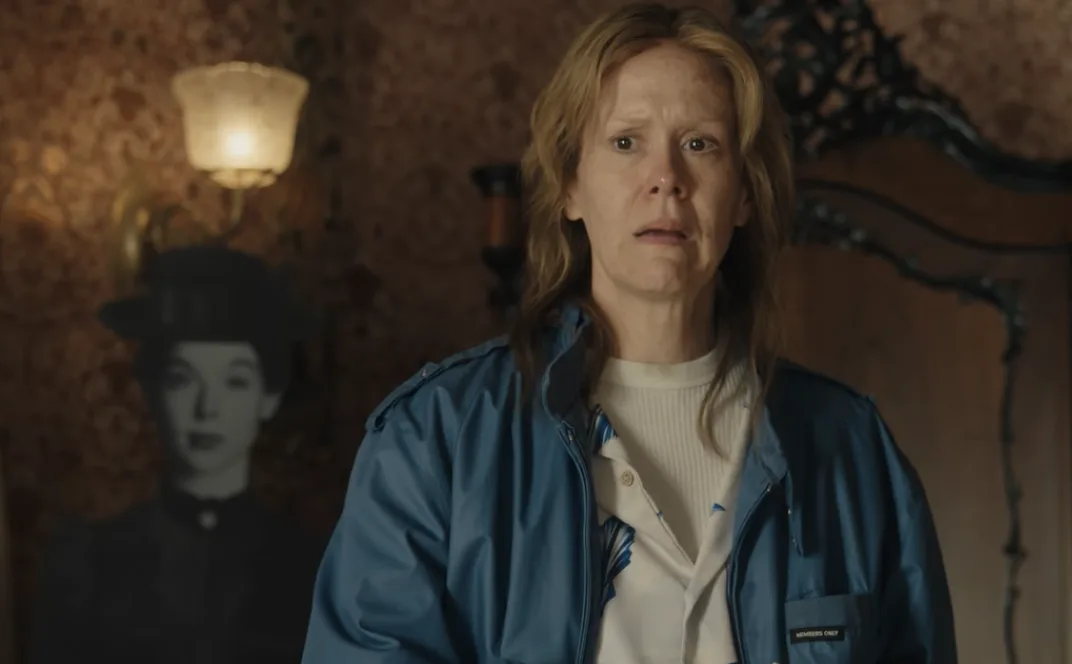
It is not a legal confession, and she does not publicly announce herself as the murderer. Emotionally, however, it is Lizzie finally admitting the truth to herself.
Historically, Lizzie Borden was acquitted and the murders remain officially unsolved. Monster is presenting its own fictional answer to a case that has never been conclusively resolved in real life. Netflix itself describes the season as requiring significant speculation because its central subject was acquitted.
Why Do Lizzie and Maggie Become Suffragettes?
After Lizzie seeks forgiveness, she tells Maggie that they should make their lives mean something. The two women subsequently become involved in the women’s suffrage movement, using their resources and time to support women’s right to vote. For Lizzie, the activism represents an attempt to transform the freedom she gained through violence into something that might benefit women beyond herself.
The storyline also completes one of the season’s central themes. Monster repeatedly portrays Lizzie, Maggie, Abby and even historical figures such as Elizabeth Bathory as women living within systems controlled overwhelmingly by men. The suffrage movement gives Lizzie and Maggie a way to challenge that power without repeating the violence that once defined them.
The finale eventually shows the women celebrating political progress on voting rights. It gives Lizzie something she never truly had earlier in the season: a future built around a cause rather than resentment.
Why Does Aileen Wuornos Appear at the End?
The final minutes return to Aileen Wuornos because Monster is drawing a thematic line between her and Lizzie rather than claiming the two women had a real connection.
Aileen’s storyline ends very differently. She is convicted of murder and ultimately executed by lethal injection. The series emphasizes her claims that at least some of her violence followed abuse and sexual assault, contrasting her fate with Lizzie’s successful acquittal decades earlier.
After Aileen dies, however, she opens her eyes and finds Lizzie and Maggie waiting for her. They tell her that she does not need to be afraid and lead her toward a bright light. Lizzie assures her that she has been forgiven and understood. Netflix co-creator Ian Brennan explained that the ending deliberately connects Aileen and Lizzie as part of the season’s exploration of female rage and the question running throughout Monster of whether killers are born or created by their circumstances.
The scene should not be read as a literal historical event or proof that the show has suddenly established a supernatural afterlife. It functions as a symbolic conclusion to Aileen’s story and to Lizzie’s own search for forgiveness.

What Does the Final Scene Really Mean?
Monster gives Lizzie something Aileen never receives in life: time. Lizzie escapes conviction, inherits wealth, finds Maggie again and lives long enough to confront the consequences of what she has done. She eventually asks for forgiveness and chooses to devote part of her later life to something larger than herself.
Aileen, by contrast, reaches the end of her life still angry at a society she believes never understood what happened to her. In death, the series gives her the acceptance that Lizzie spent decades searching for.
Having Lizzie guide Aileen forward completes that circle. Lizzie begins the series as a woman who believes violence can free her from confinement. By the end, Monster imagines her as someone who understands that freedom without reconciliation simply creates another kind of prison.
The finale does not excuse the murders committed by either woman. Instead, it closes on the idea behind the entire season: understanding how someone becomes a monster is not the same thing as pretending that the terrible things they did never happened.