It’s Always Sunny Season 18 Episode 6 Recap and Ending Explained
It’s Always Sunny in Philadelphia has never needed much encouragement to turn a changing social habit into a crisis for Paddy’s Pub, and Season 18 Episode 6 finds the Gang confronting one that actually threatens their livelihood. “The War on Alcohol” begins when a salesman introduces them to Shallow Shade Lager, a locally brewed beer…
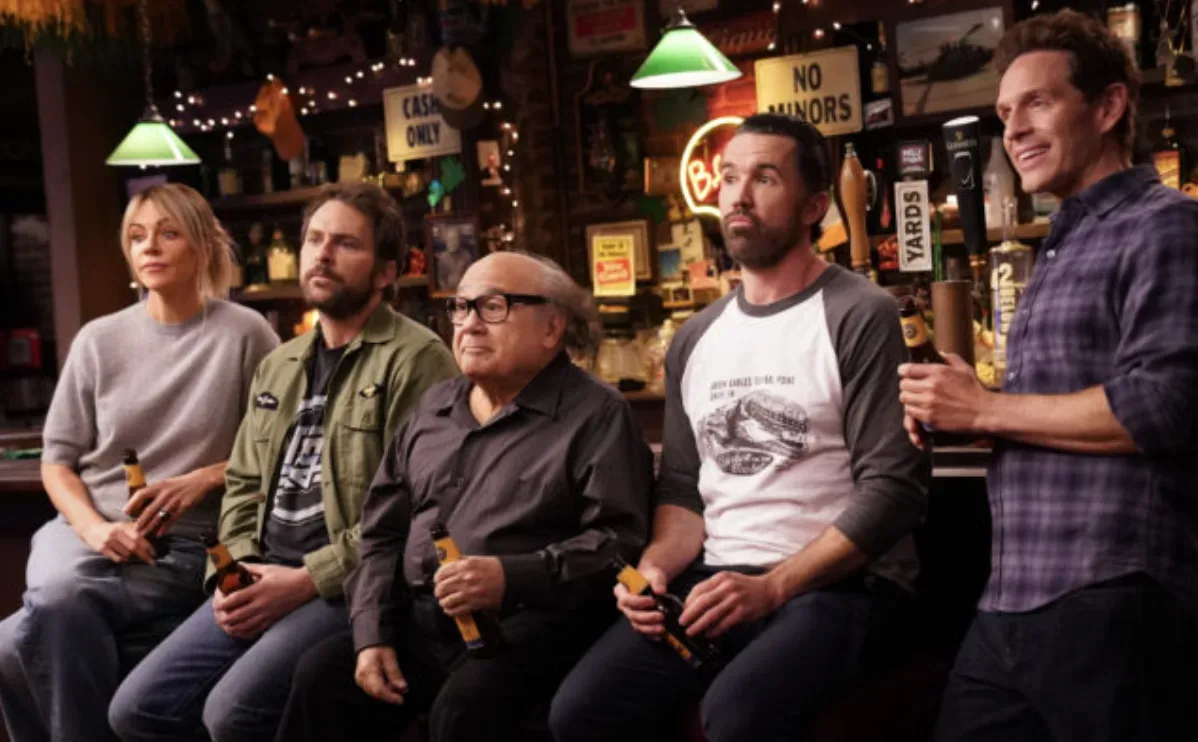
It’s Always Sunny in Philadelphia has never needed much encouragement to turn a changing social habit into a crisis for Paddy’s Pub, and Season 18 Episode 6 finds the Gang confronting one that actually threatens their livelihood. “The War on Alcohol” begins when a salesman introduces them to Shallow Shade Lager, a locally brewed beer that wins everyone over until he reveals the detail they somehow missed: it contains no alcohol. To Dennis, Mac, Charlie, Dee and Frank, the rise of nonalcoholic beer is not simply a new drinking preference. It is evidence that the country has turned against booze itself, sending them on a mission to restore the kind of working culture they remember from another era.
The plan divides along class lines almost immediately. Dennis, Dee and Frank head to a nearby marketing agency to recruit white-collar workers, while Mac and Charlie go searching for the muscular factory workers they imagine once filled bars after a hard shift. What both groups find instead is a workplace transformed by remote work, automation and changing attitudes toward drinking. By the time everyone returns to Paddy’s, the Gang has accidentally discovered a way to make the bar more profitable than usual, only to reject the lesson almost as quickly as they learned it.
Related: Its Always Sunny In Philadelphia Season 18 Episode 3 Recap: The Gang Gets Tested
Why Does the Gang Declare a War on Alcohol?
The trouble begins with Shallow Shade Lager, which the Gang consumes enthusiastically during a product tasting at Paddy’s. They like the flavor, the low calorie count and the fact that it is brewed locally in Philadelphia, but their enthusiasm disappears when the salesman tells them it is nonalcoholic. Charlie and the others react as though they have been personally deceived, throwing the representative out of the bar despite having praised the product only moments earlier.
From there, the Gang decides that alcohol is under attack. They complain that beer is losing its alcohol, cigarettes lost much of their old cultural status, meat is being replaced by alternatives, and even Coca-Cola no longer contains the ingredient Frank associates with its distant past. Their solution is to remind Philadelphia that drinking once brought people from different backgrounds together, particularly after work and during lunch.
Frank proposes rebuilding that culture by recruiting two groups they believe once sustained bars like Paddy’s. Dennis, Dee and Frank will find white-collar workers who supposedly spent their afternoons drinking at power lunches, while Mac and Charlie will bring in blue-collar factory workers. The problem is that their understanding of both workplaces comes almost entirely from old movies, advertisements and memories that no longer match reality.
Dennis, Dee and Frank Take Over an Empty Office
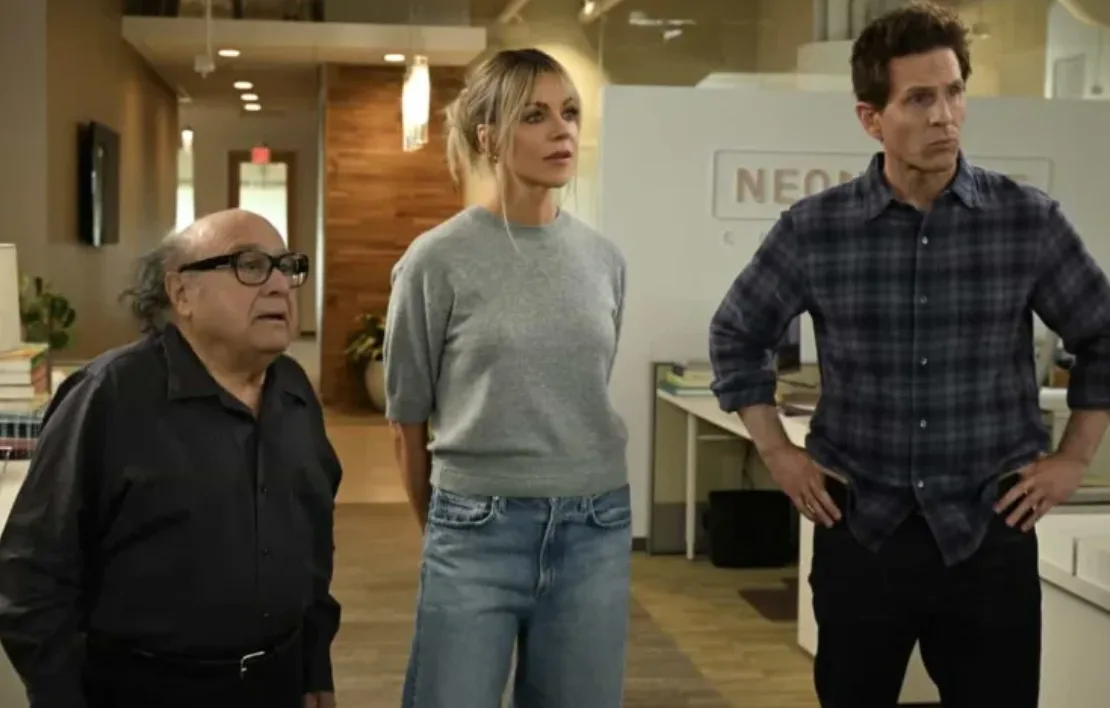
Dennis, Dee and Frank enter a nearby marketing agency expecting expensive suits, crowded desks and executives looking for an excuse to drink during the workday. Instead, the office is practically deserted because most employees work remotely and only return for important meetings. The only person they initially encounter is a young intern named Darren, who assumes the three strangers actually work there after they confidently claim to be part of marketing.
The empty office only strengthens Frank’s belief that work culture has deteriorated. He remembers an era when he could arrive at the office, pour a drink, attend meetings, sexually harass his secretary, go out for another drink and avoid returning home for as long as possible. Dennis sees a different opportunity in the unused workspace and suggests creating an advertising campaign that will make people want to drink in bars again.
Their brainstorming session quickly turns into a parody of old advertising. They imagine an alcohol mascot, eventually settling on a sophisticated penguin wearing a tuxedo and expensive watch while driving an Alfa Romeo with a drink in one hand. When Dennis and Frank expect Dee to take notes because she is the woman in the room, she storms away and decides to create her own version of the workplace culture they keep romanticizing.
What Happens Between Dee and Darren?
Dee’s subplot takes the Gang’s nostalgia for the old office and reveals exactly what some of those traditions actually meant. She summons Darren into an office, makes him prepare drinks and begins treating him the way a powerful male executive in one of Frank’s stories might have treated a young female employee. Darren quickly becomes uncomfortable, particularly when Dee makes it clear that the interaction is about workplace power rather than romance.
The situation grows even more absurd when Darren tells her he has low testosterone and is already in a relationship. Dee is not interested in those explanations because she believes occupying the position of the boss gives her permission to behave however she wants. What began as the Gang celebrating the supposedly freer workplace of the past has now become a fairly direct demonstration of why many of those behaviors disappeared.
The joke continues when the actual agency employees eventually return for a meeting. Dennis and Frank drunkenly present their unfinished alcohol advertisement to a room full of confused marketing professionals, apparently without realizing that everyone around them actually works for the company they have invaded. Dee then leaves Darren behind after creating her own HR nightmare, allowing the white-collar experiment to end without recruiting a single useful customer for Paddy’s.
Mac and Charlie Search for Blue-Collar Workers
Mac and Charlie have an equally outdated vision of American manufacturing. They arrive at a factory expecting darkness, sparks, molten metal and enormous men physically bending steel with their bare hands. Charlie even prepares sandwiches because he expects everyone to eat lunch while sitting on a steel beam high above the city, borrowing his entire concept of factory life from familiar industrial imagery.
The factory they enter looks nothing like that fantasy. It is bright, quiet and largely automated, with a single employee named Mitch overseeing machinery that can be monitored through a phone. He explains that much of the manufacturing work has either been automated or moved overseas, leaving Mac and Charlie disappointed that they cannot find the kind of workers they imagined would restore Paddy’s old clientele.
Mitch offers to come to the bar himself, but he also asks whether Paddy’s serves nonalcoholic beer. Mac and Charlie initially dismiss him because he does not fit their preferred image of a blue-collar customer, although they eventually decide he is the best option available. More importantly, Mitch introduces them to a technology that will become the episode’s most important business idea: a system that allows customers to pay and pour their own beer without requiring the Gang to stand behind the bar.
Why Does Charlie Put Alcohol in Mitch’s Beer?
Mitch genuinely enjoys the nonalcoholic beer, but Charlie cannot accept that anyone could have a good time drinking it. He secretly adds alcohol to Mitch’s drinks and watches as Mitch becomes increasingly intoxicated while operating factory machinery. Mac initially sees the drunken transformation as progress because Mitch appears closer to the reckless blue-collar worker he had imagined finding.
The experiment nearly becomes catastrophic when Mitch’s tie is pulled into a machine. He manages to stop the equipment before suffering a serious injury, but the incident should be an obvious warning about combining alcohol with industrial work. Mac and Charlie, however, remain more interested in finding someone who fits their romanticized idea of the American factory worker.
That search leads them to an old employee photograph of Buck Longwood. Buck looks exactly like the worker Mac has been searching for, and Mac immediately builds an entire heroic story around him. They track Buck down believing that they have finally found a representative of the lost working class who will happily drink at Paddy’s.
What Happened to Buck Longwood?
Buck initially seems receptive when Mac and Charlie arrive at his home and complain about the changing factory. He agrees that things are no longer the same and accepts their invitation to Paddy’s. Mac is especially excited because he sees Buck as proof that workers like the ones he imagined really did exist.
The mood changes when Buck reveals the severe injuries covering much of his body. He explains that he was injured in a lava accident at the factory, immediately validating one of Mac and Charlie’s most ridiculous assumptions about old industrial work. The final detail destroys their nostalgia completely: Buck admits the accident was his own fault because he had been drinking while working.
Mac and Charlie suddenly understand that bringing alcohol back into factories might not be the noble social project they imagined. They also abandon Buck once they realize his injuries and mobility issues make it difficult for him to travel with them, undercutting their earlier claims about honoring the workers who “built America.” Their supposedly patriotic mission disappears as soon as helping an actual worker becomes inconvenient.
Why Does Paddy’s Pub Suddenly Make So Much Money?
When everyone returns to Paddy’s, the day appears to have been a complete failure. Dennis, Dee and Frank found an office culture that no longer resembles the one they remembered, while Mac and Charlie discovered that the dangerous factory culture they romanticized had very real consequences. None of them successfully delivered the crowd of drinkers they promised to bring back to the bar.
Then they check the automated payment system. Despite the Gang barely being present, Paddy’s has generated an unusually large amount of sales because customers were able to pay, pour their own drinks and leave without depending on the owners. The biggest surprise is that much of the money came from the very nonalcoholic beer the Gang threw out at the beginning.
For a rare moment, the evidence changes their minds. Mac suggests that perhaps a modern workplace does not need to look like the one they imagined, while the others recognize that drinking on the job can end very badly. After spending the entire episode fighting automation, remote work and nonalcoholic beer, the Gang has accidentally built a business that benefits from all three ideas.
Episode 6 Ending Explained: Why Does the Gang Reject the Beer Machine?
The ending gives the Gang one of those fleeting moments of clarity that It’s Always Sunny almost never allows to survive. Paddy’s has finally found a system that makes money while requiring very little work from the people who own it. Customers clearly like the self-service machine, and they are buying large quantities of Shallow Shade, proving that the product the Gang dismissed has an audience.
Their entire argument has also collapsed during the course of the day. The empty marketing agency shows that white-collar employees do not need to spend every day in an office, the automated factory demonstrates how manufacturing has changed, and Buck provides horrifying evidence of what drinking during dangerous work can actually do. Even Charlie’s attempt to turn Mitch into the kind of worker he wants almost causes another industrial accident.
For several seconds, the Gang acknowledges all of this. They consider embracing remote work, automation and a more modern version of Paddy’s, while admitting that drinking during work might not be such a good idea. Then someone offers an alternative thought, and the lesson evaporates.
The final sequence shows them getting rid of the automated system and dismissing the nonalcoholic product that just made them money. They insult the machine on its way out and head back inside to get a “real beer,” restoring Paddy’s to the inefficient operation it has always been. The joke is not simply that the Gang refuses change, but that they are presented with measurable proof that change works and still choose the version of the world they prefer to imagine.
What Does “The War on Alcohol” Really Mean?
The episode is built around nostalgia more than alcohol itself. Dennis, Dee, Frank, Mac and Charlie believe there was once a perfect era when office workers drank through lunch, factory workers performed dangerous physical labor and everyone met at the neighborhood bar afterward. Each part of the story dismantles that picture by showing what the Gang has conveniently left out.
The timing of the premise also reflects a real shift in American drinking habits. Gallup reported in August 2026 that 54 percent of U.S. adults said they drink alcohol, matching the lowest figure in its polling history, while 17 percent said they had substituted nonalcoholic beverages for alcoholic ones. The episode exaggerates that change into a cultural war because the Gang cannot accept that customers might simply want something different.
“The War on Alcohol” ultimately gives Paddy’s the perfect response to that new reality and then watches the Gang destroy it. They do not lose because society has declared war on them; they lose because adaptation would require admitting that their memories, habits and business instincts are wrong. Paddy’s remains Paddy’s precisely because its owners would rather fail on their own terms than succeed by learning anything.