It’s Always Sunny Almost Reveals What’s Really Going on in Charlie’s Brain
Charlie Kelly has spent two decades being treated as the Gang’s resident idiot, so “The Gang Gets Tested” takes great pleasure in putting him in front of actual academics and watching their confidence disappear. What begins as a routine neuropsychological evaluation becomes stranger every time Charlie answers a question. He says he can smell colors,…
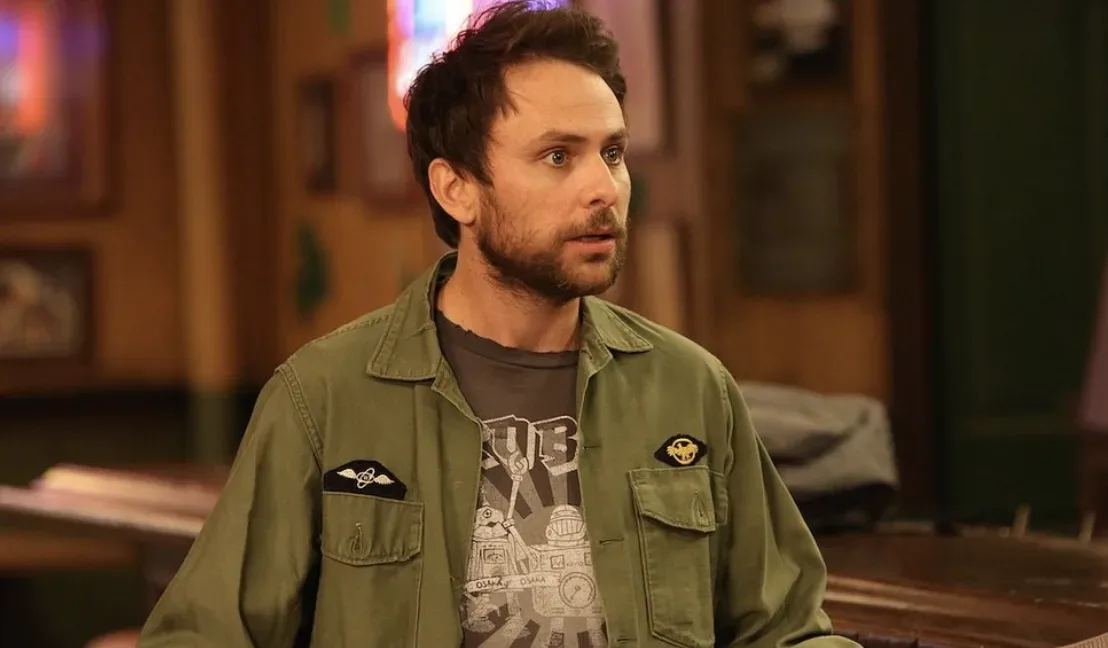
Charlie Kelly has spent two decades being treated as the Gang’s resident idiot, so “The Gang Gets Tested” takes great pleasure in putting him in front of actual academics and watching their confidence disappear. What begins as a routine neuropsychological evaluation becomes stranger every time Charlie answers a question. He says he can smell colors, notices a nearly invisible hair, somehow knows exactly how many coffee beans are inside a closed can and detects pencils in a professor’s pocket from the way he walks. By the time a room full of academics prepares to announce an “extraordinary scientific discovery,” Charlie has already walked out. The episode never reveals his diagnosis, and that is very much the joke.
What were the professors going to diagnose Charlie with?
The show deliberately withholds the name. After several rounds of testing, the professors gather to announce that they believe Charlie has a condition significant enough to qualify as one of the most extraordinary scientific discoveries of the last century. They reach the sentence, “Mr. Charlie Kelly has a condition we would like to call…” and discover he is no longer in the room.
Charlie has not stormed out because he is frightened by the result. He simply sees the professor put down his folder and interprets that physical cue as meaning the speech is finished. When the professor catches up with him and asks whether he wants to hear what they found, Charlie is genuinely puzzled by the idea that somebody else needs to tell him what he “is.”
That means there is currently no canonical name for Charlie’s condition. Any diagnosis circulating online, including synesthesia, savant syndrome or something invented specifically for the episode, is interpretation rather than something FXX actually confirms.
The official synopsis only identifies Dennis and Dee as receiving ADHD diagnoses. Charlie’s increasingly bizarre testing becomes a separate storyline rather than part of the episode’s stated ADHD premise.
Why are the professors so fascinated by Charlie?
Because Charlie repeatedly gives answers that appear wrong until he explains how he reached them. His logic is bizarre, but it is often internally consistent.
When asked which image “has grass,” Charlie ignores photographs of ordinary grass and points to a man’s head because hair is “the grass of the head.” Then he notices an actual tiny hair lying on the image, something the professor had apparently missed. Charlie says he could detect the black hair partly because he could smell its color.
A later analogy question produces the same pattern. Asked what belongs in a coffee can, Charlie rejects “coffee” because coffee itself is liquid while cans hold coffee beans. He then claims the particular can contains exactly 627 beans because he heard the number when it was placed on the table.
He follows that by identifying two pencils inside a professor’s right pocket. Charlie says he can hear the difference in the man’s footsteps because he is subtly protecting that side of his body from being poked.
Individually, each answer sounds like ordinary Charlie nonsense. Taken together, they convince the professors that something unusual is happening.
Does Charlie have synesthesia?
Synesthesia is certainly one plausible part of what the episode is playing with, particularly when Charlie says he can smell colors. Synesthesia involves involuntary connections between sensory or perceptual experiences, where one kind of stimulus produces an additional experience through another sensory pathway. NIH gives examples including sounds producing colors or smells producing touch sensations.
Researchers have also documented smell-color synesthesia, in which odors consistently produce particular color experiences. Studies of people with odor-color synesthesia have found unusually consistent associations between smell and color and, in some cases, stronger odor and color discrimination.
Charlie describes the relationship in the opposite direction, saying that he can smell colors. The broader cross-sensory idea resembles synesthesia, but the episode does not give enough information to medically label him, and it would be a mistake to diagnose a fictional character from one gag-heavy testing sequence.
More importantly, synesthesia does not explain everything else Charlie demonstrates.
What about the 627 coffee beans and the pencils?
Those abilities are the reason the episode’s mystery goes beyond a simple synesthesia joke. Charlie appears to have extremely unusual auditory discrimination, noticing information hidden inside sounds that nobody else realizes contains useful information.
Hearing a container hit a table and knowing the exact number of beans inside it is not an established diagnostic feature of synesthesia. Neither is identifying the number and location of pencils inside someone’s pocket through changes in walking rhythm.
Sunny exaggerates Charlie’s senses until they become almost superhuman. The academics’ reaction acknowledges that exaggeration rather than trying to squeeze him into a familiar diagnosis.
That may be why the writers never actually name the condition. Giving Charlie a recognized label would make the joke smaller. Leaving the professors speechless allows the episode to suggest that Charlie’s brain is operating according to rules even trained experts cannot categorize.
Why doesn’t Charlie want to know his diagnosis?
Charlie’s decision becomes the episode’s surprisingly sincere payoff. Throughout “The Gang Gets Tested,” everyone else desperately wants a label that will explain why their lives have gone wrong.
Dennis and Dee initially reject their ADHD results, then quickly begin using the diagnosis to reinterpret their past. Mac is furious that his test comes back negative because he wants an explanation of his own. Frank tries to prove he can succeed academically despite never having gone to college. Charlie eventually decides the entire exercise is irrelevant.
When the Gang asks what the professors diagnosed him with, he says he does not need someone using complicated words to tell him what he is. He knows he is Charlie, he knows he is smart in his own way, and another label is not going to change that.
It is unusually healthy reasoning from the least conventionally educated member of the Gang.
So what diagnosis did Charlie get?
We never find out, and there is no hidden official answer after the credits. The episode deliberately interrupts the professors before they can name whatever new condition they believe Charlie has discovered.
Synesthesia probably explains part of the joke, especially his cross-sensory description of color and smell. His extreme hearing, unconventional pattern recognition and hyper-specific observations point toward something much broader and intentionally fictionalized.
“The Gang Gets Tested” ultimately cares less about naming Charlie’s brain than about reversing the Gang’s assumptions about it. Dennis, Dee and Mac spend the episode chasing explanations for why they are failures. Charlie walks away from the most extraordinary diagnosis in the room because he is the only one who does not need it to tell him who he is.