Is Ser Adrian Redfort Dead in House of the Dragon? Why Aemond Kills Him and What It Means for Barry Sloane
Ser Adrian Redfort enters Harrenhal with a clear assignment and barely gets the chance to begin it. Rhaenyra sends him to accompany Alicent, watch her closely and kill Aemond once she draws her son into the open. Instead, Aemond studies the unfamiliar knight for a few seconds, recognizes the problem in Alicent’s story and drives…
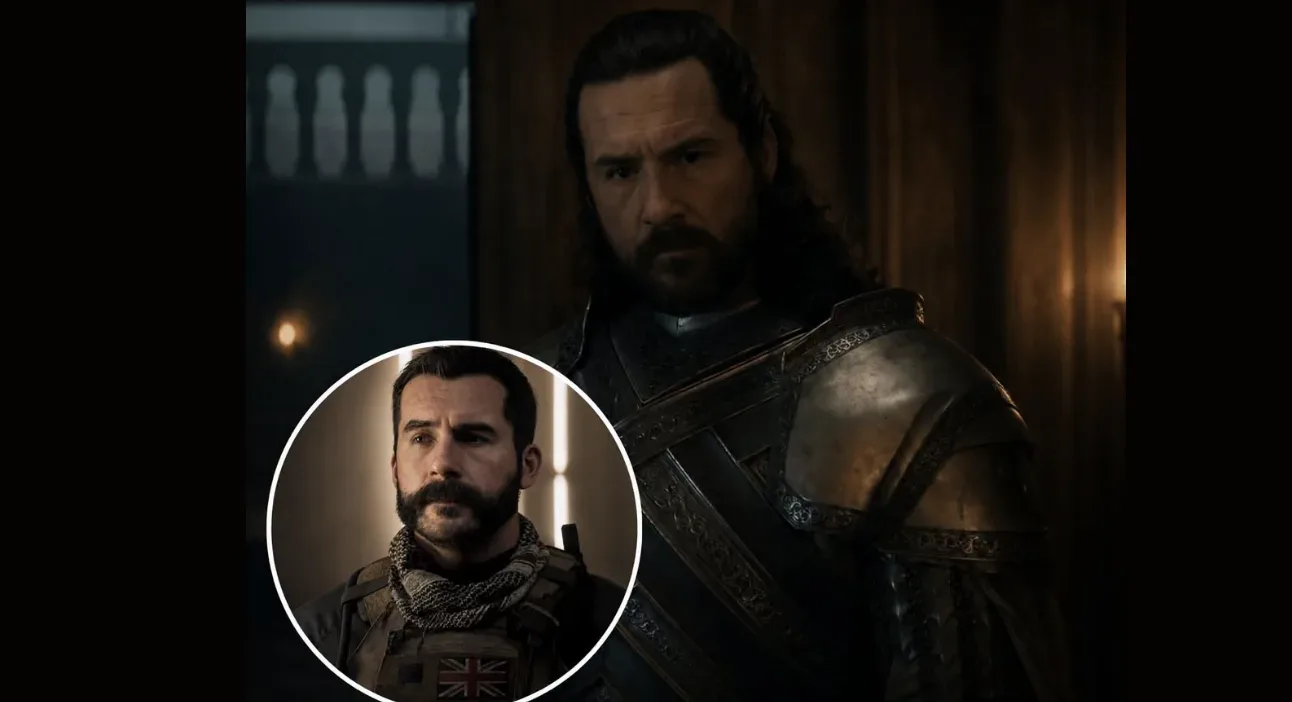
Ser Adrian Redfort enters Harrenhal with a clear assignment and barely gets the chance to begin it. Rhaenyra sends him to accompany Alicent, watch her closely and kill Aemond once she draws her son into the open. Instead, Aemond studies the unfamiliar knight for a few seconds, recognizes the problem in Alicent’s story and drives a knife into Ser Adrian’s throat. There is no ambiguity about the outcome. Ser Adrian is dead, and although HBO has not announced Barry Sloane’s departure in formal terms, the character’s abrupt murder almost certainly ends his active run on House of the Dragon.
Spoilers ahead for House of the Dragon Season 3, including book spoilers from Fire & Blood.
Is Ser Adrian Redfort really dead?
Yes, Ser Adrian Redfort (Barry Sloane) is killed by Aemond at Harrenhal.
The scene gives viewers no reason to expect a survival trick. Aemond pulls a knife and drives it directly into Adrian’s throat before the knight can defend himself. Adrian falls in front of Alicent, who can do little more than watch their carefully planned assassination collapse in a matter of seconds.
House of the Dragon occasionally leaves injured characters in uncertain condition, particularly when dragons, fire or collapsing battlefields are involved. Adrian’s death is staged differently. It is quick, close and unmistakably lethal.
The lack of ceremony is the point. In Fire & Blood, Adrian receives the kind of death Westerosi knights are supposed to want, standing by his queen when loyalty has become dangerous. The television version gives him something colder. He travels into hostile territory on Rhaenyra’s orders and dies before anyone can pretend the mission was honorable.
Why does Rhaenyra send Adrian to Harrenhal?
Rhaenyra sends Adrian because she does not trust Alicent to kill her own son without supervision.
Helaena’s recurring visions place Aemond (Ewan Mitchell) at Harrenhal, apparently separated from Vhagar and therefore more vulnerable than he has been at any other point in the war. Alicent (Olivia Cooke) shares that information with Rhaenyra (Emma D’Arcy), hoping cooperation might earn Helaena greater freedom.
Rhaenyra responds by turning Alicent’s information into an assassination plan. Alicent must travel to Harrenhal, approach Aemond as his mother and create an opening for his death. Adrian goes with her as both executioner and insurance.
His presence reveals how little trust remains between the two women. Rhaenyra may believe Alicent wants to prevent further destruction, but believing she will personally help murder Aemond is another matter. Adrian is there to ensure maternal hesitation does not derail the mission.
That makes him more than an escort. He is Rhaenyra’s guarantee that the order will be completed, even if Alicent changes her mind at the last moment.
How does Aemond discover the assassination attempt?
Aemond realizes Adrian is dangerous because Alicent cannot provide a convincing explanation for why a Queensguard knight survived the fall of King’s Landing and arrived at Harrenhal beside her.
Ser Adrian does not attack, reach for a weapon or openly threaten him. His mistake is simply being present in a story that does not make sense.
Aemond has spent enough time hiding at Harrenhal to assume that every unexpected visitor might be another claimant to the reward on his head. Rhaenyra’s bounty has already attracted would-be killers, while Alys has repeatedly helped him survive the dangers surrounding the ruined castle. He has learned to treat suspicion as a survival skill.
So when Alicent introduces a knight Aemond does not recognize, he asks the obvious questions. Why did Adrian not die defending King’s Landing? Why was he not captured when Rhaenyra took the capital? How did he conveniently escape and then find Alicent?
Alicent does not get enough time to sell the lie. Aemond reaches his conclusion and acts.
The uncomfortable part is that his paranoia is correct. Aemond is becoming increasingly detached from reason, but Adrian really has come to kill him. Surviving this plot will only convince Aemond that his ugliest instincts are reliable.
Why can’t Ser Adrian stop Aemond?
Adrian cannot stop Aemond because the prince attacks before the supposed introduction has become an open confrontation.
The plan depends heavily on surprise. Alicent is meant to use her position as Aemond’s mother to draw him out, while Adrian appears harmless long enough to get within striking distance. Once Aemond questions why the knight is there, that advantage disappears.
Adrian also seems to underestimate what Harrenhal has done to Aemond. He is not meeting the same prince who confidently ruled from King’s Landing with Vhagar nearby. This Aemond is isolated, hunted and conditioned to strike at the first hint of betrayal.
A more cautious man might have detained Adrian and questioned Alicent. Aemond is not interested in gathering evidence. He sees a possible threat and removes it immediately.
For once, his refusal to wait saves his life. It also forces Alicent to accept that there may be no version of this meeting in which she talks her son down.
What does Adrian’s death reveal about Aemond?
Adrian’s death shows that Aemond can no longer distinguish between justified caution and automatic violence, even when his suspicion happens to be accurate.
Aemond does not know Adrian’s orders when he kills him. He has correctly identified a gap in Alicent’s explanation, but he has not proved that the knight intends to attack. The murder comes from instinct rather than certainty.
That distinction matters because Aemond will remember only that he was right. He suspected an assassin, killed the man and survived. From his perspective, the result validates every paranoid thought Harrenhal has fed him.
The scene also reverses Alicent’s expectations. She brings Adrian because she fears she may not be capable of killing her son. After watching Aemond murder him without hesitation, she no longer needs anyone to explain what her son has become.
Adrian’s body is not merely evidence that the mission failed. It is the event that pushes Alicent toward a more private attempt on Aemond’s life.
How is Ser Adrian’s death different in Fire & Blood?
In Fire & Blood, Ser Adrian dies defending Rhaenyra at Dragonstone rather than attempting to assassinate Aemond at Harrenhal.
The book keeps Adrian in Rhaenyra’s Queensguard through a far more dangerous stage of her downfall. When loyalties begin collapsing around the queen, he remains among the knights who stand with her. He is eventually killed by men serving Ser Alfred Broome, reportedly stabbed from behind with a spear while protecting Rhaenyra.
The adaptation removes that later stand entirely. Adrian is instead made part of Rhaenyra and Alicent’s scheme against Aemond, then killed by the intended target.
It is a harsher ending because Adrian never receives a meaningful choice. Book Adrian remains loyal when abandoning Rhaenyra might save him. Show Adrian follows an order into Harrenhal and is eliminated before his loyalty can be tested under comparable circumstances.
The change also transfers the dramatic value of his death. Rather than illustrating Rhaenyra’s increasing isolation at Dragonstone, it exposes Aemond’s mental state and destroys Alicent’s first plan to stop him.
Did Barry Sloane leave House of the Dragon?
Barry Sloane’s character has been written out through an onscreen death, but neither HBO nor Sloane has publicly framed it as a formal departure announcement.
HBO officially included Sloane in its Season 3 cast, while the original casting announcement identified him as Ser Adrian Redfort. Neither announcement promised that Adrian would continue beyond the season or described Sloane as a permanent series regular.
Since Adrian is visibly killed, Sloane is unlikely to return as part of the present-day story. A flashback, dream or brief memory remains technically possible, especially in a series that frequently revisits past relationships and trauma. Still, there is no unfinished survival question attached to his final scene.
It is more accurate to say that Sloane’s role has ended than to suggest he independently chose to leave the production. Nothing currently indicates a contract dispute, scheduling problem or creative disagreement. The story simply reaches Adrian’s death much earlier than Fire & Blood does.
Why does Ser Adrian’s short storyline matter?
Ser Adrian matters because his death changes Alicent from a reluctant participant in Rhaenyra’s plan into someone who understands she may have to act alone.
Before Harrenhal, Alicent can still place part of the responsibility on Rhaenyra and Adrian. The queen gives the order. The knight carries the weapon. Alicent only has to bring Aemond into position.
Aemond destroys that arrangement instantly. Adrian dies, the assassination fails and Alicent is left inside Harrenhal with a son who has just murdered the man standing beside her.
Later, she retrieves Adrian’s knife from his body and hides it. The weapon becomes a grim handoff between two versions of the same mission. Adrian was sent to kill Aemond directly. Alicent instead uses familiarity, spiced wine and poison to get past the suspicion that killed him.
Ser Adrian never lands a blow against Aemond, but his death removes Alicent’s last excuse for waiting. She looks at the knight on the ground, then at the son who killed him, and finally understands that no sworn sword is going to make this choice for her.