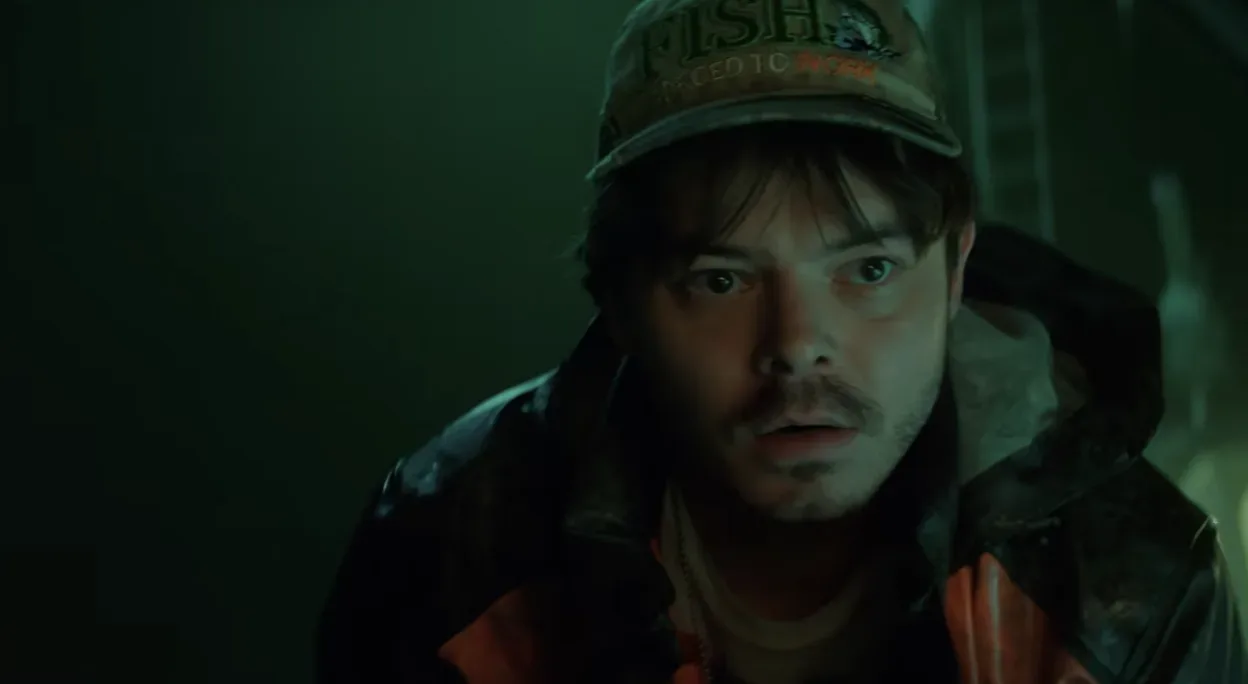
Is Bret the Trawler in The Shards? Did He Kill His Parents?
Bret Easton Ellis spends almost the entire first season of The Shards watching Robert Mallory. He remembers where Robert was, studies what Robert says, compares his movements with the Trawler murders and interprets every contradiction as another crack in Robert’s story. The finale finally gives Robert the opportunity to return the favor. Their confrontation at…

Bret Easton Ellis spends almost the entire first season of The Shards watching Robert Mallory. He remembers where Robert was, studies what Robert says, compares his movements with the Trawler murders and interprets every contradiction as another crack in Robert’s story. The finale finally gives Robert the opportunity to return the favor. Their confrontation at the Halloween party is not frightening because Robert suddenly produces proof against Bret. It is frightening because he finds gaps in Bret’s life that nobody, including Bret himself, has been required to explain.
Related: The Shards Episode 9 Finale Recap and Ending Explained: Who Is the Trawler?
Why Does Robert Accuse Bret of Being the Trawler?
Robert’s accusation is primarily a reversal of Bret’s own case against him, but it is not entirely baseless. Bret has built an intense private world around the Trawler investigation, and many of his conclusions depend on connections only he seems able to see. His fixation on Robert has also survived alibis, police questioning and increasingly complicated evidence.
During their confrontation, Robert points out how easily Bret turns murder into narrative. Bret is a writer, knows details about the victims and repeatedly arrives at conclusions before police do. From Robert’s perspective, Bret’s insistence that he understands the Trawler could look less like detective work and more like knowledge.
None of that proves Bret committed Katherine Latchford’s murder, Matt Kellner’s murder or Rhonda Fox’s kidnapping. The police have not presented forensic evidence against him, and nobody identifies Bret as the person behind the attacks.
Robert is doing something more personal. He is forcing Bret to experience what it feels like to have ordinary pieces of his life rearranged into a murder theory.
What Happened to Bret’s Parents?
The fate of Bret’s parents becomes one of the finale’s strangest unresolved mysteries. Throughout the season, Bret has explained their absence by saying they are away on an extended vacation. Because the adults in his world are frequently absent or inattentive, the explanation has largely gone unquestioned.
Robert decides to check.
He tells Bret that he contacted his father’s workplace and discovered that the company does not know about any long vacation. Bret’s father simply stopped reporting to work. Robert then taunts Bret with the possibility that his parents never left at all, going so far as to imagine Bret killing them and hiding his mother in the basement.
The finale provides no body, crime scene, confession or independent confirmation that Bret’s parents are dead. Robert’s accusation should therefore be treated as exactly that: an accusation based on a genuine inconsistency.
What matters is that Bret apparently has no immediate explanation for the discrepancy.
Robert’s Denial Makes Bret’s Memory Harder to Trust
The parents mystery becomes more unsettling because it arrives during the same conversation in which Robert denies sleeping with Bret. Episode 8 presented their encounter with an intentionally unstable quality, ending with Bret waking without Robert beside him. The finale then has Robert respond to Bret’s reference to their night together with apparent confusion.
There are several ways to read that reaction. Robert could be lying because acknowledging the encounter would give Bret emotional power over him. He could be manipulating Bret into doubting himself. Or Bret may have imagined some or all of what happened.
The ambiguity is deliberate rather than accidental. Executive producers Nina Jacobson and Brad Simpson have said the Episode 8 sequence was constructed as a signal that viewers should begin questioning Bret’s reliability as narrator. Simpson specifically framed the scene around the possibility that Bret may not have slept with Robert at all.
That does not mean everything Bret tells us is false. It means the camera is no longer sufficient proof that an event happened exactly as he remembers it.
Could Bret Have Been the Person Who Attacked Susan?
The finale quietly gives Bret’s possible unreliability another place to grow. Susan is chased through her home by someone she believes to be the Trawler. Thom later claims he fought the attacker and threw him over a balcony, but there is no body outside and Thom appears remarkably unharmed.
Nothing in the television episode directly places Bret inside Susan’s house during the attack. Treating him as the assailant on the basis of the finale alone would therefore be speculation.
The novel, however, makes this part of the story much more disturbing. After a similar attack on Susan and Thom, the supposed Trawler later denies responsibility for that particular crime. Susan then notices a bite mark on Bret’s arm in the same place where she remembers biting her attacker, leading her to suspect Bret. The novel never turns that suspicion into an uncontested confession, but it makes Bret’s capacity for violence much harder to dismiss.
The series has not reached that portion of the book’s story yet. Still, the producers have already said the finale’s Susan attack could eventually be revealed as something other than a straightforward Trawler assault.
Does the Book Reveal Bret as the Trawler?
The novel does not reveal Bret as the serial killer responsible for the established Trawler murders. In fact, the later events complicate the idea that either Bret or Robert can neatly occupy that role.
After Robert’s death in the novel, another murder occurs and the Trawler sends a message claiming responsibility for the killings. The sender describes Robert as “the God” and says the murders were committed as sacrifices to him, indicating that Robert himself was not the person carrying out the established Trawler murders.
At the same time, the book leaves open the possibility that Bret committed violence separate from the Trawler killings, particularly the attack on Susan and Thom. That distinction is essential. Bret potentially being responsible for one horrific act does not automatically make him responsible for Katherine, Matt and every other Trawler crime.
The television adaptation appears increasingly interested in exactly that separation. Simpson has said the finale was designed around the possibility that several different people may be responsible for different violent incidents.
Bret Is Now a Suspect, but His Parents Remain a Mystery
Episode 9 does not solve the season by secretly transforming Bret into the Trawler. What it does is far more useful for the story: it takes away his privileged position as the person who gets to decide who looks guilty.
There is no evidence in the finale proving Bret killed his parents. There is not even confirmation that they are dead. Their unexplained disappearance simply exposes another large hole in the version of his life we have accepted because Bret told it to us.
The same caution applies to the Trawler accusation. Bret’s obsession, unstable memories and the novel’s darker implications make him a legitimate subject of suspicion, particularly when it comes to violence that may exist outside the official Trawler pattern. They do not make him the confirmed serial killer.
Robert has spent the season trapped inside Bret’s story about him. The finale’s most effective reversal is allowing Robert to ask what happens when Bret is subjected to the same treatment.