How Did Nick Finish Joe’s Ad After Destroying His Laptop in 72 Hours?
72 Hours builds its comedy around Joe’s belief that youth culture can be studied, packaged and sold before his employers realize he has lost touch with it. The accidental Miami bachelor party appears to offer a perfect shortcut. Mason, Nick, Hunter and Freshman think an unusually generous stranger has joined their weekend. Joe sees a…
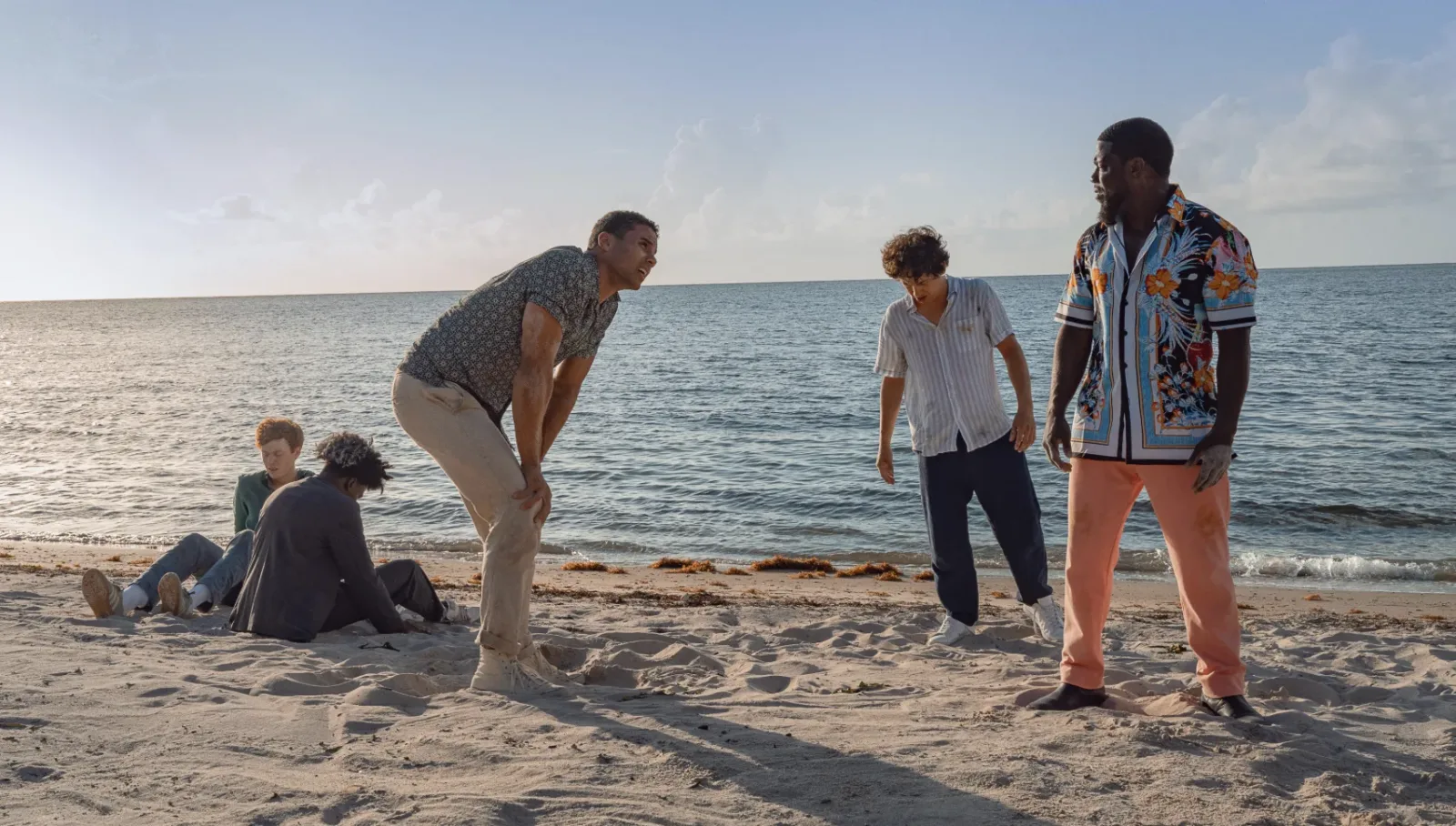
72 Hours builds its comedy around Joe’s belief that youth culture can be studied, packaged and sold before his employers realize he has lost touch with it. The accidental Miami bachelor party appears to offer a perfect shortcut. Mason, Nick, Hunter and Freshman think an unusually generous stranger has joined their weekend. Joe sees a living focus group for an Unlimited Premium Vodka campaign.
That deception eventually costs him their trust, and it appears to cost him the advertisement when Nick destroys his laptop. Yet an edited commercial reaches Joe before the ending. The film does explain how: Nick recovers Joe’s hard drive and finishes the ad himself.
Spoilers for 72 Hours follow.
How did Nick finish Joe’s ad?
Nick salvaged the storage from Joe’s damaged computer, recovered the footage and edited it into a completed commercial.
The answer arrives in the message Joe receives after returning to New York. Nick apologizes for wrecking his belongings, says he managed to save the hard drive and sends over the video he created from the recovered material. Joe watches it and immediately recognizes that it works.
That message closes the apparent continuity gap. Nick does not recreate the weekend from memory, and the film never reveals a secret cloud backup. The laptop was damaged, but its stored data survived.
The explanation is delivered quickly, which is probably why the scene has left some viewers wondering whether the movie skipped a step. It did not skip the answer. It simply buried it inside a brief message as the story rushed toward Joe’s final career decision.
What was Joe secretly recording?
Joe uses camera-equipped accessories supplied by Barry to capture the bachelor party without the group’s informed consent.
Barry introduces the wearable technology early in the film. Joe takes it to Miami after his first Unlimited Premium Vodka pitch is rejected as painfully out of touch. His bosses give him little time to rescue the campaign, and the accidental group-chat invitation appears to offer direct access to the audience he is trying to understand.
Joe pays for expensive parts of the weekend and presents himself as the older stranger willing to join the fun. Beneath that generosity is a professional calculation. He records conversations, reactions and behavior that can be converted into an advertisement.
The deception is worse than ordinary market research because the men believe they are sharing a private bachelor party. Their unguarded moments are useful to Joe, and he keeps collecting material even after he begins to care about them.
That contradiction is central to Joe’s character. His friendship with Mason and the others becomes genuine, but the original lie never disappears. Every sincere conversation is also stored as potential campaign footage.

How does Nick discover the footage?
The group accesses Joe’s computer while trying to locate him and finds the evidence he has gathered.
They discover photos and videos from the trip, the Unlimited campaign files and the camera hidden in Joe’s necklace. The material reveals that Joe did not simply enter the wrong group chat and decide to stay. He turned their friendship into an assignment.
Nick takes it personally. He already fears that Mason’s marriage will change their friendship, and Joe had seemed like an unexpected ally who understood that bond. The secret recordings make that connection feel manufactured.
The discovery also changes how the group sees Joe’s generosity. His willingness to pay for the Miami weekend no longer looks entirely selfless. He was effectively financing his own research project while allowing everyone else to believe they had found a strangely wealthy new friend.
Why did Nick destroy the laptop?
Nick destroys it to punish Joe and stop the private footage from becoming a corporate advertisement.
The laptop represents the lie at the center of Joe’s participation. Ruining it is Nick’s attempt to erase the campaign and deny Joe the professional reward he expected from deceiving them.
The scene also makes Joe’s loss visible. He has lost the group’s trust and apparently lost the work that might save his career. His original plan cannot continue untouched after everyone discovers what he has done.
Nick’s reaction is impulsive, but not difficult to understand. A private bachelor party has been turned into content without anyone’s permission. From his perspective, destroying the computer is the quickest way to make certain that the material never reaches Joe’s agency.

Can the files survive water damage?
Yes. A computer can stop working while the information on its storage remains recoverable.
Liquid can damage a battery, display or logic board without immediately erasing every file. If the storage itself survives, its contents may still be retrieved. 72 Hours does not show the recovery process or identify the exact laptop model. It simply tells viewers that Nick saved the hard drive.
The film simplifies the technology, but the basic idea is plausible: destroying the device is not necessarily the same as destroying its data.
Nick also does not need the entire laptop to function again. He only needs access to the saved video files. Once those files are transferred to another computer, he can edit the commercial without repairing Joe’s original machine.
Why did Nick make the ad anyway?
Finishing the commercial becomes Nick’s way of forgiving Joe without pretending the betrayal never happened.
Nick does not merely return the recovered files. He edits them. That gives him some control over images Joe originally captured without permission. The footage stops being only Joe’s secret observation of a younger demographic and becomes something shaped by one of the people who lived the weekend.
It is a tidy solution. The movie never pauses for a serious discussion of consent, ownership or approval of the final cut. A real campaign using covert footage would create ethical and legal problems. 72 Hours relies on the reconciliation to imply those concerns are settled.
Within the film’s emotional logic, however, Nick’s decision makes sense. Joe risks himself to rescue Mason and finally admits what he did. Nick responds with a creative gesture rather than another speech. He saves the work, but changes who gets to shape its meaning.
The gesture is also perfectly suited to Nick. He has spent much of the movie behaving like the least responsible person in the group. Quietly recovering the data and assembling a successful advertisement reveals that he is more capable than Joe initially assumed.
Did Joe take the ad to his old agency?
The ending indicates that Joe leaves his old professional arrangement and starts a company of his own.
After seeing Nick’s cut, Joe no longer treats the commercial as a ticket back to executives who dismissed him. Miami shows that his problem was not younger slang, but trying to manufacture authenticity by reducing people to consumer behavior.
By Mason’s wedding, the Unlimited campaign has become business for Joe’s new company, with Barry involved in bringing in the account. Joe remains in advertising, but he has changed the structure around the work and placed himself in charge.
Nick’s commercial survives, but not as the exact pitch Joe intended at the beginning. It becomes proof that the weekend produced something stronger once the people involved became collaborators rather than subjects.
The distinction is small but meaningful. Joe does not simply return to his former bosses, hand them the footage and collect praise for understanding Gen Z. He builds something new, reunites with Jennifer and brings Barry into the business.
Is the laptop scene a plot hole?
Nick destroys the computer, recovers its storage and uses the saved recordings to make the ad. Viewers can question how easily the data is recovered or why the group becomes comfortable with its use. Those are compressed storytelling choices, not an unexplained contradiction.
The more interesting problem is ethical. Joe films private moments under false pretenses, and the movie resolves that violation through friendship and a successful campaign. Nick’s edit softens the issue because someone from the group now controls the final version, but it does not completely erase Joe’s behavior.
Joe begins 72 Hours believing authenticity is something he can capture from other people and carry back to a conference room. Nick’s finished ad teaches him that it cannot simply be extracted. It has to be shared.
The laptop survives only in pieces, an apt ending for Joe’s old career plan. Nick saves the useful part and sends Joe a version that could only have been made after the friendship became real.