72 Hours Recap and Ending Explained
Netflix’s 72 Hours sends Joe Nixon (Kevin Hart), a successful ad executive whose instincts have gone stale, into a Miami bachelor party he was never supposed to attend. What begins as desperate research into Gen Z culture turns into a weekend of secret recordings, wounded friendships, a robbery, a yacht invasion, and a cocaine-fueled alter…
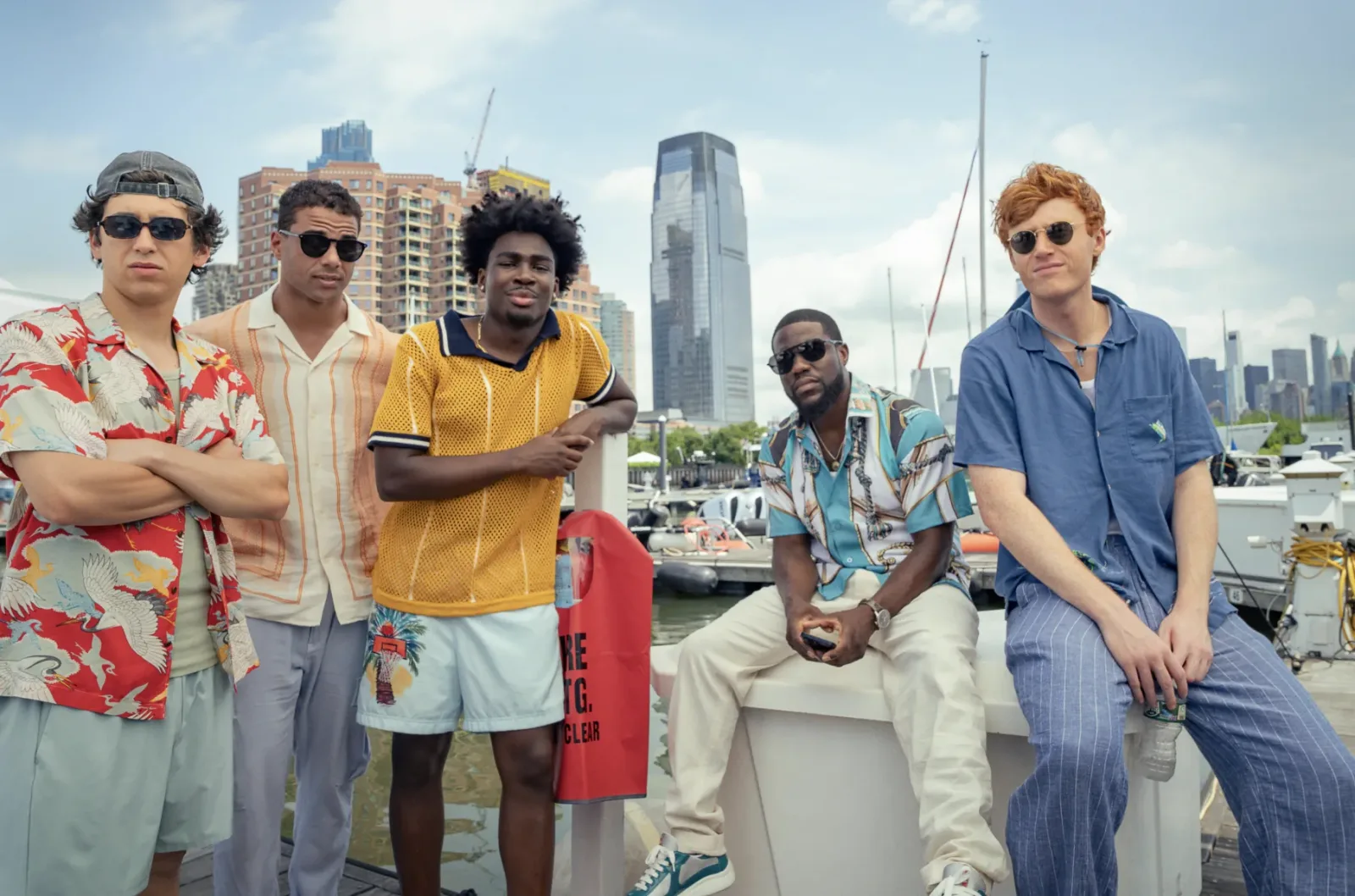
Netflix’s 72 Hours sends Joe Nixon (Kevin Hart), a successful ad executive whose instincts have gone stale, into a Miami bachelor party he was never supposed to attend. What begins as desperate research into Gen Z culture turns into a weekend of secret recordings, wounded friendships, a robbery, a yacht invasion, and a cocaine-fueled alter ego named Ricardo Montana. By the time Joe returns to Jennifer (Teyana Taylor), the career problem that sent him south matters less than the commitment problem he has avoided for years.
Why does Joe join a Miami bachelor party in 72 Hours?
Joe joins the bachelor party because his bosses think he has lost touch with younger consumers, and he sees the accidental group chat as emergency research that might save his career. At work, Joe is still treated like a man with a successful past, but not necessarily a useful future. After another advertising pitch misses its target, Joe’s boss (Kevin Dunn) tells him that his work no longer connects with Gen Z. The criticism lands hard because Joe has been expecting a promotion, not a warning that he may be aging out of the room.
His personal life is no more comfortable. Jennifer is a surgeon and Joe’s longtime girlfriend, yet he continues to delay the commitment she wants. She has an opportunity that could pull her away, and Joe responds by retreating into work. (Jennifer has already warned him that she may not wait forever.)
Then Joe is mistakenly added to a group chat belonging to four twenty-somethings planning a bachelor weekend. After sending them $200 toward the celebration, he receives an invitation from Nick. (A $200 transfer is apparently the fastest path to a new friend group.) Joe convinces himself that three days around younger men will restore his instincts, which sounds almost reasonable until he gets on the plane.
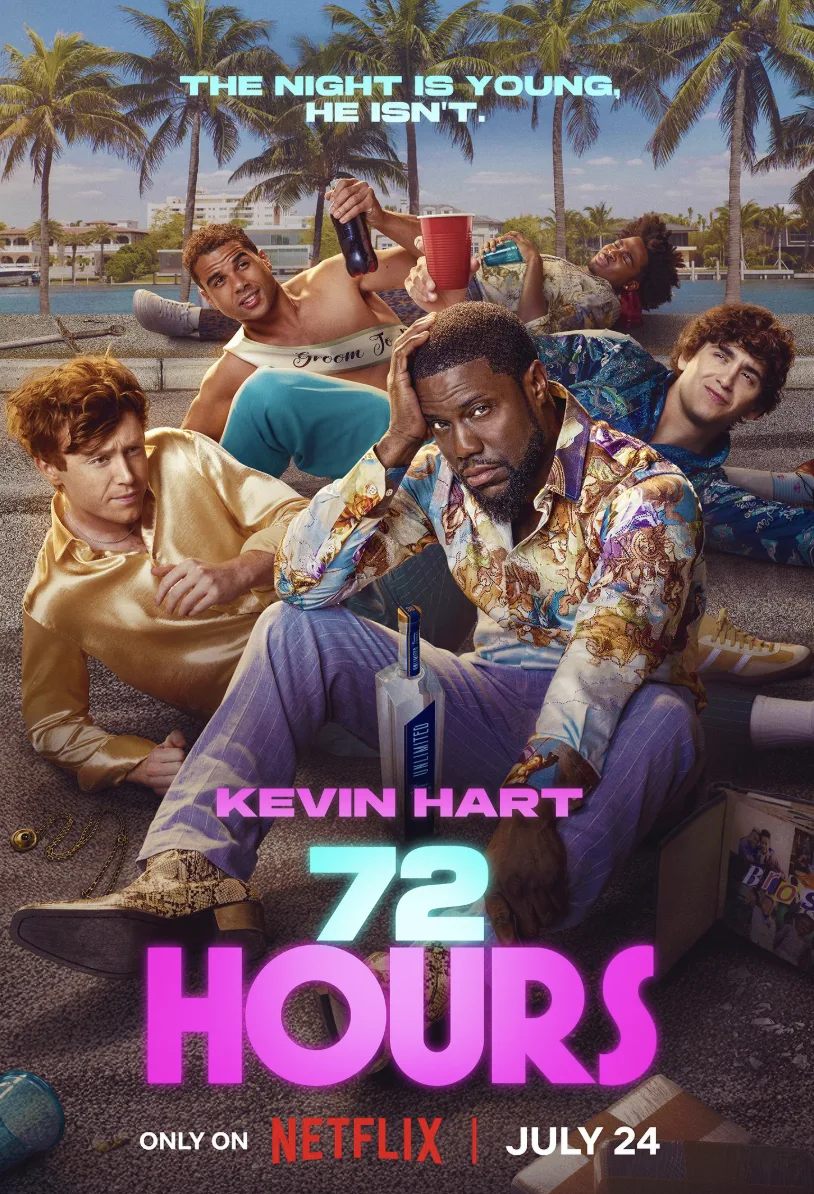
Mason, Nick, Hunter, and Freshman are longtime friends whose bachelor weekend already contains emotional problems before Joe arrives with a secret corporate agenda. Mason (Mason Gooding) is the groom-to-be and the steadiest member of the group. He is genuinely excited to get married, which puts him at odds with Nick (Marcello Hernández), his childhood friend and deeply unreliable best man. Nick treats Mason’s wedding like the official cancellation of their youth, so his jokes about marriage carry real resentment.
Who are Mason, Nick, Hunter, and Freshman in 72 Hours?
Hunter (Ben Marshall) arrives heartbroken after the collapse of his own engagement. His former fiancée wanted him to take her last name, and his refusal became part of the breakup. Freshman (Kam Patterson), the youngest and most literal member, earned his nickname after repeating his first year of high school when mathematics started including letters.
Joe first reads the men as demographic clues. They call him “Unc,” tease his age, and let him pay for upgrades and alcohol. Yet they are more emotionally open than he expects, checking on one another and preserving memories in a physical scrapbook.
That scrapbook is one of the film’s smartest details. Joe assumes the group lives only through screens, while they are building a tangible record of their friendship. The supposedly mature professional is the one turning real people into content without their consent.
How does Joe’s first night with the bachelor crew go wrong?
Joe’s first night goes wrong because he tries so hard to prove that he can still party that he drags the group into places they do not belong and attracts dangerous attention. Before the trip gains momentum, Joe’s colleague Barry (Zach Cherry) encourages the scheme and gives him wearable technology that can capture material for the struggling campaign. Joe never tells the crew that their conversations and mistakes may become advertising research. That lie sits underneath every friendly moment that follows.
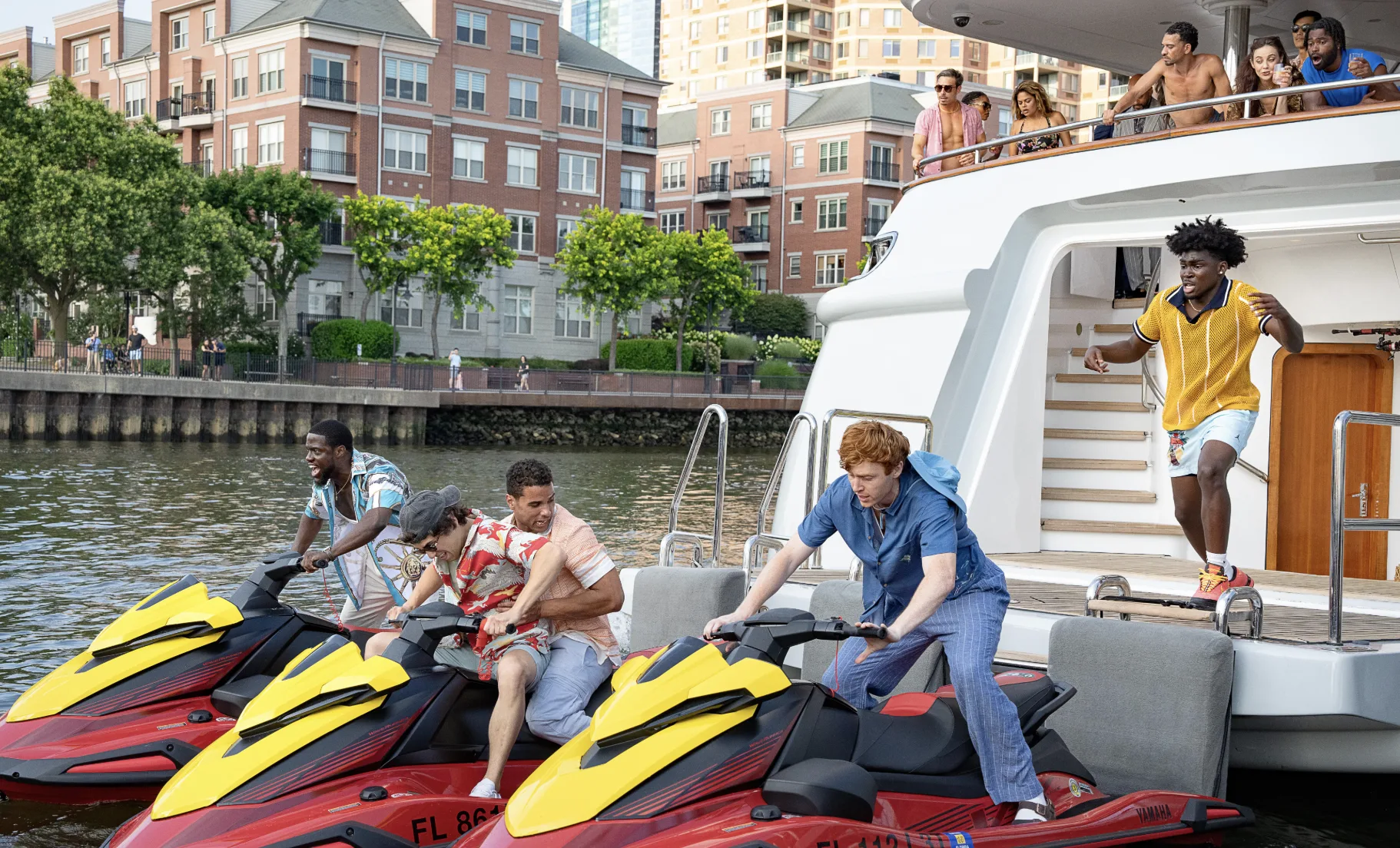
In Miami, Joe prepares for the weekend by drinking Pepto-Bismol before drinking anything stronger. He still vomits, because the human stomach remains unimpressed by strategy. He then steals a police badge and uses it to get the crew into an upscale yacht event where they were never invited. (This is already a terrible plan.)
The yacht sequence is where the movie stops being only a generational comedy and starts piling action nonsense onto the weekend. Joe’s money and confidence get the men through the door, but neither protects them from Jaze (Michael Mando), a gangster connected to the house Joe rented.
Why does Joe become Ricardo Montana in 72 Hours?
Joe becomes Ricardo Montana after Jaze forces him to take cocaine to prove that he is not a police officer, triggering an exaggerated Scarface-style persona. Jaze becomes suspicious after Joe appears with a stolen badge and too many explanations. To establish that he is not law enforcement, Joe is pressured into snorting cocaine. The drug transforms him into “Ricardo Montana,” a loud crime-boss caricature who behaves as though intimidation is another presentation skill.
The persona gives Joe a strange advantage because Jaze’s men cannot decide whether they are dealing with an idiot, a rival, or both. It also pulls the film away from its strongest material. The younger cast’s chemistry works when the men check on Hunter or argue about Mason’s marriage; the crime spoof often feels like another movie barging into the room.
Joe’s chemically enhanced night also produces the movie’s most openly meta cameo. He encounters Katt Williams and asks, “So, you have beef with me?” Williams answers, “One hundred percent beef.” Their argument becomes a slapstick fight and sword battle, using the comedians’ real public feud as the setup.
Joe begins the weekend trying to imitate youth culture, then becomes an imitation of a movie gangster from decades earlier. The joke is that even his wildest rebellion is outdated, though the film keeps the bit going after the observation has landed.
What happens with the bachelorette party and the island?
The bachelor crew meets a group of women who drug and rob them, leaving Joe and the others stranded and pushing the weekend into survival-comedy territory. The men meet the bachelorette group while their own party is already fraying. Joe is collecting footage, Hunter is emotionally raw, Nick is threatened by Mason’s growing bond with Joe, and Mason is questioning whether his best man is celebrating him at all. The women appear to offer uncomplicated fun, which should worry anyone who has seen a bachelor-party movie.
Instead, the crew is drugged and robbed. The aftermath leaves them without control of the trip and, at one point, stranded on an island. The film stacks one humiliation onto another, including a jellyfish injury and an encounter with whale anatomy that exists mostly to ensure nobody calls the weekend tasteful.
The robbery gives the friends a common problem, but the better tension is already inside the group. Nick fears Mason is leaving him behind, Hunter is learning that sensitivity does not prevent pain, and Joe is becoming attached to men he originally viewed as unpaid focus-group participants.
The hidden camera and scrapbook now function as opposite versions of memory. The crew records the weekend to remember one another, while Joe records it to sell something. That contrast makes his eventual exposure feel like a personal betrayal, not merely an office ethics violation.
Why do Nick and Mason fall out during the bachelor party?
Nick and Mason fall out because Nick treats the wedding as a threat to their friendship, while Mason realizes that his best man is making the weekend about his own fear of change. Nick acts like the loudest defender of reckless fun, but his behavior is possessive rather than carefree. Mason’s marriage means their routines will change, and Nick would rather mock commitment than admit that he feels abandoned. When Joe starts connecting with Mason, Nick becomes jealous of the older stranger he invited.
Mason wants one weekend in which his closest friend supports the life he has chosen. He does not need Nick to love marriage. He needs Nick to stop treating the wedding like a funeral. Their argument becomes a test of whether the friendship can survive adulthood.
Joe’s deception makes the rupture worse. Once the men learn that he has been collecting their private moments for an ad campaign, his generosity looks transactional. He converted their heartbreak, jokes, and fights into client material. (Nothing says market research like accidental cartel exposure.)
My read is that Nick first embraces Joe, then turns against him, because Joe represents both sides of his fear. He is an older man who appears professionally successful but emotionally stuck, supporting Nick’s claim that adulthood is miserable. Yet Joe also listens to Mason in ways Nick has stopped doing.
Does Joe save his career and his relationship with Jennifer?
Joe repairs his relationship with Jennifer by finally choosing commitment, while the exact formal outcome of his promotion or advertising account should be confirmed before publication. The criminal plot catches up with the group as Jaze and the unnamed Drug Lord (Andy Garcia), Jaze’s father, keep tracking Joe’s movements. Joe’s stolen authority, false identity, and Ricardo Montana performance have made him look like a rival instead of a confused executive. The confrontation forces the men to work together after their trust has fractured.
Joe cannot solve the problem by pretending to be younger or tougher. He has to rely on the same people he secretly studied. The action is broad, but its purpose is clear: his survival depends on treating the crew as friends rather than data. (For once, Joe stops pitching and starts listening.)
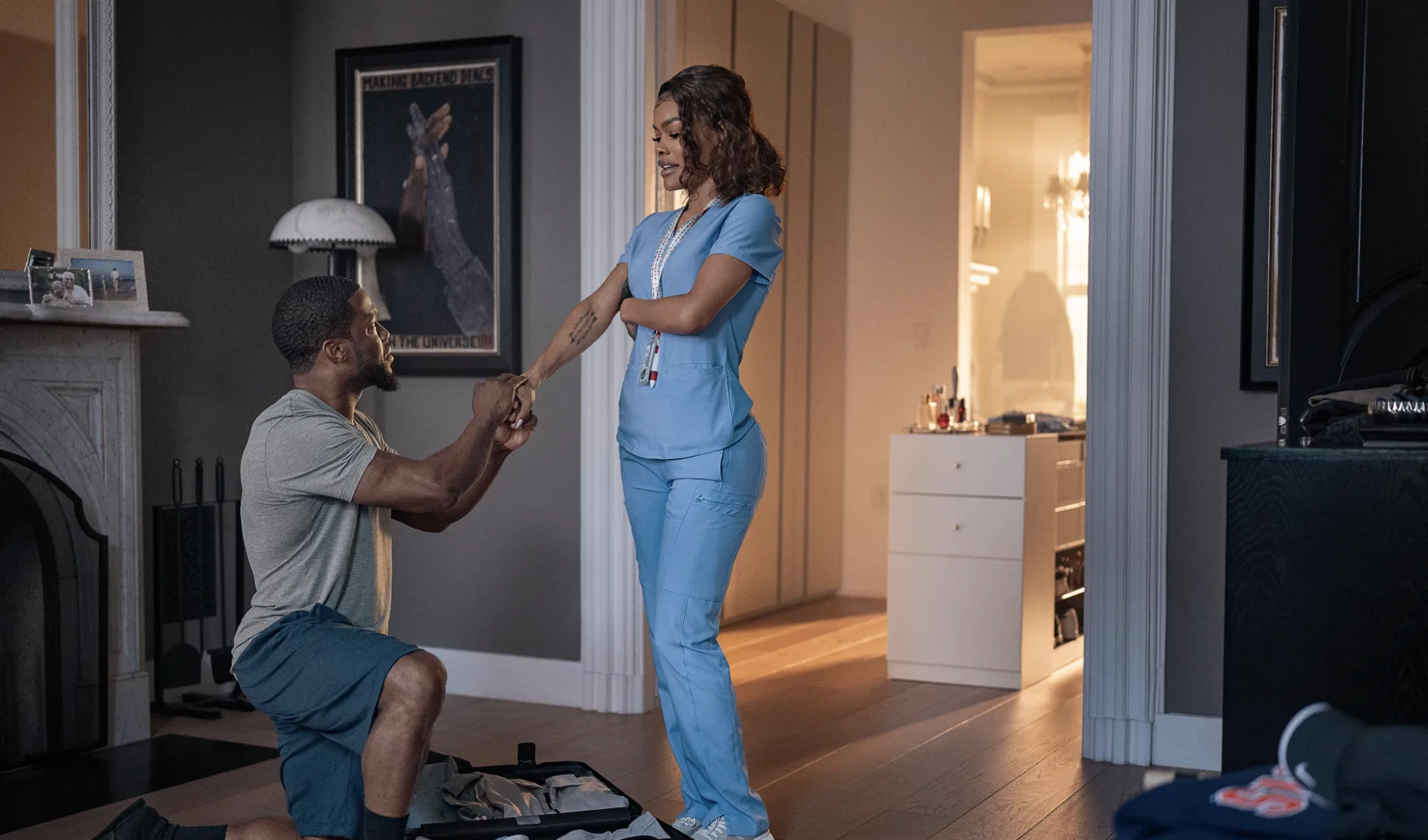
After the danger passes, Joe faces the choice he avoided before Miami. Jennifer is not asking him to become cool. She is asking whether he intends to build a life with her. Joe returns, gets down on one knee, and offers the commitment he kept postponing while chasing professional validation.
The proposal works because Jennifer has already shown that she can leave. Joe finally acts because he understands the cost of continued delay. Mason’s wedding stops looking like an ending and becomes an example of the life Joe has been too afraid to choose.
[VERIFY: Confirm whether Joe formally secures the account or promotion, and confirm the exact mechanics of the final confrontation involving Jaze and the Drug Lord. Available official materials and major reviews do not describe those beats in full.]
What is the closing scene of 72 Hours?
The closing stretch gives Joe and Jennifer their romantic resolution, then ends the bachelor-party story with Joe admitting to his new friends that he soiled his pants. Joe’s proposal pays off the choice he avoided at the start. The packed suitcase near Jennifer makes the timing plain: she was prepared to move forward without him. He finally stops asking his career to decide his personal life and shows that their relationship is no longer something he will keep on hold.
The film then returns to the group for one last gross confession. Joe, no longer performing as the wealthy sponsor, undercover marketer, or Ricardo Montana, tells the men what happened to his pants. It is hardly elegant, but he is now included without needing to impress them, and the weekend ends with Joe accepted at his least marketable.