Go Team! Ending Explained: Who Gets Fired and What Happens to Tío Mochales?
What begins as an embarrassingly cheerful corporate retreat becomes increasingly ugly once the employees of Tío Mochales realize the weekend is tied to something much bigger than team spirit. The struggling cheese company is preparing for a major change, layoffs are hanging over the staff, and every ridiculous exercise suddenly feels like an audition for…

What begins as an embarrassingly cheerful corporate retreat becomes increasingly ugly once the employees of Tío Mochales realize the weekend is tied to something much bigger than team spirit. The struggling cheese company is preparing for a major change, layoffs are hanging over the staff, and every ridiculous exercise suddenly feels like an audition for survival. Netflix describes the retreat as a battlefield of flattery, betrayals and leaks, but the final act turns that competition in a direction the employees do not expect. By the time the weekend ends, the real solution comes not from whoever performs best in the games, but from a quieter plan developing around the company itself.
Also Read: Facing El Chapo Ending Explained: What Happens to El Chapo and the Two Officers?
Who Actually Gets Fired at the End of Go Team!?
The ending does not deliver the straightforward mass firing that the retreat appears to be building toward. Domingo, played by Pedro Casablanc, is the character most clearly given an exit from Tío Mochales, but he gets out through early retirement rather than simply becoming another casualty of the layoffs. A recurring joke has Domingo comparing the appeal of a French salary with a Spanish severance package, and the final act gives that line an unexpectedly important payoff. His departure also fits the way he has begun looking at work by the end, when he reflects on how much of his life has been wasted inside an office instead of with his wife and the world outside it.
The larger workforce situation is also transformed before the feared cuts can play out as originally expected. The merger involving the French side of the business becomes crucial because French labor protections and stronger union rules make the planned restructuring much more difficult to execute in the brutal form the employees feared. The joke is that everyone spends the retreat humiliating themselves, betraying coworkers and competing for survival, only for labor law to matter more than any of the absurd team-building games. The film therefore ends by undercutting the basic premise of the competition itself.
What Was Laura Really Doing?
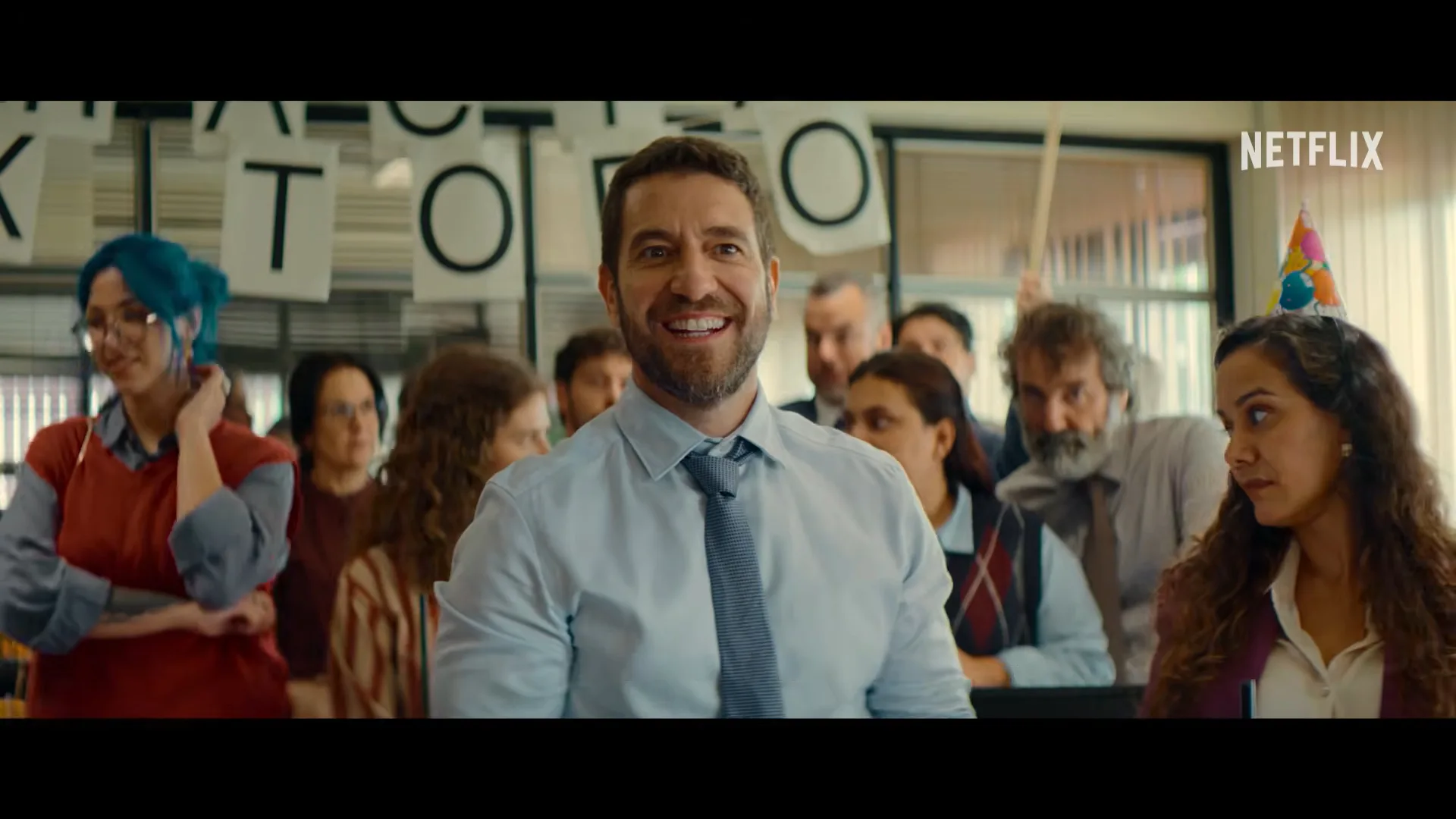
Laura turns out to be far more important than her quiet HR role initially suggests. Throughout the film, she is easy for the louder personalities at Tío Mochales to overlook, especially when Pepa and the more ambitious employees dominate the retreat. Yet the ending reveals that Laura has been working behind the scenes on a plan connected to the outcome that ultimately protects the company and its employees. The Spanish review Cine con Ñ describes the final solution as a plan orchestrated in the shadows by the HR character, turning her apparent caution and politeness into strengths rather than signs of weakness.
That reveal also changes how the movie’s earlier treatment of Laura reads. Vogue’s cast interview describes her as the one comparatively decent figure among coworkers who become increasingly ruthless once their jobs are threatened. While everyone else is busy trying to prove they deserve to survive the cuts, Laura works in a less theatrical way and ends up having more influence over the future of Tío Mochales than the loudest competitors. The movie uses her to make a simple point: the person who refuses to play the corporate survival game may understand the system better than the people desperately trying to win it.
What Happens to Tío Mochales?
Tío Mochales survives the crisis rather than collapsing at the end of the film. The company entered the retreat as a once-dominant Spanish cheese business trying to disguise its decline, with the proposed restructuring and layoffs presented as part of its attempt to remain viable. Netflix’s official synopsis describes Tío Mochales as a company struggling to keep up appearances after losing the position it once enjoyed in the market. By the ending, however, the French connection changes the terms of the company’s future and prevents the situation from becoming the simple corporate purge Pepa and the employees had been expecting.
The survival of Tío Mochales is deliberately ironic because almost none of the retreat exercises have anything meaningful to do with saving the business. Employees chase cheese down hills, compete in kayaks, ride bicycles and participate in other activities designed to measure teamwork while doing exactly the opposite. The company is ultimately helped by structural protections rather than individual performance, exposing how meaningless the weekend’s supposedly merit-based competition really was. What matters at the end is not who ran fastest or flattered management most effectively, but what rules govern the company after the merger.
Why Does Domingo Want to Leave Anyway?
Domingo’s attitude changes the emotional meaning of his early retirement. He spends much of the movie looking like one of the older employees who might naturally fear being pushed out, yet he gradually realizes that escaping Tío Mochales may be preferable to surviving another round of corporate politics. Near the end, he talks about traveling in his camper van with his wife, drinking beers, watching sunsets and thinking about how much time work has consumed. His exit is therefore not framed only as a financial arrangement, because Domingo begins to recognize that keeping a job is not necessarily the same thing as preserving a worthwhile life.

That idea connects him with the movie’s broader criticism of how much identity people surrender to employment. The retreat initially convinces everyone that losing Tío Mochales would be catastrophic, and that fear justifies increasingly ugly behavior between coworkers. By the end, Domingo is one of the clearest characters to question the assumption behind the entire weekend. His departure suggests that the better prize may be leaving the competition altogether.
What Does the Ending Really Mean?
Go Team! ends by turning its corporate competition against the people who designed it. Pepa and the company encourage workers to see their colleagues as rivals, yet the long-term answer comes through collective labor protections and Laura’s less selfish approach rather than individual ambition. The film’s cast has openly discussed how the story reflects hyperproductivity, workplace fear and the way job insecurity can make ordinary coworkers behave badly toward one another. The ending pushes that satire further by showing that the employees spent most of the retreat fighting the wrong enemy.
Tío Mochales survives, Domingo finds a route into retirement, and the threatened workforce gets something more valuable than a victory in Pepa’s games. The weekend exposes how easily fear can turn colleagues against one another, while the final twist argues that workers have more protection when the system stops forcing them to compete individually. Go Team! may package that conclusion inside an absurd cheese-company comedy, but its final joke is surprisingly pointed. The real team-building does not come from the retreat at all.