Furious Episode 4 Recap
“Flash Flood” is the kind of episode that appears to slow the investigation down while quietly changing almost everything underneath it. Catherine does not add another straightforward body to her trail. Alice does not dramatically corner a suspect. The FBI does not celebrate a clean breakthrough. Instead, Furious Episode 4 pulls its characters into increasingly…

“Flash Flood” is the kind of episode that appears to slow the investigation down while quietly changing almost everything underneath it. Catherine does not add another straightforward body to her trail. Alice does not dramatically corner a suspect. The FBI does not celebrate a clean breakthrough. Instead, Furious Episode 4 pulls its characters into increasingly uncomfortable confessions, revealing that nearly everyone in this case is withholding something.
For Alice, that means admitting how deeply Marshall’s return has destabilized her. For Danny, it means opening up about his son and failing marriage. For Nora, it means confronting a fifteen-year-old investigation she would clearly prefer to keep buried. By the episode’s final moments, Alice finally has Catherine’s real name and understands her connection to Isabel Luna. Unfortunately, she also realizes that the person blocking her investigation may be standing inside the FBI.
Why Does Alice Call Danny After Marshall Confronts Her?
Episode 4 begins immediately after Alice survives another unsettling encounter with Marshall. She manages to push him away, but the scene does not end when he leaves. Once Alice is alone inside her car, the controlled exterior collapses. Her instinct is to call Danny.
That choice matters because Alice usually treats emotional dependence as a weakness. She can work with Danny, argue with him and occasionally trust his judgment, but actively seeking him out is different. It suggests that he has become the person she associates with safety, even if she is not yet prepared to acknowledge what that means.
Danny never sees the call. He is visiting his son Liam, who lives in a care facility because of a learning disability. With Danny’s marriage barely holding together, his time with Liam feels fragile and possibly temporary. The missed call therefore becomes more than a frustrating coincidence. Both Alice and Danny need support at exactly the same moment, but neither is available to the other.
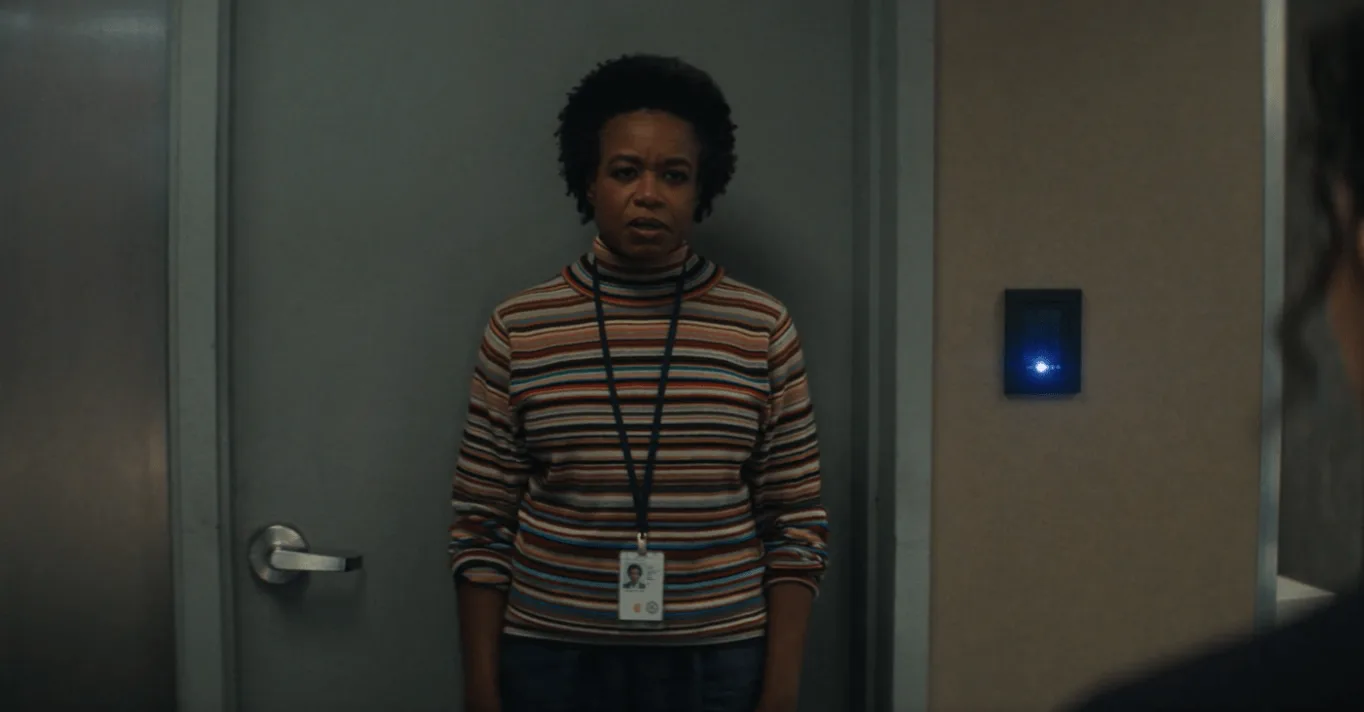
It is a smart, restrained way of showing how isolation works. These characters are not alone because nobody cares about them. They are alone because their crises keep arriving at the wrong time.
Why Does Alice Arrange Another Violent Date?
After Danny fails to answer, Alice invites another man to her home and explains that he must fight her before they have sex. He assumes she is joking until she strikes him. When the episode returns to Alice later, she is bruised but has clearly won.
The sequence is disturbing, though not because the show treats consensual aggression as inherently shocking. It is disturbing because Alice is not searching for pleasure. She is trying to recreate danger while controlling the outcome.
Marshall once used violence to make her feel powerless. Alice now stages fights in which she chooses the opponent, establishes the rules and proves that she can survive. The victory gives her a temporary sense of control, but the bruises expose the cost of that illusion.
Furious does not offer an easy psychological label for Alice’s behavior, and that restraint works in the episode’s favor. She is not healed because she can win a fight. She is simply finding more elaborate ways to avoid sitting with what happened to her.
How Do Alice and Nora Connect Isabel Luna to a Dead Girl?
Unable to sleep, Alice calls Nora, correctly assuming that the head of the FBI’s sex crimes unit might still be awake. The two women head into the local vice district with Isabel Luna‘s photograph, hoping someone will recognize her.

The search produces nothing. Because Jay and Caleb Easton cannot appear in the image without risking the investigation, their faces are removed, leaving Alice and Nora with an already limited clue stripped of useful context.
Back at the bureau, Nora searches through the FBI’s digital evidence archives, including deeply disturbing seized material, but finds no match. Alice then suggests checking unidentified dead victims. That is when the case changes.
Nora finds a deceased girl whose description matches Isabel. The wristbands provide the clearest connection. More importantly, Nora recognizes the investigation because she handled the original case fifteen years earlier under her supervisor, Ed George.
Instead of immediately telling Alice, Nora hides the discovery. It is the episode’s most consequential decision. Nora has encouraged Alice to follow difficult evidence and confront powerful men, yet the moment the case touches Nora’s own history, transparency disappears. Whatever happened fifteen years ago, Nora is afraid of it reaching the present.
What Does Emma Easton Know About Jay and Caleb?
Alice and Danny are assigned to question Emma Easton, Jay’s daughter and Caleb’s sister. Choi wants the conversation handled carefully. Danny, naturally, ignores the spirit of that instruction and directly raises the photograph showing Jay with underage girls.
Emma insists the image has been manipulated, but her reaction tells Alice and Danny more than the denial itself. She does not seem genuinely surprised by the accusation. Instead, she appears prepared to protect her father.
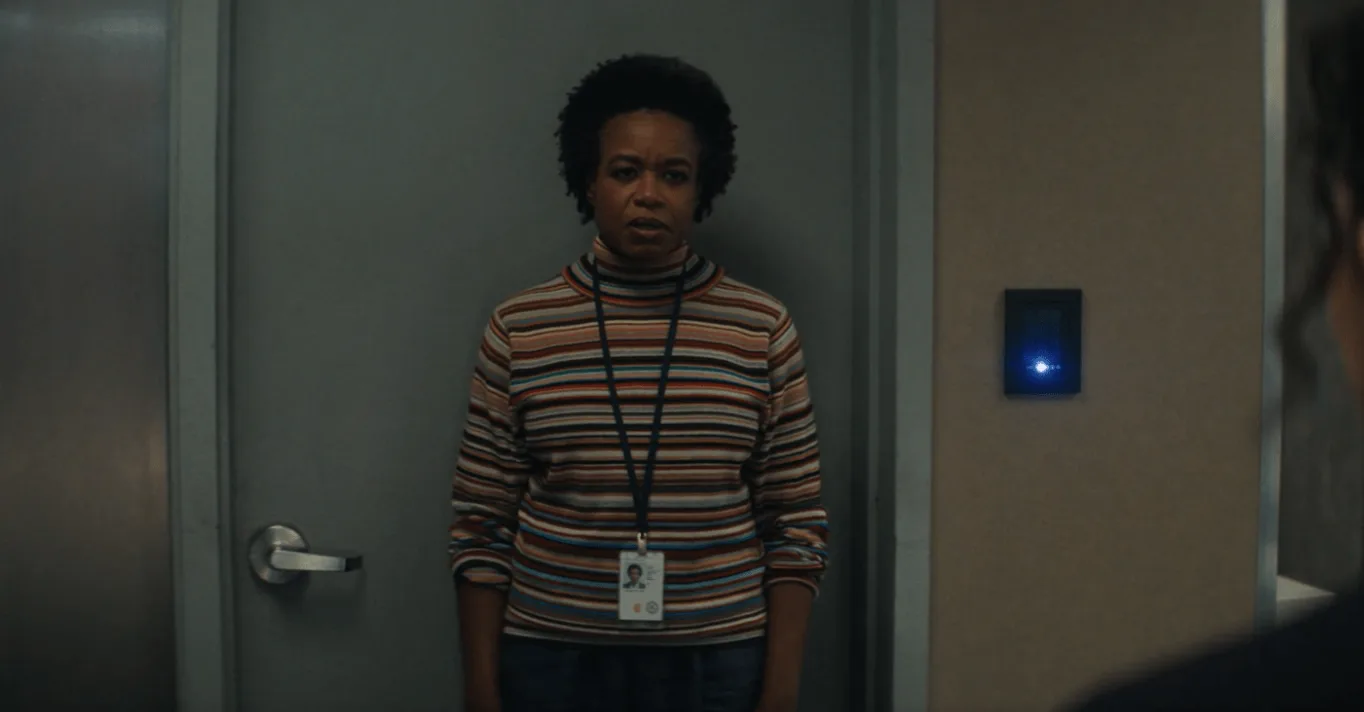
The scene does not deliver a confession, but it sharpens the show’s portrait of the Easton family. Their power is maintained not only through money or influence, but through loyalty enforced inside the family itself. Emma may know exactly what Jay and Caleb were involved in. She may also have spent years convincing herself that defending them is the same as protecting her family.
Danny’s aggressive questioning closes the conversation faster than Choi wanted. Still, his anger is understandable. By this point, the case is no longer an abstract hunt for a killer. It is exposing a network of exploitation, silence and adults who repeatedly chose self-preservation over vulnerable girls.
Why Does Catherine Target Hal Blanchard?
While the FBI circles Isabel’s past, Catherine begins another carefully designed operation. Using a fake identity, she presents herself to Hal Blanchard’s son as a former sex worker who has become an activist. She dates him, sleeps with him and then behaves the following morning as though she has already moved into his life.
At first, the son appears to be Catherine’s target. The truth becomes clear when his father enters and immediately recognizes her.
Catherine is not there because of a new grievance. She has arrived to collect an old debt.
Hal begs her to keep quiet, concerned about the effect on both himself and his son. Catherine agrees to leave, but only if Hal escorts her to the elevator. Once they are alone, his pleading gives way to threats. It is a revealing switch. Hal does not seem remorseful. He is afraid of consequences.
Catherine responds by injecting him in the foot, immobilizing him and forcing him into a minivan without attracting attention. The abduction shows how her methods are evolving. She is no longer simply luring isolated targets. She is invading their families, manipulating their routines and making them participate in their own capture.
What Does Danny Reveal About His Son Liam?
During the long drive to the orphanage, Alice and Danny finally have the conversation they avoided earlier. Danny tells her about Liam and the deteriorating state of his marriage. In exchange, Alice reveals that she has been paying men to fight her as a response to Marshall’s abuse.
The scene could easily have become overly sentimental, but it works because neither character knows what to do with the other’s confession. They do not offer polished advice. They simply tell the truth.
Danny’s disclosure also explains some of his behavior during the investigation. His impatience around exploited children is not merely professional outrage. The case is touching his fears as a father. He knows what it means to love a vulnerable child while feeling incapable of protecting that child’s future.
Alice, meanwhile, allows Danny to see the part of her life she has worked hardest to disguise. Their bond grows because neither tries to fix the other. For once, honesty is enough.

Who Is Catherine Grace?
At the orphanage, Alice and Danny confirm that Isabel Luna lived there until she was fourteen. She repeatedly tried to escape but always returned, until the final time when she disappeared permanently.
The caretaker also reveals that Isabel appeared to be pregnant.
That detail reframes the entire investigation. Isabel was not simply a missing child who fell through the system. She may have been running from abuse while carrying a baby, surrounded by adults who either failed to notice or chose not to intervene.
Then comes the breakthrough Alice has been chasing: Isabel’s closest friend was Catherine Grace.
Catherine was distant from everyone except Isabel. After Isabel vanished, Catherine also left the system. Alice now understands that the killer’s campaign is connected to what happened to Isabel and likely directed at the men responsible.
The revelation does not excuse Catherine’s actions, but it gives them a clear emotional architecture. She is not selecting victims randomly. She is reconstructing an old crime, one target at a time.
Why Does Nora Remove Alice From the Case?
Nora’s secret becomes harder to maintain after Alice adds pregnancy to her database search and independently finds Isabel’s death report. Alice initially believes she has made a breakthrough. The relief disappears when she realizes that Isabel has been dead for fifteen years.
When Alice brings the discovery to Nora, Nora responds by removing her from the investigation.
The decision might be an attempt to protect Alice, especially given her unstable condition and Marshall’s return. That explanation, however, becomes difficult to accept once Alice notices that Nora worked on Isabel’s murder case.
Nora is not simply concerned about Alice’s wellbeing. She is controlling access to the past.
Her earlier confrontation with Ed George makes that past look even more suspicious. Their relationship remains hostile, and Nora’s drinking suggests that the Isabel case carries guilt, anger or both. She also begins listening to Marshall’s claims about Alice, which creates an especially ugly possibility: Nora may use Alice’s trauma to discredit her just as Alice gets close to the truth.

What Does the Ending Mean for Alice and Catherine?
Episode 4 ends with both sides of the story closing in on a confrontation.
Alice has identified Catherine Grace and connected her to Isabel Luna. Catherine, meanwhile, still has Hal alive as he begins to regain consciousness. That means the FBI may have time to find him, but it also means Catherine has not yet completed whatever punishment she has planned.
The more immediate threat may be inside the bureau. Alice can follow Catherine’s trail, but she cannot solve the case while Nora withholds evidence and removes her from the investigation. Nora may believe she is containing an old mistake. In reality, she is repeating it by silencing another woman who refuses to stop asking questions.
“Flash Flood” works because its biggest reveal is not simply Catherine’s identity. It is the recognition that this killing spree began long before the first murder in the series. It began when Isabel disappeared, when the system failed her and when the people responsible decided that forgetting was easier than justice.
Catherine has spent fifteen years remembering. Alice has only just started.