Does Bernard Die in Silo Season 3 Episode 9? Why He Goes Outside Without a Suit
Bernard Holland (Tim Robbins) really does die in Silo Season 3 Episode 9, “Farewell,” and the cruelest part is that he understands exactly what his death can accomplish before he walks outside. After spending much of Season 3 hiding beneath Silo 18 and quietly helping Juliette Nichols (Rebecca Ferguson), Bernard returns to the top, confronts…
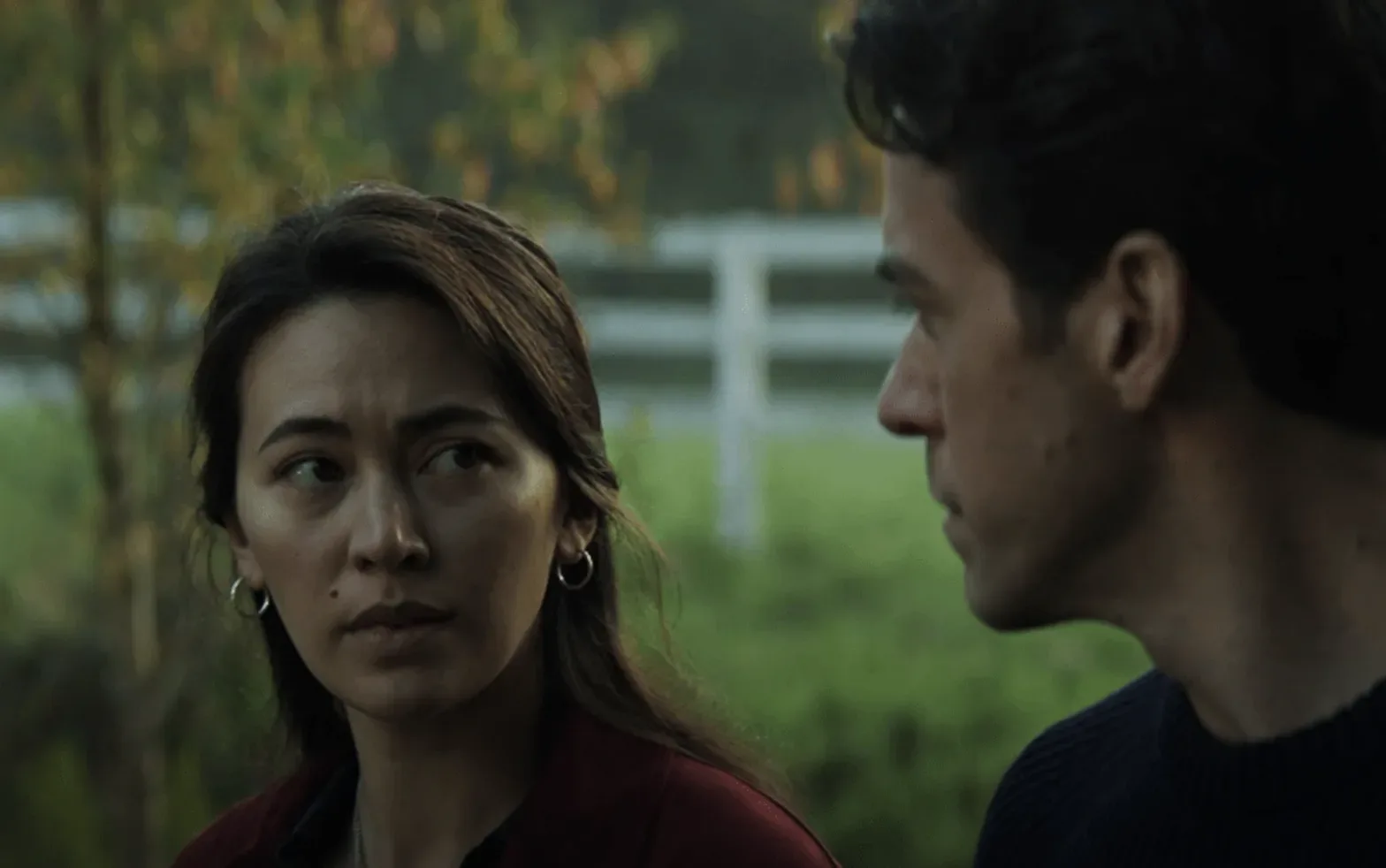
Bernard Holland (Tim Robbins) really does die in Silo Season 3 Episode 9, “Farewell,” and the cruelest part is that he understands exactly what his death can accomplish before he walks outside. After spending much of Season 3 hiding beneath Silo 18 and quietly helping Juliette Nichols (Rebecca Ferguson), Bernard returns to the top, confronts Camille Sims (Alexandria Riley), and tries one last argument with the mysterious Algorithm. It rejects him and orders a cleaning. Bernard then realizes that the execution can become useful. By drawing the entire silo’s attention upward, he gives Walker and the resistance the distraction they need to attack the Vitamin D+ delivery system below.
Does Bernard really die in Silo Season 3 Episode 9?
Yes, Bernard dies after Camille sends him outside for cleaning without a protective suit.
The episode makes his fate far less ambiguous than the Season 2 finale did. Back then, Bernard and Juliette were trapped in the airlock fire, and Season 3 spent several episodes hiding the fact that both survived. “Farewell” does not play that trick twice. Bernard steps into the toxic outside air with no functioning barrier between him and the environment, weakens almost immediately, and collapses near the dead tree visible from Silo 18’s cafeteria screen.
That image matters because Bernard has spent years treating the outside as a controlled image rather than a place. He knew the cleaning ritual as procedure, watched other people walk into it, and once prepared to do the same himself. This time there is no uncertainty about what the air will do to him.
His death is also public. Thousands of residents are watching, which turns an execution designed to restore Camille’s authority into something far messier. The silo sees a former mayor die in plain sight without the usual suggestion that a suit might somehow offer a chance.
For a man who built much of his power around controlling what people were allowed to see, dying in front of everyone is an appropriately brutal final turn.
Why does Bernard return to the top of Silo 18?
Bernard returns because he wants to confront the Algorithm directly and give Camille a way to blame the recent unrest on him instead of drugging the entire population.
After Juliette and Robert Sims (Common) are captured, Bernard understands that hiding in the Digger Void no longer solves the immediate problem. Camille still intends to use Vitamin D+ to suppress memories across Silo 18, even though Bernard has seen what mass memory manipulation can do.
He therefore resurfaces and walks openly through the silo. The sight of Bernard alive shocks residents because the official version of events had effectively removed him from public life. His appearance forces Camille to deal with a problem she believed Robert had already solved.
Bernard’s proposal is calculated. If Camille publicly punishes him, she can present him as the architect of the conspiracy, close the chapter on the rebellion, and potentially avoid a broader chemical reset. He is offering himself as a politically useful villain.
That is classic Bernard. Even while surrendering, he is still trying to design the story everyone else will hear.
The difference is that his goal is no longer preserving the Order. He is trying to preserve the people the Order was supposedly created to protect.
Related: Silo Season 3 May Have Finally Revealed What Ended the World
Why does the Algorithm reject Bernard’s deal?
The Algorithm rejects Bernard’s deal because it remains committed to the Vitamin D+ operation and decides that Bernard himself should be sent out to clean.
Bernard goes to the Vault expecting a system that will evaluate his proposal rationally. From his perspective, sacrificing one known conspirator should be cleaner than destabilizing thousands of people through forced memory loss. If the Algorithm is simply optimizing for order, his proposal should at least deserve consideration.
Instead, the voice dismisses the alternative and insists on punishment. That reaction catches Bernard’s attention. He begins to suspect that he is not dealing with an infallible machine applying perfect logic. He hears something closer to anger, impatience, frustration, or wounded authority.
This becomes the last major intellectual reversal of Bernard’s life. He spent years obeying rules because he believed those rules represented knowledge he did not possess. Now he has evidence that the authority above him may be just as reactive and limited as the people below.
Bernard cannot prove whether the voice is human, an AI capable of human behavior, or something between the two. What changes is his willingness to obey it.
The show does not give him a triumphant victory in the Vault. It gives him something potentially more dangerous to pass along to Juliette: doubt.
Why is Bernard sent outside without a suit?
Bernard is sent outside without a suit because Camille wants to eliminate any possibility that he could survive another execution.
Juliette’s return permanently changed how Silo 18 thinks about cleaning. For generations, walking outside was treated as certain death, with the suit functioning as part of the ceremony. Juliette then survived because her suit was properly sealed and remained intact long enough for her to reach another silo.
Bernard has also cheated death once this season. Robert secretly stopped his execution and hid him after everyone believed he was gone. Camille has no interest in providing another technical loophole.
Sending Bernard outside without a suit removes the question. There is no good tape, no helmet, no oxygen system, and no hidden protection that an ally could alter. Bernard is exposed to the environment immediately.
It also strips cleaning of its strange civic pageantry. Normally, the condemned person is dressed, sealed into a suit, handed cleaning wool, and sent outside as if the state is performing a solemn ritual rather than an execution. Bernard gets the truth without the costume.
That is supposed to make his death more final. Instead, it lets the silo see the process with unusually little disguise. Camille gets certainty, but she also gives Bernard an audience.
Why does Bernard agree to sacrifice himself?
Bernard accepts the cleaning because his death gives Walker and the resistance the distraction they need to attack the system delivering Vitamin D+ into Silo 18’s water.
Martha Walker (Harriet Walter), Knox (Shane McRae), Shirley Campbell (Remmie Milner), and their allies are trying to stop the mass memory reset before it becomes irreversible. Destroying or disabling the delivery infrastructure requires movement through areas Camille can otherwise guard. Bernard’s cleaning creates a rare opening.
Once news of the execution spreads, residents crowd around screens and viewing areas. Judicial’s attention shifts upward. Camille has to manage a public spectacle involving the supposedly dead former mayor. While everyone looks outside, the resistance can move below.
Sheriff Paul Billings (Chinaza Uche) becomes critical because he has access and knowledge that the Mechanical group lacks. His decision to help is another sign that Camille is losing more than rebels. Even officials who once treated the Pact as absolute are beginning to ask whose rules they are actually enforcing.
Bernard cannot defeat the Algorithm through debate, so he turns himself into cover for people willing to physically break its plan.
My read is that this is why his death works better than a simple redemption scene. Bernard does not erase what he did to Juliette, George, Lukas, or Mechanical. The episode never asks viewers to pretend he was secretly heroic all along. He simply spends the last thing he controls, his own life, on a cause that no longer benefits him.
Why does Juliette let Bernard go outside?
Juliette lets Bernard go because she understands that preventing his cleaning could also destroy the resistance’s chance to stop the memory reset.
Juliette has more reason than almost anyone to despise Bernard. He concealed the truth about George Wilkins, hunted her, manipulated Lukas, sent her outside, and defended the machinery that kept Silo 18 ignorant. Season 3 has not magically cleared that account.
What changes is the immediate problem. Bernard now understands that the system he protected can exterminate Silo 18 whenever it decides the population has become unmanageable. Juliette understands the Safeguard can be physically stopped. Neither can accomplish much if Camille erases the uprising from everyone’s memory first. Their final alignment is therefore practical, not sentimental.
Bernard also gives Juliette one final intellectual weapon. If the Algorithm is fallible, emotional, human, or simply less omniscient than it pretends to be, then resisting it is not madness. It is engineering.
That idea fits Juliette better than it ever fit Bernard. She has spent the entire series discovering defects in systems other people insist are perfect. Generators fail. Tape matters. Cameras deceive. Suits can be sabotaged. Poison pipes can be capped.
Now an Algorithm can be wrong. Juliette cannot rescue Bernard and preserve the plan at the same time. She lets him make the choice he has already made. It is not forgiveness. It is trust under extremely ugly circumstances.
What happens to Bernard when he reaches the dead tree?
Bernard collapses beside the dead tree as the toxic environment overwhelms him, apparently dying while imagining the living world that once existed there.
The walk is short because it has to be. Without a suit, Bernard has none of the protection earlier cleaners received. His body begins failing almost as soon as he leaves the airlock. Yet his attention is drawn toward the tree.
For most of Bernard’s life, that tree was information. It appeared on the cafeteria screen as part of the landscape residents were taught to fear. He knew its position, its purpose within the cleaning ritual, and what the Order said it represented. Knowing a thing and standing beside it turn out to be very different experiences.
Bernard’s final moments allow him to imagine what the tree must once have looked like with leaves and life around it. The episode gives him wonder at precisely the point when wonder can no longer save him. A little mean? Absolutely. Also effective.
There is something fitting about Bernard dying after finally allowing himself to think about the world before the silo rather than only the system that came after it.
He devoted his life to keeping humanity alive underground. He dies looking at evidence that humanity once had something more than survival.
How does “Farewell” end after Bernard’s death?
“Farewell” ends by showing the catastrophe that created the silo era, with Daniel Keene and Helen Drew separated as a nuclear blast races toward the completed complex.
The episode returns to the Before Times after Bernard’s cleaning. Daniel (Ashley Zukerman) and Helen (Jessica Henwick) have come back for the opening of the silo project, and Helen is now pregnant. What initially appears to be a grand unveiling becomes ominous once the couple is directed toward different parts of the complex.
Daniel is sent toward Silo 1, where Per Stensen and Senator Thurman are connected to the private side of the event. Helen is directed toward Silo 18 with another tour group. Both begin sensing that something is wrong and try to find each other Then the horizon erupts.
The blast instantly transforms the silos from a contingency project into the only shelter available to the people standing nearby. Daniel races toward Silo 1. Helen is caught near Silo 18 as the wall of dust and destruction reaches the complex.
The edit is mercilessly neat. Bernard dies because an old system cannot tolerate uncertainty, then the episode takes us back to the catastrophe from which that system was born.
One man willingly walks toward death so his people might keep their memories. Centuries earlier, Daniel and Helen run toward different doors because the world they remember has just disappeared.