Did Titicaca Really Talk in Dead City Episode 3? Dillard’s Walker Mystery Explained
Dillard’s private conversation with Titicaca at the end of The Walking Dead: Dead City Season 3 Episode 3 is supposed to make viewers question what they just heard. For now, there is no confirmation that Titicaca can actually talk. The scene makes it appear that the chained walker responds to Dillard, but the stronger explanation…
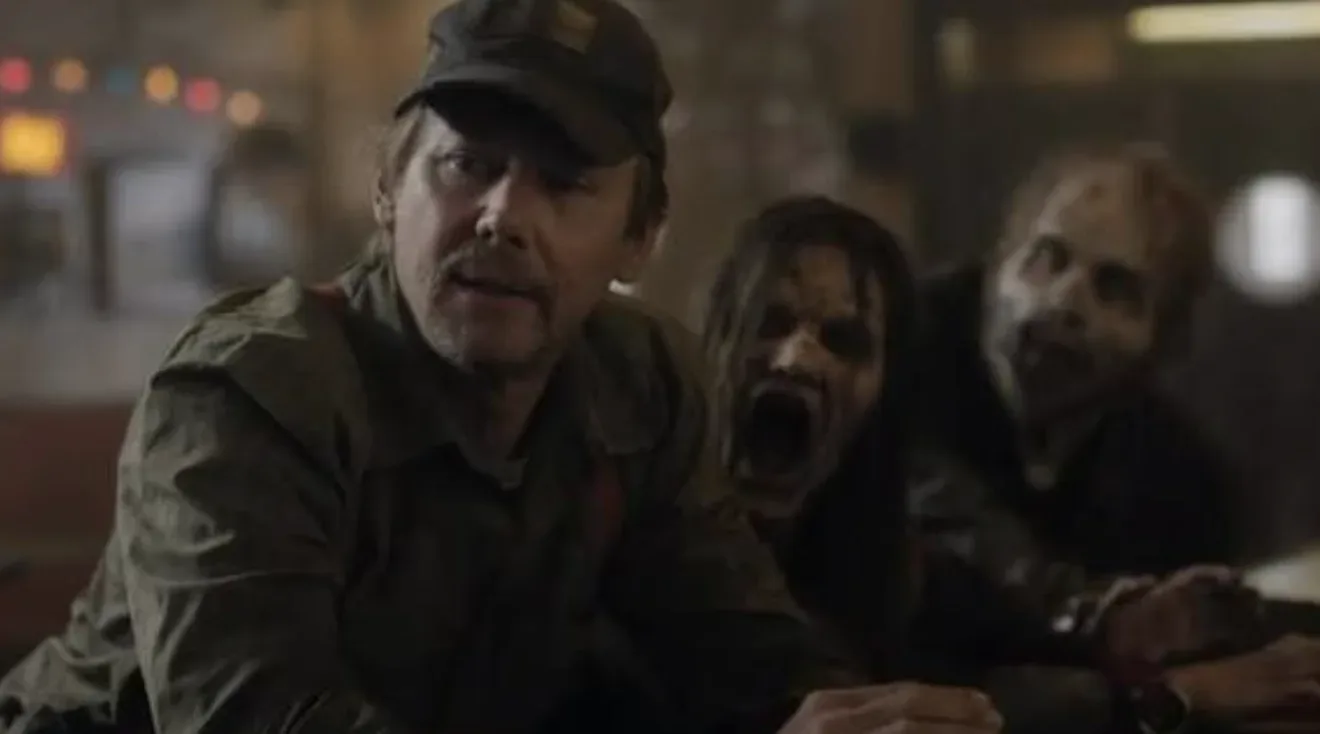
Dillard’s private conversation with Titicaca at the end of The Walking Dead: Dead City Season 3 Episode 3 is supposed to make viewers question what they just heard. For now, there is no confirmation that Titicaca can actually talk. The scene makes it appear that the chained walker responds to Dillard, but the stronger explanation is that we are experiencing the exchange through Dillard’s unreliable perception and that he is interpreting walker noises as meaningful speech. Episode 3 deliberately refuses to settle the issue. A genuinely conversational walker would also represent a major expansion of The Walking Dead’s established zombie rules, far beyond the intelligent variants encountered previously.
That uncertainty is exactly what makes Titicaca more interesting than the walkers Dillard casually chats with earlier in the season. Episode 3 turns what initially looked like one man’s eccentric survival habit into something much stranger.
What happens between Dillard and Titicaca in Episode 3?
The Episode 3 ending shows that Dillard’s attachment to walkers is considerably more personal than Negan realizes.
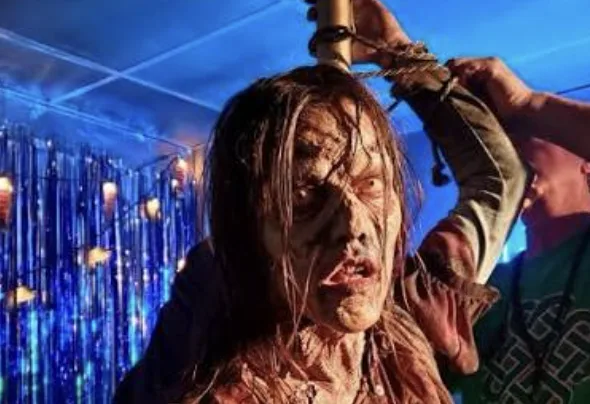
Earlier in “Emigrants,” Negan spends much of his time trying to toughen Dillard up. Dillard eventually proves useful when he saves Negan during the trouble at the power facility, but the episode’s final scene returns him to the bar and reveals where his attention really lies. He goes back to Titicaca, a walker he keeps chained in his private space, and interacts with her as though the two share an intimate relationship.
Then comes the unsettling part. Titicaca seems to respond.
The episode does not follow that moment with an objective explanation, nor does another character hear Titicaca and confirm that she has spoken. That distinction matters. Everything about the scene leaves room for the possibility that what Dillard hears and what actually occurs are not necessarily the same thing.
Dillard already believed he could communicate with walkers
Titicaca’s apparent response does not come out of nowhere because Dillard has been trying to communicate with walkers since before Episode 3.
AMC itself has leaned into the joke, describing Dillard as someone who will happily “chat with a walker.” Episode 2 makes the danger of that belief obvious when his reluctance to treat the dead like ordinary threats contributes to trouble for both him and Negan.
At first, that behavior could be read as an eccentric philosophy developed after years of isolation. Dillard has survived largely on his own, has built an unusual life inside his bar, and seems to view the dead less impersonally than people such as Negan do.
Titicaca changes the equation because Dillard does not merely talk at her. He appears to believe she understands him and returns his feelings. Episode 3 therefore shifts the mystery away from whether Dillard enjoys speaking to walkers and toward whether he genuinely hears answers when nobody else does.
Has The Walking Dead ever had talking walkers before?
The franchise has previously made viewers think walkers were speaking, but those examples do not prove that Titicaca can talk.
The most famous case comes from The Walking Dead Season 9. Eugene and Rosita encounter what appear to be whispering walkers, creating the frightening impression that the dead have developed speech. That mystery eventually leads to the Whisperers, human survivors who wear walker skins and move among herds while communicating quietly with one another. The “talking walkers” were people hiding among the dead, not zombies acquiring language.
That history actually makes Episode 3’s ending more effective. Longtime viewers have already been trained not to accept a talking walker at face value.
There is also no sign that Titicaca is secretly another Whisperer. Dillard has her restrained, treats her openly as one of the dead and has apparently maintained this strange relationship for some time. The mystery is therefore different from the Season 9 deception.
Could Titicaca be a new walker variant?
It is possible, but nothing in Episode 3 currently confirms Titicaca as a new variant.
The franchise has expanded walker behavior before. By the final season of The Walking Dead, some walkers demonstrated abilities that ordinary roamers did not, including climbing and manipulating doors. AMC has specifically acknowledged these smarter walkers and connected their behavior to unusual traits seen as far back as the show’s earliest episodes.
But intelligence and speech are very different developments.
A walker opening a door or climbing an obstacle can still be explained as retained motor behavior or a more advanced hunting instinct. Holding a meaningful conversation would imply memory, comprehension and language on an entirely different level. Nothing established about the variants so far requires that leap.
If Dead City eventually confirms that Titicaca really speaks, the reveal would therefore be significant franchise lore rather than a minor continuation of the existing variant concept.
Is Dillard imagining Titicaca’s response?
The ending is constructed around Dillard’s experience rather than independent proof that Titicaca possesses language. The episode’s own storytelling has spent time establishing how differently he sees walkers, and the final reveal pushes that trait much further. Contemporary coverage of “Emigrants” reaches the same cautious conclusion: Titicaca seems able to talk, but the episode does not establish whether she actually does or whether Dillard is hearing something that is not objectively there.
Based on what Episode 3 gives us, this is currently the most plausible interpretation.
That reading also preserves the existing rules of the franchise without requiring Dead City to introduce a revolutionary new kind of walker without explanation.
Still, the scene is deliberately strange enough that dismissing Titicaca completely would be premature. If a future episode allows Negan or another character to hear the same recognizable response, or demonstrates that Titicaca understands specific language independently of Dillard, the evidence would change considerably.
Right now, we do not have that. Titicaca may reveal more about Dillard than walker evolution
The more immediate purpose of the scene appears to be revealing something about Dillard rather than rewriting zombie biology.
Jimmi Simpson’s character initially works because he is such an odd contrast to Negan. Negan has survived by becoming brutally practical about the dead and the living alike, while Dillard has built habits, attachments and rituals around a world that most survivors learned to treat with emotional distance. AMC introduced Simpson’s Dillard as Negan’s new ally, but his unusual relationship with walkers has quickly become his defining mystery.
Titicaca makes that relationship impossible to dismiss as harmless chatter. Dillard appears emotionally invested in what he believes exists between them, which could influence how he behaves whenever other survivors threaten her.
That is considerably more interesting than simply announcing a “talking zombie.”
For now, then, Titicaca has not been confirmed as The Walking Dead’s first genuinely conversational walker. Episode 3 wants us to hear what Dillard hears without giving us the independent evidence needed to believe it. Until another character hears Titicaca speak or the show establishes a new biological explanation, Dillard’s perception remains the safer answer.
The real mystery may not be whether Titicaca understands Dillard. It may be how far Dillard will go because he believes she does.