Why Is Castle Leoch in Ellen’s Name in Blood of My Blood?
Castle Leoch has always represented far more than a family home in Outlander: Blood of My Blood. It is the seat of Clan MacKenzie, the physical symbol of its leadership and one of the most valuable things Colum and Dougal could lose by choosing the wrong side of Scotland’s growing political conflict. Season 2 turns…
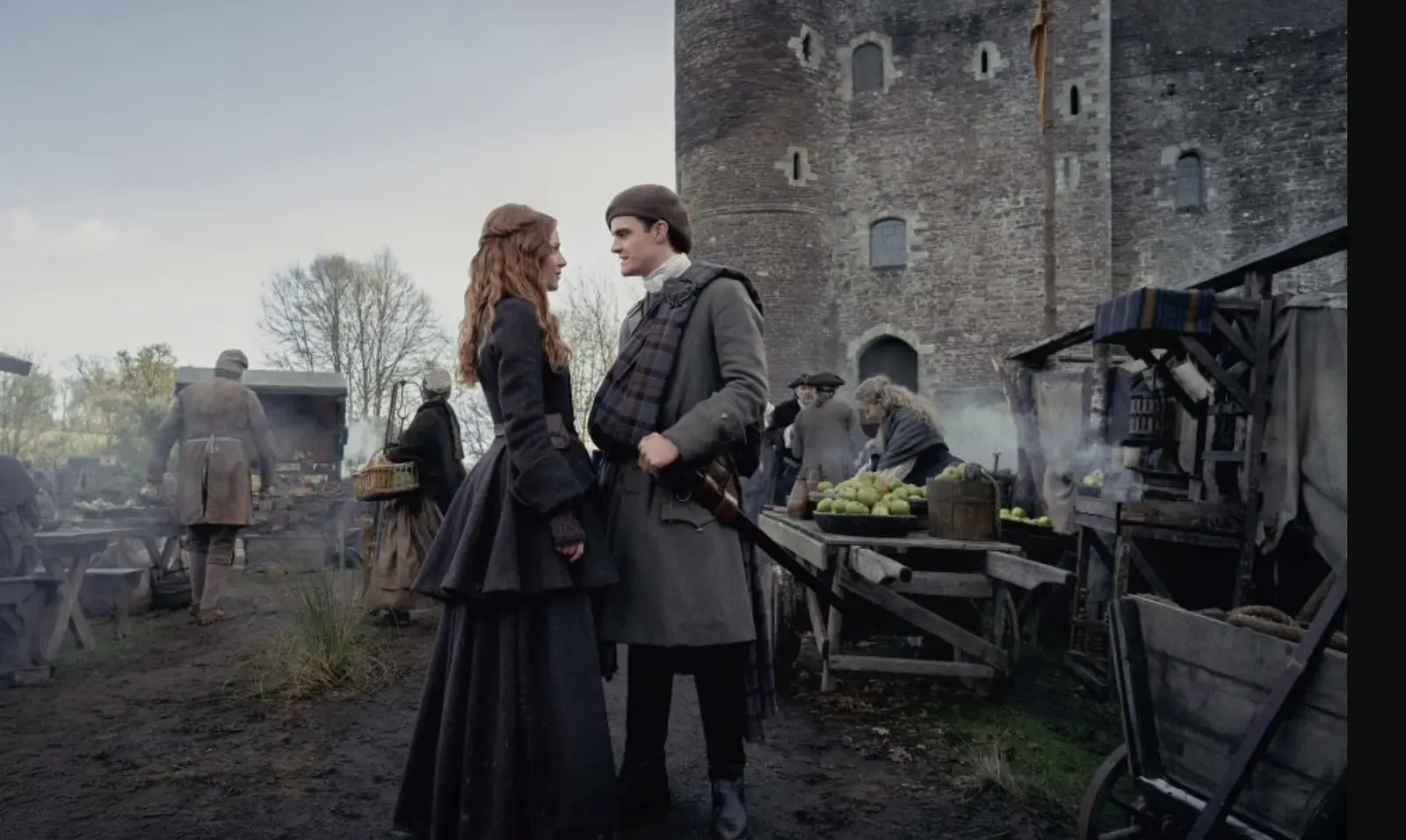
Castle Leoch has always represented far more than a family home in Outlander: Blood of My Blood. It is the seat of Clan MacKenzie, the physical symbol of its leadership and one of the most valuable things Colum and Dougal could lose by choosing the wrong side of Scotland’s growing political conflict. Season 2 turns that vulnerability into a major part of Ellen MacKenzie’s story.
That is why James MacKinney receives an unwelcome surprise when he tries to claim Leoch in Episode 3, “Rabbits Don’t Swim.” Removing Colum from power is not enough. The castle, the estate and the land surrounding it are no longer legally in Colum’s name. They belong to Ellen.
Why is Castle Leoch in Ellen’s name?
Ellen has Castle Leoch placed in her name as a way to protect the MacKenzie estate from the consequences of the Jacobite Rising.
The arrangement is made in Season 2 Episode 2, “The Veil of Time,” when Dougal is preparing to support the Jacobite cause and Colum worries about what could happen if the rebellion fails. Supporting the losing side could put the family’s property at risk. Ellen sees an opportunity.
Because she is not personally joining the rebellion with Dougal’s men, transferring the estate to her creates a degree of separation between Castle Leoch and the family members actively participating in the Jacobite campaign. Ned Gowan agrees with the strategy, and Colum ultimately signs the estate over to his sister. Contemporary recaps of Episode 2 confirm that Ellen proposes the transfer specifically as a way of safeguarding Leoch if the political gamble goes badly. It is essentially Ellen turning the rules being used against her into a political advantage.
She may not be permitted to lead Clan MacKenzie as laird, but she can still become the person legally standing between the clan and the loss of its home.
Also Read: Outlander: Blood of My Blood Season 2 Episode 3 Recap: Is Ellen Pregnant?
Colum puts one major condition on the deal
Colum does not hand Ellen unconditional ownership of the estate. The arrangement comes with a condition that immediately affects her relationship with Brian Fraser. If Ellen marries, the property returns to Colum.
That provision explains why the Castle Leoch storyline cannot be separated from Ellen and Brian’s romance. The two may want to build a life together, but marrying while the political situation remains unsettled could undo the protection Ellen has created for the MacKenzie estate. Ellen therefore gains enormous legal power at exactly the moment when that power limits one of the most important personal decisions in her life.
The contradiction suits Blood of My Blood particularly well. Ellen has repeatedly been treated as someone whose marriage can be negotiated for the benefit of her clan. Now she has used property law and family politics to gain leverage of her own, but marriage is still the condition attached to it. The difference is that Ellen chose this arrangement herself.
Why can’t MacKinney simply take Castle Leoch from Colum?
This becomes crucial in Episode 3 when James MacKinney arrives at Leoch while Dougal and many of the clan’s fighters are away.
MacKinney still believes he has a superior claim to Clan MacKenzie’s leadership. With the castle vulnerable, he sees an opportunity to correct what he views as the outcome that denied him power. His plan runs into a legal problem almost immediately.
Colum explains that taking the keys, removing him or declaring himself laird would not automatically give MacKinney ownership of the estate because the property has already been transferred to Ellen. Episode 3 emphasizes the scale of that arrangement: Leoch’s land and property sit in Ellen’s name rather than Colum’s. MacKinney therefore needs Ellen.
That changes the entire balance of the confrontation. Ellen is not merely Colum’s sister hiding somewhere inside the castle. She is the person whose legal position prevents MacKinney from turning physical control of Leoch into legitimate ownership.
Current Episode 3 coverage also notes that MacKinney realizes he would need Ellen either to transfer the property or to gain control through marriage.
For a man who enters Leoch believing the absence of its fighters has made the castle easy to take, discovering that its legal owner is the woman he cannot find is an especially fitting problem.
Ellen is effectively protecting Leoch twice
The property transfer gives Episode 3 a clever second meaning. Ellen first protects Castle Leoch on paper. Before anyone arrives at its gates, she has already created a legal obstacle designed to keep the property from being lost because of Dougal’s political choices. Then MacKinney arrives and Ellen has to protect it physically.
That combination is what makes the episode such an important showcase for the character. Her value to Clan MacKenzie has never depended only on whether she can participate in a confrontation. Ellen has consistently been the sibling who recognizes political solutions before Colum and Dougal do.
Earlier, she helped steer her brothers toward a leadership arrangement that allowed Colum to become laird while Dougal took the role of war chieftain. In Season 2, she again finds the compromise that allows Dougal to join the Jacobite cause without leaving the family’s entire future tied to his decision. Episode 3 simply makes that intelligence impossible for the men around her to overlook.
Harriet Slater has similarly described the episode as showing another side of Ellen, with the character’s intelligence and ability to defend the castle strengthening the argument that she has many of the qualities expected of a laird, even though the society around her would never give her the title.
Does Ellen permanently own Castle Leoch?
Not necessarily. Within the arrangement established in Episode 2, Ellen’s ownership is conditional. Colum makes clear that the property will return to him if Ellen marries.
The transfer should therefore be understood primarily as a protective political arrangement rather than Colum permanently surrendering the MacKenzie estate to his sister.
That distinction matters after Episode 3 because Ellen has even more reason to want a future with Brian. She reveals that she is pregnant, meaning the question of when they can safely marry is becoming more pressing rather than less.
At the same time, the Jacobite conflict is becoming more dangerous. Ellen cannot simply abandon the arrangement without considering what that could mean for Leoch, particularly while Dougal remains committed to the rebellion. The castle has effectively become tied to Ellen’s personal future.
Ellen owning Leoch changes how we should view her role
One of Blood of My Blood’s recurring tensions is that Ellen repeatedly demonstrates leadership without being formally allowed to lead. Red Jacob’s death opens a succession struggle among the MacKenzies, but Ellen’s gender prevents her from being treated as the obvious candidate despite her political instincts. Colum and Dougal receive the formal positions while Ellen often becomes the person finding solutions when their ambitions create problems. Castle Leoch being placed in her name quietly reverses part of that imbalance. Colum may still carry the title of laird, but when MacKinney arrives to claim the clan’s home, the decisive legal authority belongs to Ellen.
That is why the reveal works so well in Episode 3. MacKinney comes to Leoch expecting to confront a weakened male leader. Instead, he discovers that the person who actually stands between him and ownership of the estate is the woman he did not consider important enough to plan around. The deed does not make Ellen laird of Clan MacKenzie. It does, however, make her indispensable to its survival. And after “Rabbits Don’t Swim,” it is increasingly difficult to argue that she has not earned that position.