Tip Toe Episode 1 Recap: Leo Discovers George’s Secret
Russell T Davies returns to Manchester with Tip Toe, a five-part drama that initially disguises something deeply uneasy as an ordinary dispute between neighbors. Alan Cumming stars as Leo Struthers, the charismatic but slightly adrift owner of Spit & Polish on Canal Street, while David Morrissey plays Clive Goss, the electrician who has lived next…
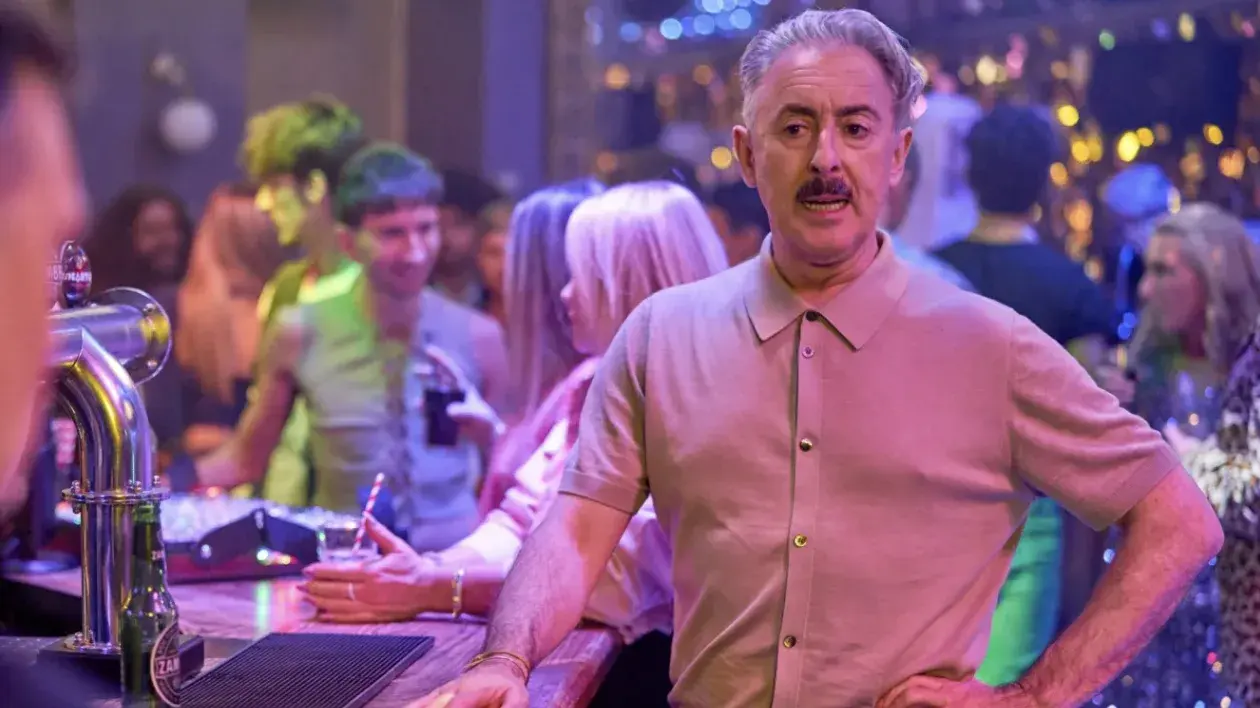
Russell T Davies returns to Manchester with Tip Toe, a five-part drama that initially disguises something deeply uneasy as an ordinary dispute between neighbors. Alan Cumming stars as Leo Struthers, the charismatic but slightly adrift owner of Spit & Polish on Canal Street, while David Morrissey plays Clive Goss, the electrician who has lived next door to him for 14 years. They know each other well enough to exchange greetings, but not well enough to understand the lives taking place on the other side of the wall.
Episode 1 begins by showing viewers that this distance will not last. A grim flash-forward on Leo and Clive’s street points toward a devastating outcome before the story rewinds ten days, when the biggest problem in Leo’s morning appears to be getting locked outside his own house. From there, a spare key begins pulling two households together, while Leo’s life at the bar introduces Zee, Melba and a community increasingly conscious of what is changing around them.
Leo’s embarrassing morning brings Clive into his life
Ten days earlier, Leo’s morning begins badly when a casual date leaves his house with his laptop and Leo rushes outside after him. By the time he returns, the door has locked behind him and he is stranded with very little dignity left to preserve.
That forces Leo to knock on the Goss family’s door. Clive is hardly enthusiastic about the situation, but Leo needs a phone so that he can reach Stephanie, the friend who keeps his spare key. Even this simple favor immediately exposes the strange distance between the neighbors. They have lived side by side for years, yet Leo does not know the family’s phone numbers and Clive has little idea what actually happens in Leo’s life.
Also Read: Outlander: Blood of My Blood Season 2 Episode 3 Recap: Is Ellen Pregnant?
Clive also seems uncomfortable leaving Leo alone in the house with his teenage son George. He never says outright what he is thinking, but the awkwardness matters because Episode 1 repeatedly shows how assumptions can exist long before anyone openly admits to them.
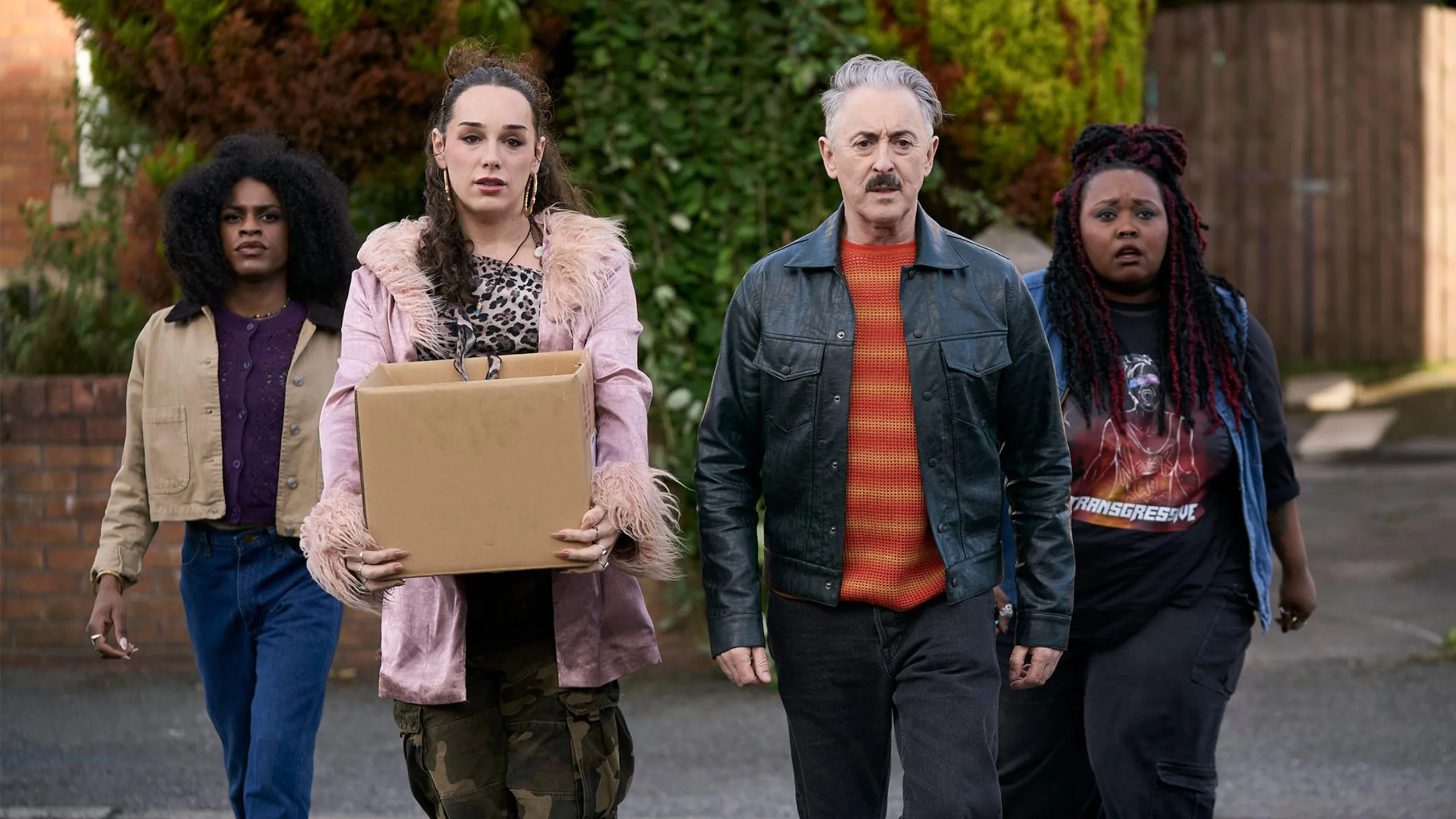
Stephanie eventually arrives and lets Leo back into his home. What should have been an embarrassing but forgettable morning, however, creates the connection on which the entire series depends. Clive now knows that Leo has only one spare key nearby, and he decides he can solve the problem himself.
Spit & Polish reveals another side of Leo
Away from his suburban street, Leo is a very different figure. At Spit & Polish, his Canal Street bar, he is confident, theatrical and surrounded by people who clearly consider the place more than somewhere to buy a drink.
Leo turns his miserable morning into a much better story for his employees, exaggerating certain details for an audience that expects him to entertain them. That instinct tells us something important about him. Leo is not simply outgoing. He has built a version of himself that can command a room even when the reality underneath it is much less certain.
The episode then gives that confidence a more serious purpose through Zee. Judy, who manages security at the bar, realizes Zee has secretly been staying there overnight. When Leo speaks to her, he learns that the house she has been sharing no longer feels safe after some of the other residents began directing transphobic hostility toward her.
Leo reacts without hesitation. He arranges temporary accommodation with someone she trusts and then accompanies Zee and several members of the Spit & Polish group when she goes back to collect her possessions.
The situation becomes tense when the housemates confront them, but the group gets Zee and her belongings out without the confrontation escalating further. It is one of the episode’s clearest demonstrations of why Spit & Polish matters. Leo may claim later that he is not especially political, but his bar already functions as a practical support system for people who may not have one elsewhere.
Melba explains what Tip Toe is really about
The premiere’s most revealing sequence arrives not through Leo and Clive, but through Melba, the longtime Spit & Polish regular played by Paul Rhys.
Leo initially forgets Melba’s birthday despite seeing him at the bar throughout the day. He eventually makes amends by taking him out for the night, which leads them through Manchester’s nightlife before they end up sitting together outside the bar. Their conversation gives the series its title.
Leo remains hopeful that the current hostility surrounding queer and trans people will eventually recede. Melba is much less convinced. For him, greater visibility has produced a complicated contradiction. People fought for generations to live openly, but being visible also means being easier to identify when the social atmosphere becomes less welcoming.
That is where the idea of “tip toe” comes from. Melba remembers living with the confidence to announce himself wherever he went. Now, he feels a new instinct to move more carefully.
The conversation also quietly challenges Leo’s belief that he somehow exists outside politics. His bar provides employment, friendship and refuge to younger members of the community. He receives hostility online because of what the place represents. Whether Leo wants that responsibility or not, other people already see him as part of something larger.
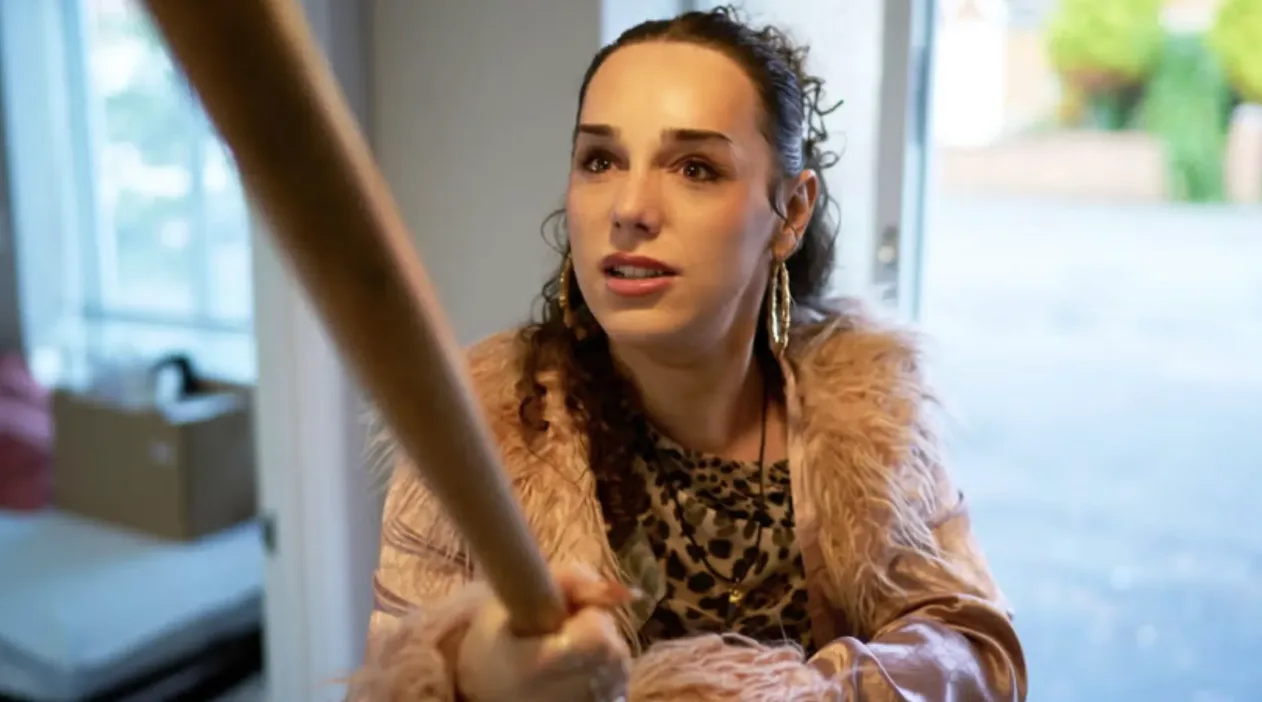
There is another emotional layer underneath the conversation. Melba’s affection for Leo has clearly lasted for years, even though their relationship has never developed in the same direction for both men. That makes him more than the older friend offering commentary from the end of the bar. Melba understands Leo unusually well, including the dangers Leo is inclined to dismiss.
Clive’s spare key stops feeling like a favor
When Leo returns home, he discovers that Clive has taken his attempt to help much further than expected. Clive has arranged another key and bought a combination key safe for the property. The following morning, he uses his access to enter Leo’s house and starts installing it. The problem is not really the key safe. It is the assumption behind it.
Clive behaves as though solving Leo’s problem gives him permission to make decisions about Leo’s home. Leo pushes back, but their argument quickly widens into the cultural disagreements that have been sitting underneath their polite neighbor relationship.
Clive makes dismissive remarks about Leo’s world and drifts into a conversation about gender that Leo refuses to let pass. Yet just when their exchange looks as though it might permanently sour the relationship, Leo tries to reduce the tension. He offers Clive paid electrical work at Spit & Polish.
That decision is much more consequential than it appears. Clive is struggling professionally, and the job will bring him directly into the queer community he currently understands mostly from a distance and through what he consumes online. Leo, meanwhile, has now allowed Clive access to both of his most important spaces: his home and his bar.
The spare key is therefore not simply a plot device. Russell T Davies has explained that the original idea for Tip Toe came from giving his own neighbor a front-door key and thinking about how different a home feels once someone else has access to it. Episode 1 turns that ordinary act of trust into the first crack in the boundary between Leo and Clive.
What does Leo discover about George?
The final development gives Leo information he was never supposed to have about Clive’s younger son. While using a dating app, Leo comes across George’s profile. George is 16, but the profile presents him as older and places him in a space intended for adults. Leo immediately realizes that the teenager next door is gay and has apparently been exploring that part of himself without his family knowing.
For George, this is not a small secret. His home life has already shown how difficult communication with Clive can be, and Episode 1 has established Clive’s discomfort with parts of Leo’s world. George therefore has reason to fear what might happen if his father learns about him before he is ready to tell him himself.
Jackson Connor, who plays George, has described the teenager as someone who has grown up looking to Clive for an idea of what a man is supposed to be while simultaneously discovering that his own identity does not fit comfortably within those expectations. George can see in Leo the possibility of living openly, but having Leo suddenly learn his secret also makes the neighbor frightening to him.
That distinction will matter. Leo’s discovery does not automatically make him George’s mentor, nor does knowing the truth give him permission to interfere. Episode 1 instead leaves Leo holding sensitive information about a teenager whose father has just been given access to Leo’s home and workplace.
The Goss household has other secrets as well, including an online life Saul keeps separate from his family, but George’s situation is the one that directly connects Leo to Clive’s family before either man understands how complicated their relationship is about to become.
Episode 1 makes the spare key the real warning sign
Tip Toe’s premiere works because very little of what happens initially looks large enough to start a feud. Leo forgets his key. Clive tries to help. Leo gives him some work. George keeps something from his parents. Two men exchange opinions that irritate each other.
Davies has described the central characters as two different versions of loneliness living on opposite sides of the same wall. Leo is nearing 60, newly single and surrounded by a younger found family at his bar. Clive is around the same age, but his loneliness exists inside a house containing a wife and two sons he increasingly struggles to understand. Episode 1 brings those two isolated lives into contact.
That is why the opening flash-forward is so effective. The audience already knows that something on this street will go terribly wrong, but the premiere refuses to provide one obvious moment that explains how they get there. Instead, it builds the problem out of small boundary crossings, assumptions, private fears and information that reaches people who were never supposed to have it.
By the end, Leo and Clive are actually closer than they were at the beginning. Clive has Leo’s key. He has work at Leo’s bar. Leo knows George’s secret. Their worlds are becoming intertwined. In Tip Toe, that closeness may be far more dangerous than simply remaining strangers.