Why Did the Demon Andreas Look Like a Bird-Human Hybrid in ‘The Parenting’?
Andras appears as a raven-headed man in The Parenting (2025) because the Ars Goetia, a real 17th-century grimoire, describes him in exactly those terms.
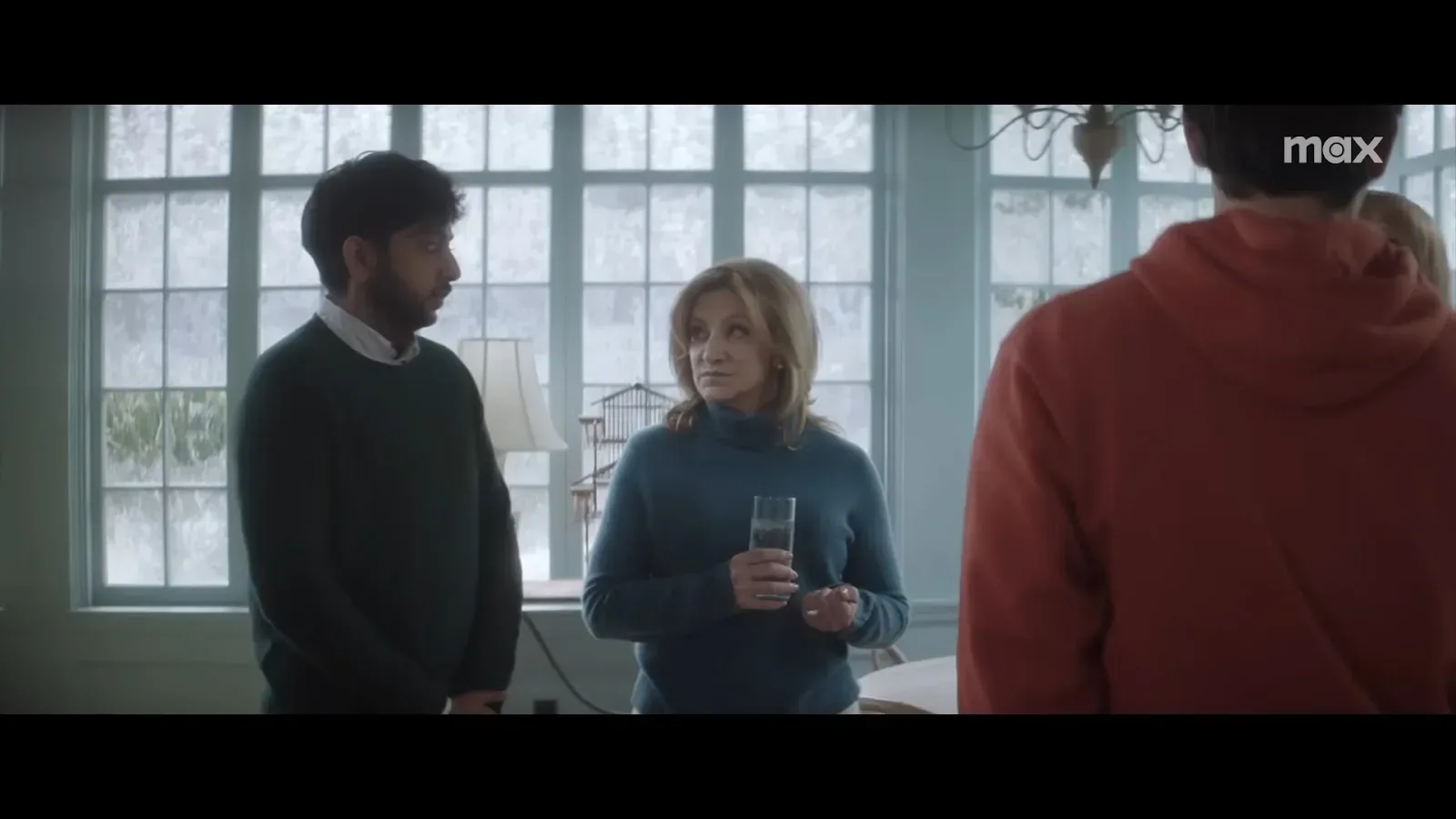
The bird-human form of Andras in “The Parenting” (2025) has an answer the film provides before the end of the story. Characters find a book inside the rented house that describes the demon as bearing the face of a raven and the body of a man. That description comes from the Ars Goetia, a 17th-century grimoire contained in “The Lesser Key of Solomon,” which lists Andras as the 63rd spirit and a Great Marquis of Hell. The creature’s appearance was not invented for the film. It reproduces a classical demonological depiction that has circulated in occult texts since at least 1577.
Spoilers for “The Parenting” follow, including the ending and mid-credits scene.
What the Ars Goetia Says About Andras
The Ars Goetia describes Andras as appearing “in the Form of an Angel with a Head like a Black Night Raven, riding upon a strong Black Wolf” and brandishing a raised sword. The “Dictionnaire Infernal” (first published 1818; 1863 illustrated edition) replaces the raven with an owl in some renderings, but both variants agree on the avian head. The earliest known version of the description, Johann Weyer’s “Pseudomonarchia Daemonum” (1577), adds a specific warning: Andras “will kill [the summoner] along with his companions” if the ritual lapses. He commands thirty legions and is listed as one of the few Goetic spirits considered genuinely dangerous to the people who invoke him.
Andras’s assigned office is sowing discord: breaking bonds between people and inclining them toward violence against one another. In a film about two families forced into close quarters before a demon has entered the picture, that alignment between the demon’s classical function and the film’s central conflict is exact. His traditional role in the Goetic literature is the destruction of bonds between people.
How the Film Activates That Tradition
Brenda (Parker Posey) and her friend Allie had originally summoned Andras years before the events of the film using a dark-magic book, intending only to frighten Allie’s mother. Brenda impulsively commanded the demon to kill, going further than Allie intended. The demon slaughtered Allie’s mother and brother, and then Allie herself when she stepped outside the protective summoning circle. Brenda survived and has since operated the property as a bed-and-breakfast, waiting for a guest to recite the activation phrase. The film was directed by Craig Johnson (“The Skeleton Twins”) from Kent Sublette’s screenplay and released on Max on March 13, 2025.
The phrase is “Ego sum tibi Andras” (“I am yours, Andras”). Brenda disguised it as the house Wi-Fi password. Frank (Brian Cox), trying to connect his laptop, reads it repeatedly, falls into a trance, and becomes the demon’s host. Andras requires a human vessel during a specific lunar event, identified in the film as the Worm Moon, for possession to become permanent.
When other characters locate the demonological book inside the house, it identifies Andras by name and carries the raven-faced description. This is the film’s primary in-universe explanation for the creature’s later appearance, and it corresponds to verified historical occult literature. The raven or crow as Andras’s signature feature appears in the Pseudomonarchia Daemonum (1577) and runs through the Ars Goetia and subsequent reference works.
The Practical Effects Approach
Craig Johnson spoke in interviews about choosing physical effects over digital ones. He cited “The Thing,” “Poltergeist,” and “Gremlins” as formative references and described wanting “practical puppets and actual goofy, rubbery stuff that you can feel and is tangible.” The film includes some CGI alongside the practical work, but Johnson framed the design as rooted in 1980s genre filmmaking. The production shot in Concord, Massachusetts, where Johnson described the house itself as “a character in and of itself” and noted the area’s old manors were “just sort of tucked away in the woods.”
Brian Cox’s possessed Frank required roughly two hours in makeup per session. Johnson said landing Cox was the project’s turning point. Once Cox agreed to play the demon-inhabited father, Edie Falco (Sharon) and Lisa Kudrow (Liddy) followed.
How Andras Is Defeated
The film’s resolution turns on the same phrase that caused the possession. Rohan proposes letting Andras move into his body and having Josh shoot him, but Josh cannot follow through. He begins chanting the incantation himself, and the other characters join in. With multiple simultaneous invitations to possess, Andras cannot settle on a single host. Sara (Vivian Bang) adds academic Latin commands to force the expulsion. Unable to enter anyone, Andras weakens and is forced into his true physical form outside any body. Frank steps on the demon’s neck and kills him. The bird-human creature the film has been building toward is visible only in this final confrontation.
The Mid-Credits Scene
A brief mid-credits sequence mirrors the film’s opening. Rohan and Josh drive home and work through what happened. They settle on one lingering question: why did the demon look like a bird? Neither reaches a conclusion on screen. Rohan eventually decides the more disturbing memory was seeing his father’s naked body during the possession, and the scene moves on.
The demonological book they found earlier described Andras’s raven-faced, man-bodied form, and the Ars Goetia established that description four centuries before Brenda converted the property into a rental. Knowing that the same tradition assigns Andras the specific office of breaking bonds between people makes the film’s premise more pointed: the families defeat the Great Marquis of Discord by refusing to stay divided.