Why Did Richard E. Grant Admit He Was a Traitor and Why Didn’t Anyone Believe Him?
The Celebrity Traitors has always depended on people hiding information, which makes Richard E. Grant’s first major decision in Season 2 almost impossible to believe. Minutes after Claudia Winkleman selects him as one of the show’s first Traitors alongside Maya Jama, Richard is asked the most dangerous question anyone could ask him: is he a…
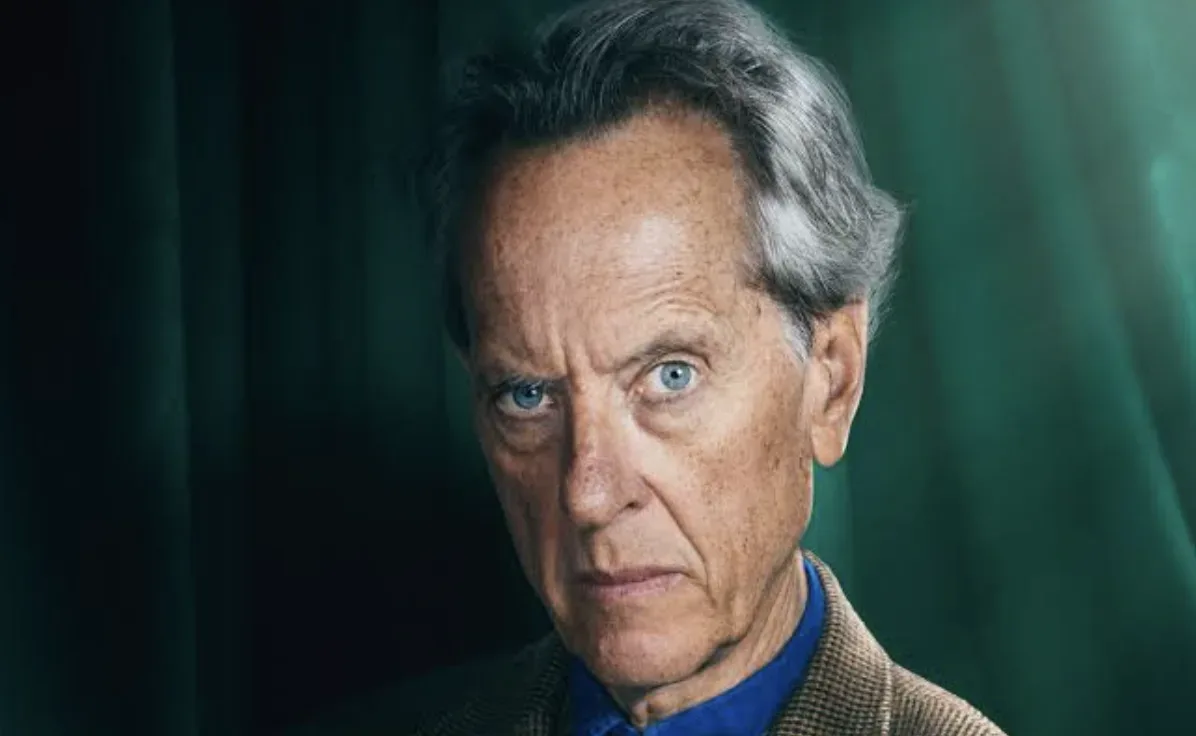
The Celebrity Traitors has always depended on people hiding information, which makes Richard E. Grant’s first major decision in Season 2 almost impossible to believe. Minutes after Claudia Winkleman selects him as one of the show’s first Traitors alongside Maya Jama, Richard is asked the most dangerous question anyone could ask him: is he a Traitor? Instead of deflecting, inventing a story or giving the obvious answer expected from every hidden Traitor, he tells Joe Lycett the truth.
The confession should have damaged Richard’s game before it had properly begun. Instead, something much stranger happens. Several celebrities start wondering whether an actual Traitor would ever be reckless enough to openly admit it, allowing Richard’s mistake to briefly function like an accidental double bluff.
Richard’s Confession Was a Genuine Mistake
Richard did not make the confession as part of a carefully planned strategy. He had been open about wanting to become a Traitor during the selection process and was visibly delighted when Claudia finally chose him. That excitement appears to follow him directly back into the group.
When Joe asks whether he is a Faithful or a Traitor, Richard answers that he is a Traitor before seemingly realizing what he has just admitted. He attempts to correct himself, but the original response is already out there. Richard later acknowledges that his excitement got the better of him and recognizes that he may have created a serious problem for himself.
The moment is particularly striking because Traitors normally spend enormous amounts of energy constructing believable Faithful identities. Richard effectively does the opposite within minutes of receiving his cloak, placing himself under scrutiny before Maya Jama has attracted any meaningful suspicion at all.
His Answer Was Almost Too Obvious to Believe
Richard receives unexpected protection because his confession makes so little strategic sense. Everyone understands that a Traitor is supposed to hide their identity, meaning an actual Traitor openly announcing the truth appears almost irrational.
That creates an immediate alternative explanation. Perhaps Richard was disappointed that he had not been chosen and was joking about becoming a Traitor because he wanted the role so badly. Perhaps he was deliberately being theatrical. The more ridiculous the confession appears, the easier it becomes for some players to convince themselves that it cannot possibly be genuine.
It is one of the strange contradictions at the heart of The Traitors. The Faithfuls enter the castle expecting constant deception, so sometimes a straightforward truth becomes harder to believe than a complicated lie. Richard does not intentionally engineer that reaction, but it prevents the confession from becoming an immediate death sentence for his game.
Jerry Hall Gives Richard an Unexpected Defense
Jerry Hall becomes one of the most important voices protecting Richard after the confession. She has known him for decades and is familiar enough with his personality to believe that his behavior does not necessarily indicate guilt. Instead of taking his words literally, she filters them through the Richard she already knows.
Jerry’s reasoning effectively becomes that Richard is theatrical enough to say something like this even if Claudia had not selected him. That gives the group a believable explanation at exactly the moment Richard needs one. Her personal history with him carries more weight than the instincts of players who have only just entered the game alongside him.
That type of relationship can be extremely powerful during the early stages of The Traitors. Before the contestants have voting patterns, mission behavior or Round Table arguments to analyze, much of their judgment comes from personality and reputation. Richard’s naturally expressive behavior therefore becomes both his greatest weakness and, for the moment, part of his defense.
James Acaster and Amol Rajan Take Richard Seriously
Not everyone is willing to dismiss Richard’s admission. James Acaster becomes particularly interested in the possibility that Richard simply told everyone the truth, while Amol Rajan also begins questioning the actor about what happened.
Their suspicions matter because Richard’s explanations never completely erase the original confession. Once a player has openly identified himself as a Traitor, every unusual reaction afterward can be viewed through that lens. James and Amol therefore become two of the people most capable of turning an embarrassing mistake into a serious campaign against him.
That makes the end of Episode 1 particularly significant. Claudia allows Richard and Maya to select two candidates who could become the third Traitor, and they choose James and Amol. The two people applying some of the most pressure to Richard suddenly find themselves standing in front of the Traitors and arguing for their survival.
Recruiting James or Amol Could Help Richard Repair His Mistake
The recruitment twist offers Richard an unusual solution to the problem he created. If James or Amol becomes a Traitor, one of his strongest early skeptics immediately becomes his ally. The person who had been trying to expose him would instead need to help protect him.
The other candidate would leave the game, removing another player who had shown a willingness to take Richard’s confession seriously. On paper, that sounds like an almost perfect way for Richard to recover. In practice, however, eliminating a suspicious Faithful can create problems of its own.
James recognizes that danger during his pitch. If he disappears immediately after telling people that Richard might really be a Traitor, his absence could make the surviving Faithfuls reconsider everything he had been saying. A move designed to protect Richard could therefore produce exactly the opposite effect.
Amol presents a different advantage. His ability to question people and analyze what they are saying makes him dangerous as a Faithful, but those same qualities could be extremely useful to the Traitors. If other contestants trust his judgment, he could potentially direct their suspicion away from Richard and Maya while appearing to investigate the game honestly.
Richard’s Real Test Comes After the Confession
Surviving the initial reaction does not mean Richard’s mistake has disappeared. His admission is now part of the castle’s shared memory, and it can become relevant again every time something suspicious happens around him. If contestants who accuse Richard begin leaving the game, people who originally dismissed the confession may start reconsidering whether the simplest explanation was correct all along.
Maya also has reason to be cautious about her new partner. She begins the game in a much stronger position because almost none of the early attention is directed toward her. Richard’s behavior therefore creates a risk not only for himself but for the Traitors as a group.
The situation becomes even more interesting because Richard appears aware that he needs to lower his profile. Allowing the calmer Maya to take more control in their private discussions could help, but The Traitors rarely allows players to completely erase an early mistake.
Richard’s confession ultimately works in the premiere because it is almost too ridiculous to accept. He tells everyone the truth, several people assume a real Traitor would never do something so obvious, and the two contestants who take him most seriously are then placed directly in danger. Whether that bizarre sequence saves Richard or eventually becomes the clue that exposes him is now one of Season 2’s most interesting storylines.