What is the connection between Dark Nuns and The Priests, and how does the ending set up a sequel?
Dark Nuns connects to The Priests through 12 evil spirits. Both films trap demons rather than destroy them, and the ending positions Michaela for a sequel.
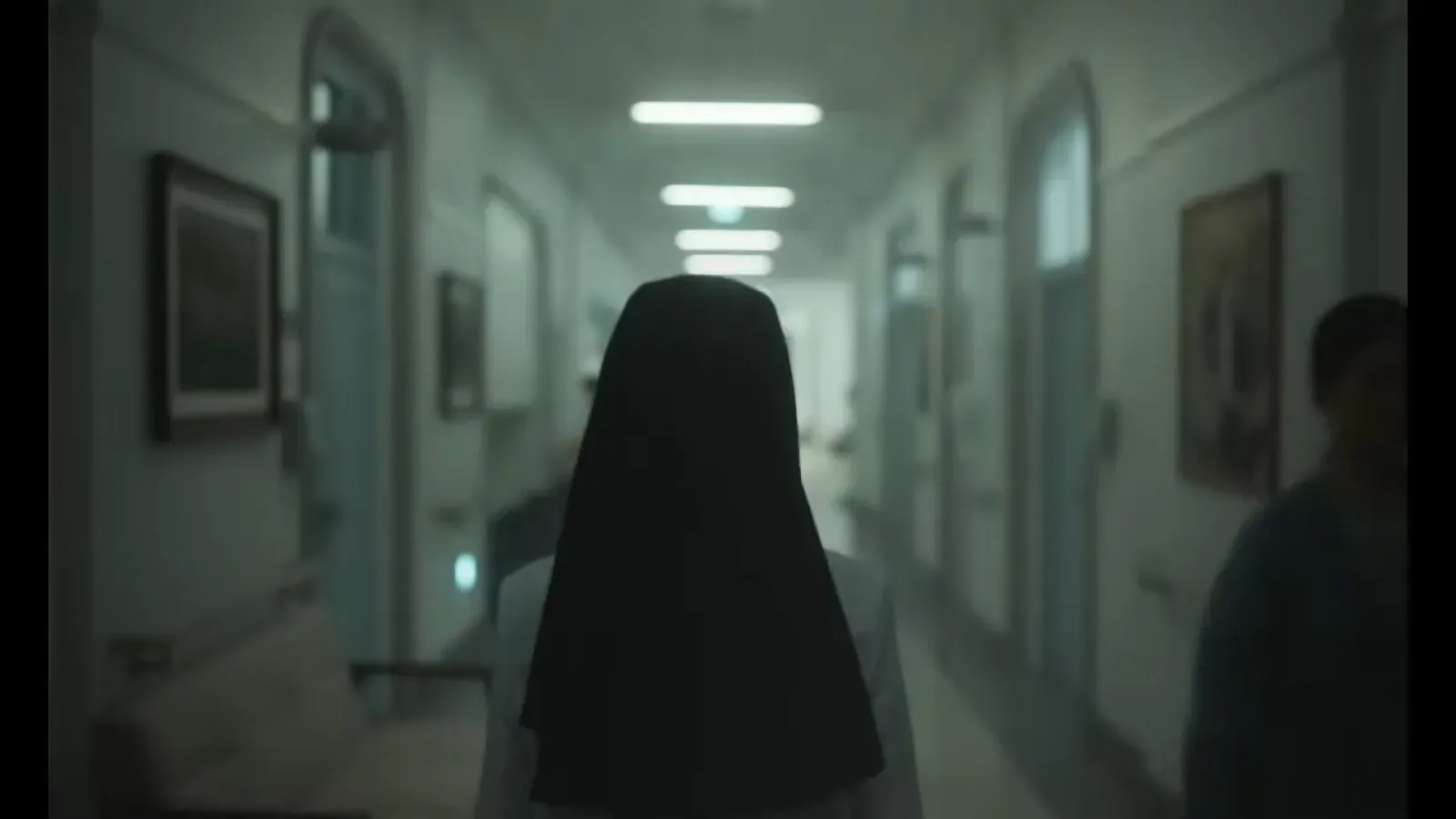
Spoiler warning: This article covers the full plot of Dark Nuns (2025), including the fate of Sister Junia.
Dark Nuns (2025) shares a universe with The Priests (2015) because both films are built on the same mythology: 12 powerful evil spirits, referred to in Dark Nuns as the Manifestations, that operate in the world. The Priests established that mythology by having Father Kim (Kim Yoon-seok) and Deacon Choi (Gang Dong-won) exorcise a demon named Malphas from a possessed young woman named Young-shin (Park So-dam). Dark Nuns continues the premise with Gamigin, a second Manifestation described in the film as a marquis of hell, which has now possessed a teenage boy named Hee-Joon (Moon Woo-jin). The ending, in which Deacon Choi appears at Sister Junia’s grave and Sister Michaela leaves with him to pursue the remaining Manifestations, is the franchise structure made explicit.
How the two films share a universe
Both films draw from the same roster of 12 evil spirits. The Priests, directed by Jang Jae-hyun and developed from his short film 12th Assistant Deacon, established the premise that these demons deliberately hide from humanity because widespread awareness of their existence would drive even non-believers toward God. That film ends with Malphas transferred into a pig, which Deacon Choi submerges in a river, as instructed from Luke 8:33. Young-shin, who was considered dead, shows signs of life once the demon is gone.
Dark Nuns is directed by Kwon Hyeok-jae, not Jang. (Jang has since directed the 2024 supernatural film Exhuma.) The franchise mythology holds the two films together rather than any shared creative team. The link is made explicit early in Dark Nuns: when Sister Junia (Song Hye-kyo) seeks Church authorization to treat Hee-Joon, a council of senior clergy shows a photograph from the Young-shin case as proof that one of the Manifestations has been successfully handled before, and notes that Father Kim and Deacon Choi are unavailable. Sister Junia studied under Father Kim, which gives her some institutional credibility but also means her methods are already on file with the organization blocking her.
What is different about Dark Nuns
The Priests operated within a narrow framework: two ordained Catholic clergy, a secret exorcism, and Latin rites. Dark Nuns combines Catholic ceremony with Korean shamanism and tarot, and includes Ae-Dong (Shin Jae-hwi), a stuttering boy who joins the effort as a shaman during the ritual sequences.
The institutional tension also shifts. Junia and Sister Michaela (Jeon Yeo-been) are nuns and therefore cannot be ordained, which means the Church grants them no authority to perform exorcisms. Father Paolo (Lee Jin-wook), a priest-psychiatrist overseeing Hee-Joon’s care, believes the boy has dissociative identity disorder and treats any talk of possession as delusion. Father Andrea (Huh Joon-ho) is willing to perform the rites but lacks the knowledge to handle a Manifestation of Gamigin’s class. The nuns proceed without sanction, as Father Kim and Deacon Choi did before them, but with the added layer that the Church’s refusal to ordain women removes any path to official authorization entirely.
The demon spawn concept
Dark Nuns introduces demon spawns, people born from wombs that were possessed during pregnancy, as a category that The Priests never explored. These individuals inherit abilities that set them apart from ordinary clergy.
Junia is profoundly hearing-impaired but can perceive demonic presences acoustically. Michaela experiences prophetic visions and uses tarot to interpret them. She was placed in a Catholic orphanage after losing her parents, and Father Paolo had previously categorized her abilities as symptoms of mental illness rather than spiritual gifts. A girl Michaela grew up with, who taught her tarot, died by suicide. The film describes demon spawns as people fated to become shamans or die, and frames their abilities as burdens as much as tools.
The demon spawn status of both nuns is presented in the film as the reason they can confront Gamigin in ways that the ordained priests cannot.
How Sister Junia’s cancer shapes the ending
Sister Junia has terminal uterine cancer, with roughly six months to live. This illness is what makes the climax possible. Gamigin has been taunting Junia about her condition throughout the film’s exorcism sequences.
In the climax, Junia draws Gamigin into her cancerous womb, using the disease itself as the vessel of containment. The demon spent the film weaponizing Junia’s mortality against her; the ending reverses that. The building burns. Before she dies, Junia tells Michaela and Ae-Dong to take Hee-Joon to the nearest church and ring the bell three times, so she can hear that the boy is safe. She stays in the fire.
This mirrors the structure of The Priests, where Malphas was transferred into a pig rather than expelled or destroyed outright. Both films use physical containment as the solution, and both require someone to bear the cost of that containment. The film indicates Hee-Joon will make a full recovery.
What Deacon Choi’s appearance sets up
The cameo positions a potential ongoing franchise. In the final scene, Gang Dong-won reprises Deacon Choi at Junia’s grave. Michaela approaches him, and the two depart together to pursue the remaining Manifestations.
The framework being proposed is direct: one entity per film, with multiple Manifestations still unaccounted for. Michaela’s arc, from a frightened nun suppressing her own abilities under Father Paolo’s psychiatric framework to someone who has accepted her demon spawn identity and committed to the work Junia modeled, positions her as the character most likely to carry that mission forward.
Dark Nuns grossed roughly $11 million at the South Korean box office. Well Go USA released it in US theaters on February 7, 2025, with digital and disc availability from July 15, 2025.