This, That and Everything in Between Ending Explained: Does Jo Forgive Paz?
Jo spends most of This, That and Everything in Between convinced that Paz’s terminal illness does not give her the right to rewrite 27 years of abandonment. By the final act, that anger has not magically disappeared, and the film never gives Paz an easy absolution simply because she is dying. Jo does, however, choose…
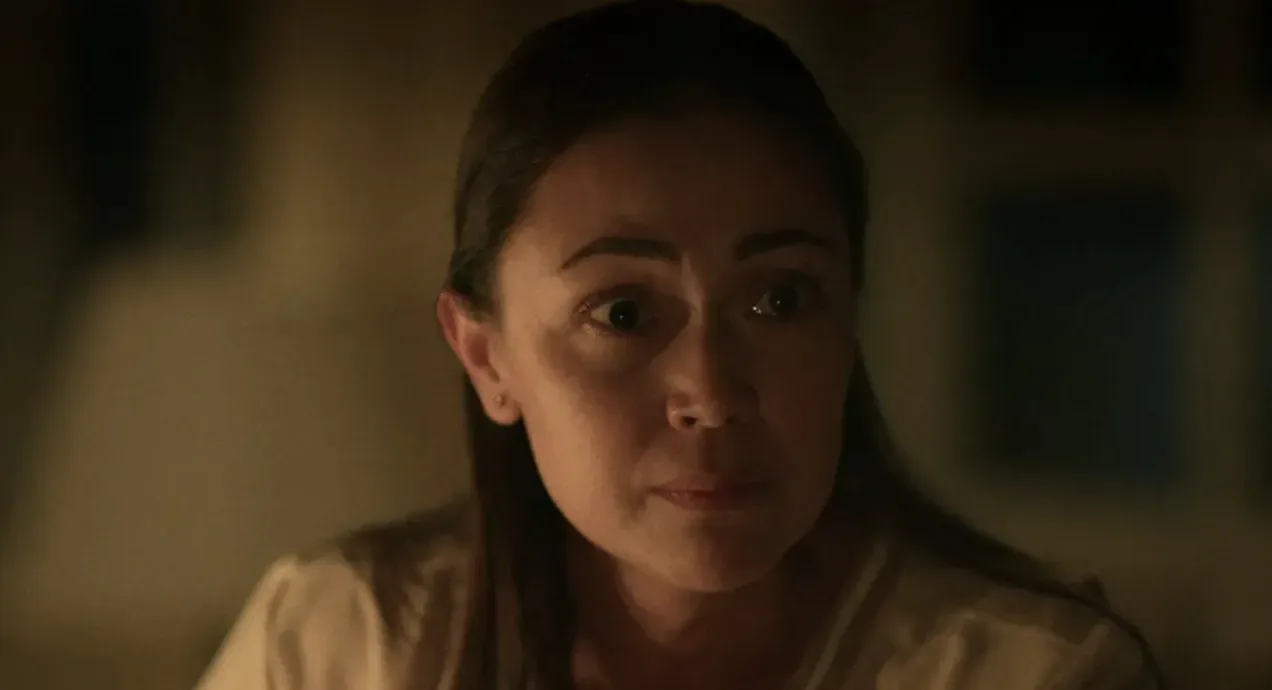
Jo spends most of This, That and Everything in Between convinced that Paz’s terminal illness does not give her the right to rewrite 27 years of abandonment. By the final act, that anger has not magically disappeared, and the film never gives Paz an easy absolution simply because she is dying. Jo does, however, choose to reconcile with her mother before it is too late. After Matti reveals that Paz continued thinking about Jo throughout her years in America, Jo returns to San Rafael, embraces Paz and stays for her final days. It is better understood as acceptance and compassion than complete forgiveness. Jo acknowledges her mother’s love without pretending that Paz’s choices did not hurt her.
Netflix’s Filipino drama, also titled Ganito, Ganyan, Ganoon, stars Jodi Sta. Maria as Jo and Agot Isidro as Paz and centers on their reunion after nearly three decades apart. Netflix describes Jo as a TV writer whose carefully reconstructed life is disrupted when her estranged mother suddenly returns carrying secrets of her own.
Spoiler Alert
Why Does Jo Walk Away From Paz?
Jo leaves San Rafael because Paz’s explanation for abandoning her sounds, to Jo, like another attempt to justify an unforgivable decision. Their most damaging confrontation begins when Paz talks about how she wants the family to remember her after death and expresses a desire to be remembered as a good mother. Jo cannot accept that description. From her perspective, Paz forfeited the right to define their relationship when she left and remained absent for 27 years.
Paz insists that the past was more complicated than Jo believes. She says motherhood affected her career, that she struggled with the responsibilities placed on her and that leaving for America was partly an attempt to escape circumstances she could no longer handle. Jo hears those explanations as excuses rather than accountability, especially when Paz attacks Jo’s own choices and criticizes her relationship with Migs. Their fight therefore becomes about much more than one woman’s disappearance. It is about who gets to decide what that disappearance meant.
Jo ultimately calls Paz a loser and returns to Manila. At that point, reconciliation seems unlikely because neither woman has managed to give the other what she needs. Paz wants her daughter to recognize that she loved her despite failing her, while Jo wants Paz to acknowledge that love does not cancel the consequences of leaving.
What Does Matti Tell Jo About Their Mother?
Matti changes Jo’s understanding of Paz by revealing that leaving the Philippines did not mean Paz emotionally forgot her daughter. When he unexpectedly arrives in Manila to return Jo’s charger, the half-siblings finally have a conversation without Paz controlling the story. Matti admits that their mother can be difficult, temperamental and deeply flawed, but he also explains that Paz regularly remembered Jo while they were living in the United States.
That information matters because Jo has spent years constructing a fairly understandable explanation for her childhood: Paz left because she wanted another life more than she wanted her daughter. Matti cannot erase the abandonment, but his memories complicate that conclusion. He recalls Paz becoming quiet and emotional when Jo came to mind, giving Jo evidence that her mother carried the separation with her rather than simply replacing one family with another.
Matti is particularly persuasive because he does not pretend Paz is a wonderful mother. He loves her while openly recognizing her faults, offering Jo a way of thinking about Paz that does not require choosing between hatred and idealization. Jo can believe that her mother failed her and still accept that Paz loved her. That distinction becomes the emotional key to the ending.
Why Does Jo Get on the Bus Back to San Rafael?
Jo boards Matti’s bus because she finally realizes that waiting for perfect closure could leave her with no relationship with Paz at all. After dropping her brother off, Jo initially intends to remain in Manila and continue with her life. Watching Matti leave changes her mind, and she impulsively gets on the same bus back to San Rafael.
Her return does not mean Paz has won their argument. Jo does not suddenly decide that her mother was justified in leaving, nor does the film ask her to apologize for being angry. What changes is Jo’s willingness to spend Paz’s remaining time trying to understand her rather than insisting that understanding must begin with a satisfactory explanation for everything that happened.
When Jo reaches Paz’s bedroom, she embraces her instead of restarting their argument. It is one of the film’s more restrained choices because the reconciliation does not depend on a grand speech in which every grievance is resolved. Their remaining relationship is imperfect, but Jo has chosen presence over another separation.
Does Jo Completely Forgive Paz?
The film never explicitly confirms complete forgiveness, and describing the ending that way would make Jo and Paz’s relationship simpler than the movie allows it to be. Jo’s return demonstrates empathy, affection and a willingness to reconnect, but nothing indicates that the pain caused by her mother’s absence has suddenly disappeared. The difference is that Jo no longer needs to erase that pain before allowing herself to love Paz.
That is also why Paz is not transformed into a misunderstood saint in the final act. She remains blunt and difficult, just as Jo remains wounded and capable of being equally cutting. The reconciliation works because both can be true at the same time: Paz made damaging choices, and Paz loved her daughter. Jo accepting the second fact does not require her to deny the first.
The film’s wider treatment of family supports that reading. Publicity for Ganito, Ganyan, Ganoon presented the story specifically around dysfunctional Filipino family relationships rather than an uncomplicated absent-parent redemption story, while Agot Isidro described Paz in promotional discussion as a difficult and complex figure.
Does Paz Die at the End?
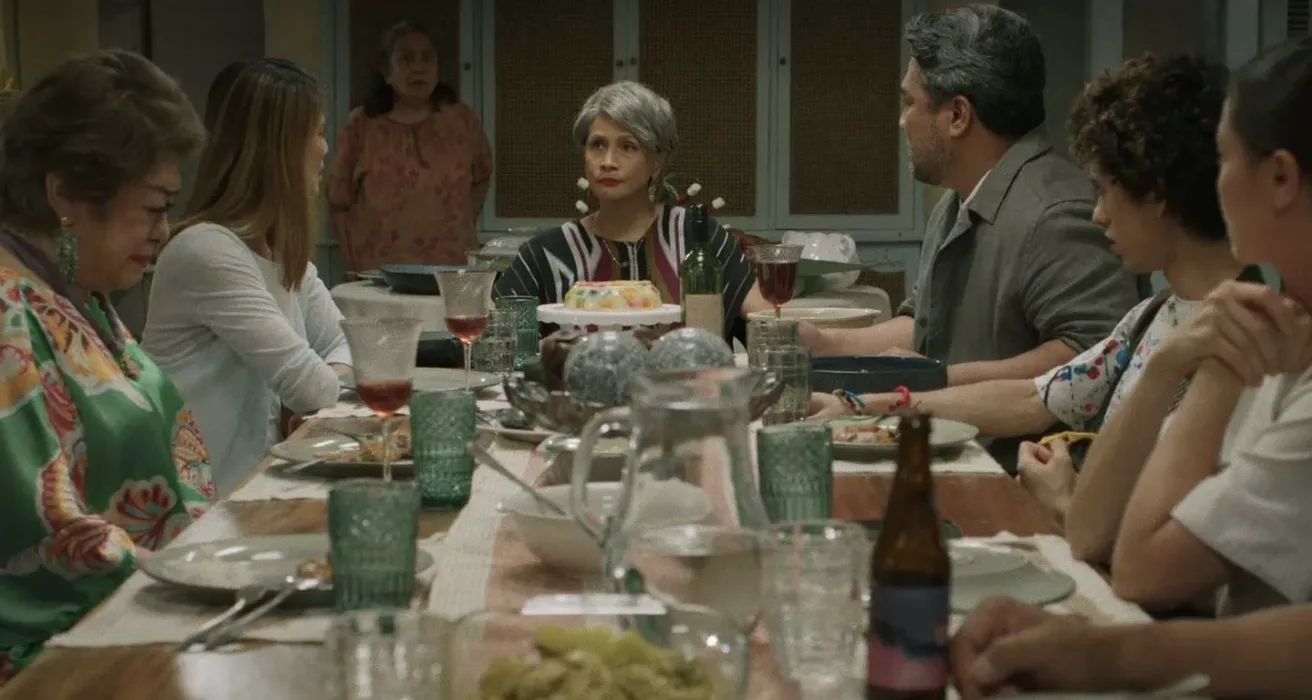
Yes. Paz dies shortly after Jo returns, although her death itself happens offscreen. The story moves forward to the family preparing to scatter her ashes at sea, confirming that the terminal cancer diagnosis was accurate and that Jo’s return gave mother and daughter only a limited amount of additional time together.
The decision not to stage Paz’s death as the emotional climax keeps the emphasis on what happened before it. Jo cannot change the number of years they lost, but she avoids allowing their final encounter to be the vicious argument that sent her back to Manila. After Paz’s death, Jo, Rene, Des and Matti gather as a family, hang a portrait and approach the scattering of her ashes as an act of remembrance rather than unresolved hostility.
Jo eventually floats calmly in the water and looks upward with a smile. The image does not imply that grief or childhood wounds have vanished. Instead, Jo appears capable of carrying her memories of Paz without allowing them to dictate everything that comes afterward.
Does Jo Still Go to Brooklyn?
The ending strongly indicates that Jo intends to pursue the Brooklyn writing fellowship rather than abandoning her career because of Paz’s death. Earlier, she hesitates because leaving while her mother is dying feels impossible, even though the fellowship represents the professional opportunity she has been working toward. After returning to Manila during their argument, Jo finally submits her completed script and accepts the invitation to travel to Brooklyn.
Paz’s death does not reverse that decision onscreen. If anything, Jo’s experience with her mother makes pursuing the opportunity more meaningful. Paz’s life is partly defined by frustration over the ambitions she believed motherhood forced her to surrender, while Jo has spent years trying to construct a life she can control. Choosing Brooklyn allows Jo to avoid repeating that pattern of sacrificing her own future and later resenting the people around her for it.
That makes the answer to the film’s central mother-daughter question deliberately imperfect. Jo does not forgive Paz by deciding that everything her mother did was acceptable. She forgives enough to return, enough to hold her mother while she still can, and enough to remember Paz as something more complicated than the woman who abandoned her.
Paz dies without repairing 27 lost years because nobody could repair them. What she and Jo manage instead is smaller but more believable: they stop allowing those years to be the only thing that defines their relationship. Jo can mourn her mother, keep the anger that still belongs to her and continue toward Brooklyn anyway. That is the reconciliation the ending actually earns.