The Reluctant Royal: What Really Happened Between the Duke and Dottie That Led to Their Separation?
Three acts of interference kept William and Dottie apart for nearly four decades: a forged annulment, intercepted letters, and a suppressed pregnancy.
Spoiler note: This article discusses key plot revelations from The Reluctant Royal (2025), including the outcome of Johnny’s succession claim and the full backstory of William and Dottie’s marriage.
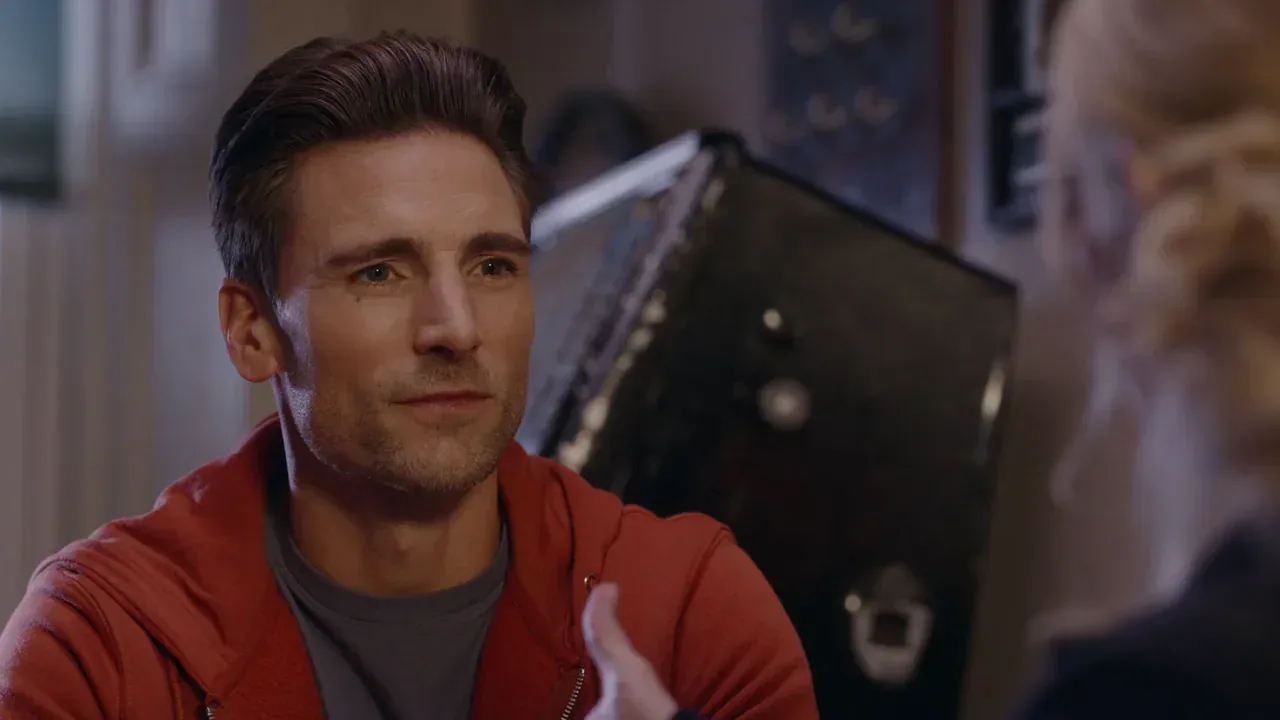
The separation between William, Duke of Glasswick (Simon Coury), and Dottie Moretti (Megan Elle Day) traces to three layers of interference that stacked on top of each other. William’s father pressured him back to England and arranged an annulment of their three-week marriage. He then intercepted and concealed every letter Dottie wrote, including the one in which she told William she was pregnant. The annulment paperwork itself carries a forged signature, something William had no reason to question because he believed he had consented to the annulment himself. Those three facts together explain why two people who tried to stay in contact spent nearly four decades apart, and why Johnny Payne (Andrew W. Walker) grew up in Philadelphia with no knowledge of his father.
How the Marriage Happened and How It Ended
William married Dottie, a nightclub singer, after three weeks together, and his family began working to end the match almost immediately. As heir to the Dukedom of Glasswick, William was expected to return to England and fulfill his obligations, and his father made sure he did. The marriage was annulled, or so William and Dottie were both led to believe.
What neither of them knew was that the annulment paperwork was not genuine. The document exists, it bears what appears to be William’s signature, and it is dated before Johnny’s birth. That timing would mean William legally ended the marriage before Dottie became pregnant, which would sever any hereditary claim Johnny could later assert to the dukedom. The signature is a forgery.
The Letters William Never Read
Both William and Dottie attempted to maintain contact after the separation, but none of their letters got through. The film establishes that William’s father collected and withheld every piece of correspondence Dottie sent. The letter he had the most reason to suppress was the one in which she told William she was pregnant. William never received it.
Dottie raised Johnny alone in Philadelphia. Per the film, Johnny grew up refusing to let his mother discuss the subject, knowing only the basic shape of what had happened: a man who left before he was born and never made contact. Per the film, his first name came from a Johnny Cash song playing on the radio when Dottie brought him home from the hospital.
How Prudence Thorp Finds the Thread
The present-day events begin when Prudence Thorp (Emilie de Ravin), the Duke’s longtime advisor, goes through William’s personal papers and finds a marriage certificate. William had legally married an American woman decades earlier. Prudence traces the certificate to Dottie Moretti, learns that Dottie has a son, and recognizes the succession implications. With William in poor health and the estate under financial pressure, identifying the rightful heir has become urgent.
Prudence travels to Philadelphia. She first encounters Johnny at a local bar where he performs karaoke, a small inheritance from his mother’s musical life. He has no interest in the dukedom and considerably less in meeting a man he holds responsible for abandoning him. After talking with Dottie about the brief marriage and how William had chosen duty over staying, the film presents Johnny as going for a single stated purpose: to speak directly to his father and leave.
The Forgery and How It Unravels
The forgery unravels because of a physical detail: William is left-handed, but the annulment papers were signed by someone right-handed. The legal threat that brings this into focus comes from Allistair Covington-Breed (Fiach Kunz), a cousin and the only other potential heir. Allistair produces the annulment paperwork, pointing out that it predates Johnny’s birth. If the annulment is valid, the marriage was dissolved before the pregnancy, and Johnny has no legitimate claim to succeed his father.
Prudence examines the documents and identifies the handwriting inconsistency. The Duke cannot have written his own name the way it appears on those papers. Her argument holds, and the legal case Allistair built on that paperwork collapses.
The film does not name the person who forged the signature. The evidence points toward William’s father, who had both the access and the established pattern of suppressing the marriage, but the film frames this as a conclusion the characters reach rather than a fact the story confirms outright.
What the Duke’s Account Changes
Once William tells Johnny what he knew and what he did not know, Johnny’s understanding of his father shifts from straightforward abandonment to something considerably more complicated. He had grown up with the version in which William left and never responded. William’s account establishes that he believed he had consented to the annulment and had no idea his correspondence was being intercepted. The film frames the father-son relationship that takes shape at the estate (including a joint restoration of a vintage Triumph GT-6) around this distinction: William was a participant in a system of suppression he did not recognize, not a man who simply chose to walk away.
The Reluctant Royal was written by Neal Dobrofsky and Tippi Dobrofsky from a story by Samantha Herman and directed by Kevin Fair. It was shot in and around Dublin, Ireland, in September 2024, with Muse Entertainment Enterprises and Treehouse Media producing for Hallmark Media. It premiered March 8, 2025, on Hallmark Channel as the second of three linked Royal films the network aired that month. Johnny’s story connects to those of his royal cousins across the two companion films.
The element most summaries leave out is the physical proof behind the forgery. The annulment does not fall apart because someone confesses or because the recovered letters directly contradict it. It falls apart because William’s handwriting, specifically which hand he uses, does not match the document that supposedly bears his name. That is a verifiable physical fact rather than a character’s assertion.