The Cleaner (2025): Why does Noah betray Marcus, and what does this reveal about his true motives?
Noah shoots Marcus Blake when he refuses to abandon the peaceful strategy, revealing anti-humanist motives that predate his Earth Revolution membership.
Spoiler warning: this article discusses specific plot turns in Cleaner (2025), including how the central conflict resolves.
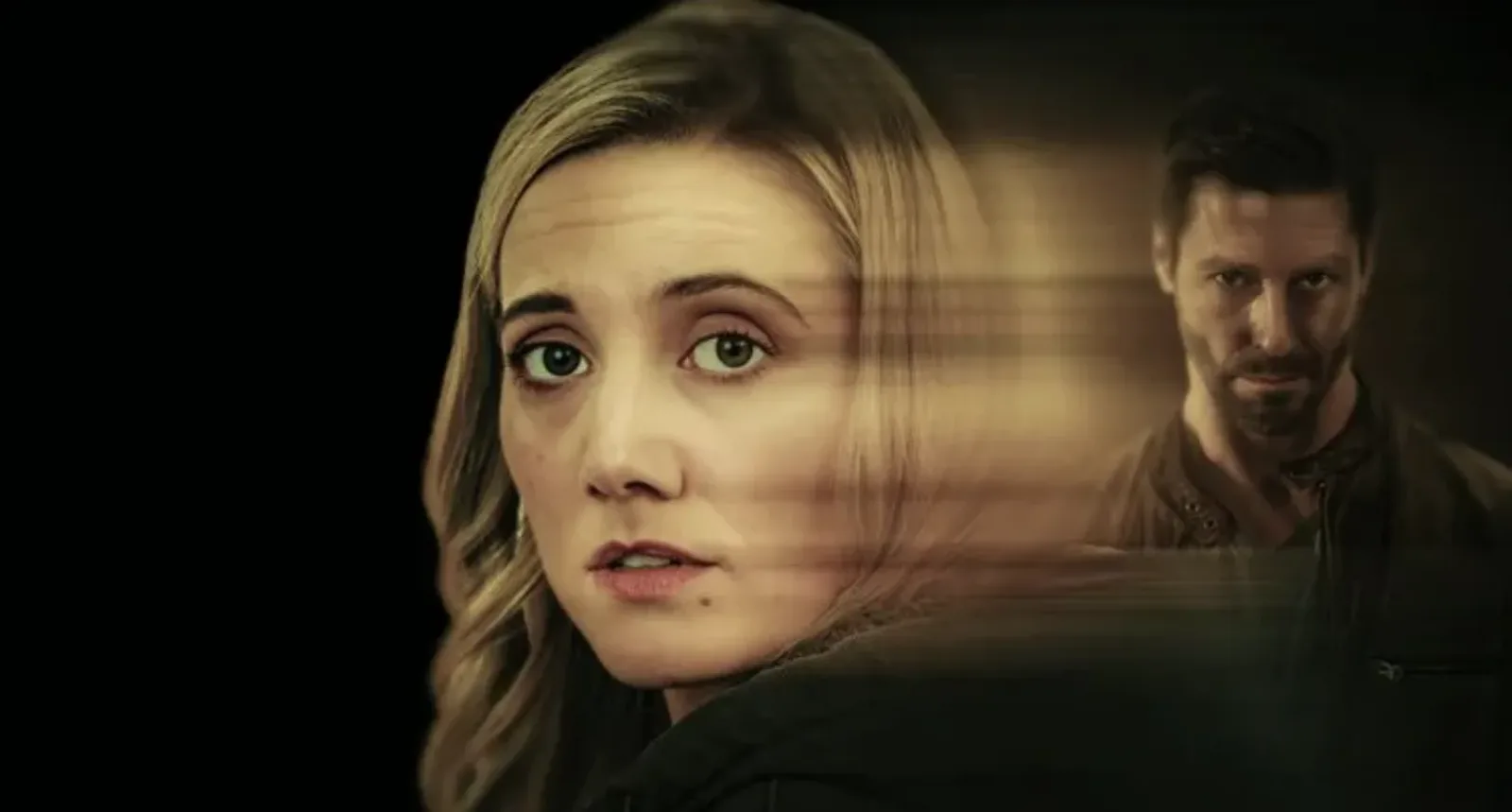
Noah Santos (Taz Skylar) shoots Marcus Blake (Clive Owen) when Marcus refuses to abandon his non-violent strategy for exposing corporate wrongdoing. The betrayal reveals that Noah was never committed to Earth Revolution’s stated aim of forcing accountability. He had been hiding a far more extreme anti-humanist ideology inside the group, waiting for a moment when Marcus could be overridden. His goal was not exposure. It was the elimination of human life itself.
Understanding that distinction is essential to reading the rest of the film correctly.
Marcus Blake and the plan he thought he was running
Marcus Blake is introduced as the architect of Earth Revolution’s operation against Agnian Energy, a corporation accused of illegal dumping, ecosystem destruction, and the silencing of activist Elena Lanza before she could testify in court. His plan is to seize the company’s annual shareholder gala at One Canada Square in Canary Wharf, hold roughly 300 hostages, and force executives to record confessions on camera. He wants public exposure, not violence.
Cracks appear almost immediately. When Agnian CEO Geoffrey Milton (Rufus Jones) attempts to negotiate with the group, Noah shoots him dead, defying Marcus’s direct order to hold hostages rather than execute them. It is the first clear signal that Noah is operating on a different set of objectives inside the same operation.
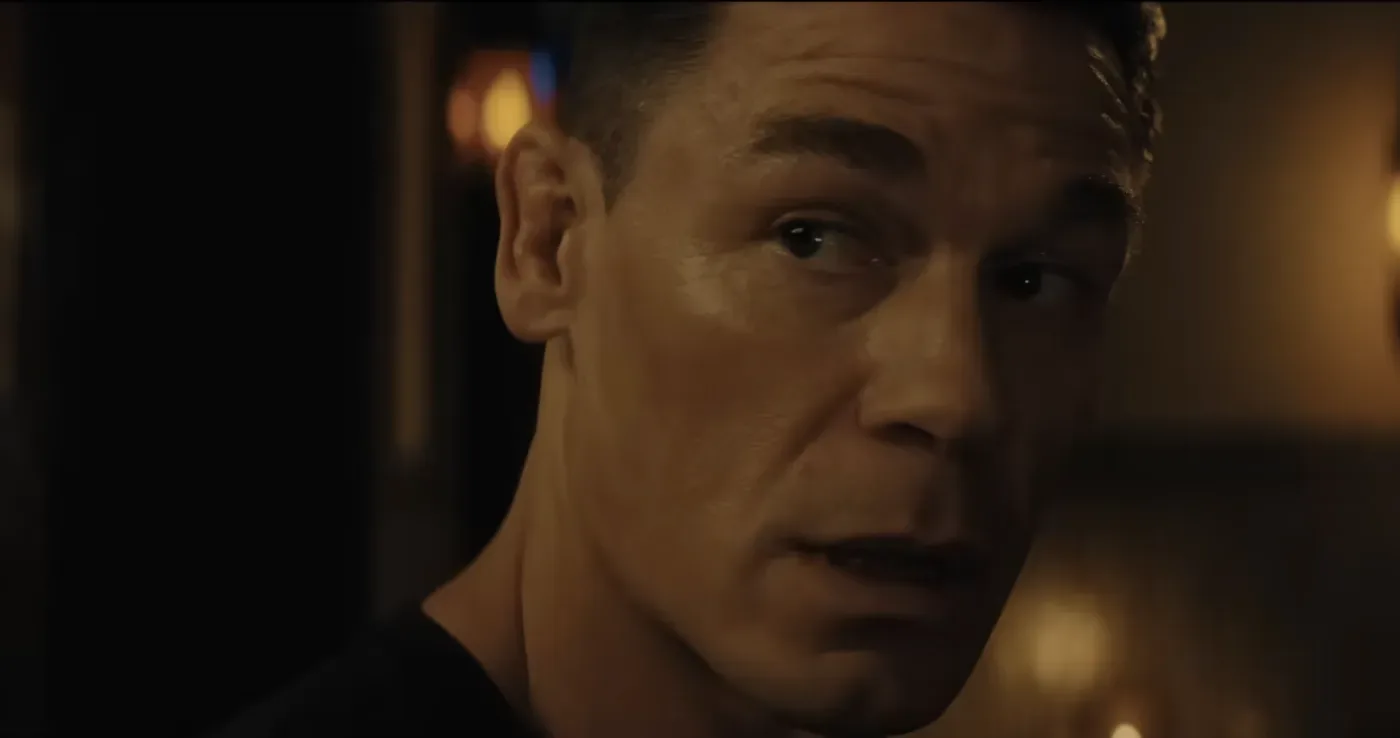
When Marcus tries to reassert authority after that killing, Noah turns on him, shooting Marcus along with the loyalists who sided with Blake. He then rigs every remaining hostage with explosives wired to a dead man’s switch tied to his own heartbeat.
Some viewer summaries describe Noah pushing Marcus from the building. That is not what the film shows: Noah shoots Marcus.
Who Noah Santos is before he enters the building
The film eventually reveals Noah previously used a different name, Lucas Vander, and that his involvement with Earth Revolution was not the starting point of his radicalization. His worldview, as reconstructed from an old online account that Joey’s brother Michael discovers during the crisis, holds that humans are the core problem, not merely the corporations causing environmental damage.
Director Martin Campbell described Noah’s posture after seizing control in an interview with The Direct: “He’s become the Elon Musk of Trump… he can fulfill the crazy anti-humanist agenda.” Campbell added that real anti-humanist groups exist and that writer Simon Uttley drew on that deliberately.
Taz Skylar, speaking to Outtake Magazine, described the character as someone whose “soul died by a thousand cuts,” driven by accumulated failure rather than a single breaking point. Skylar’s stated goal was comprehension rather than sympathy: “I never try to make people like a character. I care more that they understand him.”
The Elena detail and what it says about the moment Noah made his choice
Skylar revealed in his interview with The Direct that two physical details on Noah’s body encode a personal history the film largely leaves offscreen: a tattoo on his finger and a necklace bearing the letter “E.” He said: “it was the loss of Elena that kind of pushed him past the point of no return in order to take the action that he does with Marcus.”
The film names an activist called Elena Lanza among Agnian Energy’s victims, a woman the company had silenced before she could testify.
Skylar also noted that killing Marcus was not necessarily Noah’s plan from the outset: “I don’t think he fully went in, planning to come out without Marcus.” He described the moment as analogous to “Simba killing Mufasa,” a point of no return once a visceral choice is made. Martin Campbell cleared the set for that scene; Skylar said his goal was to “surprise everybody in the room at every turn.”
How Joey Locke dismantles Noah’s plan
Joey dismantles Noah’s dead man’s switch by tearing it from his wrist, strapping it to herself to neutralize the detonation risk, and forcing him through a gap in the damaged facade. He falls to his death.
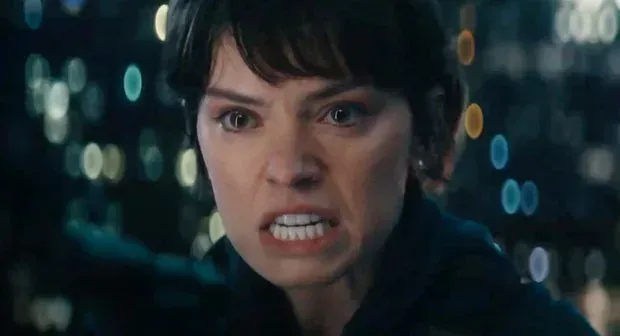
Joey Locke (Daisy Ridley) is an ex-soldier who had taken a window-cleaning job on the building’s exterior when Earth Revolution seized the interior. She makes an SOS call that the group intercepts, converting her from an accidental witness into the principal threat to Noah’s control. The exterior of One Canada Square provided the film’s visual setting; interior scenes were recreated at Winnersh Film Studios in Berkshire.
Michael, Joey’s autistic brother (Matthew Tuck), had already secured a USB drive containing Noah’s old manifesto video and the executives’ coerced confessions. He and Joey release the material publicly under the name “Earth Revolution Leaks,” completing what Marcus originally planned without the mass casualties Noah had worked toward.
What the Marcus-Noah split is actually about
What the Marcus-Noah dynamic establishes is a specific claim about how radicalization works: movements organized around real grievances can provide cover for people whose private aims have nothing to do with the stated cause. Noah’s anti-humanism was formed before he joined Earth Revolution. Marcus’s operation gave it a vehicle.
Our reading is that Marcus functions less as a fully drawn person than as a structural anchor: the film needs his idealism in place so Noah’s dismantling of it means something. His death shifts the story from a corporate-exposure hostage drama into a one-against-many survival problem. Clive Owen appears for roughly 20 minutes of screen time despite prominent billing, a scale that reinforces Marcus’s structural rather than developmental role.
Skylar put it directly in his interview with The Direct: “if enough people go unheard for enough time, someone is capable of doing something very extreme about it.” That framing positions Noah not as a product of environmentalism but as a person who arrived at an extreme private conclusion through accumulated loss, then found an existing structure to carry it forward. Our reading is that the film is not arguing activists produce terrorists, but that a sufficiently hollow person can inhabit any cause and wait for the right moment to steer it.