Taylor Swift’s Patient Zero Ending Explained: Why Her Ghost Warns Dakota Johnson to Run
Taylor Swift turns “Patient Zero” into something much darker than the song initially suggests. Her self-directed music video, which premiered during the 2026 MTV Video Music Awards, stars Dakota Johnson as a woman whose increasingly troubled relationship with Colin Farrell’s character begins to resemble another relationship that came before hers. Swift appears beside her throughout…
Taylor Swift turns “Patient Zero” into something much darker than the song initially suggests. Her self-directed music video, which premiered during the 2026 MTV Video Music Awards, stars Dakota Johnson as a woman whose increasingly troubled relationship with Colin Farrell’s character begins to resemble another relationship that came before hers. Swift appears beside her throughout the video, sometimes comforting her and sometimes simply watching as familiar patterns repeat.
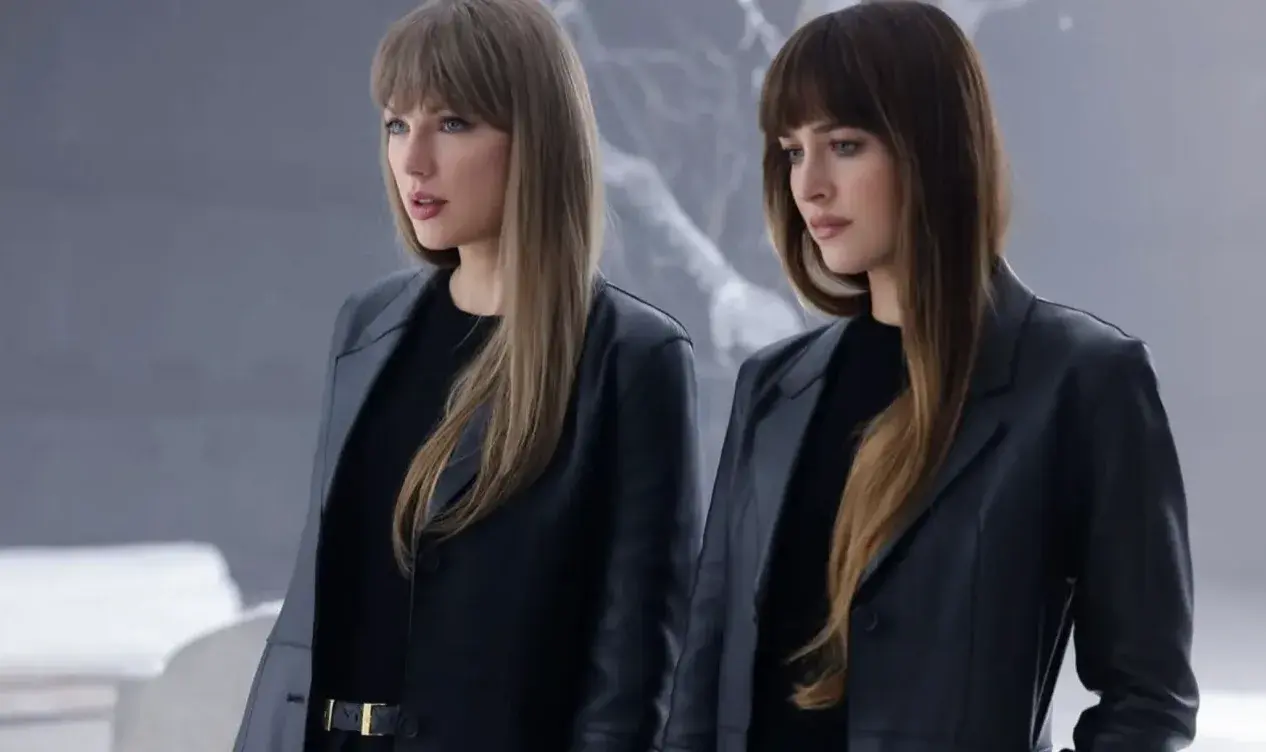
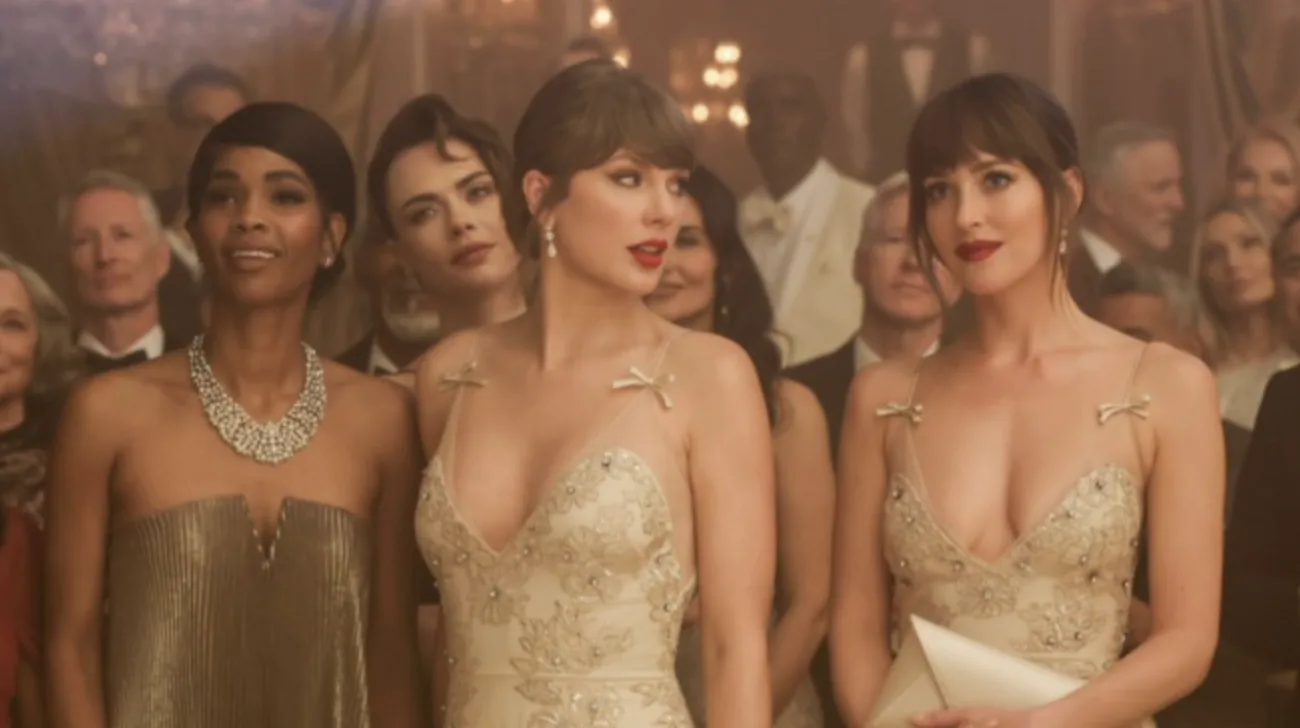
For much of the video, Swift and Johnson look less like two separate characters than two versions of the same woman. Their clothes mirror each other, their hair is styled similarly, and even their movements are frequently matched. What initially looks like an elaborate visual metaphor eventually becomes part of the video’s central reveal: Swift’s character has already lived through this relationship, and she is no longer alive.
The final minutes reframe almost everything that came before them, from the graveyard opening to Johnson’s strange physical reaction at the formal event. Most importantly, they explain why Swift has been following Johnson in the first place.
Patient Zero Ending Explained: Taylor Swift Is Colin Farrell’s Late Wife
The biggest reveal in “Patient Zero” is that Swift is not simply portraying Farrell’s former partner through flashbacks. Her character was his wife, and the Swift who has been appearing alongside Dakota Johnson throughout the present-day story is her ghost.
The truth comes together through the video’s final images. A newspaper reports that an heiress died following a mysterious illness while her husband inherited her fortune. The headline reads, “Heiress Dies of Mystery Illness, Husband Inherits Billions.” Johnson then visits the grave that has been present since the opening of the video, where the headstone identifies Swift’s character as a “Beloved Wife and Daughter Gone Too Soon.”
Those pieces transform Farrell’s character from an unpleasant partner into the villain of Swift’s fictional psychological thriller. The video’s story indicates that he was responsible for his first wife’s fate and benefited financially afterward. Johnson is now moving through a disturbingly similar relationship, which explains why Swift’s ghost remains close to her.
Also Read: Who Is Louis Russell on Outside? Where Is He Now? Age, Family and Career
Swift herself described Farrell’s role as a villain when discussing the production after the premiere. She also said the video allowed her to explore gothic ghost stories, true crime and psychological thrillers, making clear that the heightened storyline is intentionally operating like a miniature genre film rather than a literal dramatization of the song.
Why Taylor Swift’s Ghost Keeps Following Dakota Johnson
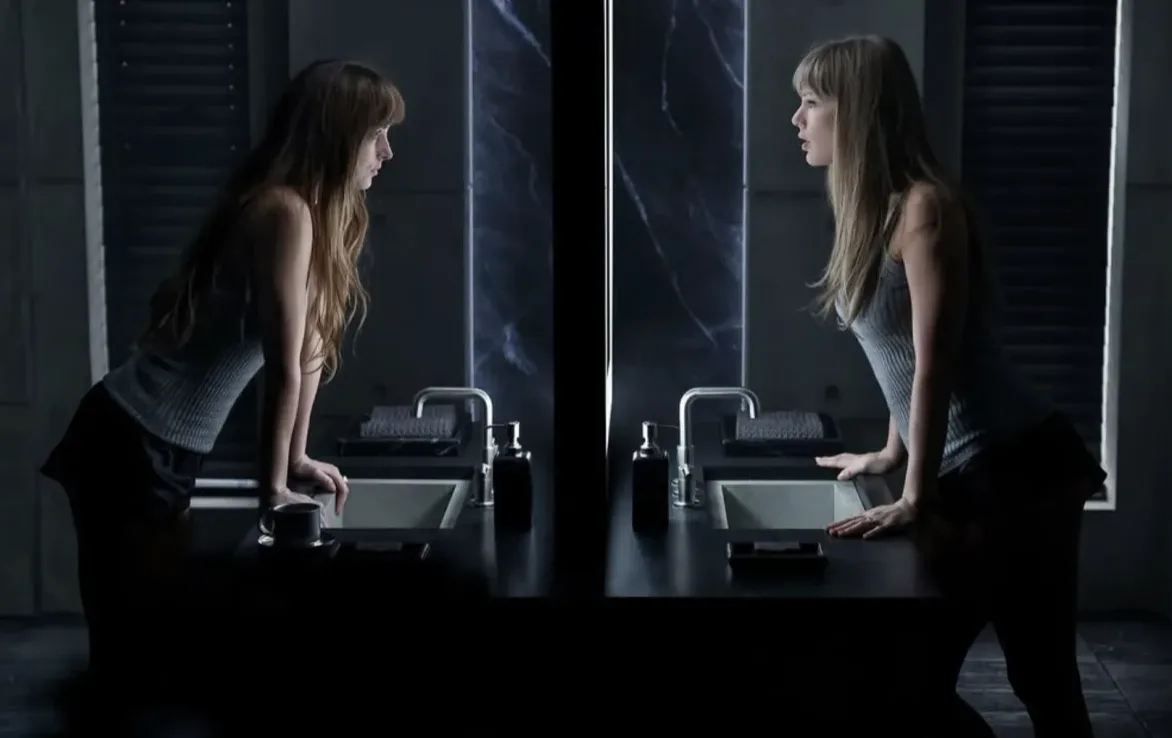
The ghost is not haunting Johnson in the traditional sense. She is trying to protect her. That distinction is essential to the video’s meaning. “Patient Zero” is built around one woman recognizing what another woman is going through because she has experienced the same patterns herself. The song’s narrator is not competing with the new girlfriend or enjoying the collapse of her ex’s next relationship. She has already recovered enough to recognize the warning signs.
Swift takes that idea and makes it literal. Her character has become the woman who came before, permanently trapped on the other side of the story while Johnson unknowingly retraces her steps. The supernatural element lets Swift appear in rooms and moments where Johnson cannot fully understand her presence yet, turning experience itself into a ghost that keeps trying to intervene.
That also explains why the two women are styled so similarly. People noted the matching trench coats, dark clothing, similar hair and mirrored compositions used throughout the video. At one point, the pair even form a visual yin-and-yang pattern in the water. They are not being presented as rivals. They are being presented as parallels.
Johnson is effectively becoming the next version of Swift’s character, which is exactly what the ghost is trying to prevent.
Is Colin Farrell’s Character Doing the Same Thing to Dakota Johnson?
The video strongly suggests that Johnson is approaching the same danger that surrounded Swift’s character.
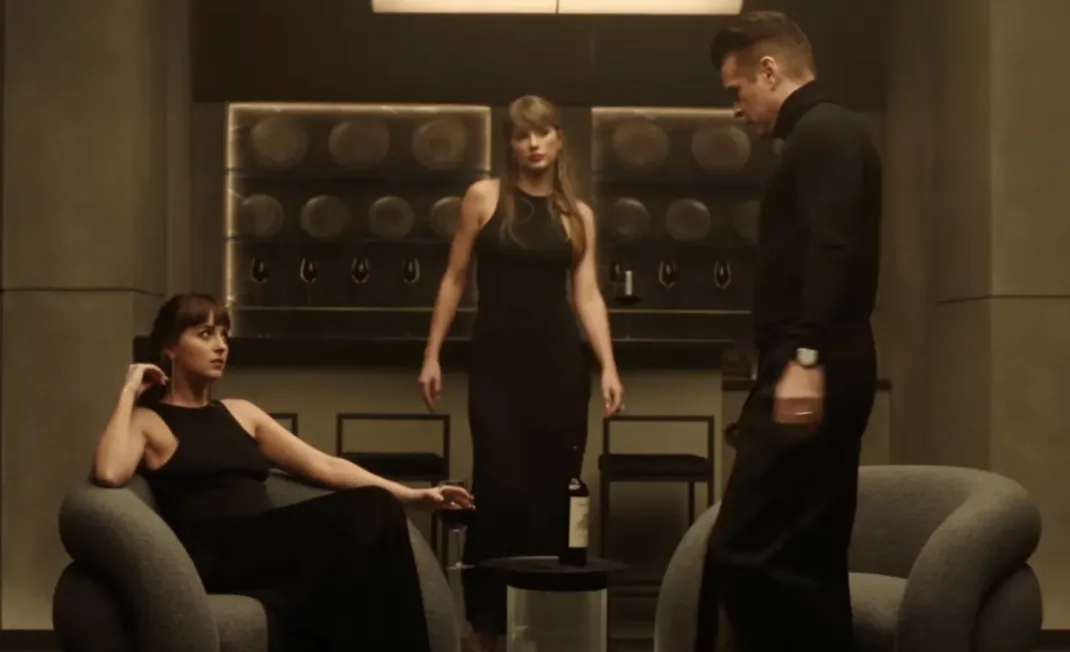
At the formal event, Johnson becomes unsteady and appears intoxicated. Farrell’s character later challenges her account of how much she drank and accuses her of embarrassing him. The sequence becomes especially suspicious once the ending reveals the mysterious illness connected to his first wife’s fate.
Earlier scenes involving Johnson’s drinks consequently take on a second meaning. What can initially look like strange or disruptive behavior from Swift’s ghost becomes an attempt to interfere with what is happening around Johnson.
This is one place where the ending rewards a second viewing. Swift does not reveal the full thriller plot immediately. Instead, she lets viewers experience the same uncertainty Johnson does and only later provides the information needed to reinterpret those moments.
The newspaper is particularly important because it does not present Swift’s fictional character’s fate as an openly solved crime. It calls it a mysterious illness and emphasizes the fortune inherited by her husband. Within the language of the video’s psychological thriller, the implication is unmistakable even though the fictional newspaper itself stops short of spelling everything out.
Why Does Taylor Swift Write “Run”?
The most direct warning comes near the end when “Run” appears in red for Johnson to see.
Despite some descriptions of the scene calling it blood, the sequence is more accurately understood as a message formed through spilled red wine. That distinction also connects it back to Johnson’s drinks and the video’s wider suggestion that something is wrong with what she is consuming. Contemporary coverage of the video similarly identifies the warning as being written through spilled wine.
“Run” is intentionally simpler than almost every other symbol in the video. Swift spends much of “Patient Zero” working through doubles, graves, reflections, formal dinners and gothic imagery, but the ghost’s final message does not require interpretation. She knows where Johnson’s story could lead because she has already reached that ending herself.
It is also the point where the song’s metaphor becomes the video’s plot. Being “patient zero” means being the first person to recognize the damaging pattern associated with this man. The narrator survived that relationship emotionally in the song, while the video raises those stakes by turning its first woman into an actual ghost.
The warning therefore comes from experience rather than jealousy. Swift’s character is effectively telling Johnson that she does not have to become patient number two.
What the Graveyard Scene Really Means
The graveyard appears at the beginning before viewers have enough information to understand why Swift and Johnson are there together. Once the story returns to the grave at the end, the geography of the entire video suddenly makes sense.
Johnson has been standing beside the grave of the woman whose relationship she is repeating.
That is why opening and closing the story in the cemetery works better than simply saving the grave for a final surprise. Swift gives away the answer visually but withholds its context. The audience sees a dead woman’s grave immediately without realizing that one of the two women standing beside it is the person buried there.
The dates on the fictional headstone, 1986-2022, have generated their own fan theories. They should not, however, be treated as proof that Swift is literally playing herself. Swift was born in 1989, while the character’s dates make her 36 at the time of her fictional death, the same age Swift is now. Harper’s Bazaar also noted that 2022 was the year Swift staged another fictional funeral for herself in the “Anti-Hero” video, giving the date at least one possible connection to her existing visual work beyond theories about her personal relationships.
Why the Matching Outfits Matter
Swift later joked about spending the shoot “twinning” with Johnson, but within the finished video that similarity becomes one of the story’s most useful clues.
The women repeatedly occupy matching visual positions because they are occupying matching emotional ones. Johnson is moving through the honeymoon period, distrust, isolation and destabilization that Swift’s character already knows. Their resemblance makes the cycle visible before the plot explicitly explains it.
It also prevents the story from falling into the familiar framing of an ex-girlfriend versus a new girlfriend. Swift’s ghost does not resent Johnson for taking her former place. She recognizes Johnson because she once was Johnson.
Cara Delevingne’s brief appearance as another woman Farrell’s character notices at the event makes that idea even sharper. Swift described Delevingne’s role jokingly as the “lusty other woman,” but structurally she represents the possibility that the cycle can keep moving forward again.
The House Is Another Part of the Ending
The large, cold home in “Patient Zero” is not merely a stylish location. Swift specifically explained that the house was designed as a metaphor for “the coldness of a relationship that’s faded and atrophied.”
That makes the setting part of the storytelling. Johnson is surrounded by signs of wealth and elegance, but almost nothing inside the relationship feels warm. Farrell’s character can maintain the appearance of an enviable life while the environment around Johnson becomes increasingly isolating.
There are obvious echoes of gothic stories such as Daphne du Maurier’s Rebecca, in which a second wife enters a marriage still dominated by the memory of the first. Swift has previously discussed her affection for stories involving old houses, mysterious relationships, past deaths and the possibility of ghosts. People also noted the parallels between “Patient Zero” and Rebecca, although Swift has described her new video’s influences more broadly rather than naming that novel as its single direct source.
The difference is important. In “Patient Zero,” the dead first woman is not there to threaten the second. She is the person trying hardest to save her.
Does Dakota Johnson Escape at the End?
The video does not give Johnson a conventional final scene in which she packs a suitcase, confronts Farrell and announces that the relationship is over. Instead, Swift ends with recognition.
Johnson reaches Swift’s grave and leaves flowers there. By that point, the audience understands who the dead woman was and why she has been present throughout Johnson’s story. The grave visit suggests that Johnson has finally connected herself to what happened before her, although the video deliberately avoids spelling out every step of what happens afterward.
That restraint makes the ending more effective. The central victory is not a dramatic confrontation with Farrell’s character. It is Johnson finally seeing what Swift’s ghost has been trying to show her.
“Patient Zero” ultimately turns a song about women comparing experiences with the same man into a gothic warning passed from one woman to another. Swift’s character cannot rewrite her own fictional ending, but she can try to keep someone else from reaching it. That is why the ghost follows Johnson, why they look so similar, and why the video’s most complicated imagery eventually leads to its simplest message: run.