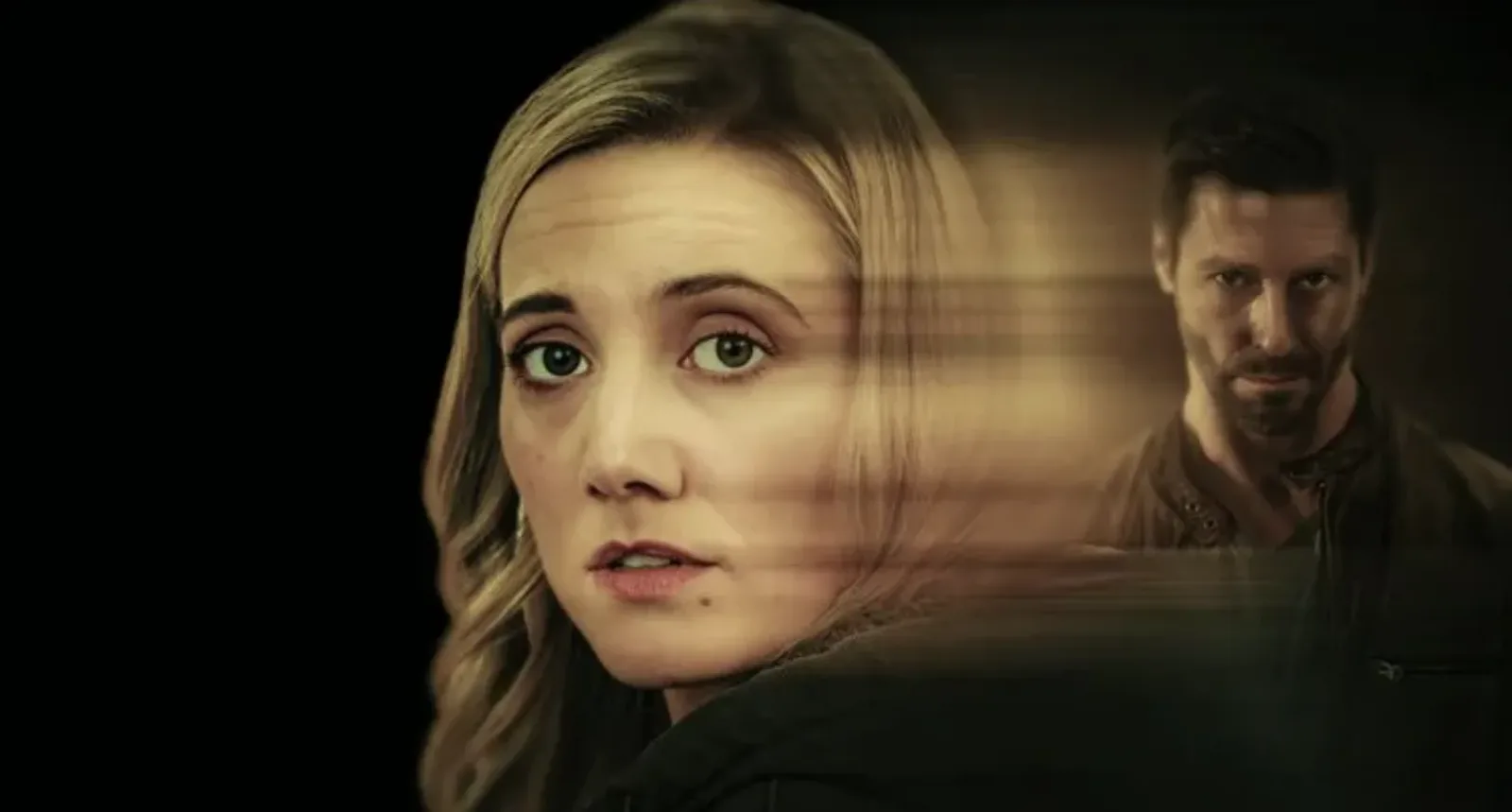
Sumala: Does Kumala die in the end, or is it Sumala who takes over her body?
Kumala's soul is gone. Sumala now controls her body permanently, thanks to a single anatomical fact: the sisters' hearts sit on opposite sides of the body.

Spoiler warning: This article discusses the complete ending of Sumala, including the fates of all major characters.
The answer is both. At the conclusion of Rizal Mantovani’s 2024 Indonesian horror film, Kumala’s soul is gone and her body is controlled entirely by the spirit of her dead twin sister, Sumala. Both roles are played by Makayla Rose Hilli. The possession becomes permanent because of a single anatomical fact: Sumala, being Kumala’s mirror twin, has her heart on the right side of her body. When their father Soedjiman (Darius Sinathrya) stabs Kumala on the left side of the chest with a blessed blade, he misses Sumala’s heart entirely. That failure seals the outcome.
What the Shaman’s Pact Actually Required
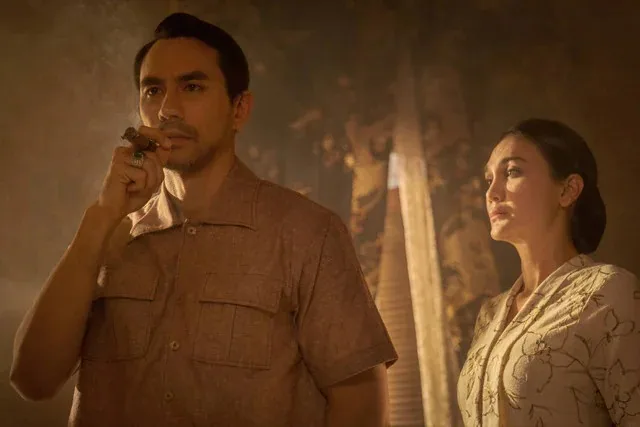
The shaman’s terms required both children to be raised for ten years, after which the Devil would collect the deformed twin as his own. Sulastri (Luna Maya) struck this deal, not Soedjiman. Unable to conceive, she approached a female shaman who practiced black magic and agreed to terms that would give her twins. Many summaries of the film misstate what was required: the shaman did not demand that one child be immediately sacrificed. Killing that child at birth was what broke the pact and triggered every event that follows.
The story is set in Semarang Regency, Central Java, during the late 1940s. Soedjiman was a wealthy landowner under pressure from a competing uncle over inheritance of the family estate. His need for an heir drove Sulastri to the shaman in the first place. She gave birth to twin girls: one unresponsive, one visibly deformed. The surviving child was named Kumala. The deformed child was named Sumala.
Why Soedjiman Killed Sumala at Birth
Soedjiman killed the deformed newborn immediately, driven by shame and fear of social disgrace. He was not party to the pact and did not know its terms at the time. This act voided the agreement: by preventing the Devil from collecting his child at the agreed ten-year mark, Soedjiman gave the Devil cause to collect through other means.
The film then follows Kumala growing up mute and physically disabled, abused by Soedjiman and bullied by the village children around her. Mbok Sum (Ivonne Dahler), her caretaker aunt, is the only adult who treats her with consistent care. Soedjiman’s cruelty toward Kumala runs throughout the film and matters to the ending. The film’s imagery suggests that when Sumala kills him, she echoes his own methods of controlling Kumala in how she displays his body.
How Sumala Returns and What She Wants
Sumala arrives not as a haunting specter but as a companion. She appears to Kumala as a girl who looks exactly like her, identifies herself as her twin, and initially functions as protection, involving herself when bullies target Kumala. The early relationship between the two makes the possession easy to overlook.
As Kumala’s tenth birthday nears, the Devil’s deadline arrives and Sumala’s presence intensifies. Her goal is permanent occupation of the body she was denied at birth, not simply revenge for specific individuals. The film marks the shift through escalating violence: Sukir (Denino Basrial), Soedjiman’s right-hand man, is killed. Sulastri is attacked in the family home. The killings track people who either harmed Kumala directly or failed to protect her.
The Heart Twist and Why It Works
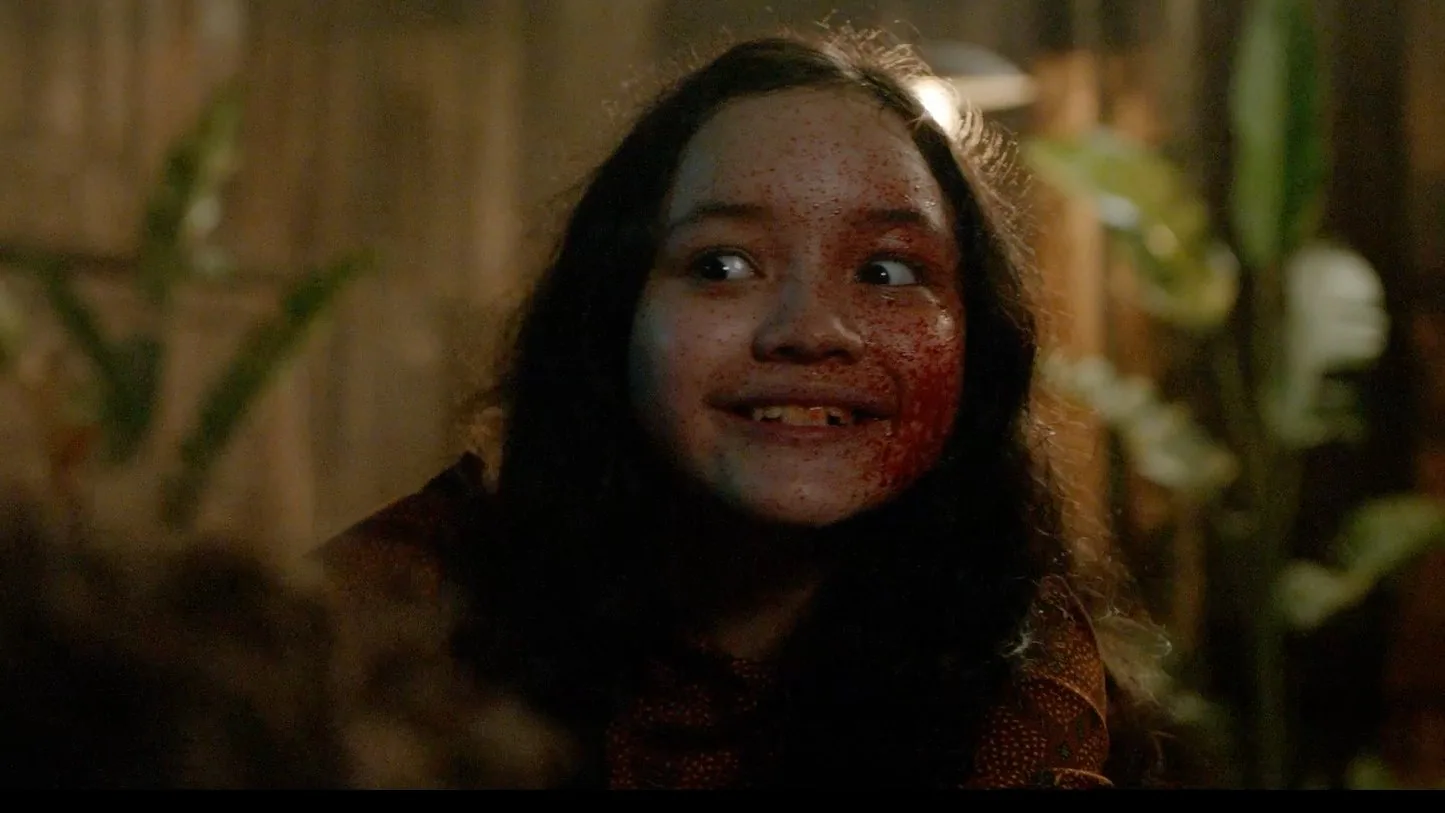
Because Sumala and Kumala were mirror twins, opposite in every physical characteristic, their hearts sit on opposite sides of the body. Kumala’s heart is on the left. Sumala’s is on the right. Once Sumala takes over Kumala’s body, the governing anatomy shifts accordingly.
Soedjiman, seeking a way to stop the possession, consults Mr. Kusno (Budi Gunawan), a shaman. Kusno presents two options: perform a ritual to expel Sumala’s spirit, or use a blessed blade to kill Kumala before midnight, which would end the possession permanently. By the time Soedjiman returns home, events have moved beyond the ritual option. He confronts Kumala in the cornfields, renders her unconscious, and cannot use the blade on his own daughter. When Sumala revives and attacks him, he finally drives the blade into the left side of her chest: exactly where a heart would be, in any body he had ever known. But Sumala’s heart, in the possessed body, is on the right. The stab misses. Sumala is unharmed.
What Happens to Every Character
Sumala kills Soedjiman in the cornfields. The film’s final sequence shows his body disemboweled and displayed on a pole.
Mr. Kusno is found dead in his chamber the following morning. The film’s sequence of events points to Sumala having killed him overnight, eliminating the one person still capable of performing an expulsion ritual.
Sulastri does not survive. She is attacked before Soedjiman can reach her.
Mbok Sum, who took no part in Kumala’s mistreatment, returns for the funerals and finds Sumala gone. The film closes with a framing device that presents the story as a local legend from the Semarang region: the entity still roams the cornfields after dark, and children in the village are kept indoors at night. The curse is unbroken because no one capable of breaking it survived.
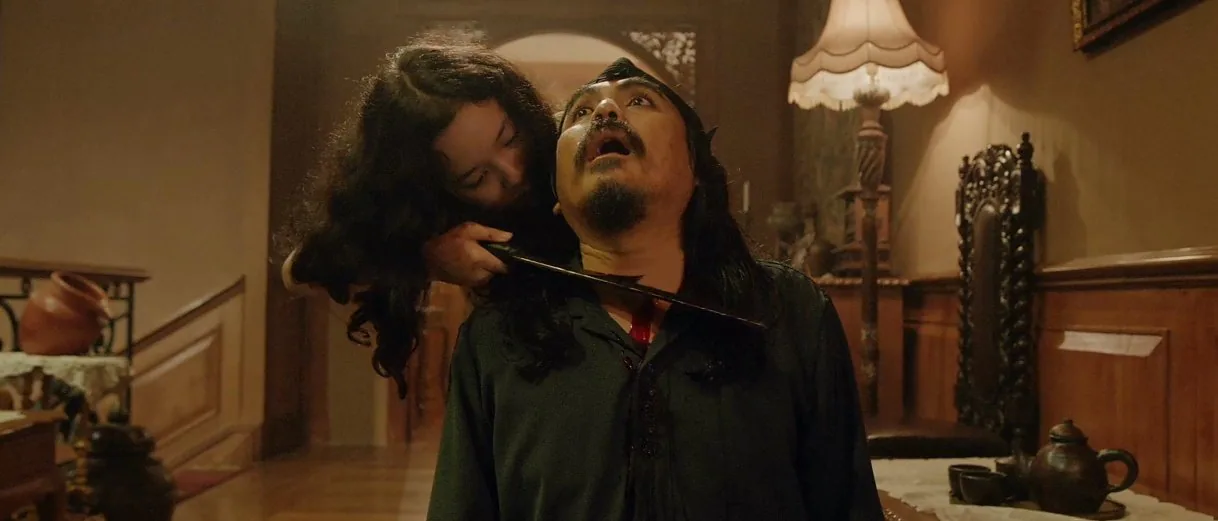
Our reading is that the anatomical detail works retroactively on the viewer’s understanding. The film establishes from its opening that Sumala and Kumala are opposites in every sense: one beautiful, one deformed; one human, one the Devil’s child; one alive, one killed. The heart placement follows that same rule. Soedjiman stabbed where he could see the wound should go, operating on the same kind of visual assessment that led him to kill Sumala the moment he saw her face at birth. In our reading, his final error and his first one share the same cause.